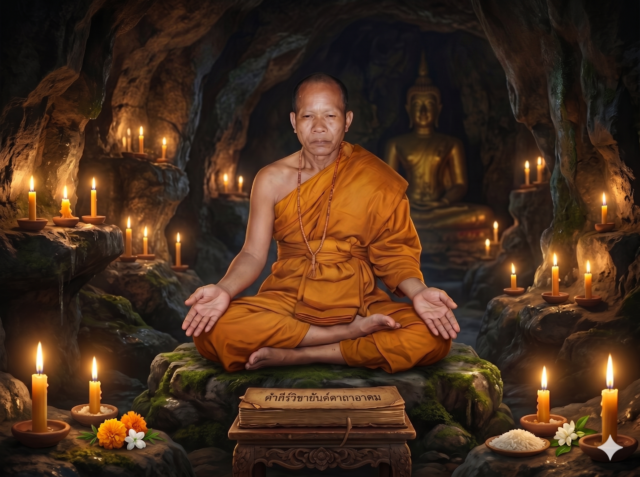
In canonical Theravada Buddhism (Anguttara Nikaya), the Lord Buddha proclaimed Pra Sivali Thera (พระสีวลีเถระ, revered in Thai occultism as Pra Chimplee / พระฉิมพลี) as the Etadagga (เอตทัคคะในทางผู้มีลาภมาก)—the foremost disciple in receiving alms, offerings, and boundless fortune. Throughout Southeast Asia, his image is revered as the ultimate embodiment of Maha Lap (immense wealth), Maha Pokasap (inexhaustible treasury), and safe passage through perilous journeys.

When the Lord Buddha led thirty thousand monks through the uninhabited desert wilderness of Phra Revata, Venerable Ananda expressed concern over how such an assembly would be sustained. The Buddha smiled and replied: “Do not be troubled, Ananda; Sivali is walking among us.” Wherever Pra Sivali took a step, celestial Devas and earth spirits manifested blossoming groves, clear mountain streams, and abundant alms-food.

YouTube player

Devotees Offering Alms and Forest Honey to Pra Sivali

Part I: Continuous Rhythmic Temple Chanting

This tutorial provides a comprehensive, structured chanting practice in traditional Thai temple cadence. It guides the practitioner through canonical backstory, sacred altar preparation, breath control, slow syllable articulation, and rhythmic continuous temple recitation.

Kata Bucha Pra Sivali - Sacred Chanting Tradition Infographic

Continuous Chanting Audio Tutorial: Syllable Flow & Temple Cadence

Practice with the master voice track featuring deliberate syllable cadence and continuous 3x temple flow

YouTube player

Continuous Kata Bucha Pra Sivali (Rhythmic Temple Cadence)

สีวะลี จะ มะหาเถโร เทวะตานะระปูชิโต โสระโห ปัจจะยาทิมหิ อะหัง วันทามิ ตัง สะทา
สีวะลี จะ มะหาเถโร ยักขาเทวาภิปูชิโต โสระโห ปัจจะยาทิมหิ อะหัง วันทามิ ตัง สะทา
สีวะลีเถระคุณัง เอตัง โสตถิ ลาภัง ภะวันตุ เม (๓ หรือ ๙ จบ)

Hua Jai Pra Chimplee (The Four Heart Syllables)

นะ ชา ลี ติ (๙ จบ หรือ ๑๐๘ จบ)

Part II: Interactive Call-and-Response Temple Chanting

This interactive call-and-response temple recitation is designed for individual devotees and study groups. The lead reciter pronounces each stanza clearly, followed by an immediate assembly response and line-for-line translation, allowing the student to absorb the spiritual meaning alongside authentic Thai-Pali meter.

Kata Bucha Pra Sivali - Responsive Temple Chanting Practice Infographic

Interactive Chanting Practice: Lead Recitation & Assembly Response

Interactive temple chanting with leader recitation, assembly response cadences, and English liturgical translations

YouTube player

Responsive Liturgical Chant Table

Role Thai-Pali Recitation English Liturgical Meaning
Leader สีวะลี จะ มะหาเถโร เทวะตานะระปูชิโต Venerable Sivali, Great Elder revered by devas and mortals alike.
Assembly Response โสระโห ปัจจะยาทิมหิ อะหัง วันทามิ ตัง สะทา Dwelling in solitary peace, sustained by boundless requisites; I bow in reverence.
Leader สีวะลี จะ มะหาเถโร ยักขาเทวาภิปูชิโต Venerable Sivali, revered by yakshas and nature spirits across all realms.
Assembly Response โสระโห ปัจจะยาทิมหิ อะหัง วันทามิ ตัง สะทา Dwelling in solitary peace, sustained by boundless requisites; I bow in reverence.
All Together สีวะลีเถระคุณัง เอตัง โสตถิ ลาภัง ภะวันตุ เม By the sublime virtue of Elder Sivali, may safe prosperity and fortune arise for me!

Hua Jai Pra Chimplee - The Four Heart Syllables Infographic

Altar Offerings & Consecration Timing

To empower your altar or amulet of Pra Sivali:

  • Offerings: 3 white lotus flowers or 9 yellow marigolds, 3 fragrant incense sticks, 1 pair of beeswax candles, 1 glass of pure water, and 1 small bowl of forest wild honey.
  • Auspicious Days: Recite on Thursday mornings (Wan Kroo) before commencing trade, or on Full Moon evenings (Wan Pen) under open sky.

Pra Sivali Traditional Temple Shrine and Bucha Altar

Pra Sivali Amulets & Sacred Bucha Images


Ajarn Spencer Littlewood & Agent Gemini Unleashed for ThailandAmulet.net
All rights reserved. Sacred Lore & Esoteric Thai Heritage Series.

Pra Chaiyawat Chinabanchorn Phim Pum Pui 71st Anniversary 2552 BE Luang Por Sakorn Wat Nong Grub Rayong

In the sacred annals of modern Thai Buddhist numismatics and occult metallurgy, few lineages carry the profound spiritual gravitas and miraculous renown of the Chinabanchorn sorcery lineage of Rayong Province. Today, we unveil a deeply revered and historically authenticated masterwork: the พระชัยวัฒน์ชินบัญชร (พิมพ์ปุ้มปุ้ย) เนื้อทองเหลือง, created as the commemorative 71st Birthday Anniversary Edition of the venerable master หลวงพ่อสาคร มนูญฺโญ of วัดหนองกรับ, consecrated on the auspicious third of February, Buddhist Era 2552 (2009).

Cast in classical high-density sacred brass alloy and cleanly stamped upon its hand-smoothed base with the sacred Thai numeric cipher โค้ด ๙, this miniature holy statuette represents the exclusive distribution piece gifted to faithful patrons who sponsored the 2552 ผ้าป่าสามัคคี merit-making envelopes for the ongoing construction and expansion of the monastic facilities at Wat Nong Grub. It was never sold over commercial counters, ensuring that each genuine example preserved today was born of direct meritorious contribution to the Sangha.

Rear view showing cast raised Thai inscriptions Luang Por Sakorn Manunyo Wat Nong Grub Rayong
Rear view of the Pra Chaiyawat Chinabanchorn 71st Anniversary Edition, displaying crisp raised cast Thai lettering: ‘หลวงพ่อสาคร มนูญฺโญ’ on the upper line and ‘วัดหนองกรับ จ.ระยอง’ on the lower line.

Iconography and Metallurgical Sculpture: The Phim Pum Pui Form

The physical iconography of this พระชัยวัฒน์ represents a triumph of classical Thai Buddhist casting art. Conceived in the cherished พิมพ์ปุ้มปุ้ย (the plump, prosperous silhouette), the Buddha is depicted in deep samadhi, seated in the full diamond lotus posture known as ขัดสมาธิเพชร upon a tiered double-lotus throne of ฐานบัวคว่ำบัวหงายสองชั้น. In His cupped hands, He cradles the sacred alchemical healing pot, the หม้อน้ำมนต์โอสถ (or medicinal nectar vessel), radiating spiritual vitality, protection against bodily ailments, and neutralizing malevolent spiritual or energetic intrusions.

The facial countenance exhibits the hallmark fullness, serenity, and compassionate composure characteristic of the highest Bangkok and Rayong Phra Kring traditions. The cheeks are pleasantly rounded (ปุ้มปุ้ย), symbolizing boundless abundance, fruitful sustenance, and liberation from poverty. Turn the amulet to its reverse, and two crisp, raised lines of Thai script are cast seamlessly into the metal: the upper line reading หลวงพ่อสาคร มนูญฺโญ, and the lower line declaring วัดหนองกรับ จ.ระยอง.

Technical Specification Authentic Chronicle Details
Canonical Title พระชัยวัฒน์ชินบัญชร ที่ระลึกครบรอบ ๗๑ ปี (พิมพ์ปุ้มปุ้ย)
Consecrating Master หลวงพ่อสาคร มนูญฺโญ (Phra Khru Manunnyathammasan), Abbot of Wat Nong Grub
Monastery & Province วัดหนองกรับ (Wat Nong Grub), Ban Khai District, Rayong Province
Consecration Date 3rd February B.E. 2552 (2009 C.E.) — 71st Birthday Anniversary
Sacred Material (Muan Sarn) เนื้อทองเหลือง (Sacred Brass Alloy) infused with 2517 BE Pra Kring Chinabanchorn sprues of LP Tim
Base Hallmark Stamp Single cleanly hand-stamped Thai numeric cipher “๙” (Code 9)
Mintage Edition Strictly 10,000 amulets distributed to donors of the B.E. 2552 Pha Pa merit envelopes
Dimensions & Weight 2.2 cm Height x 1.4 cm Base Width | Approx. 0.1 kg shipping package weight
Base of Pra Chaiyawat Chinabanchorn 2552 BE stamped with authentic Thai series code 9
Macrophotograph of the flat hand-filed base of the Pra Chaiyawat, displaying the deeply stamped Thai numeric cipher ‘๙’ (Code 9), certifying its authentic provenance as the Pha Pa giveaway edition.

The Immortal Muan Sarn: Inherited B.E. 2517 Chinabanchorn Sprues

What elevates this พระชัยวัฒน์ from a collectible work of art into a spiritual powerhouse is its primordial metallurgic pedigree. When Luang Por Sakorn resolved to create this 71st anniversary pantheon, he directly contributed his most guarded inherited metallurgic treasure: authentic casting sprues and holy metal remnants (ชนวนพระกริ่งชินบัญชร ปี ๒๕๑๗) from the immortal Pra Kring Chinabanchorn consecrated in 2517 BE by his supreme master, หลวงปู่ทิม อิสริโก of วัดละหารไร่.

To this sacred core was added the classical ancient formula preserved from the royal lineage of Wat Suthat Thepwararam:

  • แผ่นยันต์ ๑๐๘ (108 Sacred Yantra Foils): Inscribed by Luang Por Sakorn with the full canon of Buddhist protection, including Yant Ratanatrai, Yant Tri Saranagam, Yant Ipatiso Ratana Mala, and Yant Mongkut Phra Phuttha Chao.
  • นะ ๑๔ (Fourteen Sacred Na Alchemical Inscriptions): Essential esoteric catalysts governing the alchemical bonding of sacred metals and awakening the elemental spirits of the crucible.
  • Antique Bronze Relics & Temple Bells: Weathered bronze alloy sprues, ancient takrut talismans, and century-old monastery bells from historic temples across the Eastern seaboard.
Traditional Thai Buddhist holy bronze casting ceremony depicting molten sacred sprues and holy Sai Sin threads
The traditional Thai Buddhist holy bronze casting ceremony: molten sacred metals, ancient sprues, and enchanted Yantra foils poured into statuette molds beneath protective Sai Sin threads.

🎧 Sacred Audio Monograph: Pra Chaiyawat Chinabanchorn 71st Anniversary Edition 2552 BE

Sacred Audio Monograph (British Baritone & Native Polyglot Delivery) for Thailand Amulets

Broadcast Duration: 5 Minutes 43 Seconds | Mastered to -16 LUFS Stereo

The Consecration Ceremony: Solitary Dhyana & Grand Blessing

The consecration of the 71st Anniversary Chinabanchorn edition adhered to the strict esoteric protocols of the ancient Rayong masters:

Phase 1 — Solitary Meditation Empowerment (ปลุกเสกเดี่ยว ๙ วัน ๙ คืน): Prior to the public ceremony, Luang Por Sakorn placed the entire mintage inside his private meditation kutti. Over nine consecutive days and nine nights, he entered deep solitary dhyana, cycling through the Four Elements (เดินธาตุ ๔) and awakening the latent power of the Chinabanchorn incantations within each statuette.

Phase 2 — The Grand Puttapisek Ceremony (๓ กุมภาพันธ์ พ.ศ. ๒๕๕๒): On the morning of his 71st birthday, February 3, 2009, a formal Puttapisek assembly convened at Wat Nong Grub. Joining Luang Por Sakorn in the sacred mandala was his venerable Dhamma brother, หลวงพ่อสิน ภทฺทาจาโร (Phra Khru Vichai Dhammawat) of วัดละหารใหญ่. As the two greatest living lineage heirs of Luang Pu Tim, their joint empowerment sealed the amulets with a harmonious convergence of Metta Mahaniyom (universal loving-kindness), Maha Lap (boundless wealth attraction), and Maha Ud (invulnerable spiritual shielding).

Holy master monk Luang Por Sakorn Manunyo reciting empowerment prayers at Wat Nong Grub
Luang Por Sakorn Manunyo presiding over the sacred Puttapisek blessing ceremony in the ceremonial hall of Wat Nong Grub.

Video Presentation: Documentary Monograph

YouTube player

Biography of Luang Por Sakorn: Prime Heir to the Pong Prai Kumarn Lineage

หลวงพ่อสาคร มนูญฺโญ (born Sakorn Paisalsan) was born on the third of February, B.E. 2481 in Ban Khai, Rayong. From an early age, he exhibited an extraordinary affinity for spiritual contemplation and the esoteric sciences. He was ordained into the Sangha at Wat Nong Grub on June 4, B.E. 2501, receiving the monastic title Manunyo.

Recognizing his exceptional spiritual purity and razor-sharp intellect, the legendary master หลวงปู่ทิม อิสริโก of วัดละหารไร่ took Luang Por Sakorn under his personal mentorship as his prime apprentice and first-chair student. For decades, Luang Por Sakorn served at his master’s side, assisting in the inscription of sacred yantras, the casting of legendary amulets, and mastering the secret alchemical preparation of the supreme ผงพรายกุมาร (Pong Prai Kumarn) powders. Luang Pu Tim famously remarked to devotees: “When I am gone, go to Luang Por Sakorn at Wat Nong Grub; he has learned everything I have to give.”

In addition to his foundational training under Luang Pu Tim, Luang Por Sakorn traveled extensively on Tudong forest pilgrimages, studying under renowned masters across Siam:

  • หลวงพ่อเพ่ง วัดละหารไร่: Mastered the ancient Wicha for invulnerability and protective takruts.
  • หลวงพ่อหิน วัดหนองสนม: Advanced studies in esoteric palm-leaf yantras and medicinal herbal sorcery.
  • หลวงพ่อโสม วัดบ้านค่าย: Refined the art of consecrating spirit guardians, Hanuman talismans, and Kumarn Tong.
Luang Por Sakorn Manunyo holding sacred Muan Sarn relic powders inherited from Luang Pu Tim Wat Laharn Rai
Luang Por Sakorn with the sacred Pong Prai Kumarn powders inherited directly from Luang Pu Tim of Wat Laharn Rai.

Wat Nong Grub: Two Centuries of Spiritual Heritage in Rayong

วัดหนองกรับ (Wat Nong Grub), situated in Nong Bua Sub-district, Ban Khai, Rayong, possesses a rich monastic heritage spanning over two hundred years. Originally established in the late Ayutthaya / early Rattanakosin transition as a tranquil forest hermitage, the monastery fell into partial disrepair during the mid-twentieth century.

Upon being appointed abbot in B.E. 2508, Luang Por Sakorn initiated a majestic renaissance. Utilizing donations from faithful devotees and the distribution of his blessed amulets, he spearheaded the construction of the magnificent ordination hall (พระอุโบสถ), tranquil monastic residences, the Dhamma study center, and the towering golden relic stupa (พระมหาเจดีย์) that stands as a beacon of Buddhist refuge throughout the region. Luang Por Sakorn passed away peacefully on September 18, B.E. 2556 (2013) at the age of 75, leaving his uncorrupted remains resting in state within the temple grounds for the veneration of future generations.

The magnificent golden bell-shaped stupa chedi at Wat Nong Grub founded under Luang Por Sakorn
The majestic golden relic stupa (Phra Maha Chedi) at Wat Nong Grub, erected through the spiritual leadership of Luang Por Sakorn.

Authentic Kata Bucha & Chanting Invocation Protocol

To awaken the protective, healing, and fortune-attracting virtues of the Pra Chaiyawat Chinabanchorn, hold the amulet reverently between your palms raised to your forehead at the Ajna chakra, quiet the breath, and recite the following canonical liturgy:

บทสวดบูชา พระชัยวัฒน์ชินบัญชร และ หลวงพ่อสาคร วัดหนองกรับ


๑. นมัสการพระรัตนตรัย (Maha Namasakara – 3 Times)

นะโม ตัสสะ ภะคะวะโต อะระหะโต สัมมาสัมพุทธัสสะ

๒. พระคาถาบูชาหลวงพ่อสาคร (Great Mantra of LP Sakorn – 3 Times)

นะโมพุทธายะ มะอะอุ ทุกขัง อนิจจัง อนัตตา
ยะธาพุทโมนะ อุอะมะ ทุกขัง อนิจจัง อนัตตา ทุกขัง

๓. พระคาถาอิติสุคะโต (Protective Sugato Formula – 3 Times)

อิติสุคะโต อะระหัง พุทโธ นะโมพุทธายะ
มะอะอุ ทุกขัง อนิจจัง อนัตตา พุทโธ พุทโธ พุทโธ

๔. หัวใจธาตุ ๔ และผงพรายกุมาร (Heart of 4 Elements & Prai Powders)

นะมะพะทะ นะโมพุทธายะ มะอะอุ

๕. พระคาถาหัวใจพระปิดตามหาอุตม์ (Heart of Pra Pid Ta / Maha Ud)

ควัมปติ พุทธะบูชา มหาเตชะวันโต นะโมพุทธายะ มะอะอุ

Gently blow your warm breath over the statuette, pray for wealth, health, and protection, and wear with pure mindfulness.

Video Presentation: Authentic Chanting Tutorial

YouTube player

Original temple presentation box from Wat Nong Grub for the 71st Anniversary 2552 BE edition
The Pra Chaiyawat Chinabanchorn complete in its original velvet-lined temple presentation box from Wat Nong Grub, Rayong.

Acquire This Sacred Amulet: Thailand Amulets Official Store


Ajarn Spencer Littlewood & Agent Gemini Unleashed for ThailandAmulet.net
All rights reserved.

The Immortal Legacy of Somdej Pra Puttajarn (Dto) Prohmrangsri of Wat Rakang Kositaram

In the sacred history of Thai Theravada Buddhism and traditional esoteric sorcery (Saiyasart), no revered master occupies a seat of higher spiritual authority than Somdej Pra Puttajarn (Dto) Prohmrangsri (สมเด็จพระพุฒาจารย์ (โต) พรหมรังสี, 2331–2415 B.E. / 1788–1872 C.E.), the legendary nineteenth-century patriarch of Wat Rakang Kositaram on the Thonburi bank of the Chao Phraya River. Known affectionately across Siam as Luang Por Dto or Khrua Dto (ขรัวโต), he bridged the highest echelons of the Rattanakosin Royal Court across five reigns (King Rama I through King Rama V) and the deepest forest ascetic lineages of the kingdom. Through his boundless compassion to preserve the Buddhist dispensation (Puttasasana) across five millennia, he bequeathed two immortal gifts to humanity: the supreme sovereign of all Thai Buddhist amulets, the Pra Somdej, and the diamond-fortress protective liturgy known as Pra Kata Chinabanchorn (พระคาถาชินบัญชร).

Drawing directly from the historical chronicles and forensic plates preserved in Ajarn Spencer Littlewood’s Buddha Magic archives and the classical Dtamra Pra Somdej (ตำราพระสมเด็จ) compendium, this collector-grade reference study examines the complete biography, childhood geography, prophetic visions, pre-Rakang forest masters, Royal Court Dhamma parables, sacred chalkboard alchemy of the Five Divine Powders (Pong Wised Ha Prakan), forensic mold and surface traits across his three principal temples, and the anatomical mandala of the fifteen stanzas of Pra Kata Chinabanchorn.

🎧 Listen as You Read

Press play to listen to the audio narration

Somdej Pra Puttajarn Dto Prohmrangsri at Wat Rakang Kositaram Altar with Pra Somdej and Sacred Chalkboard

1. Auspicious Birth at Ban Gai Jon (Wat Satue) and Early Childhood at Ban Chaiyo, Ang Thong

According to the traditional monastic chronicles and natal astrological records (ดวงชะตาสมเด็จพระพุฒาจารย์ (โต)) recorded by Supreme Patriarch Somdej Pra Maha Samana Jao Kromma Praya Pavares Variyalongkorn, the future patriarch was born in a floating houseboat moored at Ban Gai Jon, Amphoe Ta Ruea, Phra Nakhon Si Ayuttaya Province (บ้านไก่จ้น อำเภอท่าเรือ จังหวัดพระนครศรีอยุธยา)—the exact riverside locus where Wat Satue (วัดสะตือ) stands today—on Thursday, the 12th Waxing Moon of the 5th Lunar Month in the Year of the Rat, 2331 B.E. (17 April 1788 C.E.), during the prophetic hour of ngai (approximately 09:00 AM) in the reign of King Rama I. His mother was Mae Gaes (นางเกตุ), daughter of Nai Phol and Nang La of Ban Sakorn Grajom in Kamphaeng Phet, who had migrated southward to Tha It in Uttaradit before travelling down the river basin during the early Rattanakosin era.

Auspicious Houseboat Birth of Somdej Dto at Ban Gai Jon Amphoe Ta Ruea Ayuttaya Site of Wat Satue 2331 BE

Oral royal tradition across the central plains has long linked his paternity to Prince Jao Fa Krom Luang Itsarasunthon (later crowned as King Rama II, Pra Bat Somdej Pra Puttalertla Napalai) during a military campaign in the northern provinces, where he entrusted Mae Gaes with a royal sash or hand-cloth (Pha Sabai / Pha Ched Na) as a token of recognition. Because the wooden roof beams of the houseboat were covered with beeswax candles that remained miraculously unmelted and royal bees swarmed auspiciously around the vessel at the moment of his birth, elders noted that his twelve-house planetary alignment mirrored that of a world-turning monarch or a supreme patriarch of the Sangha.

Historical Portraits of Somdej Pra Puttajarn Dto Prohmrangsri and Natal Astrological Horoscope Chart 2331 BE

During his early childhood, Mae Gaes brought the young boy down the Chao Phraya river to reside at Ban Chaiyo in Ang Thong Province (บ้านไชโย จังหวัดอ่างทอง). It was along the peaceful riverbanks of Ban Chaiyo that the child first absorbed the daily cadence of monastic chanting and merit-making. Decades later, when he attained national renown, Somdej Dto returned to this exact childhood village of Ban Chaiyo to construct the monumental seated Buddha image Pra Maha Puttapim (revered locally as Luang Por Dto) at Wat Chaiyo Worawihan (Wat Gaes Chaiyo), enshrining the famous seven-tiered Pra Somdej Wat Gaes Chaiyo amulets within the statue to dedicate supreme merit to his mother’s name, Gaes, and his childhood home, Chaiyo.

Young Samanera Dto Studying Sacred Bai Lan Palm Leaf Scriptures by River at Ban Chaiyo Ang Thong

2. Novicehood as Samanera Dto and the Prophetic White Elephant Omen at Wat Rakang

In his later childhood, his family moved downriver to Bang Khun Prohm in Bangkok, where the boy began his formal education at age seven inside the monastic school of Wat Bang Khun Prohm Nok (known today as Wat Indrawihan, วัดอินทรวิหาร) under the venerable master Jao Prakun Aranyiga (Ajarn Gaew). Demonstrating prodigious memory and a spontaneous mastery of Pali grammar and sacred Khom calligraphy, he was ordained as a Buddhist novice—Samanera Dto (สามเณรโต)—at the age of twelve in 2343 B.E. (1800 C.E.) under the preceptor Jao Khun Boworn Wiriyathera (Luang Por Yu) at Wat Sangwaes Wisayaram (วัดสังเวชวิศยาราม / Wat Bang Lamphu Bon).

Having exhausted the elementary curricula, the teenage Samanera Dto rowed across the Chao Phraya River between the ages of fifteen and eighteen to seek advanced scriptural instruction in the Pariyatidhamma at Wat Rakang Kositaram under the illustrious patriarch Somdej Pra Puttakosajarn (Nak). On the very night before the young novice arrived at the temple pier, Somdej Pra Puttakosajarn (Nak) experienced a remarkable prophetic dream: a radiant, snow-white celestial elephant (ช้างเผือก) walked majestically onto the wooden veranda of his residence and the central Hor Trai (หอไตร) scripture library, devouring every single cabinet of palm-leaf Tripitaka manuscripts (พระไตรปิฎก) from beginning to end without damaging a single plank or pillar of the building.

Prophetic Dream of the Celestial White Elephant at the Hor Trai Scripture Library of Wat Rakang Kositaram

When Samanera Dto stepped ashore the next morning, bowed at the patriarch’s feet, and answered the most intricate doctrinal questions of the Pali Canon with effortless clarity, Somdej Pra Puttakosajarn (Nak) recognized the boy immediately as the living embodiment of the White Elephant omen. Soon thereafter, Somdej Pra Puttakosajarn presented the brilliant novice to Prince Jao Fa Krom Luang Itsarasunthon at the Royal Palace. Deeply moved by the youth’s eloquence and gentle bearing, the Prince took Samanera Dto under direct royal patronage as a Nak Luang (Royal Novice) and subsequently sponsored his higher ordination as a full Bhikkhu in the Year of the Rabbit, 2350 B.E. (1807 C.E.) at the Royal Temple of the Emerald Buddha (Wat Pra Sri Rattana Satsadaram), with the Supreme Patriarch Somdej Pra Ariyawongsayan (Suk) presiding as preceptor and conferring the immortal monastic title Prohmrangsri (พรหมรังสี)—The Radiant Light of Brahma.

Buddhist Era (C.E.) Sacred Location / Temple Biographical Milestone & Monastic Lineage
2331 B.E. (1788 C.E.) Ban Gai Jon, Amphoe Ta Ruea, Ayuttaya (Wat Satue) Born Thursday 17 April 1788 in a floating houseboat to mother Mae Gaes during the reign of King Rama I.
Early Childhood Ban Chaiyo, Ang Thong (Wat Gaes Chaiyo) Raised along the river at Ban Chaiyo; later returned to build the giant seated Buddha Pra Maha Puttapim in tribute to Mae Gaes.
2338–2343 B.E. (1795–1800) Bang Khun Prohm, Bangkok (Wat Indrawihan & Wat Sangwaes) Studied under Jao Prakun Aranyiga (Ajarn Gaew); ordained as Samanera Dto at age 12 under Luang Por Yu.
2346–2349 B.E. (1803–1806) Wat Rakang Kositaram, Thonburi Fulfilled the White Elephant dream omen of Somdej Pra Puttakosajarn (Nak); inducted as a Royal Novice (Nak Luang).
2350 B.E. (1807 C.E.) Wat Pra Sri Rattana Satsadaram (Wat Pra Gaew) Ordained as a Royal Bhikkhu under Somdej Pra Ariyawongsayan (Suk) with the clerical name Prohmrangsri.
2367–2394 B.E. (1824–1851) Forests of Kamphaeng Phet, Sukhothai, Phitsanulok & Lopburi Walked 25 years on austere Tudong forest pilgrimage to avoid ecclesiastical rank; mastered Abhinna under Khrua Dta Saeng of Wat Manee Chonlakhan.
2395–2407 B.E. (1852–1864) Wat Rakang Kositaram & Grand Palace Appointed by King Rama IV (Mongkut) as Pra Thammakit (Abbot of Wat Rakang), Pra Thep Gawi, and in 2407 B.E. elevated to Somdej Pra Puttajarn.
2409–2415 B.E. (1866–1872) Wat Rakang, Wat Gaes Chaiyo & Wat Bang Khun Prohm Peak consecration of the 84,000 Pra Somdej votive tablets; passed into stillness at midnight on Saturday, 22 June 1872 (2415 B.E.) at age 84 (64 Pansa).

3. The 25-Year Tudong Forest Pilgrimage and Pre-Rakang Lineage under Khrua Dta Saeng and Somdej Suk Kai Tuean

When King Rama III (Pra Bat Somdej Pra Nangklao Jao Yu Hua) ascended the throne in 2367 B.E. (1824 C.E.) and sought to elevate the brilliant young preacher to the noble ecclesiastical rank of Pra Racha Khana, Pra Maha Dto Prohmrangsri realized that courtly honors and administrative titles could easily fetter a monk’s quest for spiritual liberation. Quietly slipping away from the capital with only his alms bowl and three-piece robe, he embarked upon an extraordinary twenty-five-year Tudong (ธุดงค์) forest pilgrimage that lasted throughout the entire reign of King Rama III.

Twenty Five Year Tudong Forest Pilgrimage of Somdej Dto Studying Wicha under Khrua Dta Saeng of Lopburi

Travelling on foot through the malaria-infested jungles of Dong Phaya Fai (ดงพญาไฟ), limestone caverns, and ancient brick stupas of Kamphaeng Phet, Sukhothai, Phitsanulok, Utai Thani, Ang Thong, and Lopburi, he sought out the most accomplished meditation masters and esoteric adepts of the interior. His primary teacher in the higher psychic sciences (Wicha 8 Prakan and Abhinna 6) was the legendary forest patriarch Pra Ajarn Saeng (Khrua Dta Saeng) of Wat Manee Chonlakhan in Lopburi Province (ขรัวตาแสง วัดมณีชลขัณฑ์ จังหวัดลพบุรี)—who also resided at Wat Saded in Kamphaeng Phet and co-consecrated the early Pra Gru Wat Tap Khaw amulets of Sukhothai. According to the classical chronicles, Khrua Dta Saeng possessed such mastery of supranormal locomotion (Yor Paendin, folding the earth) that he routinely walked from Lopburi to Bangkok for morning alms rounds and returned to his forest monastery before the noon meal, and could crush dense mortar in his bare palms while molding bricks with a single touch.

Pre Rakang Forest Lineage Khrua Dta Saeng Pra Gru Wat Tap Khaw Pra Wat Plab Somdej Suk and Look Om Benjarong

Alongside Khrua Dta Saeng, Somdej Dto inherited the courtly sacred-powder lineage of Supreme Patriarch Somdej Pra Sangharaja (Suk Kai Tuean) of Wat Ratchasittharam (Wat Plab) and Wat Mahathat, whose iconic Pra Gru Wat Plab and Pra Somdej Arahang tablets established the foundational formula for compounding white Pong Puttakun chalk with calcined seashell lime. During this period, Somdej Dto also rolled leftover multi-colored sacred pastes into spherical Gaew Radtana / Look Om Somdej (ลูกอมสมเด็จ เนื้อสีเบญจรงค์) five-colored Benjarong beads prized by veteran collectors as pre-mold talismans containing pure Wat Rakang Muan Sarn.

4. Fearless Dhamma Parables Before the Royal Court: The Daylight Torch and the Wooden Soup Ladle

Upon the ascension of King Rama IV (Pra Bat Somdej Pra Jom Klao Jao Yu Hua, King Mongkut) in 2394 B.E. (1851 C.E.), the scholar-monarch summoned Pra Maha Dto back from the wilderness. Knowing the elder’s legendary humility, the King remarked that throughout the twenty-seven years of the previous reign, Pra Maha Dto had successfully fled royal titles across the provinces, and asked how he could flee now that the King himself ruled the entire realm. Accepting the monarch’s plea out of compassion, he became Abbot of Wat Rakang Kositaram in 2395 B.E. and was consecrated as Somdej Pra Puttajarn (Dto) Prohmrangsri in 2407 B.E. (1864 C.E.).

Somdej Pra Puttajarn Dto Carrying a Lit Torch in Broad Daylight Past the Grand Palace Walls in Reign of King Rama IV

Even wrapped in the highest silk ecclesiastical honors of the kingdom, Khrua Dto remained the fearless conscience of Siam, delivering unforgettable visual Dhamma parables directly to the throne and nobility:

  • The Parable of the Blazing Torch in Broad Daylight (จุดคบไฟในเวลากลางวัน): During a period of political tension among high ministers of state, Somdej Dto walked slowly along the white battlements of the Grand Palace (พระบรมมหาราชวัง) under the blazing midday sun carrying a lit resin torch (Khob Fai). When courtiers ran out in astonishment to ask why a Somdej would carry a burning torch at noon, he replied gently that whenever the light of Dhamma and moral integrity grows dark within the hearts of those who govern, even the brightest midday sun leaves the realm stumbling in pitch darkness.
  • The Parable of the Wooden Soup Ladle (ปริศนาธรรมไม้จวัก): Invited to deliver a royal sermon inside the Grand Palace before an assembly of learned princes and scholars, Somdej Dto ascended the carved preaching throne holding an ordinary, unadorned coconut-shell wooden soup ladle (Mai Jawak) tucked beneath his robe. Lifting the wooden ladle before the court, he explained that a kitchen ladle dips into the richest, most fragrant curries from morning until night, yet the wooden ladle itself never once tastes the sweetness or spice of the food. In the exact same way, one who sits beside the Tripitaka scriptures and memorizes every Pali verse without eradicating greed, anger, and delusion from the heart remains no different from a wooden soup ladle in a pot of curry.
Somdej Pra Puttajarn Dto Teaching the Parable of the Wooden Soup Ladle Mai Jawak inside the Grand Palace

5. The Sacred Chalkboard Alchemy of the Five Divine Powders (Pong Wised 5 Prakan)

Following the ancient Buddhist tradition of creating 84,000 votive tablets—one for every doctrinal division (Pra Thammakhan) of the Pali Canon—to anchor the teachings of the Buddha for five thousand years, Somdej Pra Puttajarn (Dto) Prohmrangsri devoted decades of solitary nocturnal practice to compounding the mystical alchemical core of every authentic Pra Somdej: the Five Sacred Powders (ผงวิเศษ 5 ประการ).

Sacred Chalkboard Alchemy Inscribing and Erasing the Five Pong Wised Powders at Wat Rakang Kositaram

The method of creating these powders—known in the classical manuals as Wicha Lob Pong (วิชาลบผง)—represents the pinnacle of Thai Buddhist mental alchemy. Mixing white marl clay (Din Sor Pong, ดินสอพอง) with sacred water and herbal extracts to roll cylindrical sticks of ritual chalk, Somdej Dto sat by candlelight before an ancient black wooden slate chalkboard (กระดานชนวน). Maintaining unbroken meditative absorption (Jhana Samadhi), he inscribed intricate Agkhara Khom (sacred Khmer script) yantra formulas across the slate while reciting the corresponding Kata incantations. Once a formula was complete, he chanted the erasure invocation (Kata Lob), brushing the consecrated chalk dust from the chalkboard into a porcelain vessel—only to gather that very powder, re-roll it into a fresh stick of chalk, and inscribe the next higher tier of sacred grammar hundreds of times in succession.

Sacred Powder (Thai / Romanized) Esoteric Scripture & Chalkboard Formula Primary Spiritual Virtue & Blessing
1. Pong Patamang
(ผงปถมัง)
Starts from the primordial origin point Pindhu (พินทุ), expanding through Na Patamang across the nine chapters of the Khamphi Patamang until dissolving into emptiness (Sunyata / Nibbana). Kong Grapan Chadtri & Klaew Klaad: Invincibility against lethal weapons, physical protection, unseen evasion of fatal danger, and unshakable spiritual grounding.
2. Pong Ittije
(ผงอิทธิเจ)
Derived from the mystical permutation of Pali vowel and consonant sandhi rules in the Kaccayana Grammar (มูลกัจจายน์), declared by the Buddha as the gentle charm of the Tripitaka. Metta Mahaniyom & Maha Sanaeh: Supreme loving-kindness, magnetic social harmony, dissolving hostility, and drawing benevolent patronage from all beings.
3. Pong Maharaj
(ผงมหาราช)
Advanced geometric yantra grids compounded from the culmination of Patamang and Ittije matrices, invoking sovereign cosmic command. Maha Amnaj & Serm Yos: Regal authority, charismatic leadership, protection across 108 directions, and elevation of noble status.
4. Pong Puttakun
(ผงพุทธคุณ)
Inscribed using the nine supreme virtues of the Enlightened One (Itipiso Bhagava Araham Sammasambuddho…) and the Rattana Mala stanzas. Maha Mongkol & Klaew Klaad: Radiant auspiciousness, illumination of wisdom, and complete immunity against black magic and malevolent spirits.
5. Pong Trinisinghe
(ผงตรีนิสิงเห)
Mathematical magic-square yantra matrices (กลเลขยันต์ ๑๒ ตัว: 3, 7, 5, etc.) invoking the Devas, Brahmas, and celestial guardians of the triple world. Serm Duang & Subduing Calamities: Harmonizing planetary alignments, lifting fallen destiny, neutralizing ancestral or environmental curses, and shielding the household.

In accordance with the Dtamra Pra Somdej formulation, these five sacred chalk powders were kneaded into a living clay matrix (Muan Sarn, มวลสาร) composed of:

  • Calcined River Seashell Lime (ปูนเปลือกหอย): Crushed river and marine mollusk shells kiln-fired and slaked into fine white calcium carbonate paste, forming the durable structural body of the amulet.
  • Consecrated Alms-Bowl Rice (ข้าวสุก): Whenever Somdej Dto tasted a particularly delicious mouthful of rice or sweet offering during his morning meal, he would set a portion aside to dry in the sun, grinding it into the clay so the wearer would never know hunger or poverty (Maha Pokasap).
  • Sacred Lotus Petals, Jasmine, and 108 Auspicious Herbs (เกษรดอกไม้ ๑๐๘ และว่านมงคล): Offerings taken directly from the main shrine room (Ubosot) of Wat Rakang together with fragrant incense ashes (ผงธูปบูชาพระ) and red broken stupa grains from Kamphaeng Phet (Met Daeng).
  • Organic Binders—Wild Honey, Banana Pulp, and Chinese Tung Oil (น้ำผึ้ง กล้วยน้ำว้า และน้ำมันตังอิ๊ว): Early Wat Rakang pressings used honey, cane syrup, and mashed Kluay Nam Wa bananas, which caused the high-lime paste to shrink and crack rapidly during drying. When the royal court goldsmith Luang Wijarn Jiarana (หลวงวิจารณ์เจียรนัย) observed this cracking, he introduced imported Chinese Tung Oil (Namman Tang Iu, น้ำมันตังอิ๊ว) as a slow-curing resinous binder, imparting the unmistakable warm ivory, jade-like translucency (Nuea Nopparat / Nuea Gaan Kluay), and fine spiderweb crazing (Dtaek Lai Nga) revered by master connoisseurs.

6. Forensic Connoisseurship Across the Three Great Temples of Dtamra Pra Somdej

During the final decades of his life, Somdej Pra Puttajarn (Dto) Prohmrangsri consecrated amulets across several temples along his life’s path, with three great monastic treasuries standing today at the apex of the Thai Buddhist Benjapakee (Five Supreme Amulets) pantheon: Wat Rakang Kositaram, Wat Bang Khun Prohm, and Wat Gaes Chaiyo (Wat Chaiyo Worawihan).

Authentic Dtamra Pra Somdej Wat Rakang Kositaram Ongk Kroo Masterpieces Kroo Uea Bai Po and Thai Pragan

I. Pra Somdej Wat Rakang Kositaram (2409–2415 B.E. / 1866–1872 C.E.)

Pressed by hand at Wat Rakang Kositaram and distributed personally by Somdej Dto from his boat and satchel during morning alms rounds—rather than being buried in a sealed underground crypt—authentic Pra Somdej Wat Rakang tablets exhibit a living, unburied surface texture with natural shrinkage wrinkles (Roi Yob Yuen), pinprick pores from escaping organic gases (Roo Khem), tiny crab-claw drag marks formed when slicing the soft clay with a bamboo sliver (Roi Bpoo Dtai), and fine ivory surface crackle (Dtaek Lai Nga). As demonstrated by the famous Ongk Thai Pragan master specimen in the Buddha Magic archives, true Dtaek Lai Nga crazing formed over decades as an original protective coating of black herbal lacquer (Ya Rak) contracted and was later washed away, leaving the rear face with intact lacquer and gold leaf while the exposed front face displays spiderweb ivory crackle.

Enshrinement of 84000 Pra Somdej Amulets inside the Great Chedi Crypt of Wat Bang Khun Prohm in 2413 BE

II. Pra Somdej Wat Bang Khun Prohm (2411–2413 B.E. / 1868–1870 C.E.)

Between 2411 and 2413 B.E., wealthy clerk Samian Tra Duang (เสมียนตราด้วง), ancestor of the Thanakoses family, refurbished Wat Bang Khun Prohm (divided today into Wat Mai Amataros and Wat Bang Khun Prohm Nai) and erected a grand central bell-shaped stupa (Pra Maha Chedi Yai). Under the direct guidance and consecration of Somdej Pra Puttajarn (Dto) Prohmrangsri, 84,000 votive tablets were pressed across nine distinct molds (plus the rare tenth reclining Buddha mold Pim Pang Saiyaas found in Gru Chedi Lek) and sealed inside the brick crypt of the Chedi in 2413 B.E. (1870 C.E.).

Authentic Dtamra Pra Somdej Wat Bang Khun Prohm Kraap Fong Dtao Hoo Gru Gao and 2500 BE Chedi Opening

Because these tablets rested inside the brick stupa through seasonal Chao Phraya river floods and tropical heat cycles—prior to the early removals (Gru Gao) and the official ceremony presided over by Gen. Praphas Charusathien on 27 May 2500 B.E. (1957 C.E.) (Gru Mai)—their surfaces bear authentic Kraap Gru (คราบกรุ): bubbly soya-milk tofu-foam calcium craters (Kraap Fong Dtao Hoo, คราบฟองเต้าหู้), fused bluish-white lime skins (Kraap Nam Bpoon), and translucent golden-honey tung-oil bloom (Kraap Nam Pheung) that cannot be duplicated by artificial chemical aging.

Colossal Outdoor Seated Buddha Pra Maha Puttapim Luang Por Dto at Wat Chaiyo Worawihan Wat Gaes Chaiyo Ang Thong

III. Pra Somdej Wat Gaes Chaiyo, Ang Thong (c. 2404–2410 B.E. / 1861–1867 C.E.)

Enshrined inside the colossal outdoor brick-and-stucco Buddha (Pra Maha Puttapim / Luang Por Dto) built by Somdej Dto at his childhood home of Ban Chaiyo, Ang Thong Province, these amulets came to light in 2430 B.E. (1887 C.E.) during the reign of King Rama V when vibrations from reconstruction works caused the giant statue to collapse, spilling thousands of sacred white tablets from its chest cavity. Unlike the three-tiered thrones of Wat Rakang and Wat Bang Khun Prohm, Pra Somdej Wat Gaes Chaiyo is immediately recognizable by its intricate multi-tiered pedestal (Pim 7 Chan Niyom พิมพ์ ๗ ชั้น นิยม and Pim 6 Chan Ok Dtan / Ok Rong พิมพ์ ๖ ชั้น อกตัน / อกร่อง), a recessed mirror frame (Grorb Grajok), a split chest channel (Ok Rong), and flared earlobes (Hoo Bai Sri).

Authentic Dtamra Pra Somdej Wat Gaes Chaiyo 7 Tiered Base Niyom and 6 Tiered Ok Dtan Molds Ang Thong
Forensic Attribute Wat Rakang Kositaram Wat Bang Khun Prohm Wat Gaes Chaiyo (Ang Thong)
Pedestal Tiers & Molds Classic 3-Tiered Dais across 4 Master Molds of Luang Wijarn Jiarana (plus early Nork Pim). 3-Tiered Dais across 9 Canonical Molds (including Pim Sen Dai, Sangkati & Ok Krut). Distinctive 7-Tiered Base (Pim 7 Chan) and 6-Tiered Base (Ok Dtan / Ok Rong).
Clay Composition (Nuea Muan Sarn) Highest concentration of 5 Pong Wised, visible organic flecks, honey, banana, and heavy Namman Tang Iu tung oil. Higher ratio of calcined seashell lime to withstand decades inside the sealed brick Chedi crypt. Fine, dense, porcelain-smooth white chalk and seashell lime (Nuea La-iad) produced at Wat Rakang and transported by boat.
Surface Patination Unburied (Mai Long Gru); natural shrinkage wrinkles, Roo Khem pinholes, Roi Bpoo Dtai crab tracks, and Dtaek Lai Nga crackle. Buried in Chedi crypt (2413–2500 B.E.); covered in calcified Kraap Fong Dtao Hoo tofu-foam craters and mineral crust. Enshrined inside dry chamber of giant Buddha; clean marble-like sheen with light powdery bloom and fine ivory crazing.

7. The 3:00 AM Vision of Taw Maha Prohm Chinabanchorn and the 15 Stanzas of the Victor’s Cage

Every authentic Pra Somdej consecrated by Somdej Pra Puttajarn (Dto) Prohmrangsri was empowered through the rhythmic recitation of his crowning liturgical masterpiece: Pra Kata Chinabanchorn (พระคาถาชินบัญชร), literally translated from Pali (Jinapanchara) as The Cage or Protective Armor of the Victorious Buddha.

Three AM Celestial Vision of Taw Maha Prohm Chinabanchorn and the Seven Tiered Diamond Armor Mandala

While researching ancient palm-leaf manuscripts from the Sinhalese/Lanna Lankavong tradition (historically associated with Lanna scholars of the Chiang Mai golden age), Somdej Dto discovered an archaic protective hymn that contained corrupted lines and structural omissions. Retiring to his candlelit Kuti to purify and edit the Pali meter through deep meditative absorption, he experienced a luminous vision at 3:00 AM (Ti Sam) on a Thursday night: a radiant four-faced celestial Brahma clad in spotless white and golden regalia manifested above his altar, identifying himself as Taw Maha Prohm Chinabanchorn (ท้าวมหาพรหมชินบัญชร)—a former royal disciple of the Buddha Kassapa who had attained the Brahma heavens through mastery of the Jinapanchara liturgy. Guided by this celestial visitation, Somdej Dto perfected the concise fifteen-stanza Rattanakosin recension and presented it before King Rama IV, who praised its pristine Pali syntax and doctrinal completeness.

Archival Manuscript Plate of the Fifteen Stanzas of Pra Kata Chinabanchorn Compiled by Somdej Dto

The Anatomical and Cosmic Mandala of Pra Kata Chinabanchorn

Unlike ordinary protective spells, Pra Kata Chinabanchorn functions as an internal architectural consecration (Krob Jakrawan), systematically stationing the 28 Supreme Buddhas of Antiquity, the Triple Gem, the Eighty Great Arahant Disciples (Asiti Mahasawok), and the Major Paritta Suttas at exact anatomical points of the practitioner’s body and the surrounding directional compass:

Stanzas Anatomical / Directional Station Enlightened Beings & Sacred Paritta Suttas Invoked
Stanzas 1–2 Seat of Victory (Chayasana) & Crown The 28 Supreme Buddhas led by Pra Tanhangkara (พระตัณหังกร) and Pra Gotama Buddha (พระโคตมพุทธเจ้า), who conquered Mara and drank the nectar of the Four Noble Truths.
Stanzas 3–4 Head (Sise), Eyes, Chest & Heart Pra Buddha, Pra Dhamma, and Pra Sangha upon the crown, eyes, and chest; Pra Anuruddha (พระอนุรุทธะ) at the heart center; Pra Sariputta on the right; Pra Kondanna behind the back; Pra Moggallana on the left.
Stanzas 5–6 Right & Left Ears & Back of Cranium Pra Ananda & Pra Rahula at the right ear; Pra Kassapa & Pra Mahanama at the left ear; Pra Sobhita shining like the sun at the back of the head.
Stanzas 7–9 Tongue, Forehead & All Limbs/Organs Pra Kumara Kassapa at the mouth/tongue; Pra Punna, Pra Angulimala, Pra Upali, Pra Nanda, and Pra Sivali as auspicious marks upon the forehead; the remaining 80 Great Arahants blazing with moral virtue across every limb.
Stanzas 10–11 Four Compass Directions & Sky Canopy Ratana Sutta in front; Metta Sutta on the right; Dhajagga Sutta behind; Angulimala Paritta on the left; Khandha, Mora & Atanatiya Parittas forming a roof across the sky above.
Stanzas 12–15 7-Tiered Diamond Wall (Satta Prakara) Encircles the practitioner inside the 7-Tiered Crystalline Fortress Wall (กำแพงแก้ว 7 ชั้น) of the Jinapanchara, dissolving all inner and outer calamities through the boundless majesty of the Buddha, Dhamma, and Sangha.

8. Complete 15 Stanzas of Pra Kata Chinabanchorn (Thai Script, Phonetic Chanting Guide & Translation)

Before reciting Pra Kata Chinabanchorn, traditional practitioners light candles and incense before their shrine (or hold their Pra Somdej between joined palms at the brow), chant the preliminary homage to the Triple Gem (Namo Tassa Bhagavato Arahato Sammasambuddhassa — 3 times), silently call to mind the compassionate image of Somdej Pra Puttajarn (Dto) Prohmrangsri, and recite the fifteen stanzas with calm, rhythmic mindfulness:

1. ชะยาสะนากะตา พุทธา เชตวา มารัง สะวาหะนัง / จะตุสัจจาสะภัง ระสัง เย ปิวิงสุ นะราสะภา
Chayaasanaagataa Buddhaa Chetawaa Maarang Sawaahanang / Chatusaccaasabhang Rasang Ye Piwingsu Naraasabhaa
The Buddhas, noble leaders among humanity, who took their seat upon the Throne of Victory, having conquered Mara together with his mounted legions, and drank the supreme ambrosial nectar of the Four Noble Truths—

2. ตัณหังกะราทะโย พุทธา อัฏฐะวีสะติ นายะกา / สัพเพ ปะติฏฐิตา มัยหัง มัตถะเก เต มุนิสสะรา
Tanhangkaraadayo Buddhaa Attha-weesati Naayakaa / Sabbe Patitthitaa Mayhang Matthake Te Munissaraa
Those twenty-eight Supreme Buddhas, sovereign guides of the world led by Tanhangkara Buddha—may all those Lords of Sages be firmly established upon the crown of my head.

3. สีเส ปะติฏฐิโต มัยหัง พุทโธ ธัมโม ทะวิโลจะเน / สังโฆ ปะติฏฐิโต มัยหัง อุเร สัพพะคุณากะโร
Seese Patitthito Mayhang Buddho Dhammo Dawi-lochane / Sangho Patitthito Mayhang Ure Sabba-gunaakaro
The Buddha resides upon my head, the Dhamma at my two eyes, and the Noble Sangha—the mine of all virtuous qualities—resides upon my chest.

4. หะทะเย เม อะนุรุทโธ สารีปุตโต จะ ทักขิเณ / โกณฑัญโญ ปิฏฐิภาคัสมิง โมคคัลลาโน จะ วามะเก
Hadaye Me Anuruddho Saareeputto Cha Dakkhine / Kondanno Pitthi-bhaagasming Moggallaano Cha Waamake
Venerable Anuruddha is at my heart, Sariputta upon my right, Kondanna guards behind my back, and Moggallana stands upon my left.

5. ทักขิเณ สะวะเน มัยหัง อาสุง อานันทะราหุโล / กัสสะโป จะ มะหานาโม อุภาสุง วามะโสตะเก
Dakkhine Sawane Mayhang Aasung Aananda-Raahulo / Kassapo Cha Mahaanaamo Ubhaasung Waama-sotake
Venerable Ananda and Rahula guard my right ear, while Kassapa and Mahanama abide together at my left ear.

6. เกสะโต ปิฏฐิภาคัสมิง สุริโย วะ ปะภังกะโร / นิสินโน สิริสัมปันโน โสภิโต มุนิปุงคะโว
Kesato Pitthi-bhaagasming Suriyo Wa Pabhangkaro / Nisinno Siri-sampanno Sobhito Muni-pungkawo
At the hair behind the crown of my head sits Venerable Sobhita, supreme among sages, perfected in splendor, shining like the radiant midday sun.

7. กุมาระกัสสะโป เถโร มะเหสี จิตตะวาทะโก / โส มัยหัง วะทะเน นิจจัง ปะติฏฐาสิ คุณากะโร
Kumaara-Kassapo Thero Mahesee Chitta-waadako / So Mayhang Wadane Niccang Patitthaasi Gunaakaro
The great elder Kumara Kassapa, brilliant speaker and treasury of virtue, abides constantly within my mouth and upon my tongue.

8. ปุณโณ อังคุลิมาโล จะ อุปาลี นันทะสีวะลี / เถรา ปัญจะ อิเม ชาตา นะลาเฏ ติละกา มะมัง
Punno Angulimaalo Cha Upaalee Nanda-Seewalee / Theraa Pancha Ime Chaataa Nalaate Tilakaa Mamang
These five great elders—Punna, Angulimala, Upali, Nanda, and Sivali—have arisen as auspicious anointing marks upon my forehead.

9. เสสาสีติ มะหาเถรา วิชิตา ชินะสาวะกา / เอเตสีติ มะหาเถรา ชิตะวันโต ชิโนระสา / ชะลันตา สีละเตเชนะ อังคะมังเคสุ สัณฐิตา
Sesaaseeti Mahaatheraa Vijitaa Jina-saawakaa / Eteseeti Mahaatheraa Jitawanto Jinorasaa / Chalantaa Seela-techena Angka-mangkesu Santhitaa
The remaining eighty Great Elders, victorious disciples and true sons of the Conqueror, blazing with the fiery power of pure moral virtue, stand stationed throughout every limb and organ of my body.

10. ระตะนัง ปุระโต อาสิ ทักขิเณ เมตตะสุตตะกัง / ธะชัคคัง ปัจฉะโต อาสิ วาเม อังคุลิมาละกัง
Ratanang Purato Aasi Dakkhine Metta-suttakang / Dhajaggang Pacchato Aasi Waame Angulimaalakang
The Ratana Sutta stands before me, the Metta Sutta upon my right, the Dhajagga Sutta behind me, and the Angulimala Paritta upon my left.

11. ขันธะโมระปะริตตัญจะ อาฏานาฏิยะสุตตะกัง / อากาเส ฉะทะนัง อาสิ เสสา ปาการะสัณฐิตา
Khandha-Mora-parittancha Aataanaatiya-suttakang / Aakaase Chadanang Aasi Sesaa Paakaara-santhitaa
The Khandha Paritta, Mora Paritta, and Atanatiya Sutta form a protective roof across the sky above me, while the remaining sacred discourses stand ranged around me as ramparts of stone.

12. ชินาณาพะละสังยุตตา สัตตะปาการะลังกะตา / วาตะปิตตาทะสัญชาตา พาหิรัชฌัตตุปัททะวา
Jinaanaa-bala-sangyuttaa Satta-paakaara-langkataa / Waata-pittaada-sanchaataa Baahirajjhattu-paddawaa
Bound by the sovereign authority and strength of the Victorious Buddha, and encircled by seven tiers of crystalline fortress walls—may all inner and outer afflictions arising from wind, bile, or phlegm—

13. อะเสสา วินะยัง ยันตุ อะนันตะชินะเตชะสา / วะสะโต เม สะกิจเจนะ สะทา สัมพุทธะปัญชะเร
Asesaa Winayang Yantu Ananta-jina-techasaa / Wasato Me Sakicchena Sadaa Sambuddha-panchare
Dissolve completely without trace through the boundless majesty of the Conqueror, as I dwell constantly in all my duties within the protective cage of the Supreme Awakened Ones.

14. ชินะปัญชะระมัชฌัมหิ วิหะรันตัง มะฮีตะเล / สะทา ปาเลนตุ มัง สัพเพ เต มะหาปุริสาสะภา
Jinapanchara-majjhamhi Wiharantang Maheetale / Sadaa Paalentu Mang Sabbe Te Mahaa-purisaasabhaa
As I live upon this earth in the very center of the Victor’s Cage, may all those Great and Noble Beings forever watch over and protect me.

15. อิจเจวะมันโต สุคุตโต สุรักโข / ชินานุภาเวนะ ชิตุปัททะโว / ธัมมานุภาเวนะ ชิตาริสังโฆ / สังฆานุภาเวนะ ชิตันตะราโย / สัทธัมมานุภาวะปาลิโต จะรามิ ชินะปัญชะเรติฯ
Iccewamanto Sugutto Surakkho / Jinaanubhaawena Jitupaddavo / Dhammaanubhaawena Jitaari-sangho / Sanghaanubhaawena Jitantaraayo / Saddhammaanubhaawa-paalito Charaami Jinapanchareti.
Thus am I utterly guarded and well-protected: through the power of the Buddha, all calamities are vanquished; through the power of the Dhamma, all hostile throngs are overcome; through the power of the Sangha, all dangers are transcended. Guarded by the majesty of the True Dhamma, I walk forever within the Victor’s Cage.


Ajarn Spencer Littlewood for ThailandAmulet.net
All rights reserved.

Jao Mae Kwan Yin Nuea Wan Sabu Luead - Ajarn Hmom Niranam Traipoom

The Jao Mae Kwan Yin Bodhisattva Nuea Wan Sabu Luead (Bloodsoap Herb Powders) edition of 2552 BE represents one of the rarest, most esoteric, and deeply sought-after sacred creations from the legendary lay sorcerer and spiritual master, Ajarn Hmom Niranam Traibhumi (Ajarn Hmom Niranam Traipoom). Consecrated during an epic ritual gathering in Sisaket Province on November 24, 2009, this dual-archetype talisman synergizes the boundless ocean of Mahayana Buddhist compassion with the unshakeable cosmic martial authority of Vedic cosmology.

Jao Mae Kwan Yin Front Face Sacred Red Wan Sabu Luead
Frontal relief of Jao Mae Kwan Yin Bodhisattva standing gracefully upon ocean waves and blooming lotus pedestal in sacred crimson Wan Sabu Luead.

The Enigmatic Lineage of Ajarn Hmom Niranam Traipoom

Ajarn Hmom Niranam Traibhumi is renowned throughout Thailand as an aristocratic, enigmatic adept of exceptional spiritual standing. Moving freely between royal and monastic circles, Ajarn Hmom dedicated decades to funding monumental temple construction, sponsoring state ceremonies, and donating consecrated amulets directly to frontline soldiers, border patrol police, and military personnel guarding hazardous border provinces.

His amulets are famous for requiring no commercial fanfare; rather, their extraordinary efficacy in Kong Grapan (invincibility), Klaew Klaad (catastrophe evasion), and miraculous career elevation created an intense organic following among high-ranking commanders, politicians, and seasoned collectors. Known for utilizing profound esoteric geometries and rare occult botanicals, Ajarn Hmom’s editions are considered modern classics of Siamese sorcery.

Rear Face Pra Narai Vishnu Four Armed Cosmic Form
Rear face displaying the four-armed cosmic form of Pra Narai (Vishnu) bearing his celestial weapons, surrounded by intricate sacred yantra scripts.

Botanical Alchemistry: Nuea Wan Sabu Luead

The foundational medium of this sacred amulet is Nuea Wan Sabu Luead — the legendary Bloodsoap root herb (Stephania venosa). In ancient Thai herbal sorcery (Tamra Wicha Wan), Sabu Luead is celebrated as the paramount plant for granting physical invulnerability, skin resilience against cutting weapons, and spiritual rejuvenation.

When harvested according to astronomical alignments with proprietary incantations, the crimson sap and potent root powders absorb immense protective prana. Ajarn Hmom combined these pulverized blood-red root fibers with sacred Pong Puttakun temple powders, crushed gemstone dust, and consecrated floral pollens, imparting to the amulet its rich earthy red hue, tactile density, and subtle natural botanical fragrance.

Profile Macro View Showing Wan Sabu Luead Density and Edge Relief
Edge profile macro view exhibiting the compressed density of the herbal paste and crisp three-dimensional sculptural layering.

Dual Archetypal Cosmology: Kwan Yin & Pra Narai

What elevates this edition to the apex of sacred design is its unique bilateral esoteric synthesis:

  • Front Face — Jao Mae Kwan Yin (Avalokiteshvara Bodhisattva): The supreme Chinese-Mahayana embodiment of unconditional mercy, compassion (Karuna), and loving-kindness (Metta). She holds the sacred willow branch and nectar phial, dispensing spiritual dew to extinguish the burning fires of suffering, family disharmony, illness, and worldly stress.
  • Rear Face — Pra Narai (Lord Vishnu) & Sacred Yant: The supreme Brahmanical preserver deity in his dynamic four-armed manifestation, holding the discus (Chakra), conch (Shankha), mace (Gada), and lotus. Pra Narai provides an impenetrable energetic perimeter, striking down malevolent spirits, reversing occult curses (Gae Aathan), and granting triumphant victory over competitive obstacles.

Together, this dual polarity ensures that while the devotee is wrapped in an aura of tranquil loving-kindness that attracts people and opportunities, their rear and blind spots are defended by the fiercest cosmic protector.

Macro Detail of Yantra Script and Astrological Characters
Macro detail showing the sacred astrological character stamps and protective yantra contours impressed into the reverse face.

The Grand Consecration Assembly of Sisaket (2552 BE)

On November 24, 2009 (2552 BE), one of the most formidable blessing ceremonies in modern Isan history was convened in Sisaket Province. The monastic assembly was presided over by the venerable Pra Phrom Wachirayan (Prasit Khemangkaro, abbot of Wat Yannawa and member of the Supreme Sangha Council), alongside dozens of renowned master monks, forest meditation adepts, and white-robed lay sorcerers.

Over successive days and nights, the assembly focused concentrated Vipassana power and ancient incantations into the sacred powder pressings, sealing them with multifaceted blessings:

  • Metta Maha Niyom: Inspiring universal favor, popularity, and harmonious interpersonal relationships.
  • Serm Duang & Serm Choke: Raising fallen horoscopes, enhancing good fortune, and accelerating financial flow.
  • Gae Aathan & Pongan Pai: Total shielding against ghosts, curses, psychic attack, and catastrophic accidents.
  • Health & Serenity: Promoting physiological tranquility and protection from pathogenic miasmas.
Oblique Perspective Revealing Subtle Herbal Muan Sarn Textures
Oblique perspective showcasing the authentic matte surface texture and natural color variations of the Wan Sabu Luead blend.

🎧 Listen as You Read

Press play to listen to the audio narration

YouTube player

Bucha Practice & Sacred Incantation

Due to its gentle yet powerful dual nature, this amulet is exceptionally suited for all genders, business proprietors, meditators, and those seeking domestic peace. It can be worn on a necklace at the chest or placed on a personal shrine.

Devotees may offer clean water, fresh tea, sweet fruits, and white lotus blossoms. Before leaving the home or commencing business, center your mind and chant the veneration mantra:

Kata Bucha Jao Mae Kwan Yin

“Namo Guan Shi Yin Pu Sa” (Recite 3, 9, or 108 Times)

(I take refuge in and pay homage to the supremely merciful and compassionate Bodhisattva Avalokiteshvara.)

Perspective View of Both Faces Side by Side
Dual perspective emphasizing the artistic mastery and harmonious balance between the Bodhisattva and the Cosmic Preserver.


Ajarn Spencer Littlewood for ThailandAmulet.net
All rights reserved.

Pra Kring Pairee Pinaat Pai Rit - Wat Bowon Niwet 2557 BE

The Pra Kring Pairee Pinaat Pai Rit (Wat Bovornives Voraviharn, Bangkok) stands as one of the most venerated and historically distinguished Buddha amulets in modern Thai Buddhist history. Consecrated in 2557 BE to commemorate the illustrious centenary and noble legacy of His Holiness Somdej Pra Nyanasamvara Suvaddhana (Somdej Pra Sangkaraj Yannasangwon), the 19th Supreme Patriarch of Thailand, this sacred loi ongk statuette carries the full weight of Royal monastic tradition and centuries of protective esoteric lore.

Pra Kring Pairee Pinaat Wat Bowon 2557 BE Frontal View
Frontal portrait of the Pra Kring Pairee Pinaat statuette encased in custom waterproof casing, displaying the serene meditative posture and royal arch.

The Royal Lineage of Wat Bovornives Voraviharn

Wat Bovornives Voraviharn (Wat Bowon) occupies a transcendent tier in Siamese Buddhist history. Located within the Phra Nakhon district of Bangkok, Wat Bowon is the premier royal temple of the Dhammayuttika Nikaya order and the historic residence of Thailand’s Supreme Patriarchs. It is also the sovereign sanctuary where Thai monarchs, including King Rama IV (during his extensive monkhood) and His Majesty King Bhumibol Adulyadej the Great (Rama IX), took holy monastic ordination.

His Holiness Somdej Pra Nyanasamvara, who presided over the Thai Sangha for nearly a quarter of a century until his passing at age 100, was renowned across the Buddhist world for his peerless mastery of Vipassana meditation, his profound humility, and his boundless Metta. Every sacred edition cast under his monastic auspices at Wat Bowon is treated by collectors, royalty, and lay devotees as an heirloom of sovereign spiritual merit.

Pra Kring Pairee Pinaat Wat Bowon Posterior Perspective
Posterior perspective showing the flowing royal sanghati robe contours and flawless blackened metal patination.

Iconography & Miracle Lore of Pra Pairee Pinaat

The name Pairee Pinaat literally translates to “Destruction of Foes” or “Enemies Vanquished into Nothingness.” The archetype dates back to the reign of King Rama III (Phrabat Somdej Pra Nangklao Chaoyuhua), when an ancient stone Buddha image displaying the gesture of vanquishing Mara was presented to Prince Mongkut (later King Rama IV) while he was residing as abbot at Wat Bowon. Soon after the image arrived at the temple, severe political conspiracies and treacherous intrigues directed against the Prince dissolved completely, with conspirators turning away or self-neutralizing.

In Thai esoteric sorcery (Wicha Saiyasart) and Buddhist iconography, Pra Pairee Pinaat does not promote violence or aggression; rather, it functions as an invincible metaphysical mirror. Any malice, slander, occult hostility, political sabotage, or backbiting directed against the righteous wearer rebounds back upon its originator, leaving the devotee unharmed under a canopy of divine grace (Klaew Klaad).

Pra Kring Pairee Pinaat Flank Profile Macro View
Lateral profile highlighting the precise facial features, serene contemplative half-closed eyes, and pristine metal casting.

Alchemical Composition & The Acoustic Kring Bead

This commemorative edition was cast from Nuea Loha Saksit Rom Dam — sacred multi-metal alchemical alloy enriched with ancient temple yantra foils, historical bronze bells, and consecrated monastic metal ingots, treated with a fine blackened satin patina (Rom Dam). Sealed within the hollow lotus pedestal base is an authentic Kring bead (rattle mechanism).

When gently shaken in meditation or prayer, the bead emits an ethereal, high-frequency acoustic chime. In ancient Medicine Buddha (Bhaisajyaguru) traditions, this sacred vibration is understood to awaken celestial guardian spirits, dispel dark psychic miasmas, harmonize personal biorhythms, and carry prayers directly to the ear of the Enlightened Ones.

Pra Kring Pairee Pinaat Alternate Profile Angle
Detailed angle showing the waterproof acrylic framing protecting the delicate alchemical surface from moisture and ambient wear.

The Grand Puttapisek Consecration Ceremony (2557 BE)

The consecration ceremony for the Pai Rit Sangkaracha Commemoration Edition brought together an assembly of Thailand’s most revered master monks within the historic Uposatha hall of Wat Bovornives. The rites were presided over by senior monastic luminaries including Pra Thep San Waetii and Pra Ajarn Decha Suritnutho.

Throughout the ceremony, continuous meditative incantations were channeled into the amulets, infusing them with multifaceted blessings:

  • Serm Duang & Serm Yos: Uplifting karma, destiny, social status, and professional promotion.
  • Klaew Klaad: Evasion of fatal accidents, physical dangers, and catastrophic disruptions.
  • Kong Grapan Chadtri: Invulnerability against sharp weapons and physical trauma.
  • Metta Maha Niyom: Bestowing an aura of serene loving-kindness that disarms hostile personalities.
  • Gae Aathan & Pairee Pinaat: Total neutralization of black magic, curses, jealousy, and treacherous adversaries.
Pra Kring Pairee Pinaat Base and Lotus Seat Detail
Bottom and lotus seat view displaying the sealed internal kring chamber and crisp double-lotus petals.

🎧 Listen as You Read

Press play to listen to the audio narration

YouTube player

Bucha Method & Sacred Incantation (Kata Bluk Sek)

To cultivate maximum resonance with the Pra Kring Pairee Pinaat, devotees place the amulet on a clean altar facing East or North, or wear it on a necklace at chest height. Offerings of clean water, white jasmine blossoms, and sandalwood incense may be made on Buddhist holy days (Wan Pra).

Before putting on or praying to the amulet, calm the mind, recite the Universal Triple Refuge (Namo Tassa Bhagavato Arahato Samma Sambuddhassa) three times, and then chant the dedicated activation Kata:

Kata Bluk Sek Pra Pairee Pinaat

“Sitthammatthu Sitthammatthu Sithammatthu I Tang Pa Lang”

(May absolute accomplishment and unshakeable spiritual power manifest through this holy embodiment, easing all worldly struggles and vanquishing all adversity.)

Pra Kring Pairee Pinaat Handheld Scale and In-Hand Perspective
Handheld perspective demonstrating the compact, highly wearable dimensions (2.5 x 2.0 cm) of this holy statuette.


Ajarn Spencer Littlewood for ThailandAmulet.net
All rights reserved.

Hun Payont Por Gae Ta Ba Khaw Nuea Loha Aathan - Por Tan Kloi Wat Phu Khao Tong

The Hun Payont Por Gae Ta Ba Khaw Nuea Loha Aathan Mad Daay Akom Gang Geng Jong Graben Khiaw is one of the most revered and sought-after occult guardian effigies created by the Great Por Tan Kloi Anomo of Wat Phu Khao Tong in Phatthalung province. Consecrated in 2556 BE during the historic ‘Sang Hor Chan’ edition to fund the construction of the monastic refectory, this masterpiece talisman represents the zenith of modern Southern Thai sorcery in the authentic Khao Or Lineage.

The Khao Or Mountain Cave Sorcery Lineage & Wicha Hun Payont

For well over a millennium, the limestone cave shrines of Wat Khao Or in Phatthalung have served as the paramount fountainhead of Thai spiritual sciences, occult metallurgy, and esoteric sorcery. In this southern lineage, the Wicha Hun Payont is not mere superstition, but an advanced metaphysical science of animating inanimate matter with an autonomous astral guardian spirit (Jit Winyan).

Por Tan Kloi, widely hailed as the undisputed modern master of Hun Payont effigies, cast this sacred series from Nuea Loha Aathan—an alchemical alloy composed of consecrated temple metals, ancient yantra foils, sacred bronze artifacts, and mystic minerals. The effigy takes the form of Por Gae Ta Ba Khaw (the White-Robed Ascetic Elder / Hermit Rishi), symbolizing spiritual purity, ancient primordial authority, and transcendent protective power.

Hun Payont Por Gae Ta Ba Khaw - Frontal Display with Green Jong Graben Breeches
Hun Payont Por Gae Ta Ba Khaw – Frontal Display with Green Jong Graben Breeches

Each individual effigy was meticulously hand-bound using sacred spellbound threads (Mad Daay Akom), ritually dyed green to represent the traditional Thai Jong Graben breeches. During the binding ritual, Por Tan Kloi performed the ancient Khao Or invocation of the Dhat See (the Four Elemental Foundations: Earth, Water, Fire, and Wind) combined with the Kata Akarn 32 (the 32 physical attributes of living beings). Through continuous breath control and meditative absorption (Jhana), the master awakened the dormant metal effigy, transforming it into an alert, living spiritual sentry.

Sacred Alchemical Loha Aathan Alloy and Spellbound Cord Weave - Macro Detail
Sacred Alchemical Loha Aathan Alloy and Spellbound Cord Weave – Macro Detail

Occult Attributes, Sentry Duties & Metaphysical Protection

In Thai occult traditions, a properly empowered Hun Payont fulfills the role of an incorporeal spiritual bodyguard and household guardian. Unlike negative necromantic entities that require dark appeasement, Por Tan Kloi’s Hun Payont Por Gae is powered by Buddhist virtue and white-robed rishi ascetic purity, making it safe, benevolent, and deeply loyal to its owner.

The talisman provides six primary dimensions of protection and empowerment:

  • Kong Grapan Chadtri & Klaew Klaad: Invincibility against physical weapon strikes, bladed instruments, ballistic danger, and miraculous evasion from fatal collisions or roadway accidents.
  • Gae Aathan & Pongan Phii: Inviolable psychic armor against curses, malevolent black magic, voodoo, graveyard sorcery, demonic incursions, and lower astral haunting.
  • Premises & Vehicle Guard: Autonomous surveillance over the owner’s residence, business establishment, or vehicle, deterring burglars, thieves, and malicious trespassers.
  • Premonitory Warning (Nimitta): Projecting warning omens into the owner’s dreams or instincts prior to unforeseen dangers or duplicitous people.
  • Maha Lap & Maha Pokasap: Drawing business prosperity, windfalls, high-volume customer footfall, and unyielding financial growth.
  • Metta Mahaniyom: Cultivating respect, benevolent mercy, and authoritative standing in negotiations and professional circles.
Side Profile View Displaying Ancient Khao Or Hermit Ascetic Demeanour
Rear Perspective Displaying Consecrated Binding Knots and Metal Core

🎧 Listen as You Read

Press play to listen to the audio narration

YouTube player

Devotional Methods & Traditional Bucha Protocol

To welcome and consecrate the Hun Payont into the residence or altar, light 5 incense sticks and offer clean fresh water, betel nut, or sweetmeats. Recite the Maha Namasakara (Namo Tassa) three times, followed by the specific Bucha incantation for Khao Or Hun Payont:

“Om Pluk Maha Pluk, Goo Ja Pluk Phra Hun Payont Duay Gae-Saa Loh-Maa Nak-Khaa Tan-Dtaa Dta-Joh, Phut-Thang Bprasitthimae, Tham-Mang Bprasitthimae, Sang-Khang Bprasitthimae… Na Ma Pa Tha, Na Mo Phut Tha Ya.”

Instruct the effigy clearly in your mind or out loud regarding its protective assignment—whether to guard your home, vehicle, store, or personal safety while travelling.

Base Perspective and Cord Fastening Craftsmanship
Three-Quarter Perspective of Consecrated Guardian Effigy

Ajarn Spencer Littlewood for Thailand Amulets
All rights reserved.

Chueak Takrut Koo Ud Look Sakot Nuea Dtakua - Luang Por Koon Wat Ban Rai

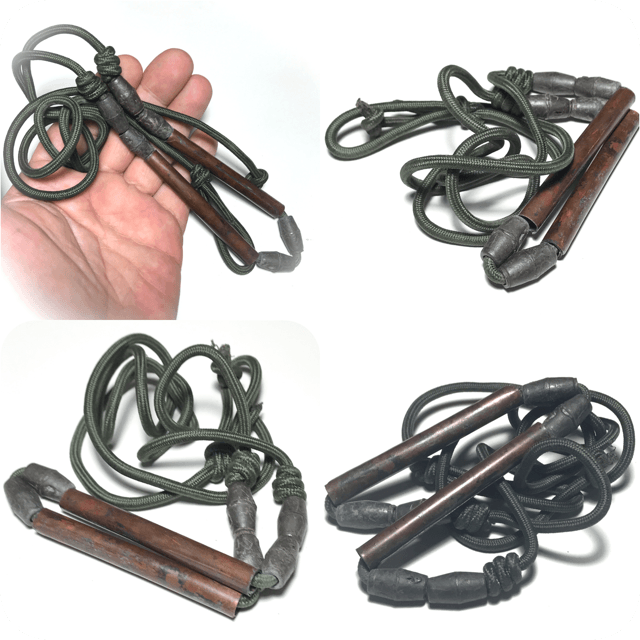
The Chueak Takrut Koo Ud Look Sakot Nuea Dtakua is an exceptionally rare, early-era occult talisman created and empowered by the Great Luang Por Koon Bparisutto of Wat Ban Rai in Nakhon Ratchasima province. Conceived as a complete personal protective compendium, this masterwork artifact combines two ancient alchemical Takrut Tone Yantra scrolls rolled from sacred copper foil (Nuea Tong Daeng) with four spellbound leaden seals (Look Sakot Nuea Dtakua), bound permanently onto an authentic green hand-woven cord belt (Chueak Kart Aew).

The Metaphysics of Look Sakot: Locking and Sealing Sacred Power

In the sacred lineages of Thai Theravada occultism, a Takrut Tone serves as a physical vessel holding the consecrated mental energies and Yantra spells inscribed by an attained master. However, without proper alchemical locking, the raw magical charge of an amulet can be diluted over decades or interfered with by conflicting external sorceries. To prevent any leakage of power, Luang Por Koon flanked and capped each copper scroll with heavy alchemical leaden beads known as Look Sakot.

The word Sakot (สะกด) literally signifies to hypnotize, restrain, seal, or command. In this compendium, the leaden Look Sakot beads perform a triple role: they perpetually amplify the internal magnetic resonance of the inscribed copper foil, form an impenetrable psychic shield that prevents rival sorcerers or lower astral spirits from siphoning the blessing, and establish a steady protective perimeter around the wearer’s physical body.

Luang Por Koon Twin Takrut Tone with Lead Look Sakot Seals - Macro View
Luang Por Koon Twin Takrut Tone with Lead Look Sakot Seals – Macro View

Luang Por Koon: The Miraculous Monk of Wat Ban Rai

Luang Por Koon Bparisutto is widely revered across Southeast Asia as an attained Arahant whose superhuman stamina and purity of Dhamma practice transformed the lives of millions. Famed for his spontaneous spiritual absorptions, Luang Por Koon could attain the highest levels of Samadhi meditation in seconds, empowering amulets with intense, instantaneous blessings that made his talismans legendarily responsive.

🎧 Listen as You Read

Press play to listen to the audio narration

YouTube player

Despite raising hundreds of millions of Baht throughout his monastic career, Luang Por Koon never retained personal wealth. He lived in utter simplicity, squatting in down-to-earth humility and donating every single cent toward building hospitals, schools, electricity grids, and water infrastructure for rural communities in Isan. Devotees wear his amulets not only for their legendary invincibility but as a sacred beacon of selfless moral conduct and boundless generosity.

Green Chueak Kart Aew Cord Belt Weave and Lead Binding Bead Detail

Comprehensive Four-Fold Blessings and Occult Powers

The Chueak Takrut Koo compendium is engineered to furnish balanced, comprehensive protection across all facets of daily life:

  • Kong Grapan Chadtri & Klaew Klaad: Invincibility against sharp weapons, projectiles, and ballistic threats, accompanied by total evasive shielding to escape lethal vehicular accidents.
  • Maha Lap & Maha Pokasap: Continuous influx of unexpected windfalls, business fortune, commercial prosperity, and accumulation of liquid assets.
  • Maha Amnaj & Serm Yos: Imposing authoritative aura that commands respect and obedience from subordinates, colleagues, and officials in positions of power.
  • Metta Mahaniyom & Gae Aa-than: Gentle charisma that softens harsh hearts and neutralizes malicious sorcery, psychic hostility, and negative household karma.
Sacred Copper Foil Yantra Scroll Inscription and Leaden End Cap

Bucha Method & Sacred Chanting Verses (Kata Aathan)

To cultivate a direct spiritual connection with Luang Por Koon and awaken the protective cord belt, devotees should place the talisman before a clean altar or hold it reverently between prayer hands and recite the following three-stage ritual liturgy:

1. Maha Namasakara (3 Times)

Namo Dtat-Sa Pakawa-Dto Araha-Dto Sam-Maa Sam-Put-Dtat-Sa

2. Trai Soranakom (The Triple Refuge – 3 Times)

Puttang Cheewidtang Yaawa Nipaanang Saranang Kajchaami
Tammang Cheewidtang Yaawa Nipaanang Saranang Kajchaami
Sangkang Cheewidtang Yaawa Nipaanang Saranang Kajchaami

3. Kata Aaraatanaa Pra Krueang (Invocation of the Amulet – 3 Times)

Puttang Aaraatanaanang Tammang Aaraatanaanang Sangkang Aaraatanaanang
Puttang Prasittimae Tammang Prasittimae Sangkang Prasittimae

Hand-Empowered Twin Takrut Belt Overview Display
Reverse Alignment and Corded Loop Fastener Detail
Full Length Perspective of Sacred Talisman Belt Compendium


Ajarn Spencer Littlewood for Thailand Amulets
All rights reserved.

See Pheung Gao Burut Pichit Jai Nang Wicha Maha Laluay - Kroo Ba Dech

The See Pheung Gao Burut Pichit Jai Nang Wicha Maha Laluay (Nine Lustful Heartbreaker Ghosts Necromantic Potion, to Win the Hearts of a Lady) represents an extraordinary and highly coveted masterwork of northern Lanna charnel-ground sorcery. Hand-crafted and consecrated in 2552 BE by Kroo Ba Dech Gidtiyano at the secluded woodland cemetery hermitage of Samnak Songk Pha Cha Ban Rattanaporn in Payao Province, this esoteric enchantment potion embodies the most uncompromising occult traditions of the ancient Khmer and Lanna grimoires.

Immersed directly within this rich, aromatic necromantic balm is a consecrated pure silver spell scroll insert: the Takrut Na Jao Orn (‘Tender-Hearted Enchanter’). This specialized yantra spell operates on the psychological and spiritual faculties of those encountered, dissolving stubbornness, subduing anger, and creating a spontaneous feeling of affection, warmth, and submission in the hearts of listeners and prospective romantic partners.

Esoteric Muan Sarn & Charnel Ground Consecration

The material basis of this potion consists of pure forest honey beeswax gathered from wild hives hanging from high branches where bees departed without being stung, boiled in a bronze cauldron over a three-stage wood fire fed exclusively with Mai Rak (Love Tree) and Mai Mayom (Popularity Tree) timbers. To this foundation, Kroo Ba Dech blended 108 kinds of rare forest herbs (Wan), sacred pollen, and concentrated Nam Man Prai Gao Burut (the spiritual essence of nine deceased heartbreaker males who were legendary during life for irresistible charisma and amorous fortune).

See Pheung Gao Burut Pichit Jai Nang Kroo Ba Dech
Perspective view of the consecrated potion container with authentic ritual sealing wax.

The Wicha Maha Laluay & Na Jao Orn

The formula of Wicha Maha Laluay is celebrated throughout Southeast Asia for its power of total mental melting (‘Laluay’ meaning to dissolve, liquefy, or soften). When applied or carried, the amulet diffuses hostile tensions, softens cold hearts, and induces listeners to agree enthusiastically with business propositions, artistic appeals, or romantic overtures. The addition of the Takrut Na Jao Orn ensures that even the most formidable or proud individuals feel an irresistible inclination to accommodate the wearer’s desires.

Takrut Na Jao Orn immersed in See Pheung
Macro view revealing the hand-inscribed Takrut Na Jao Orn submerged in sacred herbal wax.

🎧 Listen as You Read

Press play to listen to the audio narration

YouTube player

Methods of Application & Bucha Protocol

Devotees may engage the power of this sacred potion through two distinct classical modalities:

1. Active Dabbing (Jem): Using the ring finger (for romance and seduction) or index finger (for commanding authority and status), lightly dab a minuscule, imperceptible trace of the potion onto the eyebrows, forehead, or lips while reciting the Kata Bucha. This creates an immediate fragrant auric field of Metta Mahaniyom.

2. Passive Carrying (Krueang Rang): Devotees who prefer not to deplete the wax may carry the closed pot intact in their pocket, purse, or cash register. The resident Prai spirits and sacred Yantra emit continuous blessings of Maha Pokasap (wealth attraction) and customer enchantment.

See Pheung Gao Burut side profile
Side profile of the sacred necromantic potion container.

Kata Bucha See Pheung Gao Burut

Always chant the Namo Tassa preliminary homage three times first:

Namo Tassa Bhagavato Arahato Samma Sambuddhassa

Then recite the special heart-softener incantation of Kroo Ba Dech:

Om Maha Laluay, Ra-Luay Maha Ra-Luay, Jit-Tang Man-Soo, Na Metta Mo Garuna, Put Pra-Nee, Taa Yin-Dee, Ya En-Doo, Sappa Snaeha Jamma Sam-Saa, Sawaha Sawaha.

Sacred herbal beeswax texture macro
Detailed macro study of the pure herbal wax matrix and sacred oils.
Container base view
Base stamping and ritual verification markings.
Original temple packaging
Original edition packaging from Samnak Songk Pha Cha Ban Rattanaporn.

Sacred Amulet Specifications

Specification Attribute Detail / Historical Provenance
Amulet Title See Pheung Gao Burut Pichit Jai Nang Wicha Maha Laluay
Consecrating Master Kroo Ba Dech Gidtiyano (now practicing as Ruesi Hermit)
Temple / Hermitage Samnak Songk Pha Cha Ban Rattanaporn, Payao Province
Year of Consecration 2552 BE (Edition released 2560 BE)
Primary Muan Sarn Wild forest beeswax, 108 Wan herbs, Nam Man Prai Gao Burut, immersed Silver Takrut Na Jao Orn
Magical Properties Maha Sanaeh (attraction), Maha Laluay (heart-softening), Metta Mahaniyom (mercy charm), Maha Pokasap (wealth accumulation)
SKU Reference 05039


Ajarn Spencer Littlewood for ThailandAmulet.net
All rights reserved.

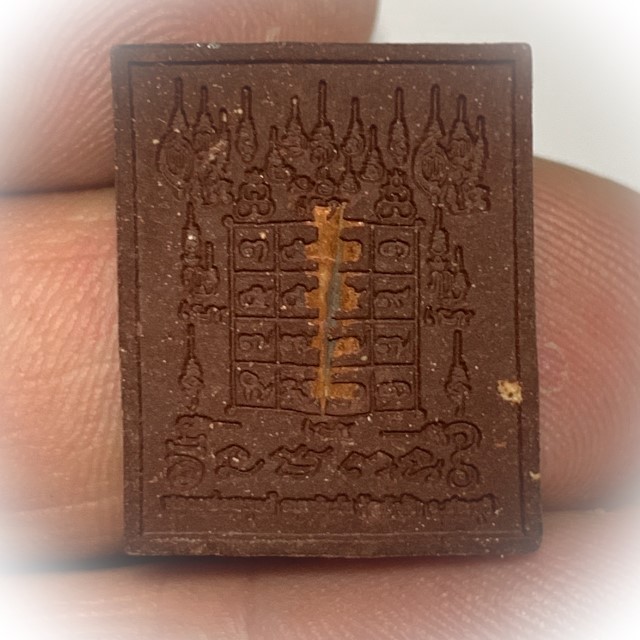
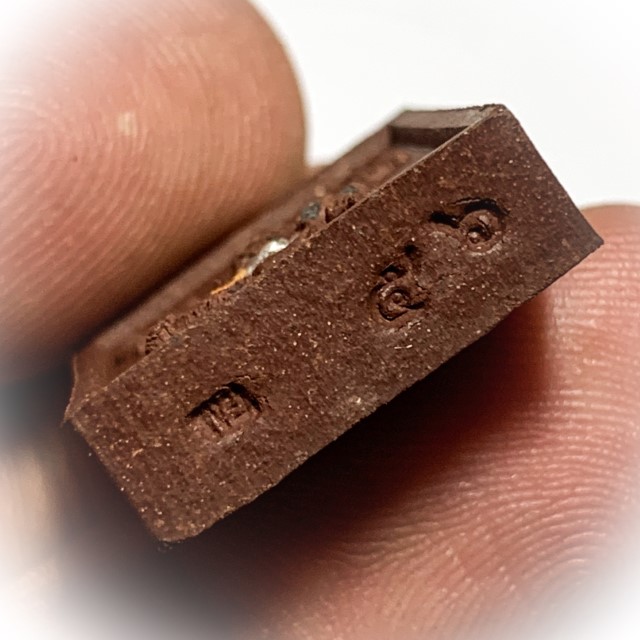
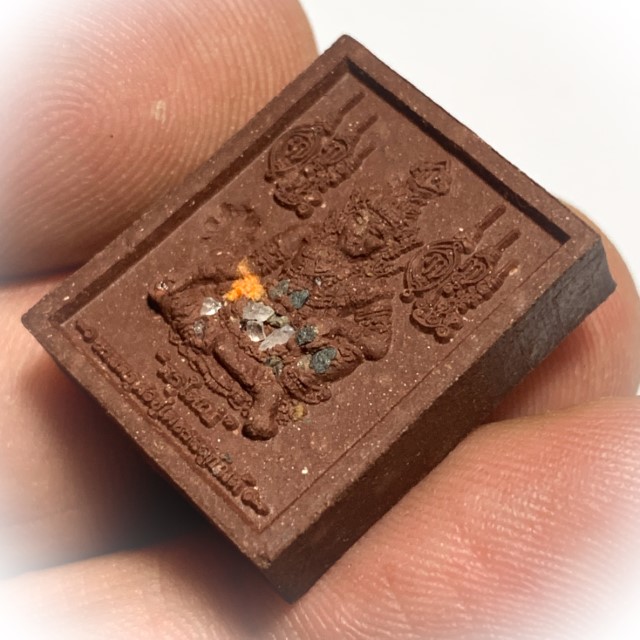
Pra Ruesi Chiwok Gomartapaj Buddha’s Physician Healing Amulet, Guru of all Healers and Physicians, imbued with the power of ‘Pongan Roke Pai Khai Jeb’ (Prevent Illnesses and Heal Existing Ones), with Ploi Sek Blessed Gemstone Insert, from Luang Por Glom, of Wat Nong Bua.

Jivaka Kamaurabacca or Jivaka Kamarabhrtya (Kamaurabacca meaning “fed by a prince” and Kamarabhrtya alluding to expertise is medical care of infants/children) was born to an exceptionally beautiful and most sought after courtesan who upon knowing of her pregnancy discarded the infant out of fear that her status as a very high priced maiden should be affected. It was with Jivaka’s immensely stored up good fortune through his rounds of Samsara that he would be found near by a one Prince Abhaya who was a son of King Bimbisara, and because it was seemingly amazing that he should be found alive, he was named “Jivaka” meaning alive and moved by compassion was raised in royal care.


Once Jivaka began to reach the age of reason, he started to think for himself of what he wanted his craft to be. Stemming from his gift of Loving Kindness and Compassion, he decided with his higher intellect that it would be beneficial for him and future rebirths (should there be any) that he should take up a practice that helped rather than harmed, and in doing so denied the job of raising animals (which may cause harm i.e. slaughter) and instead took up studying Ayurvedic medicine for the benefit of others, and so continuing his path of practicing Metta Mahaniyom and as reward Maha Sanaeh attraction.

Jivaka became a very well renowned physician who treated many important people including kings and other royalty, but most importantly Jivaka was sought out through the Buddha Sakyamuni’s Divine Eye to be his personal physician. Jivaka realizing the benefit of giving alms and venerating the Triple Gem, had a monastery built on his grounds where Jivaka himself attained to the first stage of Arahantship (Sotapanna). Sometime later the Great King Ajatasattu was lead to the Buddha by Jivaka and through right understanding and effort became a devotee of the Buddha Dhamma and was responsible for establishing the first Buddhist Council after The Buddha’s Maha Parinibanna.

Around 2 centuries after the Buddha’s death (India’s First Buddhist King) King Ashoka sent emissaries to other countries to disseminate the Buddha Dhamma and of those emissaries was one Sohn Uttar Sthavira who was sent to Thailand in 228 BCE which began to establish itself and did so some 800 years later and then officially as the National Religion of Thailand in the 13th century. It is believed in Thailand that Buddhist monks brought medical knowledge from the lineage of Jivaka and as such he is revered as the Father of Thai Medicine.

Ruesi Chiwok amulet by Luang Por Glom of Wat Nong Bua

The Jivaka Rishi amulet venerates the most auspicious physician in Buddhist and especially Thai Theravada Buddhist history, for its immense power in Metta Mahiniyom and Maha Sanaeh as well as an object of Samadhi concentration and wellness in the Citta mind/heart connection that urges the possessor to exude outwards excellence and control in the Brahma Viharas as well as commanding the same fortune toward the owner.


The amulet itself is ovular in shape and beige in color. It has a generous mixture of highly auspicious herbal compounds specifically for Metta Mahainiyom and Maha Sanaeh. The Rishi Jivaka is represented on the front face seated on an elevated platform seated in the Bhumispara Mudra of subduing Mara (ignorance) calling witness to earth (elements of Ayurvedic Natural Medicines), steadfastness (imperturbability).

Healing Yantra on rear face of Ruesi Chiwok amulet by Luang Por Glom of Wat Nong Bua

Below him, an enchanted gem is inserted into the Muan Sarn sacred Pong powders. The reverse of the amulet features a floral Yant Duang, Karma-Improving Yantra of protection, wellness and healing, drawing power from the Ayurvedic Rishi Masters from all ages, with Ancient Sacred Khom Agkhara, Invoking Auspicious Buddhist Incantations.

YouTube player

Luang Por Glom of Wat Nong Bua

Authors Rights:

Ajarn Spencer Littlewood  for thailandamulet.net
All rights reserved.

see-pheung

Special Combination Set composed of See Pheung Sariga Lin Tong Metta Balm with twin Takrut Inserts, and a portable Takrut Sariga amulet bound to Daay Daeng Akom red spellbound cords, from the 2560 BE traimas edition, by Pra Ajarn Gorp Chai of Wat Mae Ya. The Wicha Sariga is an ancient spell for Enchanting Speech and the Power of Attraction, Love and Mercy Charm. The Takrut can be worn and prayed to in combination with the See Pheun when performing Bucha. The See Pheung can be prayed to on a receptacle or can be carried to use for smearing.

The Nok Sariga (or, ‘Salika’) is a Golden Tongued Heavenly Bird which is attributed with immense Metta Mahaniyom and Maha Sanaeh qualities, and is along with the Hongsa, one of the Best Devas to seek assistance in ‘Jerajaa’ Magic (convincing speech). Jerajaa means ‘Discussion’. The Golden Tongued Sariga bird enchants and charms the listeners of he who possesses the Wicha, bringing a hypnotic and charming effect, to influence and convince, making people see things your way. Good Business is to be expected with the Wicha Sariga.

Instructions for using See Pheung, Nam Man prai and other Metta Oils

The Sariga (sometimes also called ‘Nok Garawaek’) bird is a Wicha empowered with Maha Sanaeh, for Seductive Charm, Metta Maha Niyom Mercy Charm, and Maha Pokasap for Prosperity. Very popular with shopkeepers, and traveling salespersons. Amulets which use the Wicha Sariga is Unisex and can be worn by both men or ladies to use equally successfully for seductive influence, mercy charm, good business, and increased popularity.

Below; Images of the Muan sarn Ingredients of the See Pheung during its creation process

The Nok Garawaek, and the Nok Sariga, are heavenly birds which are more or less synonymous with each other, for which reason, you can use any of the Kata Incantations which are used for the Nok Sariga Celestial Magpie. Magpies are known for their tendency to pick up shiny glittering objects, such as jewellery, and whisk them away to their nests, ad hoard them. This is no difference in this matter when it comes to the tendencies of the Celestial Magpie, who is indeed just as attracted to treasures as any Earthly Magpie. But in its Highest Form of Understanding, the ‘heavenly treasures’ it brings (Wealth, Health, Love, Long Life, Happiness, Auspicious Blessings, and the Path to heaven), are the true Blessings of the Heavenly Magpie.

Pra Ajarn Gorp Chai is the continuing lineage practitioner of the Wicha of Luang Phu Kroo Ba Ban (Wat Mae Ya), and is a Lanna Monk who has continued the Wicha of Kroo Ba Ban and of the great Lanna Master Kroo Ba Wang, through the Lineage of his Kroo Ba Ajarn in the most diligent fashion, as well as increasing the spells within the repository of grimoires at Wat Mae Ya. Nor did the Ancient Masters have to accept to bless amulets which were mass made, and donated for blessing, rather, used their own precious time and efforts and Meditations to create and empower each amulet one after the other, passing through the hands and incantations of the Master one by one.

Pra Ajarn Gorp Chai refuses to allow himself to be tempted to invent any modernisations, and maintains the integrity of the Northern methods of Lanna Sorcery. These days, it is truly difficult to find a Master who still uses this old-school method of personal applied Wicha and without assistance from third parties. We can but recommend the amulets of Pra Ajarn Gorp Chai most highly for this reason. Pra Ajarn Gorp Chai is a lineage master of Wat Mae Ya, following in the tradition of his Kroo Ba Ajarn, Luang Phu Thin (Current Abbot) and the Great Luang Phu Kroo Ba Ban. Wat Mae Ya is the temple of the Late and Great Arya Sangha (said by his devotees to have attained. Pra Ajarn Gorp Chai is continuing the Wicha and Traditional Amulet making of the Great Kroo Ba Ajarn; Luang Phu Kroo Ba Ban, the ex Abbot of Wat Mae Ya temple.

He has expanded the magical repository of knowledge of his Lineage with his constant seeking, collecting of ancient Grimoires of Sorcery of the Thai Yai and other Lanna Folk. He is extremely proficient in the Wicha of Lanna Amulet making and in addition, a Master of Kata Akom and Agkhara Lanna Magical Script, and Sak Yant Thai Temple Tattoos. He adheres to the methods of amulet creation using his own hand and individual inscription of each item, with no mass production methods allowed, such as stamped Yantra foils.

He inscribes every Takrut and Yant design himself with the full series of Ritual Incantations performed. The See Pheung potion was made by his own hand, and the full formula of Invocations for the Kata Akarn Sam Sip Sorng were performed for reanimation of the Sariga. This is an essential part of Empowerment with all Humanoid and Animal form amulets which are imbued with a resident spirit. The Invocation Summoning, Awakening and Turning of the Four Elements was performed to Reanimate Living Sariga Magic within the potion, according to the Ancient Grimoires and Magical Formulas of the Wicha.

We pray that Pra Ajarn Gorp Chai continues to present us with these highly limited editions of sacred Northern Lanna Wicha Amulets, which he inscribes and empowers and constructs all by himself without any machinery or mass made methods of production, as in olden days, as the Lanna Masters would make the amulets with their own hand, and not with the assistance of factory made components or modern machinery.

the amulets of Pra Ajarn Gorp Chai are amongst the most highly recommendable and authentically empowered with the inimitable personal touch of the master, which is becoming ever harder to find in modern times

Kata Nok Garawaek

Gaara Wigo Gaara Gaa Nuu

Kata Sariga Lin Tong

Puttaa Anaenaa Maliyaa Susangkayaemi Puttaa Irimaliyaa Susangkayaemi Puttaa Aribpayo Kaema Kun Na Bpagkhae Samae Mami Unaalomaa Bpanna Wichaayadtae

Kata Sariga Bpon Yuea

Badsabinhlaa Haedtaro Mahaedtaro Himma Anlaenaegan Chayorgan Dto Bo Guu Yor Maa Cheu Wagan Gadtor Waa Guu Gadtor See Dee Nguu Huu Anlaerohuu

Kata Bucha Takrut Sariga Jab Bpaag Loeng (1)

Aehi Gaasimaadti Gaama Raaka Lopa Bpihagaa

Kata Bucha Sariga Jab Bpaag Loeng (2)

Wanna Wannaa Saligaayo Puttang Siro Waa Ha Ma Ma

Nightly Kata (chant each night)

Om Bplug Bplug Ruk Laew Yaa Norn Yaa Chaa Sarigaa Jao Euy Yaa Cheuy Leuy Raa Kroo Sang Jao Maa Ha Raksaa Kum Krong Bpok Bpong Kaehaa – Phuu Dai Mii Jidt Raay Khor Hai Glab Jai Maedt-Dtaa – Roke Pay Naanaa Khor Yaa Dai Pob Paan Laap Lae Yot Khor Hai Bpraakot Kheun Tang Bpaed Tidt, Midtr Khor Hai Gerd Kheun Tang Bpaed Daan Phuu Dai Haen Hnaa Guu Laew Khor Hai Man Rak – Phuu Dai Tak Guu Laew Khor Hai Man Hlong – Om Mahaa Sarigaa Greung Garanang Dtaawang Dtaawaa Ma ma Aehi Swaaha.

Kata Bucha Sariga Koo Maha Sanaeh (Twin Sariga Love Birds)

Aehi Saarigaa Wandtaanang Maedtamputtasae Sinaeharadthang Saarigaa Laapo Pawandtumae Aehi Hying Chaay

Use for Calling Customers, Selling Wares, Convincing Speech, Flirting, and Mercy Charm

Ajarn Spencer Littlewood for thailandamulet.net
All rights reserved.

In Pae Gaama Suudt Saep Rak Saep Som Ongk Kroo Animist Charm Goat Incubus - Chanuan + Chin Aathan Hand Inscriptions - Ajarn Gao

Ongk Kroo Masterpiece Version of the In Pae Gaama Suudt Khmer Yab-Yum Kama Sutra Amulet from Ajarn Gao in powerful extra pure concentrated Prai Maha Sanaeh powders with sorcerous substance inserts. This amulet is one of a very few made by this Lay Master, in extreme limited edition, using only the most highly concentrated Muan Sarn Sacred Powders gathered from the forest cemeteries by his Kroo Ba Ajarn.

The Wicha Pae Gaama Suudt and Wicha Pae Tong Kam are two Ancient and Extremely Rarely Mastered Wicha of the Khmer Necromantic Maha Sanaeh Sorcery Grimoires of the Kroo Ba Ajarn of Ajarn Gao’s Lineage, inherited from Khmer Forest Lersi Masters in Kampuchea, and his Kroo Ba Ajarn of the Isan forest regions. The Wicha is so rare that most people may never have seen this particular form of Animist Imagery of the Golden Kama Sutra Goat.

Created in the image of the Pae Gaama Suudt ‘Horny Lucky Goat’ Animist Deva in Yab-Yum Sexual Tantric Union with a Beautiful Nymph, representing the communion of Metta Maha Niyom and Maha Sanaeh, to bering Erotic Attraction and Mercy Charm within one symbiotic Animist Entity. Apart from Maha Sanaeh seductive Influence, the Pae Gaama Suudt also provides Lucky Fortunes, as is ubiquitous with all Animist spells which use the goat in their imagery.

Made from the finest concentrated Prai Sanaeh Necromantic and herbal Powders, with Sorcerous Chanuan Muan Sarn, and Chin Aathan Necromantic Substance inserted into the rear face of the amulet. The rear face has been inscribed with Sacred Na and Khom Agkhara Spells and Incantations, and sprayed with Nam Man Prai Oil to imbue Immense Maha Sanaeh Power within the Muan Sarn Sacred Powders of the amulet.

The amulets are empowered with the invocations of the Wicha Pae Tong Kam Golden Goat Spell, and the Wicha In Koo Maha Sanaeh for Symbiotic Yab-Yum Tantra Magick, to attract, entice and enchant all who wander within the magickal aura of the In Pae Gaama Suudt. The Sacred Prai Powders include Pong Saneh Hua Jai Sadtri (Heart Of A Lady Enchantment Powders), Pong Hua Jai Burut, Pong Na Bpathamang Lokee, and Pong Wan Maha Sanaeh, all 5 kinds of Pong Wan Sanaeh Jantr, various kinds of Pong Wan Dork Tong, Pong Wan Maha Sanaeh 108.

Ajarn Gao is one of the New Era of Lay Masters of the North East of Thailand along the Khmer Border, who has amassed a number of the rarest Khmer and Lanna Sorcery spells of the Maha Sanaeh Metta Maha Niyom, Siang Choke, Maha Lap Maha Pokasap type.

These Prai powders were mixed with Necromantic ingredients of the Dark Arts variety, including ‘Nam Ga’ of a mating Goat, Nam Man Prai Chang Pasom Khlong (mating elephant in heat oil), and Pong Wan Paya Tae Kruam, a rare and powerful Maha Sanaeh Enchanted herb used in Khmer Kama Sutra Tantric Necromancy.

The Front face of the amulet features the Pae Gaama Suudt consummation of the sexual act with a maiden invoking fertile fruits. This can mean to Have One’s way with Others, Seduce and Enchant, Increase Prosperity in Business, Gambling. Luck in Love and Money.

A very recommendable occult charm, for Mercy Charm and Seduction, the In Pae Gaama Suudt is a powerful Mery Charm and Kama Sutra Sex Magick Animist amulet of the “IN KOO” type. The Wicha is most certainly derived from ancient Vedic Kama Sutra sciences, which can be seen from the various postures found in the many different designs of In Koo Deities found within the Pantheon of the Dtamra Saiyasart of all regional forms of Sorcery.

A very usable amulet for for Singles to attract a Lover, and then Bind them with the Love Spell of the Pae Gaama Suudt. If the amulet is worn as a love charm, or carried on ones person as an attraction agent, then it will cause everyone the wearer meets to feel friendly and compassionate towards them.

The amulet endows the wearer with the power over the minds of those of the other Sex (or same Sex if that is the Inclination). For those who already have a Lover, but who seems to be a little distanced and not too close, the In Pae Gaama Suudt is the best kind of charm to improve and increase the persons love towards you, and increase intimacy in the bedroom. For those who practice Tantric Sex Magick, this amulet can serve to enhance and intensify the ritual and the inner experience of Kundalini when performing Tantra.

For use as a Mercy Charm for Business, simply wear the amulet to attract customers and reel them in with the immense Prai Maha Sanaeh power of this powerful piece of Khmer Necromantic Sorcery, or place it in the cash till. You can also place it inside a box in the same method and manner as performed with other types of In Koo amulets; For Choke Lap wealth increase, place the In Koo inside a money bowl or savings box. Before you put or remove any money from the box, you must tap or knock on the side of the container with the same hand you shall be using to remove or place money in the box with.

The Pae Gaama Suudt Magick should provide an immense source of increase in your power of attraction, to entice and seduce partners through Maha Jang-Ngang (stun) and Maha Hlong (Enchantment). The Powerful Kama Sutra Invocations should incite passionate affairs and increase sexual arousal with those you entice and enchant.

Chant the Kata In Pae Gaama Suudt 7 times, before putting your hand inside the container. It is said that if you do this regularly, that money will never cease to flow. Those who perform this well will find time to sit and meditate and chant the Kata whilst tapping on the container. About 5 minutes each time is enough.

Kata Pae Gaama Suudt

Or Ae Ae Ae Dor Dā Di Dī Hī Mā Hā Dor Or Ae

Chant 7 Times before using/wearing.

Ajarn Spencer Littlewood for thailandamulet.net
All rights reserved.

Amulets of Luang Por Sakorn Wat Nong Grub

The Legend of the Sacred Amulets and Talismans of Luang Por Sakorn, Wat Nong Grub

Luang Por Sakorn Manunyo, was a highly renowned master monk (Kroo Ba Ajarn) of Wat Nong Grub in Rayong Province. In the realm of sacred objects and talismans, he was widely recognized as a practitioner of exceptionally potent magical arts. His deep and formidable mystical knowledge was inherited from his teacher, Luang Por Pheung of Wat Nong Bua, and further refined through advanced study under the guidance of Luang Pu Tim of Wat Laharn Rai.
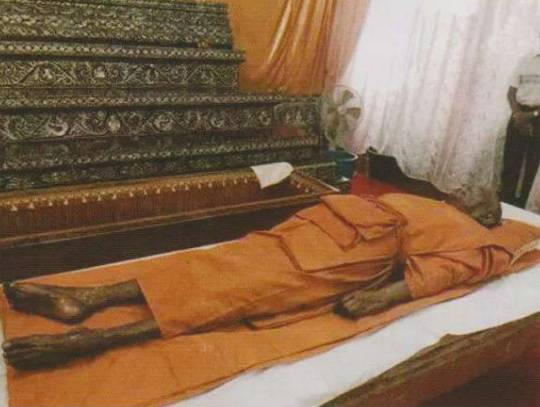
LP Sakorns mummy
It was under Luang Pu Tim’s careful mentorship that Luang Por Sakorn was advised to pursue additional study with Luang Pu Hin at Wat Nong Sanom until his skills reached mastery.

The sacred objects crafted and consecrated by Luang Por Sakorn have long been cherished by collectors and devoted worshippers alike. These objects are believed to carry miraculous powers and an enduring sacredness a belief that is supported by many years of stories and personal experiences shared by countless devotees.
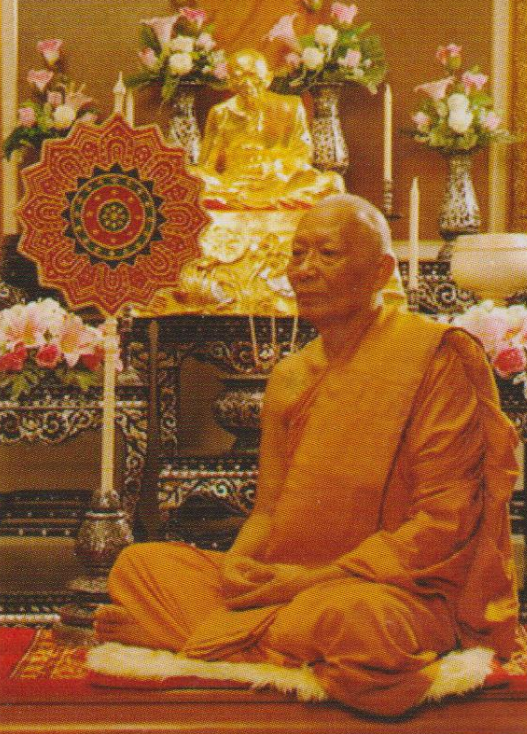
Below is a detailed explanation of the major sacred amulets and talismans attributed to Luang Por Sakorn, complete with the legends surrounding each object, their dates of creation, and the Physical details and marks (known as “tamni” and “Pim”) that help to identify each type:

1. Pra Khun Phaen (Pong Prai Kumarn) – Nong Bua Klee Model

Year of Creation: 2543–2544 BE

This amulet is considered among the most famous sacred objects of Luang Por Sakorn. According to legend, Luang Por Sakorn performed a very powerful consecration ritual, employing age-old incantations and spells of great intensity. The ritual used pure “prai kumarn” powder, which was mixed with an herbal essence derived from the “Dork Tong” (Golden Flower herb) and other special sacred substances. The back side of the amulet features an image of Mae Nang Bua Klee, a female deity who symbolizes irresistible charm and an immense magnetism. Devotees believe that wearing or carrying this amulet endows the possessor with extraordinary powers in the realms of universal benevolence (metta maha niyom), fortune in wealth, and protection from various dangers and misfortunes.

Marks and Impressions:

• Large Print: Notable for its prominent, sharp, and detailed facial features, especially the distinctive, protruding nose.

• Small Print: Similar in design to the large version but rendered in a smaller size for more convenient carrying.

• Herbal Composition A: A formulation that mixes the “Dork Fai Tong” with pure Prai Kumarn powder. This version is both highly popular and considered the rarest in the collection.

• Herbal Composition B: A blend of Prai Kumarn powder with “bai laan” powder, which exhibits a darker hue and is known for its extraordinary potency.
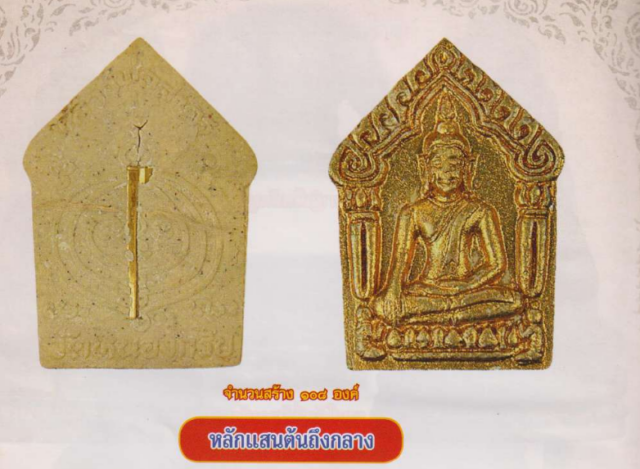
Khun Phaen Run Raek first edition amulet

Khun Phaen Run Raek first edition amulet

2. Pra Khun Phaen (Pong Prai Kumarn) – Sap Perm (Wealth Increasing) Model

Year of Creation: 2548 BE

This version of the Pra Khun Phaen was specially consecrated by Luang Por Sakorn with the purpose of blessing its devotees with an increase in material wealth and fortune. The ritual for this model involved a secret mixture of special powders that Luang Por Sakorn had accumulated over many years, including powder derived from very old sacred images some more than a century in age. The consecration process extended over an arduous period of nine days and nine nights, carried out by Luang Por Sakorn in the company of several famous monk-teachers.

Marks and Impressions:

• Large Print: Characterized by a striking, intense face that expresses a sense of formidable determination.

• Medium Print: Exhibits clear, well-proportioned details that highlight its aesthetic appeal.

• Small Print: A compact version that is easy to carry, ensuring that the spiritual benefits are accessible on the go.

• Herbal Mixture: A version prepared by combining Prai Kumarn powder with bai laan powder, resulting in a darker color that signifies high magical potency.
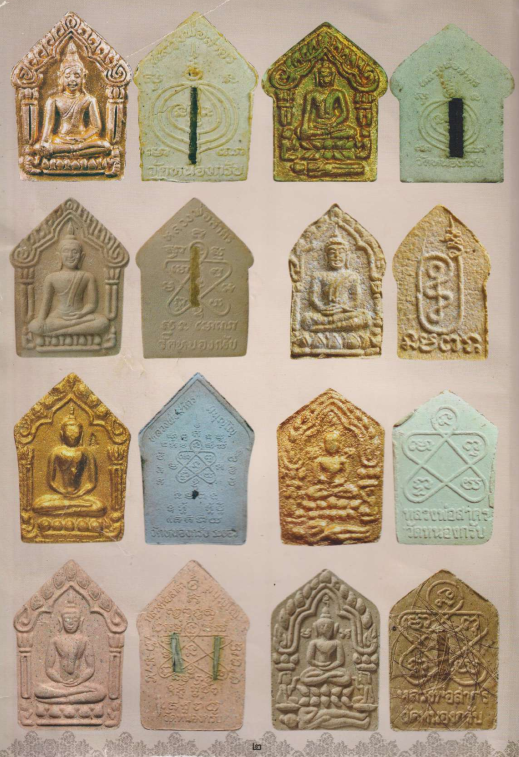
3. Luang Por Sakorn’s Sacred Coin – Sao Ha (Saturday-5) Model

Year of Creation: 2536 BE

This sacred coin was created on a Saturday that coincided with the lunar Phase known as “Ram 5 Kham,” believed to be an auspicious moment in ancient times. Luang Por Sakorn performed an intense consecration using ancient incantations passed down from Luang Pu Tim of Wat Laharn Rai. The coin is shrouded in legend and is reputed to bestow extraordinary protection; many devotees have shared miraculous accounts of narrowly escaping severe accidents and mishaps after carrying or venerating this coin.

Marks and Impressions:

• Golden Composition: There are only nine coins made with this material, making them extremely rare and valuable.

• Silver Composition: Noted for its sharp and intricate line patterns that underscore its divine craftsmanship.

• Metallic Composition (Nwona Lokhad): This version is popular among serious collectors due to its distinctive finish.

• Copper Composition: Although the most abundant among the variants, these coins have become rarer today because devotees tend to favor the other forms.

4. Takrut Tone (Sacred Amulet – Inscribed Dial) of Luang Por Sakorn

Year of Creation: This type has been produced in various models starting from 2530 BE onwards.

The Takrut Tone amulets are renowned for their association with national protection, invincibility, and immense charm. Luang Por Sakorn himself would inscribe these amulets with ancient sacred characters, using the mystical techniques he had learned from both Luang Pu Tim and Luang Pu Hin. There is a popular legend that soldiers and police officers who carried these inscriptions while on duty in dangerous areas were miraculously saved from violent confrontations and attempted assassinations.
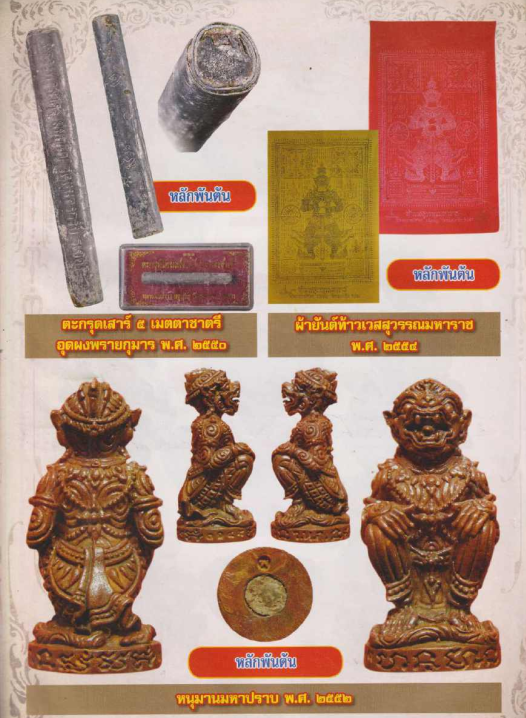
Characteristics and Varieties:

• Takrut Tone with Silver: Approximately 3–5 centimeters in length, fully inscribed with sacred characters.

• Takrut Tone with Copper: Known for its high potency and favored for its strong protective qualities.

• Takrut Sam Kasat (Three Kings’ Takrut): This exceptionally rare model is an alloy blending silver, gold, and copper a combination that further amplifies its special properties.
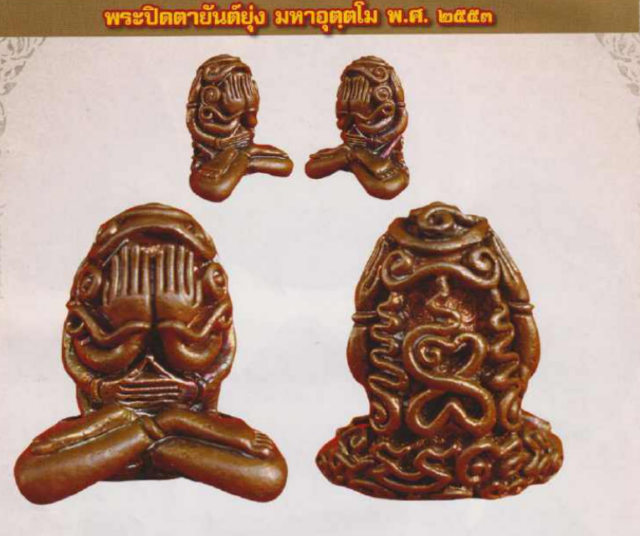
5. Pra Pidta (Eye-Covering Amulet) – Maha Lap (Great Wealth) Model

Year of Creation: 2540 BE

The legend of this Pra Pidta tells that Luang Por Sakorn combined the techniques of creating protective eye-covering amulets that he learned from Luang Pu Tim, with additional knowledge obtained from Luang Pu Hin. As a result, this amulet model acquired the unique power to safeguard its wearer and enhance their luck. Luang Por Sakorn used a sacred, ancient powder blended with a powder obtained from centuries-old sacred images and consecrated it over the course of seven days and seven nights. Many devotees have testified that those who venerate this amulet often experience unexpected successes in their work and receive abundant blessings.
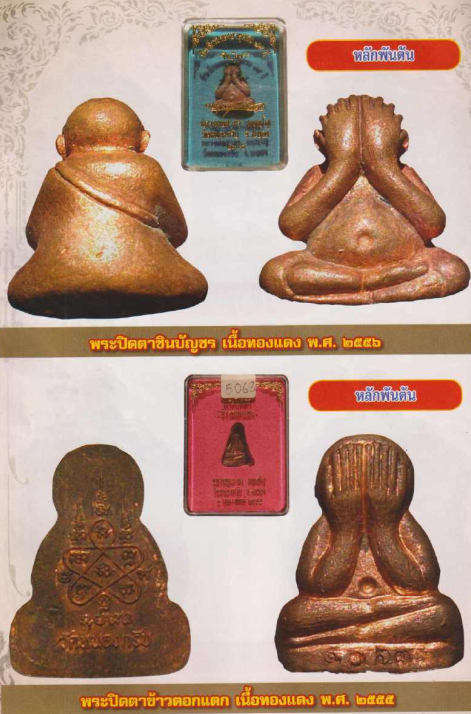
Marks and Impressions:

• Large Print: Features a sharply defined, intense facial expression with the hand pose clearly indicating the “hama yat” (gesture to ward off misfortune).

• Medium Print: Offers well-balanced proportions and is highly popular among collectors.

• Small Print: Designed to be compact and portable, making it easy to carry everywhere.

• Herbal Composition A: A blend of bai laan powder with the ancient sacred powder, recognizable by its deeper hue and high potency.

• Herbal Composition B: A version with a lighter color, noted for its exceptional beauty and unique energy.
6. The First Model of Luang Por Sakorn’s Lion Amulet

Year of Creation: 2535 BE

The very first lion model crafted by Luang Por Sakorn is considered one of the rarest and most valuable sacred objects to date. According to legend, Luang Por Sakorn once received a divine vision in which he saw a golden lion appear in his dream. Inspired by this vision, he created the lion amulet using a mixture of several sacred substances, including ancient powders reputed to have been passed down from legendary spiritual ancestors. The consecration took five days and five nights, during which Luang Por Sakorn and several esteemed monk-teachers joined in the ritual. The resulting amulet is celebrated for its embodiment of spiritual power, courage, and protective force.

Marks and Impressions:

• Large Print: Notable for its majestic appearance and a presence that exudes power and dynamism.

• Medium Print: Distinguished by its balanced proportions and finely detailed craftsmanship.

• Small Print: A more portable version, making it convenient for devotees to carry this symbol of strength and protection.

• Nine Sacred metals Metallic Composition (Nava Loha): Highly prized for its beauty and intrinsic value.

• Copper Composition: Distinguished by its robust mystical energy and favored by many devotees.
7. The Tiger Amulet – Champion in Battle Model

Year of Creation: 2545 BE

The tiger model, known as “Chana Seuk” (Champion in Battle), was created during a time when parts of Thailand faced social unrest and instability. It is said that Luang Por Sakorn deliberately created this amulet to be bestowed upon military personnel and police officers operating in dangerous areas. The ritual involved a special blend of sacred powders that had been accumulated over many years, including soil from ancient battlefields. The consecration was performed using particularly potent and age-old chants. Many devotees claim that those who have carried this tiger amulet have found not only Physical protection but also the courage to overcome adversaries, achieving victory over their enemies and evading all sorts of harm.

Marks and Impressions:

• Large Print: Features an aggressive, roaring posture that conveys both strength and determination.

• Medium Print: Shows detailed, well-proportioned imagery favored by collectors.

• Small Print: A compact and easily transportable version ideal for those who require constant protection.

• Metallic Composition (Nwona Lokhad): Admired for its aesthetic beauty and revered value.

• Copper Composition: Noted for its high mystical potency and cherished by devotees.

8. Luang Por Sakorn’s Sacred Bell – Charoen Porn (Prosperity) Model

Year of Creation: 2550 BE

Created during the later years of Luang Por Sakorn’s life, the sacred bell model named Charoen Ponr was said to embody all the accumulated spiritual knowledge and experiences the master had gathered over his lifetime. The creation of this sacred bell took as long as nine days and nine nights. It was performed by Luang Por Sakorn himself, accompanied by more than 108 renowned monk-teachers, each contributing to the ritual by mixing over 108 special types of sacred powders. Included among these ingredients was a powder derived from a Buddhist statue over 500 years old. This amulet is particularly celebrated for its ability to bestow universal benevolence, bring fortune and prosperity, and usher in spiritual success, as testified by many devotees.

Marks and Impressions:

• Gold Composition: Only nine pieces exist in this category, adding to its rarity and sacred value.

• Silver Composition: Recognized for its attractive and refined lustre.

• Metallic Composition (Nwona Lokhad): Especially popular among collectors due to its exquisite appearance.

• Copper Composition: Noted for its powerful spiritual energy and highly esteemed among the faithful.
9. Sacred Talisman Cloth (Paa Yant) – Pha Yant Maha Sethee (Great Wealth) Model

Year of Creation: 2547 BE

The cloth talisman known as the Maha Sethee model, was developed during a period when Thailand was recovering from an economic crisis. In response, Luang Por Sakorn created this talisman to help bring wealth and prosperity to its devotees. The cloth was inscribed by Luang Por Sakorn himself, using a special ink prepared by mixing enchanted oil with “Maha Sanéh” oil the very oil he formulated from his deep understanding of sacred alchemy. The consecration process lasted for seven days and seven nights during a full-moon period. Countless devotees have claimed that worshiping this cloth talisman has led to remarkable success in their business ventures; some even report winning major government lottery prizes.

Characteristics and Varieties:

• Red Talisman Cloth: Intended for those seeking universal benevolence and deep compassion from others.

• Yellow Talisman Cloth: Designed to attract wealth and prosperity to the wearer.

• White Talisman Cloth: Associated with happiness, success, and overall well-being.

• Black Talisman Cloth: Reserved for those seeking invincible protection and the power to ward off misfortunes over a lifetime.

10. Paya Tao Ruean (The Tortoise Amulet) – Ruay Tan Jai (Instant Wealth) Model

Year of Creation: 2549 BE

The Instant Wealth model of the Tortoise Amulet was created following a divine vision experienced by Luang Por Sakorn. In this vision, he saw a golden tortoise leading an abundance of treasures and wealth directly to him. Motivated by this compelling vision, he set out to create an amulet that would rapidly bestow material prosperity upon its devotees. Its creation required the blending of a special mixture of powders that Luang Por Sakorn had gathered and stored over many years, including powders from ancient sacred relics and venerable statues.

The consecration ritual lasted for five days and five nights, performed by Luang Por Sakorn together with a team of well-known monk-teachers. It is said that many businessmen and traders who have venerated this tortoise amulet later experienced unexpected and substantial windfalls the kind of fortune that transformed their lives overnight.

Marks and Impressions:

• Large Print: Distinguished by its beautifully rendered details and an overall aesthetically pleasing design.

• Medium Print: Boasts finely proportioned and popular imagery among collectors.

• Small Print: A miniature version crafted for ease of carrying while retaining all the intricate details.

• Metallic Composition: Valued for its graceful appearance and revered as a symbol of spiritual and material wealth.

• Copper Composition: Known for its high mystical potency and widely popular among devotees.

How to Authenticate Luang Por Sakorn’s Sacred Amulets

To determine whether a sacred object attributed to Luang Por Sakorn is genuine, there are several critical factors that must be considered:

1. Material (Saua Watthu):

Genuine sacred objects by Luang Por Sakorn exhibit a unique material composition. For example, in the case of the Prai Kumarn powder, the texture is extremely fine and invariably mixed with herbs in a manner that can be observed by experienced devotees.

2. Calligraphy or Handwriting (Lai Mue):

In amulets such as the talismans or cloth inscriptions, the handwriting of Luang Por Sakorn is distinct and unique. Devotees who have seen his work can often recognize his style, ensuring that the object is indeed authentic.

3. Detailing (Rai La-iat):

True sacred objects feature finely detailed engravings, especially evident in the facial features and decorative patterns. Such clear, defined details are a hallmark of his masterful craftsmanship.

4. Weight:

Authentic amulets possess an appropriate weight they are neither too light nor excessively heavy. This balanced weight is seen as an indication of the right proportion of sacred materials used during the creation process.

5. Impressions or Stamps (Pim):

Each model has a unique set of impressions or marks that distinguish it from counterfeits. A thorough study and comparison of these marks can help authenticate the object, with each model (whether large, medium, or small) having its own distinct design patterns.

The Powers and Blessings of Luang Por Sakorn’s Sacred Objects

Luang Por Sakorn’s sacred amulets and talismans are reputed for their varied and potent influences. Their powers generally fall into four primary domains:

1. National Protection (Kong Grapan Chatri):

Certain models especially the talismans (Takrut Tone) and some sacred coins are renowned for their ability to shield the bearer from harm. Many devotees recount miraculous escapes from accidents or dangerous situations after carrying these objects.

2. Universal Benevolence (Metta Maha Niyom):

The Pra Khun Phaen models and other similar sacred objects are believed to enhance the wearer’s magnetism, making them more amiable and well-loved by those around them. Their influence is seen as transformative, endowing the possessor with a charismatic charm and a compassionate nature.

3. Wealth and Prosperity (Choke Laap and Rung Rueang):

Amulets such as the Tortoise Amulet, the Pra Pidta, and various cloth talismans are widely reputed to attract material wealth and good fortune. Devotees report successes in trade, business, and even unexpected lottery wins, attributing these strokes of luck to the blessings imbued in these sacred objects.

4. Spiritual Authority and Courage (Aman Barami):

The lion and tiger models, in particular, are celebrated for their capacity to enhance personal power, instil courage, and provide protection against Physical and spiritual adversaries. They are often seen as symbols of leadership and martial prowess, channelling the divine energy of the master into tangible protective power.”
The Legacy of the First Apprentice: Luang Por Sakorn and the Pong Prai Kumarn

Luang Por Sakorn Manunyo was not just a follower; he was the primary apprentice (Looksit Aek) of the legendary Luang Pu Tim. He was the only disciple entrusted with the secret ratio and the complex creation method of the original Pong Prai Kumarn. This inheritance ensured that the sacred power of Wat Laharn Rai continued through his own consecrations at Wat Nong Grub.

About the Khun Phaen Pim Lek Nuea Chompoo

The ‘Nuea Chompoo’ (Pink Flesh) is a highly desirable variation among collectors. The distinct pinkish hue is often achieved through the inclusion of specialized ‘Wan’ (sacred herbs) and occasionally crushed semi-precious stones. These elements are believed to significantly amplify the ‘Metta Maha Saneh’ (Attraction and Charm) and ‘Maha Niyom’ (Popularity) properties, making it a potent choice for those seeking to enhance their interpersonal charisma.

The ‘Pim Lek’ (Small Model) is particularly prized for its exquisite detail and precision, proving that sacred power is not defined by size, but by the purity of the materials and the mental concentration of the master during the ‘Buddha Abhiseka’ (consecration ceremony).

What are the Main Powers of Thai Amulets?

The 11 Main Powers of Thai Amulets and Occult Charms

Thai Amulets, be they Buddhist, Animist or Occult, are endowed with various types of Magical Powers, which are categorized by their nature, or the effect they bring or enhance. Thai Amulets, based on their unique abilities or the benefits they bestow. These amulets can be broadly classified into three groups: Buddhist, Animist, and Occult. Buddhist amulets often contain sacred images or inscriptions of Buddhist mantras, invoking spiritual protection and blessings.

Nang Kwak Nang Supawadee

Nang Kwak Nang Supawadee is a sacred deity in Thai culture, often depicted as a woman dressed in traditional Thai attire, beckoning with her right hand to invite good fortune and prosperity. This mystical figure is deeply rooted in Thailand’s historical and spiritual landscape, often found in shops and businesses as a symbol of success and wealth. With her alluring gaze and inviting gesture, Nang Kwak Nang Supawadee embodies the welcoming and enterprising spirit of Thailand, making her a popular and significant amulet for many.

Animist amulets, on the other hand, are imbued with the spiritual power of animist deities, nature spirits, or ancestral spirits, offering wearers protection, prosperity, or good health. Occult charms, however, draw on the esoteric arts, such as astrology, alchemy, or sacred geometry, to provide users with a wide range of benefits, from enhancing personal magnetism to deflecting harmful energies. Overall, Thai amulets and occult charms are not merely decorative items, but potent spiritual tools that can significantly influence one’s life.

Kumarn Tong Kroo Ba Beng

Kumarn Tong Kroo Ba Beng.; Kumarn Tong, also known as the “Golden Boy,” is a popular and highly revered amulet in Thai culture, believed to bring good luck, fortune, and prosperity to its possessor. These amulets are typically made in the form of a small statue, often representing a young prince or a divine child. Kumarn Tong is deeply rooted in ancient Thai folklore and animist beliefs, which attribute supernatural powers to these figurines. Devotees believe that by caring for the amulet as if it were a real child, they can harness the power of Kumarn Tong to improve their lives, attract success, and ward off evil. The rich history and enduring popularity of Kumarn Tong amulets make them a significant and intriguing aspect of Thai spiritual tradition.

11 KEY AMULET POWERS in Thai Buddha Magic


Key Amulet Power

Explanation

Metta Maha Niyom This amulet power is centered on the qualities of loving-kindness, charm, and popularity. It is believed to enhance the wearer’s power to attract goodwill and compassion from others, making them more amiable and well-received in social and professional settings. This power is often sought by those who wish to build harmonious relationships and foster a positive environment around them. The concept of Metta, rooted in Buddhist teachings, emphasizes unconditional love and benevolence, and when embodied in an amulet, it serves as a reminder of the importance of these virtues in daily interactions.


Maha Sanaeh Known for its power of attraction, Maha Sanaeh is a highly revered quality in Thai amulets. This power is believed to enhance the wearer’s allure and magnetism, making them more appealing and desirable. Often associated with love and romantic interests, Maha Sanaeh amulets are popular among individuals seeking to enhance their personal relationships or attract new ones. The use of specific rituals and materials, such as those involving the Bai Rak tree, can amplify this power, making the amulet a potent love charm


Maha Amnaj Signifying authority, power, and influence, Maha Amnaj is a highly esteemed quality in amulets. Particularly associated with tiger amulets, this power is believed to bestow the wearer with an aura of command and respect. It is valued in contexts where leadership qualities and protection are paramount, such as in professional or competitive environments. The creation of Maha Amnaj amulets is a revered practice, often involving intricate craftsmanship and blessings by masters to ensure their potency.


Kong Grapan This power is associated with invulnerability and protection from physical harm. Amulets with Kong Grapan are believed to shield the wearer from injuries caused by weapons or accidents. They are often used by individuals in dangerous professions or those seeking extra protection in risky situations. The concept of invulnerability is deeply rooted in Thai magical traditions, providing a sense of security and courage to the wearer.


Klaew Klaad Known for its ability to help the wearer evade danger and misfortune, Klaew Klaad is a sought-after power in amulets. It is believed to guide individuals away from harm and protect them from unforeseen accidents or negative events. This protective quality makes it popular among travelers or those embarking on new ventures, as it provides reassurance of safety and well-being.
Choke Lap Representing luck, fortune, and prosperity, Choke Lap is a highly desired power in amulets. It is believed to attract wealth and opportunities to the wearer, enhancing their chances of success in various endeavors. Amulets with this power are often used in business contexts, gambling, or any situation where financial gain is sought. The power of Choke Lap is deeply connected to the belief in the influence of auspicious energies and their ability to transform one’s fate.
Maha Pokasap Maha Pokasap is primarily associated with wealth, abundance, and financial prosperity. It is believed to attract riches and good fortune to the wearer or owner of the amulet. This power shares similarities with the Choke Lap quality mentioned in the context, which represents luck, fortune, and prosperity. Amulets imbued with Maha Pokasap are often used by individuals seeking to improve their financial situation, grow their business, or attract wealth-generating opportunities. The power is thought to work by creating a positive energy field around the wearer that attracts prosperity and abundance. The creation of Maha Pokasap amulets typically involves intricate rituals and empowerment ceremonies performed by respected monks or spiritual masters. These ceremonies may include the use of sacred materials, chanting of specific mantras, and invocations to deities associated with wealth and abundanc
Serm Yos This power relates to increased status and the ability to gain professional and social recognition. Amulets with Serm Yos are believed to aid in job promotions and the achievement of higher social standing. They are particularly valued by those seeking to advance in their careers or improve their reputation. The power of Serm Yos is a reminder of the importance of ambition and perseverance in reaching one’s goals.
Serm Duang Focused on improving one’s lucky stars and lessening bad karma, Serm Duang strengthens the wearer’s line of fate. This power is believed to enhance the positive aspects of one’s destiny while mitigating negative influences. Amulets with Serm Duang are sought by individuals aiming to improve their overall life circumstances, providing a sense of control over fate and karma. The power of Serm Duang is deeply intertwined with the belief in destiny and the potential for personal transformation.
Gae Aathan ‘Gae Aathan’ (แก้อาถรรณพ์), means to remedy sorcery or curses, or black magic. It also means to ward or fend off all evils such as curses, poisonous potions and demonic entities, as well as magic spells aimed at the person. This power is deeply rooted in the belief of counteracting or neutralizing the effects of black magic, including curses, poisonous potions, and malevolent spiritual entities. The power of Gae Aathan, serves as a protective measure, warding off all forms of evil that may be directed towards an individual. Beyond this, ‘Gae Aathan’ can also be interpreted as a defensive strategy against magic spells and other malicious supernatural activities. This practice underscores the importance of holistic protection and the belief in the unseen world in many cultural narratives.
Maha Ud Maha Ud can mean both ‘Ud Pern’ (silence a gun), as well as ‘Ud Sap’ (close the seal on the money/treasure container). Ud Pern refers to the ability to protect by making weaponry or attacks powerless against the wearer of the amulet, and ‘Ud Sap’ means to caqtch and keep treasured possessions and wealth, often seen in the form of one eyed coconuts, ‘hae dak sap’ bottle-necked fishing net yantra spells, and other self-enclosed objects empowered as amulets. The self enclosed nature of natural objects, such as the Sai dak Sap fish trap or the Hae Dak sap treasure Fishnet, and the Kala maha Ud one eyed coconut, are comparable to the parable of the monkey with his nand inside a nutshell, who once he grabs the food inside, cannot get his closed fist out of the trap again. This is known as the ‘monkey trap’ in Thai, and shows how the greedy thieves cannot steal or cause your possessions to disappear or diminish your wealth, with this kind of magic spell

108 Bead Mala Buddhist Rosary in Sacred Powders Kroo Ba Na

Presenting the Prakam 108 Na Sethee, a powerful hand-held rosary crafted with care and dedication. This small rosary, made with sacred Nuea Pong Puttakun Yantra Powders and coated in herbal resins, is a testament to the expertise of Luang Phu Na Chinawangso. This rosary is an embodiment of multifaceted practice, i.e. meditation, chanting prayers, spellcasting, and development of one pointed focus, precepts, and good karma. The rosary was released  as part of the Na Sethee Run Raek Run Sud Taay first and last edition series. The Mala Rosary has 108 Beads as is traditional in Buddhism.

Prakam 108 Na Sethee

Luang Phu Na Chinawangso skillfully crafted these powders using an ancient Wicha for Maha Pokasap, Metta, and Maha Lap Magic. These powders are not only known for their positive effects, but they also possess Serm Duang and Maha Lap qualities. This rosary acts as a shield against malevolent forces and aids in Klaew Klaad evasion. Its protective energy promotes well-being and repels negativity.

Sacred Powder Rosary

Designed for ease of use and meditation practice, the hand-held Prakam Rosary is a versatile tool. It provides protection against harm and is suitable for Lersi, Chanting practitioners, Bhikkhus, Yogis, Meditators, and Devotees alike. The central hub of the rosary features the sacred Na Sethee Millionaire Yantra, while the intricate red Daay Daeng Akom cords ensure its authenticity.

Learn more about Thai Lanna Sorcery.

Na Sethee Yantra

Enhance your experience with the Prakam Rosary by practicing the Kata Na Sethee for Wealthiness. Begin by chanting the Maha Namasakara three times:

Namō Dtassa Pakawadtō Arahadtō Sammā Samputtassa

Next, chant the empowering incantation three times:

NA MAA MEE MAA NGERN KAM MAA TONG KAM MAA NA CHAA LI DTI NA MA PA TA NA MOE PUT TAA YA

Luang Phu Kroo Ba Na

Dive deep into meditation by focusing on the Prakam beads, visualizing each bead as a radiant, crystalline light. Cultivate this imagery, allowing the light to expand within your mind’s eye. If you attain Jhanic Absorption Access, dedicate your newfound enlightenment to your loved ones and all beings. Empower your wishes with these meditative attainments, creating a profound connection with the Prakam Na Sethee.

Meditation Practice

This versatile rosary aids in precise counting and focus during specific occult rituals. Its protective properties extend beyond rituals, offering a shield against black magic and maintaining health. Carry it with you as a potent amulet, invoking the power of Luang Phu Na Chinawangso and his lineage of Master Sorcerers.

Rosary Amulet

Luang Phu Na Chinawangso was a dedicated student of Kroo Ba Srivichai and inherited the Master Lineage Sorcery of Kroo Ba Apichai Khaw.

The final edition of this rosary, released in 2561 BE, carries the blessings of Luang Phu Na. Its auspicious empowerment aligns with the passing of Kroo Ba Na. Remarkably, the edition’s name, ‘Na Sethee Run Raek Lae Run Sud Taay’ (first and last edition), seems to foreshadow the end of an era. This rosary stands as a testament to his legacy.

Luang Phu Kroo Ba Na

Harness the Prakam rosary’s protective and meditative properties. Its energy shields against black magic and psychic interference, allowing for focused meditation. Wear or carry it to invoke Buddhanussati remembrance and safeguard against negative influences.

Kata Aaraatanaa Pra Krueang

YouTube player

Prakam Rosary

A Buddhist mala, also known as a Buddhist rosary, is a string of beads used for counting prayers, mantras, or breaths during meditation and spiritual practices. The mala is an essential tool in various Buddhist traditions, particularly in Tibetan and Zen Buddhism. While malas can come in different sizes and configurations, the 108-bead mala is one of the most common and significant designs.

Here’s what you need to know about the 108-bead Buddhist mala:

  1. Number 108: The number 108 is considered sacred and significant in many Eastern spiritual and religious traditions, including Buddhism. It is believed to represent various aspects of the universe, such as the 108 stages of the journey to enlightenment or the 108 defilements to overcome. There are also mathematical and astronomical reasons for the significance of 108.
  2. Beads and Materials: A traditional 108-bead mala is usually made of beads, often of wood, seeds, or gemstones. The choice of material can vary based on personal preference or the specific intentions of the practitioner. Each bead on the mala is used to count recitations of a chosen mantra or prayer.
  3. Guru Bead: In addition to the 108 counting beads, a mala often has a larger bead or pendant called the “guru bead.” This bead marks the starting and ending point of the mala and is not counted among the 108 beads. It symbolizes the guidance of the guru or spiritual teacher.
  4. Counting Method: Practitioners hold the mala in one hand and use their thumb to move from one bead to the next after each recitation of a mantra or prayer. The index finger is not used, as it symbolizes ego, which should be transcended during meditation.
  5. Mantras and Meditation: The primary purpose of a mala is to aid in meditation and mantra recitation. As the practitioner moves through each bead, they repeat their chosen mantra or prayer. The repetitive action of counting and reciting helps to focus the mind and cultivate a sense of mindfulness and concentration.
  6. Energetic and Spiritual Significance: Malas are believed to carry spiritual and energetic qualities based on the materials used. Different gemstones or seeds are associated with specific intentions or qualities, such as compassion, wisdom, or healing. The mala can become a personal talisman or a tool for enhancing one’s spiritual journey.
  7. Personalization: While the 108-bead mala is the most common design, there are variations, such as wrist malas with fewer beads, as well as longer malas with additional counters for larger numbers of repetitions. Some practitioners also create custom malas with specific intentions, choosing beads that resonate with their personal spiritual goals.

Sacred Rosary


It’s important to note that the use of a mala is deeply personal and can vary based on individual practice and tradition. Whether for meditation, mantra recitation, or as a symbol of one’s spiritual journey, the 108-bead Buddhist mala holds a special place in Buddhist practice and is cherished by practitioners around the world.

The Meaning of 108

Within the context of Buddhism, the numerical value of 108 holds significance as it establishes a link to the fundamental principles of the dharma. In an intriguing geometric correlation, when considering the human form encapsulated within a circle, emblematic of Earth, a discernible connection is drawn: each of the internal angles of the five-pointed star thus formed amounts to 108 degrees.

Turning our attention inward, the construct of the heart chakra reveals a composition of precisely 108 distinct channels of energy known as nadis. Concurrently, the heart chakra features an arrangement of 108 pressure points, termed marmas, further underscoring the prevalence of this numerical motif within the somatic framework.

A physiological threshold of note emerges at 108 degrees Fahrenheit (108ᵒF), at which juncture a critical juncture is reached. Beyond this threshold, the delicate equilibrium governing our vital organs becomes perturbed, resulting in a cascade of overheating phenomena culminating in the cessation of organ functionality.

Expanding the purview to a cosmic context, an astronomical relation is evident in the parameter measuring the expanse between Earth and its solar counterpart, the sun. This interval is found to be precisely 108 times the diameter of the sun, thereby manifesting a harmonious linkage between macrocosm and microcosm.

In summation, the number 108 serves as a conduit, binding the individual to both the intrinsic self and the broader cosmological milieu, thereby facilitating a profound nexus between the individual’s innermost contemplations and the expansive tapestry of the external world.

Empowered Rosary

Takrut Hua Jai Khun Phaen Luang Phu Sawad Wat Kaset Sukh 2552 BE

The Takrut Hua Jai Khun Phaen of Luang Phu Sawad, is now in the year of writing (2563 B.E.), an amulet immense rarity to see from what we love to call the Golden Age of modern Thai Buddhist Amulets (2535-2555 BE was an especially special time with an immense fervor for the magic of Thai Buddhist sorcerer monks, which is now seeing a new generation of devotees and collectors from the millennial era entering this wonderful niche, who will not remember this era, where monks like Luang Phu Sawad were among the top internationally known and preferred names, and a time when there were much less amulet makers than we see today, with the explosion of interest in Thai Occultism, Sak Yant Thai Temple Tattoos and Thai Amulets.

Takrut Hua Jai Pra Khun Phaen

The Takrut Hua Jai Khun Phaen is a Wicha, which belongs to High Sorcery (Wizardry), which Luang Phu Sawad received from one of his various Ruesi Kroo Ba Ajarn Mentors in Magic. The spell came from a Laoatian Ruesi Hermit, whose Wicha has become that of the Higher Adept Grade.

The Takrut Hua Jai Khun Phaen of Luang Phu Sawad grew very popular back in 2552 after its release, with many ladies and gay persons believing strongly in their successes coming from the help of this amulet. It is very small and easy to conceal, but also looks very pretty when worn as an accessory too. Since then, time has told its tale, and the Takrut Hua Jai Khun Phaen has successfully entered the annals of history as an all time classic and powerful amulet that has been time-tried-and-tested for well over a decade.

Takrut Hua Jai Khun Phaen LP Sawad

This sometimes can also be the cause of interest and the approach of a stranger, with questions about your amulet (what is that?). The Takrut uses the Lanna ‘Wicha Pitsamorn’ which is traditionally applied in the North, using the triple Takrut foils to imbue with three major blessings, and complete the spell according to the Dtamra Saiyasart Lanna.
Local Devotees like to call Luang Phu Sawad ‘Por Phu Ruesi’. This is because before he was a Monk, he was a practicing Ruesi practicing in the depths of the forest, residing in caves in Thailand, Cambodia and Myanmmar (then Burma). He travelled all over the place, collecting Wicha from various other practitioners (both Monks and Ruesi) who he met and exchanged magical arts with them, and mastered a great number of magic spells. Luang Phu Sawad needs little preamble for many Buddhists in South East Asia, such as Singapore and Malaysia, who know this Master very well and revere his amulets since decades.

Luang Phu Sawad, of Wat Kaset Sukh, in Payao

During his early years of practice, Luang Phu remained in the forest until he became adept in both Wicha Akom (magical arts) and Vipassana Kammathana practice. Amulets that are powerful do not only come from knowledge of magical arts and ritual. The practitioner must also have developed mind powers to bestow the amulet with empowerment, normally meditation ability of the Jhanic level is required to empower amulets, and it is Vipassana Kammathana method which is one of the major causes the Jhanic power to arise in a practitioner.

Then one day he found a very old monk whose Baramee and purity was sufficient to be his Kroo, and he ordained. After his ordination, he asked to be able to wander on Tudong. As he travelled, the local Folk were filled with faith in Luang Phu and they gathered money together to buy some land for Luang Phu to build a Samnak Songk (small forest Sangha temple). Luang Phu then saw that the words of his Ruesi Kroo in the forest were true, and that he was destined to become a Gaeji Ajarn. So he began to develop the place he had been given, until one day, it had become the temple of Wat Kaset Sukh that is visited by devotees from all around the Country and Foreign shores too. The visitors who come to pay respects and beseech blessings from LP Sawad are increasing in numbers almost daily, as the word spreads about the various stories of people who used his amulets and saw very quick results according to what they were wishing for.

Takrut Hua Jai Khun Phaen Luang Phu Sawad


In the parlance of the Western world, the High Sorcerer dons the mantle of a Wizard—a parallel to the esteemed title of ‘Por Phu Ruesi’ bestowed upon Thai hermit sorcerers who wield profound powers. These luminaries transcend the necromantic forces of ‘Jom Khamang Waet,’ which rely upon the might of the deceased, instead harnessing their own psychic attainments to empower their craft. Por Phu Ruesi, officially known as ‘Luang Phu Sawad,’ unquestionably embodies the essence of a Lanna Wizard, wielding the profound magic of ancient times.

Luang Por Sawad Wat Kaset Sukh Payao

Suffice to say that LP Sawad has fulfilled both requirements to be able to be called an Adept practitioner. He stayed many years in the forest until one day his Kroo Ruesi teacher told him that he should go and ordain as a monk; ‘You can ordain already, you can be an Ajarn now’ he was told. So Luang Phu travelled up to the North to find an Upachaya monk who would be good enough to ordain him. LP Sawad would use his Jhanic powers to examine each monk, for he said that if the monk who ordained did not have enough Baramee (greatness and merit), then it could cause that Ajarn to become ill and have inauspicious Karma (referring to someone less realized Ordaining someone more realized).

Kata Bucha Takrut Hua Jai Khun Phaen Saen Sawat

Sunamolo Jidt-Dtang Pakinimae  Jidt-Dtang Bpuriso Na Ma Pa Ta

Chant and blow each time on the Takrut, each of the three times.

Luang Phu Sawad passed away on the 2nd Une 2014 (2557 BE), after building many improvements over the years at the temple, and extending the land by purchasing plots of land around the temple, to expand its facilities. Luang Phu was so diligent in this, that when the Looksit investigated the bank account of Luang Phu after his death, he was found to have only 50$ (1500 baht) in his personal possessio! This reflects what a selfless and non materialistic monk he was, despite having raised so many funds to develop the temple and many charitable public projects, he never used a penny of donations for even the tiniest personal benefit.

Below; Special Limited edition Look Om from the funeral ceremony of Luang Phu Sawad, released by Kroo Ba Dech

Kumarn Tong Thai Amulet 2548 BE Kruba Beng Wat Tanode

The Kumarn Tong Song Krueang Ongk Kroo Pim Yai 2548 BE Fang Mukh Sord Takrut Ngern Koo – Nuea Dam Paint See – Early Era amulet, is a very rare sacred powder amulet with 3 seapearls, 2 silver takrut, and a Chin Aathan Mortal Remains (Ghost Bone piece) hidden inside. It was created by Kroo Ba Beng of Wat Tanode during the Kern Maa Horn ‘Night of the Howling Dogs’ in 2548 BE. The amulet features the Kumarn Tong Song Krueang, a princely child spirit of the Deva Realms holding a sack of gold. The Kumarn is painted by hand with colored robes and aura. The Muan Sarn Sacred Powders are made of various elements mixed with See Pheung Gern Ber Neung Waxy Potion and Nam Man Prai Phii Dtaay Hoeng Necromantic Oil.

Kumarn Tong Kruba Beng 2548 BE Nuea Dam Fand Chin Aathan

The Kumarn Tong Song Krueang Ongk Kroo Pim Yai 2548 BE Fang Mukh Sord Takrut Ngern Koo – Nuea Dam Paint See – Early Era was blessed in a sacred necromantic ritual by 15 monks during the Kern Maa Horn ‘Night of the Howling Dogs.’ This ritual was performed in a haunted cemetery and empowered the Kumarn using the full formula of invocations for the Kata Akarn Sam Sip Sorng, 32 Elements of Living Beings Incantation. This ritual reanimated the spirit within the effigy.

Kruba Beng

Kroo Ba Beng is known for his Wicha Sariga Dong Celestial Himapant Forest Magpie, which is effective for sweet talking and convincing others with ‘Jerajaa’ speech enchantments, and for Metta Mahaniyom Mercy Charm, to use for Business Improvement. He imbued the Kumarn Tong Song Krueang Ongk Kroo Pim Yai 2548 BE Fang Mukh Sord Takrut Ngern Koo – Nuea Dam Paint See – Early Era with this Kaa Khaay Jerajaa Magic to induce mercy and great preference (bias) in the wearer’s favor. This is useful for those in a competitive arena, as it draws the interest and focus of the customer or lover towards the wearer.

Kroo Ba Beng’s amulets are highly sought-after, and he has become internationally known for his ability to imbue them with Metta Mahaniyom, Maha Sanaeh, Maha Lap, and Maha Pokasap power. His early era amulets are equally regarded as those of his magical companion and ex-accomplice Kroo Ba Krissana Intawano, and both Masters inherited the Wicha Teerayan from the Lao Ruesi Bangbod. Kroo Ba Beng’s amulets have a cult following in Thailand and Singapore.

Below; Ruesi Bangbod of Laos

Lersi Bangbod of Laos

Pan Tai Sacred Plow Amulet for Prosperity Fertility Escaping Danger

A most unusual Sacred Yant beladen amulet, based on the horses plough trowel, using oxen in olden days when ploughing the fields; the Rian Yant Pan Tai Sacred Plow Amulet of Luang Por Tong Glerng, of Wat Chedi Hoi (Temple of the Fossilized Seashell Stupa), in Patum Thani. The Rian Yant Pan Tai amulet, is intended for passing through dangerous situations easily, No Lack of Sustenance or Prosperity, and Maintain Fertility. The Plough is able to pass through hard earth and make a pathway through the field, for the planting of seeds, which brings us food and sustenance.

Because of the strength of the Pan Tai to pass through thick earth easily, it is seen by Ancient Thai Folk, to be a luck-bringer in court cases and disputes, or when you are accused of wrongdoing, or in a life threatening situation. The word ‘Pan’ means ‘to pass through’ or ‘to pass the test’, and this is related to why the plough trowel was called a ‘Pan’ in the first place, because it passes through the earth.

The amulet has a Sacred Yant Pra Putta Jao Ja Pra Ongk (also known as ‘Yant Ha’, ‘Yant Grabong Khwai’, and ‘Yant Ongk Pra’) on the front face, and is encrusted with Sacred Magical Khom Agkhara Sanskrit Spells around the border of the amulet.


The Rear Face has a Sacred Yant Metta, a host of Khom Agkhara Spell inscriptions, and the name of LP Tong Glerng and the Temple of Wat Chedi Hoy embossed.


The amulet is made from a type of metallic alchemical alloy called ‘Nuea Maekapat’, which involves mixing different metals in the forge, and knowing the exact temperature at which the various metals with differing melting points will fuse and become one substance. The end result renders a slightly bluebottle metalllic effect, which shimmers when caught by the light. Nuea Maekapat is highly regarded for its Kong Grapan Chadtri, Klaew KLaad, Metta and Maha Pokasap Powers, and its Alchemical inherent magic within the metal, being believed to have powers of their own, even if not blessed by a monk.

https://www.youtube.com/watch?v=cRuzWU7-KNE[/embedyt

]
Luang Por Tong Gleung, is one of the very few masters who have ever made this kind of talismanic charm in coin form, and its design is highly original, and is a Wicha that has been passed down from master to master since well before the times of the Ayuttaya Era, as it is documented during that time, and was already considered an ancient Wicha.


Carved Himapant Hongsa Ivory Swan Amulet LP Lae

Paya Hongs Golden Hongsa Himapant Swan in Hand Carved Ivory with Hand Inscriptions of Khom Agkhara spells, from the Great Petchburi Master Monk Luang Por Lae, of Wat Khao Song. A most beautiful hand carved amulet that is Extremely rare to see from this Master, the Paya Hongs Tong Golden Celestial Swan, in hand carved ivory. with hand inscriptions, for Metta Maha Niyom Mercy Charm, Maha Sanaeh attraction, Jerajaa Convincing Speech, Kaa Khaay Business Success.

The Golden Hongsa is for Thai Buddhists, regarded as a past incarnation of the Lord Buddha, and the Hongsa amulet itself, is believed to be very powerful Mercy Charm for Majestic Wealth Attraction and Impressive Effect to Attract Courtiers, Increased Business, Improve Social and Love Life, and Oratory skill

Paya Hongs Tong Nuea Nga Gae Luang Por Lae Wat Khao Song

Paya Hongs Tong Nuea Nga Gae Luang Por Lae Wat Khao Song


The Paya Hongs Tong Golden Swan, represents a past Incarnation of the Lord Buddha in the Jataka Legends, and is Imbued with the Highest Metta Mahaniyom Mercy Charm, absorbing all Evil, dissolving Antimonies and Arguments, and Turning friends into Enemies. The Paya Hongs is immensely useful for praying to to attract customers and business opportunities.

It is also reputedly powerful for using to approach superiors or plead for mercy, as well as to win friends, lovers and admirers. The Hongs Swan is also the Celestial Steed of the God Brahma, and is considered to be an emanation of a Bodhisattva.


Ruesi Paetchalugan Amulets Special Edition LP Payungk

A very special limited edition of small size but highly concentrated muan sarn powder Ruesi amulets made in Wai Kroo Ceremony to the Lersi (Ruesi) Hermit God Paetchalugan, Lord of Engineering and Artisanry, and God of the Master Sorceror, from Luang Por Payungk Tammatinno, of Wat Pha Sak in Sra Buri.

Luang Por Payungk Made the amulets in extreme limited numbers and preferred to leave the sacred muan sarn powders in their most highly concentrated form, and thus decided to press the amulets in Pim Lek small size (2.2 x 2 Cm), to power-pack them with the highest concentration of sacred ingredients, without dilution.

Improve all areas of life both in Profession and Private Life, Protection, Prosperity, Promotion, Happy Life

Por Kroo Ruesi Paetchalugan Luang Por Payungk


The amulets were released in various versions for different tastes, preference of type of sacred powders/type of magical influence, and budget. The amulets were also made in their small size so that all people can wear them, men, women and children, in order for all people to be able to wear and benefit from the protection and auspicious lucky blessings of Por Phu Ruesi Paetchalugan. This version is an Ongk Kroo in Nuea Maha Wan Sabu Luead Pasom Pong Rae Lek Nam Pi, with Civara Monk Robe, Rae Khiaw Hanuman, and PLi Dam, and has strong leanings towards wealth attraction and seductive influence in its admixture.

Among the many muan sarn ingredients used for the making of this edition included; Wan SabuRae Lek Nam Pi (Lek Lai related metal ore powders), Pong Bpathamang Pong Ittijae, Rae Hin Khiaw Hnoo (Rat Tooth Mineral Ore), Pong Rae Lek Lai Jet See (7 colored Lek Lai powders), Jiworn (Jivara Monk Robe strip), Rae Gaew Jakkapat Imperial Crystals, Monk Hairs of LP Payungk, Pong Paeng Pra Ruesi sacred talc, and other ingredients.

The edition wa released as follows; 1. Chud Nam Reuks (inscribed and blessed in the ceremony one by one per hand), combining three amulets in one set, of which only 88 sets were made, composed of one Pim Wat Sabu Luead with Gold Takrut, one in Black Din Kakyayaks earths with silver Takrut, and one white model in Pong Bpathamang and Pong Ittijae with Bronze Takrut. 2. Nuea Wan Sabu Luead red-brown powders with Gold Takrut & Pong Lek Nam Pi (only 9 made). 3. Nuea Wan Sabu Luead Pasom Pong Lek Nam Pi Solid Silver Takrut (99 made).


4. Nuea Wan Sabu Luead Pasom Pong Lek Nam Pi Bronze Takrut (392 made). 5. Nuea Din Kakyayaks black powders with Solid Gold Takrut (only 9 made). 6. Nuea Din Kakyayaks black powders with Solid Silver Takrut (99 made). 7. Nuea Din Kakyayaks black powders with Bronze Takrut (392 made). 8. Nuea Pong Bpathamang Ittijae with Solid Gold Takrut (only 9 made). 9. White Nuea Pong Bpathamang with Pong Ittijae with Solid Silver Takrut (only 99 made). 10. Nuea Pong Bpathamang Ittijae with Bronze Takrut (only 735 made).

11. Special Wan 108 with silver powder coating and double silver Takrut with Ploi Dam black gems and Khiaw Hanuman crystals embedded, with Jivara robe attached, which were only distributed to sponsors, as well as 500 white Pong Bpathamang/Ittijae models with Hanuman Tooth crystals and Jivara robe were handed out to devotees during the ceremony, which had a very large attendance.

In Thailand there are also various legends of “Pu Wised”, or Lersi , Arahants or Yogis. These Lersi are said to have possessed various powers, such as Knowledge of herbal medicines, minerals, magical invocations, and supernatural abilities, such as Levitation, Teleportation, Alchemy, and Mind Reading. These beings with special powers are reputed to live reclusive lives in the forest, on mountains, and in caves. They Practice Meditative skills and mental development, using secret methods passed on from mouth to ear by their lineage mentors. If you Bucha the Ruesi properly, you will find success in all your projects and attain wealth, Health and Happiness.

Luang Por Payungk is the continuance of the Lineage Wicha of his Kroo ba Ajarn Luang Por Hwan of Wat Dork Mai, and Luang Phu Nai, of Wat ban Jaeng (Master of the number one Jing Jok gecko amulets of all time).

Kata to ask for the blessings of the Ruesi;

Om dtwa mewamaadtaa ja bpidtaa dtwa mewa dtwa mewa pantusaja sakhaa dtwa mewa dtwa mewa witayaa tarawinam dtwa mewa dtwa mewa sarawam ma ma tewa tewa


Kata Bucha Ruesi Paetchalugan

Om Ma A U Mahidtigaa Dtaebpi Dtumhae Anuragkhandtu Arokayaena Sukhaena Ja Mahaa Dtaecho Mahaa Laapo Nachaa Leedti Aehi Jidt-Dtang Bpiyang Ma Ma

โอม มะอะอุ อะหังนุกา วิษณุกรรมเทวา มหิตธิกาเตปิ ตุมเห อนุรักขันตุ อะโรตะเยนะ สุเขนะจะ มหาเตโช มหาลาโภ นะชาลิติ เอหิจิตตัง ปิยังมะมะ

Kata Bucha Kroo Paetchalugam

Om Leu-Ler Leu-Ler Paetchalugan Kidtaa Dtumhae Bpari Punchandtu Na Mo Put Taa Ya Ya Taa Put Mo Na Na Chaa Lii Dti Lii Dti Na Chaa Na Ma Pa Ta Ta Pa Ma Na Bprasittimae (and make your wish).

Keep the amulet on the Altar or on a ‘Pan Kroo’ (elevated tray) before the Altar when not wearing it.

<

Worshipping the Ruesi brings a full range of blessings and protective magic of the Boroma Kroo and the Immense Power and Protection of the 108 Ruesi Hermit Sages. Kong Grapan, Klaew Kaad, Gae Aathan, Gan Kun Sai, Choke Lap, Kaa Khaay, Metta Mahaniyom, Serm Duang, Maha Sanaeh. All of these blessings are given with the practice of revering and following the Ruesi Devas.

In Thailand there are also various legends of “Pu Wised”, or Lersi , Arahants or Yogis. These Lersi are said to have possessed various powers, such as Knowledge of herbal medicines, minerals, magical invocations, and supernatural abilities, such as Levitation, Teleportation, Alchemy, and Mind Reading. These beings with special powers are reputed to live reclusive lives in the forest, on mountains, and in caves. They Practice Meditative skills and mental development, using secret methods passed on from mouth to ear by their lineage mentors. If you Bucha the Ruesi properly, you will find success in all your projects and attain wealth, Health and Happiness.

The Lersi, or also known as ‘Ruesi’, are the holders of the Great Kampira Grimoires, and Magical Wicha of the Dtamra Saiywaet, and are the Root Guru Masters of the Magical Tradition in Buddhist Thailand. Lersi Deva Hermit Gods are Revered in Thailand under the Name ‘Por Gae’. Por Gae defends these ‘Wicha’ etheral knowledges from both the ignorant who wish to destroy them, as well as the ignorant not ready to learn them.

[ecwid_product id=”130651235″ display=”picture title price options qty addtobag” version=”2″ show_border=”0″ show_price_on_button=”1″ center_align=”1″]

Lersi commands respect and gives knowledge to those ready to accept the power that comes with the Lersi Path. Worshipping the Ruesi brings a full range of blessings and protective magic of the Boroma Kroo and the Immense Power and Protection of the 108 Ruesi Hermit Sages. Kong Grapan, Klaew Kaad, Gae Aathan, Gan Kun Sai, Choke Lap, Kaa Khaay, Metta Mahaniyom, Serm Duang, Maha Sanaeh.

The Lersi being Serm Duang (invoke an auspicious fate and destiny, horoscope). Most traditional Lersi respect the Pantheon of Higher Beings according to the Brahmin tradition. Namely; Lord Brahma Shiva and Vishnu. Most Lersi practice the development of power and evocation/invocation(Peng Kasin). The word ‘Peng’, means in principle, to “stare”, but in this case, it really means to insert, or transform matter or substance, whether it be physical element, or a spiritual element.

It requires somewhat more effort to practice revering the Ruesi, than to wear an amulet, because the practice of Revering Ruesi is a regular applied practice and you must think that the Ruesi are always with you, and that one lives and behaves as a Looksit of the Ruesi Boroma Kroo Por Gae. It is thus a practice of Bucha which must be kept to and maintained in proper Ritual Manner. the Ruesi Kroo Deities, are essential to have as Bucha Item for those who indeed themself practice Ruesi-Ism, Yoga, Meditation, Herbalism, Minerology, and magical Practices, such as Incantation or Amulet and Talisman making.

Meditation practitioners recieve extra blessings from the Ruesi, for Meditation is the primary practice of the Ruesi himself, and those who revere and practice the Science/Arts of Ruesi-ism, will attain great advancements in their meditations by studying and practicing the way of the Ruesi as a way of life.


Lanna Wicha 1 Eye Coconut Carved Amulets KB Dtu Ing

Presenting a Special series of limited edition Jumbo Size Masterpiece Hand Made amulets in Kala Ta Diaw 1 eyed coconut shell, from Lanna Monk Kroo Ba Dtu Ing, of Wat Intrataep in Chiang Mai. The amulets of this extreme limited hand made series, were made from a small number of one eyed coconuts, which are extremely rare (1 in 100,000 or less), in the form of various Lanna Popular Deities, including Pra Rahu, and Paya Khao Kham (Lanna style Khun Phaen/Paetch Payatorn).

The Naturally Imbued Power Within One Eyed Coconut Shell

Kala Ta Diaw (one eyed coconut shell), is a highly sacred and powerful substance in Thai Sorcery, with power of Maha Pokasap Wealth and Treasure Attraction. Gae Aathan Anti Black Magick, and Kong Grapan Maha Ud Protective Power. Just the substance itself is said to possess extreme magical power, even without blessing or empowerment by any sorceror or monk.

Paya Khao Kam

Paya Khao Kam Nuea Kala Ta Diaw Gae Kroo Ba Dtu Ing

Paya Khao Kam Nuea Kala Ta Diaw Gae Kroo Ba Dtu Ing

Paya Khao Kam Golden Horned Maha Sanaeh Seduction Demon amulet, released by Kroo Ba Dtu Ing imbued with the powerful Wicha Paya Tae Krua Maha Sanaeh. This Paya Khao Kam Pim Jumbo size Ongk Kroo amulet is hand carved from Nuea Kala Ta Diaw, 1 eyed coconut shell, considered a very powerful substance for Maha Ud, Ud Sap, Maha Pokasap, and Maha Lap.Pure Wicha Thai Lanna Northern Sorcery. Filled with a mass of powerful magical substances in the rear face.

Paya Khao Kam, often called the ‘Lanna Khun Phaen’. or Lanna ‘Golden Horns’ Deva, in hand carved hand painted one eyed coconut shell, filled with Muan Sarn Maha Sanaeh Powders, 2 In Koo statuettes, 3 pieces of Chin Aathan Bone Pieces 14 Ploi Sek Maha Pokasap enchanted wealth attracting gemstones (2 in front face, 12 in rear face), and a small Glass Phial of Nam Man Prai Tang Glom Necromantic Serum inserted in the rear face from Kroo Ba Swatu Jao Ing (Pra Ajarn Rit Chai), otherwise lovingly known by the Lanna style Monk’s Nickname of ‘Dtu Ing’, of Wat Intra Taep in Chiang Mai (Wat In Taep).

The front face features a Northern Lanna Style carved image of Paya Khao Kham Golden Horned Seductive Demon Deity, an ancient Animist Deity of the Thai Lanna Sorcery Tradition surrounded by his ubiquitous entourage of beautiful Maidens. As Lord and Master, Paya Khao Kam is full of Maha Amnaj (commanding power and influence) over his entourage.

Closeup Image of Paya Khao Kam Kroo Ba Dtu Ing

Closeup Image of Paya Khao Kam Kroo Ba Dtu Ing

This large Ongk Kroo Paya Khao Kam amulet is an extreme limited series Ongk Kroo Masterpiece Version amulet, hand carved and embellished with exquisitely detailed colored front face, with 2 red Ploi Sek Gemstone inserts. The amulets were released in a small limited edition of traditional Lanna Amulets, which adhere to the Ancient Wicha Lanna Methods of Creation and Empowerment, including an extensive invocation of the Wicha Paya Tae Krua..

The rear face has two In Koo Devas of Love statuettes, three pieces of Necromantic Chin Aathan bone pieces of a Hoeng Prai Ghost, 2 Takrut Spells and 12 Ploi Sek Maha Pokasap Gemstones inserted into Black Maha Sanaeh Sacred Powder Muan Sarn, which is highly resinous through the mixture of herbal saps and prai oils.

Closeup Image of Rear Face of Paya Khao Kam Kroo Ba Dtu Ing

Closeup Image of Rear Face of Paya Khao Kam Kroo Ba Dtu Ing

The Wicha In Koo can also be invoked using Kata, to increase Maha Sanaeh within the amulet.

Pra Kata for Bucha and Synopsis of the In Koo Lanna Amulet.

The Paya Khao Kam is the Pra Khun Phaen Paetch Payatorn of the Lanna tradition). Paya Khao Kam is traditionally pictured in Lanna Mythology as a Man dressed in full rich regalia with a crown bearing two golden horns of plenty. He is embracing a harem of Attractive Ladies.


The rear face of the one eyed coconut shell is filled with powerful Muan Sarn Sacred Powder admixture with 2 Takrut Spells and 12 Enchanted Wealth Attracting Gemstone spells, with twin In Koo Devas of Love statuettes, 3 pieces of Necromantic Chin Aathan Bone pieces from a Hoeng Prai Deva who was Lucky in Gambling and became Rich, and a small glass phial with green Nam Man Prai Tang Glom Necromantic Serum Inserted into the sacred Muan Sarn clay.

The Paya Khao Kam, is a powerful Seduction and Mercy Charm, known for its power to possess many lovers and keep them all happy and fulfilled, to attract admirers, customers and friends. It is highly reputed for its Maha Lap and Maha Pokasap powers. This is of course a reminiscently similar imagery and indeed, similar magical effect as the Khun Phaen Jet/See Nang Lorm Wicha, which also features a Virile Successful Wealthy man (Khun Phaen) of Great Status and Power, encircled by Lovely Maidens.


Kroo Ba Dtu Ing empowered the amulets with the Wicha Paya Khao Kam, and Wicha Khun Phaen Paetch Payatorn. The Wicha invokes immense Maha Sanaeh, Jerajaa, Kaa Khaay, Metta Mahaniyom, Maha Lap, Siang Choke, and Maha Pokasap power, for seductive attraction, Mercy Charm, Convincing Speech, Selling Power, Lucky Fortunes in Life and with Gambling, Lottery or Speculative Market Investments, and Status with Treasure Accumulation


The Paya Khao Kam, is a powerful Seduction and Mercy Charm, known for its power to possess many lovers and keep them all happy and fulfilled, to attract admirers, customers and friends. It is highly reputed for its Maha Lap and Maha Pokasap powers. This is of course a reminiscently similar imagery and indeed, similar magical effect as the Khun Phaen Jet/See Nang Lorm Wicha, which also features a Virile Successful Wealthy man (Khun Phaen) of Great Status and Power, encircled by Lovely Maidens. Thai Lanna Sorcery is a subject you can read about in Ajarn Spencer Littlewood‘s Epublication ‘The Book of Thai Lanna Sorcery‘


Kata Paya Khao Kam(Paya Tae Krua)

 Pra Rahu Kala Ta Diaw

This large Ongk Kroo Pra Rahu amulet is an extreme limited series Ongk Kroo Masterpiece Version amulet, hand carved and embellished with exquisitely detailed colored front face, 4 Takrut Spells and 8 Ploi Sek Maha Pokasap Gemstones inserted into Black Maha Lap Sacred Powder Muan Sarn in the rear face

Pra Rahu Kala Ta Diaw Ongk Kroo Carved 1 Eye Coconut Shell Asura Eclipse God 4 Takrut 8 Ploi Sek Gems Kroo Ba Dtu Ing

Pra Rahu Kala Ta Diaw Ongk Kroo Carved 1 Eye Coconut Shell Asura Eclipse God 4 Takrut 8 Ploi Sek Gems Kroo Ba Dtu Ing


The front face features a Northern Lanna Style carved image of Pra Rahu Asura Deva, swallowing the moon/sun (Eclipse God). The rear face of the one eyed coconut shell is filled with powerful Muan Sarn Sacred Powder admixture with 4 Takrut Spells and eight Enchanted Wealth Attracting Gemstone spells inserted into the sacred Muan Sarn clay. If you feel that your Fate and Horoscope is not Auspicious, then it could be that Pra Rahu is interfering. You can solve this problem by making Bucha offerings to Pra Rahu every Wednesday; Light 10 black incense sticks (‘Toop’ in Thai), and five types of black offerings (e.g. black sticky rice, black jelly grass drink, black semolina or sago pudding and the like).
Black Food Offerings to Pra Rahu

Black Food Offerings to Pra Rahu

Kroo Ba Dtu Ing (Pra Ajarn Rit Chai), is an up and coming Lanna Master who is in his early era of his magickal trajectory, and is continuing the Lanna Wicha Magickal Sorcery traditions and Formulas of his Kroo Ba Ajarn of the Lineage of Wat Intra Taep, and his other Lineage Masters.

Bua Bang Bai Rare Amulets of Ajarn Suntorn

The Bua Bang Bai Seductive Deva Amulet has come to be associated with Ajarn Suntorn, for his revival of common knowledge of this very rare, and till recently almost forgotten Maha Sanaeh Wicha for Seduction. Ajarn Suntorn’s Bua Bang Bai amulets are prized as the most powerful Bua Bang Bai of the present Era (of which there are not many to find for comparison, for only a very few masters possess this Wicha).

Mae Nang Prai Bua Bang Bai Lotus Nymph Deva

Mae Nang Prai Bua Bang Bai Lotus Nymph Deva

Only once every few years does Ajarn Suntorn release any amulets, and when he does, the Bua Bang Bai is always expected to be included. His amulets are always special, intensively empowered, and deplete almost immediately due to the small number of limited editions he makes. Now this year Devotees are extremely glad to see some Bua Bang Bai amulets appear, which Ajarn Suntorn has been empowering and preparing for a long time, finally released.

This is a long awaited event, since the depletion of previous editions, and a good 3 years of shortage from this master, who is not interested in mass production, and focused on highly concentrated sacred powders, and powerful lengthy empowerment methods, rigidly adhering to the Traditional Rules and Requirements for Correct and Powerful Applied Magickal Wicha

The Bua Bang Bai were made as Lockets, and were released in 2560 BE after some years of empowerment of the Muan Sarn Powders, and in two different models;

  1. Chak Tong Ongk Kroo Pim A Gold faced locket version, In Koo, 3 Takrut, 3 glass phials (1 Nam Man Prai Gai Daeng Red Cockerel Oil Potion, 1 See Pheung Khiaw waxy potion, & 1 Pong Sanaeh Ya Faed powder filled) 4 Gemstone inserts. The special gold faced ‘Chak Tong Ongk Kroo Pim A’ model was released at a considerably higher price due to the extreme limited numbers, higher concentration of Muan sarn and the addition of the pure concentrated extremely rare, hard to create and empower, and expensive to make Pong Sanaeh Ya Faed Necromantic Powders Flask.
  2. Chak Khaw Ongk Kroo Pim B (white locket face version) – with Nuea Pong Bpatamang Kama Sutra (Mai Hyae Yae) powders, with In Koo Lovers statuette, Nam Man Prai Wan Gai Daeng (red Prai Oil) See Pheung Khiaw (Green Waxy Potion) 2 Takrut, 4 Ploi Sek Maha Pokasap (Enchanted Gemstones) Dtid Pha Hor Sop (Corpse Cloth)
Ajarn Suntorn Phueak Tiang

Ajarn Suntorn Phueak Tiang – Master of the Wicha Bua Bang Bai, and Wicha Na Hnaa Tong Sataan Phaen Din

The Wicha Bua Bang Bai is said to be so powerful in its Maha Sanaeh properties, with the invocation of a Deva whose sexuality is said to be so appealing and enticing, which is why she is depicted as a Bousomous Nymph, with breasts so large that even the Lotus Leaf only barely covers her breasts.


The Wicha Bua Bang Bai and ther name of Ajarn Suntorn have come to go hand in hand with each other in the present Era, as this Master is considered to be the Current Living Master Adept of this Ancient Wicha.

The Bua Bang Bai is full of Maha Sanaeh, Jerajaa, Kaa Khaay, and Metta Maha Niyom type magic, which is ideally intended for going out to seduce and enchant people, in both social, and professional environments, be it for social climbing, attracting lovers, or for professional advancement, sealing business deals with your charming speech, or simply to improve popularity and increase Mercy and Compassion towards you, and recieve a more helpful and friendly attitude from others. As a Love Charm, the Bua Bang Bai Enchantment spell is said to be second to none, but works in a more subtle, merciful and loving manner than the obviously and aggressively forceful Prai Khmer Necromancy.


First made nationally famous by Luang Por Sawai of Wat Bridaram, with his famous Pha Yant Bua Bang Bai, Ajarn Suntorn now holds the highest esteem in the present day of all living Masters for the Wicha Bua Bang Bai.

Below; the famously powerful and extremely rare Pha Yant Bua Bang Bai Yantra Spell Cloth from LP Sawai, of Wat Bridaram.

Pha Yant Bua Bang Bai LP Sawai Wat Bridaram

Pha Yant Bua Bang Bai LP Sawai Wat Bridaram

Kata Bucha Bua Bang Bai

O Dtinno So Taaya Wad-Dta Madt-Dta Ga Ma Ya

Su Su Na Na Raa Cha Dtang Waa Bpup-pPhang Waa Kandang Waa Raa Cha Gu Maa Rii Waa

Raa Cha Gu Maa Ro Waa Id-Thii Yo Waa Taa Ni Yo Waa Aehi Aehi Ka Wa Gam Sae Dti Bpi Su Su Na Na Ima Sa Ming Aa Raa Mae Kae Hae Taewadaa Sukhidtaa Ho Dtu

Locket Chak Tong Bua Bang Bai Lotus Leaf Fairy Ajarn Suntorn Phueak Tiang

Locket Bua Bang Bai Lotus Leaf Fairy Pim A Ongk Kroo Chak Tong Ajarn Suntorn Phueak Tiang

Kata Bua Bang Bai

Intajidt Dtangmaani (Chant 9 Times)

If using for increasing Business Sales, place the Bua Bang Bai in a glass of pure water. The put some of the water on the palm of your hand, and use the rest of the water to spray on your wares.

[ecwid widgets=”productbrowser search” categories_per_row=”3″ grid=”8,3″ list=”20″ table=”20″ default_category_id=”31987428″ default_product_id=”0″ category_view=”grid” search_view=”list” minicart_layout=”MiniAttachToProductBrowser”]


The Hua Jai Wicha Khayum Khloeng Nuea Pong Chompoo  amulet in pink or purple Hoeng Prai powders) 2 Sariga Birds on front face, with 2 Takrut 2 Ploi Sek Maha Pokasap Gemstones, with Jing Jok Koo Mating Geckos on rear face.

Empowered with the formula of the Dtamrab Dtai Hloeng (Burmese Hilltribe Sorcery), from Ajarn Bun Rod, the only known living Looksit of aged sorceror Ajarn Phu Hnan Hyad of the Dtai Hloeng Burmese/Thai Borderland Hilltribe. Ajarn Phu Hyad was an Uncle of Ajarn Bun Rod who moved to Thailand from Burma, and who Ajarn Bun Rod began to learn Magical Wicha from the age of 10 years old.

Hua Jai Khayum Khloeng Paed Saa Dtamrab Dtai Hloeng

Hua Jai Khayum Khloeng Paed Saa Dtamrab Dtai Hloeng – The rear face of the amulet is embedded with 2 Takrut and 2 Ploi Sek Maha Pokasap Enchanted Gemstones, with a pair of entwined mating Geckos embossed within the heart shaped amulet. True ancient Thai Lanna Sorcery from a Master of Thai-Burmese Lanna Wicha of the Lineage of Ajarn Phu Hnan Hyad, and Ajarn Plod.

This leaves Ajarn Bun Rod and a very few Burmese Hilltribe Sorcerors remaining, making it very difficult to find a master who can perform this Wicha, which is centuries old. After having learned many Wicha, Ajarn Phu Hnan said that he had no more to teach, and that his Training was complete. Ajarn Bun Rod then learned many more Wicha from Ajarn Plod, including the Wicha Saa Haek, with its triple blessings, which is imbued within this amulet along with the Wicha Bang Prai and Wicha Dtai Hloeng.

Ajarn Bun Rod Asrom Prawaet Phu Kam

Ajarn Bun Rod Asrom Prawaet Phu Kam

The Hua Jai Khayum Khloeng is empowered to Improve the Power of Attraction and Seduction, Improve Professional Success, Increase Wealth and Promotion, Increase the Fortunes of Professional gamblers and increase sales, and improve professional advancement.


Latest Thai Takrut Amulets in Shop Luang Por Koon Luang Por Jamlong

Two new arrivals of Sacred Thai Takrut Amulets arrived in store today, of great deceased masters. The highly renowned Black Laquered with gold leaf Takrut Kong Grapan Chadtri, and Red laquer with gold leaf cord bound Takrut Metta of Luang Por Jamlong (Wat Chedi Daeng), and a rare example of the famous Chueak Takrut Koo Ud Look Sakot Nuea Dtakua double Takrut with 6 Look Sakot alchemical leaden alloy magic seal beads, on cord belt/necklace, from the Legendary Luang Por Koon, of Wat Ban Rai

Below; Chueak Takrut Koo Ud Look Sakot Nuea Dtakua Luang Por Koon Wat Ban Rai 

Chueak Takrut Koo Ud Look Sakot Nuea Dtakua Luang Por Koon Wat Ban Rai
This Twin Takrut Tone Tong Daeng Compendium Wicha, with 6 Look Sakot Spellbinder beads in Alchemical Leaden Alloy, from the Great Luang Por Koon, of Wat Ban Rai in Nakorn Rachasima, is an early era amulet, and an extremely rare artifact to encounter in any circumstance.

The Takrut are bound to a green Chueak Kart Aew cord belt, as a compendium. The set is comprised of two sacred copper alloy Takrut Tone Yantra Scroll Spells, measuring 3.5 Inches being from a small hand made batch, which were empowered with hand inscriptions and given the individual blessings of one of the Greatest Masters in Living Memory, Luang Por Koo Bparisutto.

[ecwid_product id=”99221658″ display=”picture title price options addtobag” version=”2″ show_border=”0″ show_price_on_button=”1″ center_align=”1″]

Below; Takrut Tone Mad Chueak Long Rak Pid Tong, leaden Takrut Yantra scroll spell wrapped with magical cord binding, black herbal laquer coating and gold leaf blessing, from Luang Por Jamlong, of Wat Chedi Daeng

Takrut Tone Mad Chueak Long Rak Pid Tong, leaden Takrut Yantra scroll spell wrapped with magical cord binding, black herbal laquer coating and gold leaf blessing, from Luang Por Jamlong, of Wat Chedi Daeng

The Takrut was made in two different colours; black for Kong Grapan Chadtri , and also had a red version for Metta Mahaniyom. This is the Black version for Kong Grapan Protection and Invincibility

Below; Takrut Metta Long Rak Chart Pid Tong Luang Por Jamlong Traimas Edition

Takrut Metta Long Rak Chart Pid Tong Luang Por Jamlong Traimas Edition

Below; Luang Por Jamlong Wat Chedi Daeng Blessing a devotee (Looksit) with Kong Grapan Chadtri Magic

Luang Por Jamlong Wat Chedi Daeng Blessing a devotee (Looksit) with Kong Grapan Chadtri Magic

[ecwid widgets=”productbrowser search” categories_per_row=”3″ grid=”10,3″ list=”60″ table=”60″ default_category_id=”582002″ default_product_id=”0″ category_view=”grid” search_view=”list” minicart_layout=”MiniAttachToProductBrowser”]

Taep Sariga Hang Giaw Kroo Ba Krissana Intawano

Free Offer Coupon Code for Taep Sariga Dong Hang Giaw Fang Ploi Maha Pokasap Blue-Pink Wings Srang Taen Nam Edition 2553 BE

Thailand Amulets proudly presents you with some Beautiful Sariga Dong Hang Giaw 2553 BE Edition Hand Painted Amulets with Ploi Sek Maha Pokasap Enchanted Wealth Attracting Gemstones in rear face, from Kroo Ba Krissana Intawano, available absolutely free with Waterproof Casing with orders over 100$. Only 4 available at the time of posting. You can also buy the amulet if you dont want to buy any other amulets up to 100$ too.

This Pim is a Pim Lek, and measures 4 x 2 Cm, and in this version is painted with blue bird body and pink wings with orange crest, and red-pink arched border frame. The Sariga Dong Hang Giaw has the tails entwined in sensual embrace and harmonious coexistence. A very popular amulet with ladies and also with the Gay community, for its smaller size and powerful Metta Maha Niyom Maha Sanaeh Mercy Charm and Seductive Influence (Power of Attraction), as well as being famed for inducing Lottery Wins, and Increasing Successful Business and Professional Advancements.

This amulet can be obtained for free when purchasing items which add up to 100$ or above, by first adding items to reach 100$, and then adding this item to the order afterwards. The add the below coupon code to the coupon code textfield before checkout, to get a full price reduction, obtaining this amulet for free, with casing included. If you use the coupon code, do not choose ‘Waterproof Casing’ option as we will encase it for you anyway. if you prefer no casing with the free coupon option, please state this in your order notes at checkout.

COUPON CODE = LOVESARIGADONG

Taep Sariga Dong Koo Hang Giaw Kroo Ba Krissana Intawano - Free with Casing for Orders Over 100$