see-pheung

Special Combination Set composed of See Pheung Sariga Lin Tong Metta Balm with twin Takrut Inserts, and a portable Takrut Sariga amulet bound to Daay Daeng Akom red spellbound cords, from the 2560 BE traimas edition, by Pra Ajarn Gorp Chai of Wat Mae Ya. The Wicha Sariga is an ancient spell for Enchanting Speech and the Power of Attraction, Love and Mercy Charm. The Takrut can be worn and prayed to in combination with the See Pheun when performing Bucha. The See Pheung can be prayed to on a receptacle or can be carried to use for smearing.

The Nok Sariga (or, ‘Salika’) is a Golden Tongued Heavenly Bird which is attributed with immense Metta Mahaniyom and Maha Sanaeh qualities, and is along with the Hongsa, one of the Best Devas to seek assistance in ‘Jerajaa’ Magic (convincing speech). Jerajaa means ‘Discussion’. The Golden Tongued Sariga bird enchants and charms the listeners of he who possesses the Wicha, bringing a hypnotic and charming effect, to influence and convince, making people see things your way. Good Business is to be expected with the Wicha Sariga.

Instructions for using See Pheung, Nam Man prai and other Metta Oils

The Sariga (sometimes also called ‘Nok Garawaek’) bird is a Wicha empowered with Maha Sanaeh, for Seductive Charm, Metta Maha Niyom Mercy Charm, and Maha Pokasap for Prosperity. Very popular with shopkeepers, and traveling salespersons. Amulets which use the Wicha Sariga is Unisex and can be worn by both men or ladies to use equally successfully for seductive influence, mercy charm, good business, and increased popularity.

Below; Images of the Muan sarn Ingredients of the See Pheung during its creation process

The Nok Garawaek, and the Nok Sariga, are heavenly birds which are more or less synonymous with each other, for which reason, you can use any of the Kata Incantations which are used for the Nok Sariga Celestial Magpie. Magpies are known for their tendency to pick up shiny glittering objects, such as jewellery, and whisk them away to their nests, ad hoard them. This is no difference in this matter when it comes to the tendencies of the Celestial Magpie, who is indeed just as attracted to treasures as any Earthly Magpie. But in its Highest Form of Understanding, the ‘heavenly treasures’ it brings (Wealth, Health, Love, Long Life, Happiness, Auspicious Blessings, and the Path to heaven), are the true Blessings of the Heavenly Magpie.

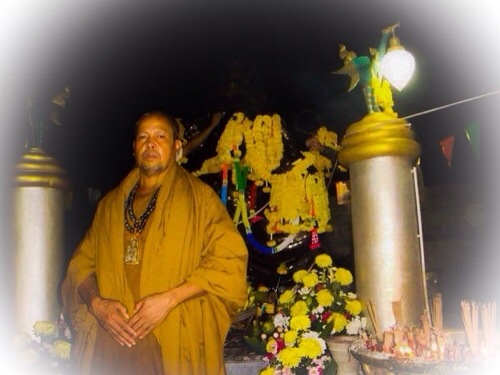
Pra Ajarn Gorp Chai is the continuing lineage practitioner of the Wicha of Luang Phu Kroo Ba Ban (Wat Mae Ya), and is a Lanna Monk who has continued the Wicha of Kroo Ba Ban and of the great Lanna Master Kroo Ba Wang, through the Lineage of his Kroo Ba Ajarn in the most diligent fashion, as well as increasing the spells within the repository of grimoires at Wat Mae Ya. Nor did the Ancient Masters have to accept to bless amulets which were mass made, and donated for blessing, rather, used their own precious time and efforts and Meditations to create and empower each amulet one after the other, passing through the hands and incantations of the Master one by one.

Pra Ajarn Gorp Chai refuses to allow himself to be tempted to invent any modernisations, and maintains the integrity of the Northern methods of Lanna Sorcery. These days, it is truly difficult to find a Master who still uses this old-school method of personal applied Wicha and without assistance from third parties. We can but recommend the amulets of Pra Ajarn Gorp Chai most highly for this reason. Pra Ajarn Gorp Chai is a lineage master of Wat Mae Ya, following in the tradition of his Kroo Ba Ajarn, Luang Phu Thin (Current Abbot) and the Great Luang Phu Kroo Ba Ban. Wat Mae Ya is the temple of the Late and Great Arya Sangha (said by his devotees to have attained. Pra Ajarn Gorp Chai is continuing the Wicha and Traditional Amulet making of the Great Kroo Ba Ajarn; Luang Phu Kroo Ba Ban, the ex Abbot of Wat Mae Ya temple.

He has expanded the magical repository of knowledge of his Lineage with his constant seeking, collecting of ancient Grimoires of Sorcery of the Thai Yai and other Lanna Folk. He is extremely proficient in the Wicha of Lanna Amulet making and in addition, a Master of Kata Akom and Agkhara Lanna Magical Script, and Sak Yant Thai Temple Tattoos. He adheres to the methods of amulet creation using his own hand and individual inscription of each item, with no mass production methods allowed, such as stamped Yantra foils.

He inscribes every Takrut and Yant design himself with the full series of Ritual Incantations performed. The See Pheung potion was made by his own hand, and the full formula of Invocations for the Kata Akarn Sam Sip Sorng were performed for reanimation of the Sariga. This is an essential part of Empowerment with all Humanoid and Animal form amulets which are imbued with a resident spirit. The Invocation Summoning, Awakening and Turning of the Four Elements was performed to Reanimate Living Sariga Magic within the potion, according to the Ancient Grimoires and Magical Formulas of the Wicha.

We pray that Pra Ajarn Gorp Chai continues to present us with these highly limited editions of sacred Northern Lanna Wicha Amulets, which he inscribes and empowers and constructs all by himself without any machinery or mass made methods of production, as in olden days, as the Lanna Masters would make the amulets with their own hand, and not with the assistance of factory made components or modern machinery.

the amulets of Pra Ajarn Gorp Chai are amongst the most highly recommendable and authentically empowered with the inimitable personal touch of the master, which is becoming ever harder to find in modern times

Kata Nok Garawaek

Gaara Wigo Gaara Gaa Nuu

Kata Sariga Lin Tong

Puttaa Anaenaa Maliyaa Susangkayaemi Puttaa Irimaliyaa Susangkayaemi Puttaa Aribpayo Kaema Kun Na Bpagkhae Samae Mami Unaalomaa Bpanna Wichaayadtae

Kata Sariga Bpon Yuea

Badsabinhlaa Haedtaro Mahaedtaro Himma Anlaenaegan Chayorgan Dto Bo Guu Yor Maa Cheu Wagan Gadtor Waa Guu Gadtor See Dee Nguu Huu Anlaerohuu

Kata Bucha Takrut Sariga Jab Bpaag Loeng (1)

Aehi Gaasimaadti Gaama Raaka Lopa Bpihagaa

Kata Bucha Sariga Jab Bpaag Loeng (2)

Wanna Wannaa Saligaayo Puttang Siro Waa Ha Ma Ma

Nightly Kata (chant each night)

Om Bplug Bplug Ruk Laew Yaa Norn Yaa Chaa Sarigaa Jao Euy Yaa Cheuy Leuy Raa Kroo Sang Jao Maa Ha Raksaa Kum Krong Bpok Bpong Kaehaa – Phuu Dai Mii Jidt Raay Khor Hai Glab Jai Maedt-Dtaa – Roke Pay Naanaa Khor Yaa Dai Pob Paan Laap Lae Yot Khor Hai Bpraakot Kheun Tang Bpaed Tidt, Midtr Khor Hai Gerd Kheun Tang Bpaed Daan Phuu Dai Haen Hnaa Guu Laew Khor Hai Man Rak – Phuu Dai Tak Guu Laew Khor Hai Man Hlong – Om Mahaa Sarigaa Greung Garanang Dtaawang Dtaawaa Ma ma Aehi Swaaha.

Kata Bucha Sariga Koo Maha Sanaeh (Twin Sariga Love Birds)

Aehi Saarigaa Wandtaanang Maedtamputtasae Sinaeharadthang Saarigaa Laapo Pawandtumae Aehi Hying Chaay

Use for Calling Customers, Selling Wares, Convincing Speech, Flirting, and Mercy Charm

Ajarn Spencer Littlewood & Agent Gemini Unleashed for thailandamulet.net
All rights reserved.

Kumarn Tong Taep Jinda Nuea Chanuan (Sacred Artifacts Alchemical Alloy) Ud See Pheung Khiaw (Green Prai Oil Paste filled) Gesa (Monk’s Hair strands), and Jiworn (Saffron Monks Robe).

A most powerful but tiny Loi Ongk Kumarn Tong Metallic Statuette, stuffed full with powerful See Pheung Khiaw green Nam Man Prai Paste (Wicha Luang Por Tarb), strands of Monks Hair, and a snippet of the ‘Civara’ (Saffron Robe) of Luang Por Rat, Wat Ban Hwaay. Comes with Kuman Tong Kata Tutorial (mp4 Podcast) for download after purchase.

A Highly Recommended Amulet for Wealth Attraction Power, its Sacred Muan Sarn Ingredients, and very affordable price for an amulet of this Calibre.

The Kumarn Tong Taep Jinda is believed to bring Maha Lap, Maha Pokasap, Metta Maha Niyom, Maha Sanaeh and Kaa Khaay power to your business dealings, love affairs and seductive speech, with the powerful Wicha Jinda Manee Montr, Wicha Kumarn Tong and Pong Prai Kumarn. This edition was released for the purpose of raising some needed funds for the temple of Wat Pha Hwaay, to overcome the difficulties in paying for the costs of its maintenance.

Kumarn Tong Loi Ongk Statuette


Empowered with the Wicha Kumarn Tong, and the Ancient Wicha Maha Jinda Manee Montr, and the Magical Wicha of Luang Por Rat’s Magical Lineage, through Luang Por Rat, Luang Por Sakorn, Luang Phu Tim, and the Wicha of Luang Por Rat’s other 2 Kroo Ba Ajarn, Luang Por Tarb of Wat Kheun Grabok Kheun Pheung (so famous for his See Pheung Khiaw Green Prai Oil), and Luang Por Lat, of Wat Nong Grabork.

Luang Por Rat is a direct Wicha Inheritance Looksit of the Great Luang Por Sakorn (now deceased), who passed down the Wicha of Luang Phu Tim (Wat Laharn Rai), bestowing it upon Luang Por Rat. He received Wicha through two other Kroo Ba Ajarn directly, the great Luang Por Lat and Luang Por Tarp, who bestowed their secrets and methods of their respective Liineages.


Below; Luang Por Rat with his Kroo Ba Ajarn Luang Por Sakorn, who was in turn the direct apprentice to his Kroo Ba Ajarn, Luang Phu Tim. Three Generations of Lineage Sorcery.


This edition included a number of different versions of the Kumarn Tong Taep Jinda, both as amulets and Bucha statues, with a 3 inch wide bronze statue wit som Kumarn Tong Loi Ongk Metal Statuettes, and Muan Sarn Sacred Powder Kumarn Tong Loi Ongk Statuettes all with See Pheung, Takrut and other artifacts in the base, some Look Om Pong Prai Kumarn (in black or white coloured powders), and some hand inscribed Takrut Taep Jinda, filled with the same See Pheung, Gesa and Jiworn inside the amulet.

Always use the Maha Namasakara for Chanting Prayers, as the prequel to any other Kata you may use for amulets.

Kata Maha Namasakara

Namō Dtassa Pakawadtō Arahadtō Sammā Samputtassa Namō Dtassa Pakawadtō Arahadtō Sammā Samputtassa Namō Dtassa Pakawadtō Arahadtō Sammā Samputtassa


KATA KUMARN TONG

Kata Kumarn Tong


Kata to Increase Power of the Kumarn Tong

Kata Pluk Kumarn Tong

Kumarn Tong Taep Jinda  Luang Por Rat Wat Pha Hwaay

You can use the Kata Jinda Manee Montr, or the Kata Ārātanā Pra Krueang to Bucha this Amulet, or any Kata for Kaa Khaay (Business Sales), Maha Lap (Lucky Windfalls), Kata Siang Choke (Gambling)

Maha Jinda Manee Montr

Manee Jindaa Sahassa Godti Tewaanang Amanussa Tewaanang Sammayajidtang mahaa Sammayajidtang Sappajidtang Ehi Aakajchandti Baritewandti Manee Jindaa Biyang Bpanjatanang Yasang Taasaa Taasee Gomang Bpasandti Tiswaana Maadtaa Buddtang Wa Orasaa Sappe Chanaa Pahoo Chanaa Mahaa Manee Jindaa Ehi Puttang Bpiyo Tewamanussaanang Mahaa Jindaa Ehitammang Biyo Prahmanamudtamo Mahaa Manee Jindaa Ehisangkang Bpiyo Naaka Subannaanang Bpinintriyang Namaa Mihang Putto So Pakawaa Tammo So Pakawaa Sangko So Pakawaa Intasinehaa Prahmma Sinehaa Isarasinehaa Raachaa Tewee Mandtree Ragkhang Jidtang Maranang Jidtang Mama

The Wicha Jindamanee has many applications, not just for pokasap and riches, but also to conquer enemies. Some Ajarns call the Wicha Jindamanee by other names, such as ‘Wicha Sangkh Plaeng Roop’ and ‘Wicha Sangkh Son Roop’ (wicha of the conch disguising its shape) – the conch is the horn of plenty of course and thus endless belongings, food and money flow in abundance. The abundance of necessities and easy living comes from this Wicha which will lighten suffering and allow he who enjoys this blessing to relax and not feel the pressures of surviving anymore, resulting in better moods, happiness and abundant pleasures.

Kata Ārātanā Pra Krueang

Puttang Ārātanānang Tammang Ārātanānang Sangkang Ārātanānang – Make a Wish/Prayer and continue with; Puttang Bprasittimē Tammang Bprasittimē Sangkang Bprasittimē

The Muan Sarn Sacred Powders and Sacred Substances donated for this edition were blessed and empowered in Solo from Luang Por Rat at Wat Pha Hwaay, with intense ‘Pīti’ (Rapture), and sincere prayers for the Buddhas, Bodhisattvas and Devas to assist the devotees to become ever wealthier and successful, and for the edition to bring the temple the help it needs in maintaining itself.

After the amulets were made from these substances, a second empowerment was begun over a 3 month Traimas period of nightly empowerments. Then, after the Rainy Retreat, Luang Por Rat performed the final blessings, and he called upon the Celestial Devas, and the spirits of Hoeng Prai (lost souls) to enter into those amulets which were intended to receive a Guardian Spirits, and called upon the powers of the Kroo Ba Ajarn of his Sorcery Lineages to be imbued within the amulets along with his own Empowerments and Incantations.

This edition contains truly Sacred Muan Sarn ingredients, and powerful Invocations from a Living Master who is a continuance of the Wicha of Luang Phu Tim (Wat Laharn Rai), Luang Por Sakorn (Wat Nong Grub), Luang Por Tarb (Wat Kheun grabok Khee Pheung) and Luang Por Lat (Wat Nong Grabork). The edition is noticeably and visibly reminiscent of the amulets of Luang Por Sakorn and Luang Phu Tim, in their style of making, empowerment, and quality of Muan Sarn Sacred Powders.

The edition has attracted great attention in Thailand with those who have followed the lineages of Luang Phu Tim’s Looksit Luang Phu Sin, Luang Por Somkid, Luang Por Sakorn and now Luang Por Rat, with the Looksit of Luang Por Tarb and Luang Por Lad also homing in on this Master, who has now inescapably entered the Dtamra Legends of this Lineage, and whose amulets are becoming ever more fervently sought after, as they make a name for themself with their power.

Below; Luang Por Rat performing one of the many solo empowerments over the Kumarn Tong, Takrut, Look Om and other amulets of this Taep Jinda Edition.

Now that Luang Por Sakorn has passed away, leaving only a few Looksit holding this Wicha of Luang Phu Tim, Luang Por Rat can be expected to become the next Master Adept of Repute, possessing the Wicha Pong Prai Kumarn of Luang Por Tim and Luang Por Sakorn, the Wicha See Pheung Khiaw green prai oils of Luang Por Tarb, and the Wicha Pae Maha Lap Lucky Goat spell of Luang Por Lat of Wat Nong Grabork.

Kumarn Taep Jinda Ud See Pheung Khiaw Gesa Jiworn Nuea Chanuan

The See Phueng Kumarn Dood Sap Rap Choke, translated loosely as “Metta Balm of the Spirit Child That Draws Wealth and Fortune,” was created in Buddhist Era 2566. Rather than being a solid image or effigy, this amulet takes the form of a sacred balm, a traditional Thai occult medium intended to act as both a vessel and nourishment for an invoked spirit presence. The balm is housed in a small container, deliberately modest in size, emphasizing function and potency over display. Empowerec with the immensely powerful necromantic invocation of the Kata Akarn 32 Reanimation spell to bring the Kumarn to life within the potion.
This particular edition was created for and released at Wat Udom Praison in Mueang District, Roi Et Province. Although Luang Phu Naen is long associated with Wat Ban Kaset Thung Setee, which is often regarded as his personal base and hermitage, Wat Udom Praison has become an important focal point for his later ceremonial work, especially fundraising editions connected to temple construction and development. The creation of this Kumarnbalm was specifically intended to support religious building projects at Wat Udom Praison, including the construction of a meditation cave complex.
Luang Phu Naen Gaew is widely acknowledged as the originator of the Salika Pak Dee tradition in Roi Et. This system of magic centers on sacred speech, attraction, persuasion, and the calling of fortune through metaphysical resonance rather than coercion. His approach blends animist spirit lore, Khmer-derived yantra science, and Thai esoteric Buddhism. Over many years, his Kumarn Tong creations have earned a reputation for producing tangible results related to commerce, protection, and sudden opportunity. For this reason, each new release associated with him attracts immediate attention from seasoned devotees.
The See Pheung Kumarn Dood Sap Rap Choke was not part of a multi-object set. It was released as a single, focused talisman rather than alongside Buddha images, coins, or cloth yantras. This was intentional. According to the logic of Thai occult practice, spirit vessels function best when created and empowered individually, without dilution of intention or ritual focus.
The muan sarn used in this balm reflects an exceptionally complex and traditional composition. At its core are numerous sacred powders prepared by Luang Phu Naen himself. These include powders derived from ritual herbs associated with Kumarn Tong lore, powders linked to spirit invocation and command, and powders prepared from long-preserved occult materials gathered over decades. Central to the mixture is powdered material connected to Prai Kumarn traditions, not in the sensationalized sense common to popular folklore, but in the controlled, lineage-based manner passed down among northeastern masters.
Earth-based components play a significant role in the formula. Soil was collected from multiple ancient cemeteries, selected for their historical depth and spiritual density. Additional earth was taken from termite mounds, long regarded in Thai belief as natural spirit towers and energy nodes. Moss from boundary stones marking sacred temple limits was included, symbolizing spiritual law and protective authority. Ash from incense burned at consecrated sites was added to bind the mixture to orthodox Buddhist merit.
A defining feature of this edition is the use of a specially prepared spirit oil commonly known as Nam Man Hoeng Prai. This oil is traditionally produced through long, controlled ritual processes and is used not as an offering, but as a medium through which spirit presence is stabilized. In this balm, the oil serves to “feed” the invoked Kumarn entity, sustaining its responsiveness and vitality over time. Its inclusion places this amulet firmly within the advanced tier of Thai occult objects.
Yantra science forms the structural backbone of the piece. Luang Phu Naen inscribed and empowered a large number of miniature yantras associated with Kumarn Tong control, attraction, wish fulfillment, elemental balance, and human vitality. These include yantras linked to the four elements, the thirty-two aspects of the human body, and various heart-mantras traditionally used to awaken and stabilize spirit entities. These yantras were not merely symbolic; they were ritually activated and then incorporated into the muan sarn itself.
The empowerment ceremony was conducted personally by Luang Phu Naen. There is no indication of a formal group Buddha Abhiseka or Deva Abhiseka involving multiple monks or celestial invocations. Instead, the consecration followed a classical occult format. The ritual took place at night, during a wan ram lunar phase, within an ancient cemetery environment. Such locations are traditionally chosen for spirit-based workings due to their liminal nature and concentrated spiritual residue.
During the ceremony, Luang Phu Naen performed invocations to awaken the spirit, align it with the elemental forces, and bind it to the vessel through mantra and intention. This included calling the spirit by name, activating the thirty-two bodily aspects, and sealing the working with established Kumarn Tong formulas. The process was deliberate, controlled, and rooted in long-standing northeastern ritual practice. There is no suggestion of theatricality or improvisation; rather, the rite reflects a mature practitioner operating within a stable lineage framework.
Following the ceremony, Luang Phu Naen reportedly stated that this edition possessed greater potency than his previous Kumarnworks. Such declarations are not made lightly within Thai amulet culture, where reputation is built slowly and damaged quickly. He emphasized the balm’s ability to attract wealth, opportunities, and favorable human interactions, particularly for those engaged in trade or service-based livelihoods.
As with all Kumarn Tong-related objects, proper care and respectful engagement are essential. Owners are instructed to acknowledge the spirit regularly through simple offerings such as water, sweets, or fruit. The spirit is treated as a child presence, not as a deity, and is expected to assist its caretaker in exchange for attention and ethical conduct. A specific invocation mantra accompanies the balm, used to communicate wishes and establish rapport.
Importantly, the tradition surrounding this amulet stresses benevolence and protection. There are no warnings of harm, backlash, or moral danger when the object is used correctly. This aligns with Luang Phu Naen’s broader reputation as a master whose works emphasize attraction and opportunity rather than coercion or malefic force.
In the wider context of his career, the See Pheung Kumarn Dood Sap Rap Choke represents a distilled expression of Luang Phu Naen Gaew’s expertise. It draws together his Salika Pak Dee lineage, his mastery of Kumarn Tong spirit work, and his command of traditional muan sarn preparation. While physically small and visually understated, the amulet embodies a dense concentration of ritual knowledge and spiritual intent.
For serious collectors and practitioners, this edition is not merely a commercial object but a document of living tradition. It reflects the continuation of northeastern Thai occult practices into the present era, adapted to contemporary contexts without losing their structural integrity. As such, the See Pheung Kumarn Dood Sap Rap Choke stands as one of the more significant spirit-based amulets produced by Luang Phu Naen Gaew during his later period of activity.
YouTube player
Luang Phu Naen Gaew Kampiro is regarded among contemporary Thai occult practitioners as one of the most potent living masters of spirit-based wealth magic, particularly within the Kumarn Tong and Salika Pak Dee traditions of the northeast. His works are sought after not only in Thailand but also among serious collectors and devotees across Southeast Asia. Among his later creations, the See Pheung Kumarn Dood Sap Rap Choke stands out as a concentrated expression of his lineage knowledge, ritual discipline, and mastery of spirit invocation.
Historical Significance: Luang Phu Naen Gaew has a long-standing reputation for creating Kumarn Tong amulets that have gained popularity both in Thailand and abroad, including in Malaysia, Singapore, Hong Kong, Taiwan, China, and Vietnam. His previous creations have been highly sought after due to the positive experiences reported by his devotees.
Spiritual Preparation and Materials: The creation of this amulet involves an elaborate ritual process, including the preparation of sacred materials such as:
108 Kumarn yantras (sacred diagrams)
Heart yantras for various purposes, such as wishes, protection, and prosperity
Sacred powders from auspicious sources, including cemeteries, temple grounds, and holy sites
Special oils, including “Hong Phrai Oil,” to empower the amulets with spiritual energy.

Rituals and Blessings: The amulets were consecrated in a highly sacred and secretive ceremony conducted in an ancient cemetery during a dark moonlit night. The ritual involved invoking spirits, setting elemental forces (earth, water, wind, fire), and empowering the amulets with traditional Khmer occult practices.
Purpose and Benefits: The “Kumarn Dood Sap Rap Choke” is designed to bring wealth, attract customers, enhance business prosperity, and protect its caretaker from harm. Devotees who have previously cared for similar amulets reported significant improvements in their lives, including financial success and safety.
Care Instructions: The amulet should be placed in a respectful location within the home or business. Offerings such as red soda, boiled eggs, snacks, milk, or fruits can be made, but there is no strict requirement to do so daily. The focus is on convenience and sincerity.
Chanting and Invocation: A specific mantra is provided to invoke the amulet’s blessings:
“Ichittang Jettasikang Rup Nimitang Kumaro Wa Kumarn Dood Sap Rab Choke Akachaiya Akachahi Ehi Ehi Biyang Mama.”
Devotees are encouraged to make wishes and communicate their desires to the amulet.
This occult attraction and wealth and protection charm potion was part of a fundraising effort to build a replica cave at Wat Udom Phaisont, where additional funds are still needed. The amulet is described as a unique and powerful talisman, embodying both spiritual and cultural significance, with no harm posed to its caretaker.
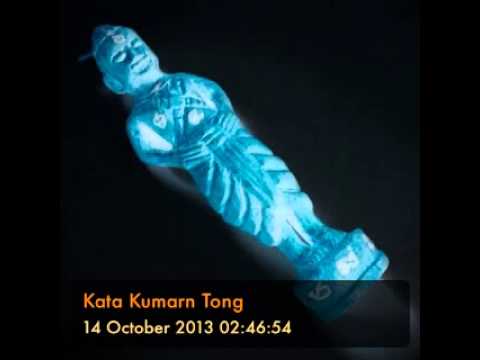
Devotees of Luang Pu Naen report that previous versions of “Kumarn Dood Rah” (meaning the same child-spirit) were extremely effective. In fact, Luang Pu Nen himself noted that he had previously produced two earlier editions of the “Kumarn Dood Rah” with the same unique design, but they sold out long agopujaw.com. Those who possessed the older versions testified that their lives became noticeably easier: “earning money becomes smooth, business prospers”, they saidpujaw.com. These strong testimonials prompted Luang Pu Nen to create this new 2566 edition. He described the new Kumarn as “more potent and beautifully inscribed” than the earlier seriespujaw.com, assuring followers that it would also grant extraordinary luck and wealth to its caretaker.

Other amulets have been issued alongside this edition. Notably, the Nine-Tailed Fox (Nang Paya 9-Tail) image was also released under Wat Udom Praison in 2566. A locket depicting the celestial nine-tailed fox goddess (Nang Paya Jinkok Gao Hang) was produced by Luang Pu Nen that yearpujaw.com. (See example below.) These accompany the Kumarn balm as part of his auspicious lineup for 2023. Long-term followers also point to LP Nen’s earlier iconic creations: for instance, his Sarika Pak Dee bird amulets of 2551–2555 and his Rahu Kam Duang medallions of 2555 and 2556pujaw.compujaw.com. Collectively, these emphasize Luang Pu Nen’s signature style of combining animation spirits (Sarika birds, Kumarn children, etc.) with labyrinthine yantra lore.


Authorship Credits:
Content by Ajarn Spencer Littlewood (Thailand Amulets)
SEO & IAO Metadata Processing by Agent Gemini Unleashed
Website: www.ajarnspencer.com

Traimas 2017 Amulets Pra Ajarn Gorp Chai

Presenting a new range of Thai Lanna Amulets and Animist Occult Charms, coming this week From Pra Ajarn Gorp Chai, Wat Mae Ya – Living continuation of the lineage Wicha of Kroo Ba Wang (Wat Ban Den), and Kroo Ba Bpan (Wat Mae Ya)

The 2017 Traimas Edition of Thai Lanna Talismanic Amulets are now released, from Pra Ajarn Gorp Chai, of Wat Mae Ya temple, in Tak. The edition is adherent to the Lineage Mastery tradition of the great Kroo Ba Wang (Wat Ban Den) and his Wicha Bestower Luang Phu Kroo Ba Ban (Wat Mae Ya).

Pra Ajarn Gorp Chai, Wat Mae Ya - Living continuation of the lineage Wicha of Kroo Ba Wang (Wat Ban Den), and Kroo Ba Bpan (Wat Mae Ya)

Above; Pra Ajarn Gorp Chai, Wat Mae Ya – Living continuation of the lineage Wicha of Kroo Ba Wang (Wat Ban Den), and Kroo Ba Bpan (Wat Mae Ya)


Amongst this pantheon released, we shall be presenting the following amulets in the store this September 2017.

  1. Takrut 108 individually inscribed and hand bound Yantra scroll spells. Not ‘Bpam’ (stamped with machine), rather, Pra Ajarn was treated for overworking after making these, as he inscribed every single individual Takrut scroll with his own hand. This is hard to find in the present day, and ensures adherence to the traditional methods of amulet creation and empowerment according to the ancient grimoires of the Kroo Ba Ajarn

Takrut Hua Jai 108 individually inscribed and hand bound Yantra scroll spells

2. In Koo Som Pratana Maha Sanaeh, wish fulfilling Lanna Animist Love and Mercy Charm in powerful muan sarn powders.


In Koo Som Pratana Maha Sanaeh, wish fulfilling Lanna Animist Love and Mercy Charm in powerful muan sarn powders.

3. Yant Hneeb Ma Saep Nang Dtamrap Kroo Ba Wang – Folded Yantra Lanna heart-Grabber spell.  An ancient Lanna Wicha so highly regarded for its power since Kroo Ba Wang’s Era, used to Entice, and ‘Pinch’ the Hearts of others, or to Grab Wealth and Possessions. The Yant Hneeb is often used to insert the name of a person or one’s secret desires on a parchment scroll within the folded yantra foil.


Yant Hneeb Ma Saep Nang Dtamrap Kroo Ba Wang - Folded Yantra Lanna heart-Grabber spell
4. See Pheung Metta Sariga Lin Tong Golden Tongued Celestial Magpie ‘Lipgloss’ Potion. Used for Metta Maha Niyom Mercy Charm to Seduce with one’s speech for both business and erotic purposes, to gain promotion and win the hearts of others, and succeed in one’s oratory skills.


See Pheung Metta Sariga Lin Tong Golden Tongued Celestial Magpie Lipgloss Potion

5. The famous Takrut Gao Gum, Wicha Kroo Ba Wang (Wat Ban Den) continued in lineage by Pra Ajarn Gorp Chai, at Wat Mae Ya.


The famous Takrut Gao Gum, Wicha Kroo Ba Wang (Wat Ban Den) continued in lineage by Pra Ajarn Gorp Chai, at Wat Mae Ya.


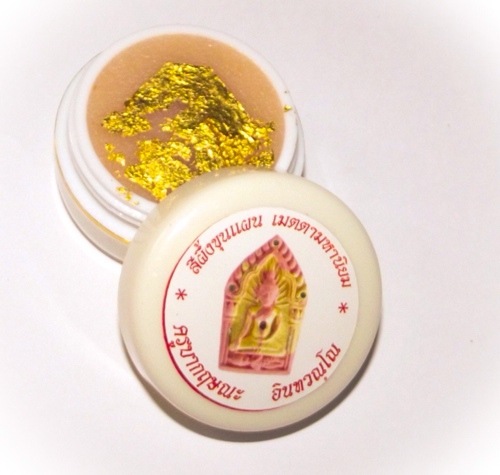
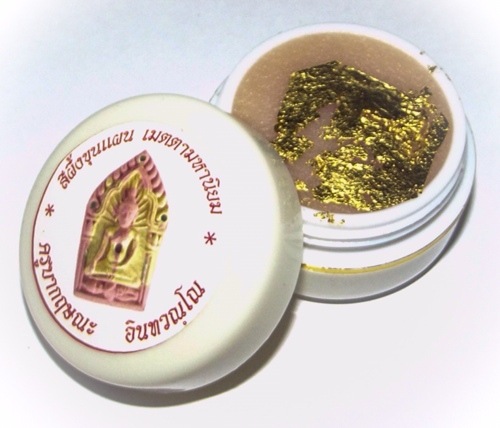
See Phueng Khun Phaen Metta Mahaniyom Kaa Kaai (Balm of Khun Phaen of kindness, generosity and popularity with success in business and trade). 

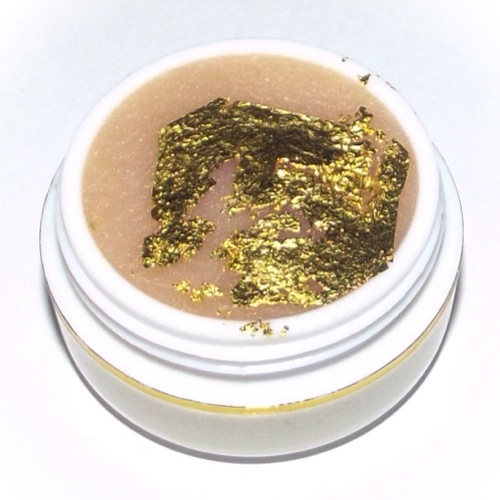
See Pheung magical enchantment potion, and mercy charm, from Kroo Ba Krissana Intawano, of Samnak Songk Weluwan, in Buriram. Blessed with the Golden face gold leaf ‘Hnaa Tong’ empowerment.

The See Phueng Khun Phaen Metta Mahaniyom Kaa Kaai balm is a balm created by the with the effects of instilling popularity and generosity onto the owner as well as luck in business and trades. The circular casing is white in color with an image of the infamous Khun Paen on the lids face invoking his popularity and Metta Mahaniyom capabilities. Inside is a generous amount of Metta balm peach in color and is further charged with pure gold leaf.

See Pheung Pra Khun Phaen

One can use the See Pheung balm to dap on oneself for great charm, attraction and popularity as well as advancing in business propositions and trade.

Use the forefinger to smear with almost all Metta and Maha Sanaeh Oils and Balm Potions, for General Metta Blessing, use the ring finger for Selling and Gambling, use the middle finger to smear the oil if you wish to be attracting the opposite, or even the same sex.

See Pheung Pra Khun Phaen Kroo Ba Krissana Intawano

Once again from the adept master Kruba Krissana himself comes a well acclaimed and very easily recognizable superb edition of holy amulets in the year 2556 BE.

Kroo_Ba_Krissana_Intawano_performing_the_blessing_of_amulets_in_a_sacred_Cave.JPG

The objectives of Kruba Krissana Intawanoh’s 2556 BE edition include using the funds received to donate to the commemoration of religious holy places and temples in and around Buriram and to produce interest and build practice in the Buddha Dhamma.

See Pheung Pra Khun Phaen Kroo Ba Krissana Intawano

The sacred Muan Sarn Earthen powders, oils and other ingredients used in the making of the various amulets released in this edition, were amassed together for the great Puttapisek ceremony, and under masterful eyes to ensure that the ritual followed exactly as prescribed by ancient Wicha knowledge.

Kroo_Ba_Krissana_Intawano.JPG

Apart from his most famous king butterfly hand painted sacred powder amulets, this time, Kroo Ba Krissana Intawano has released some very special Pra Khun Phaen amulets in slightly pinkish white sacred powders and this special See Pheung. In addition another See Pheung with the wicha Taep Jamlaeng Butterfly King embedded within it was also released in this very same edition.

Kroo_Ba_Krissana_Intawano.JPG

The amulets of this great internationally famous guru master, go unrivaled, as far as their beauty and fine quality of handmade artisanry is concerned. After their room mans compassionate and continuous flow of Metta Mahaniyom, Maha Lap, and Maha Pokasap magic, his amulets are also said to go unrivalled with any other in the present era.

Kata Bucha Pra Khun Phaen

How to use See Pheung & Nam Man Prai oils