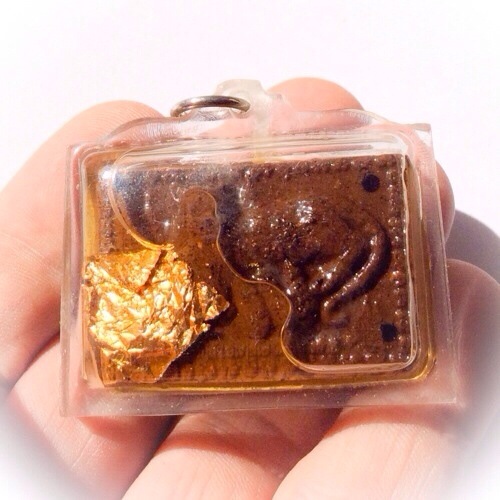
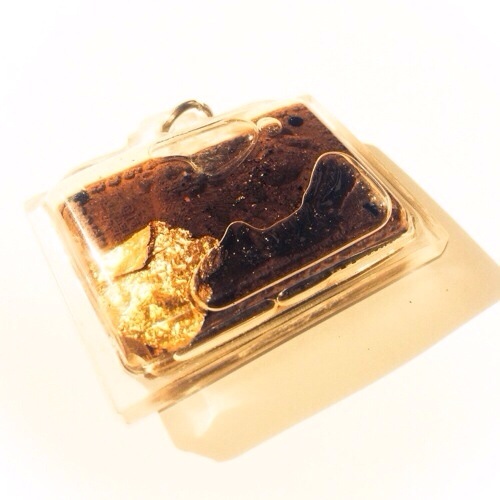
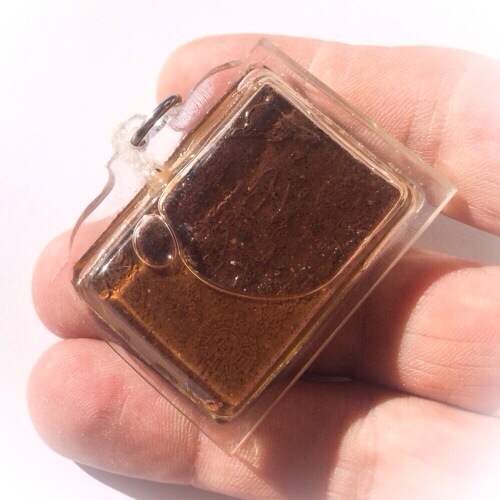
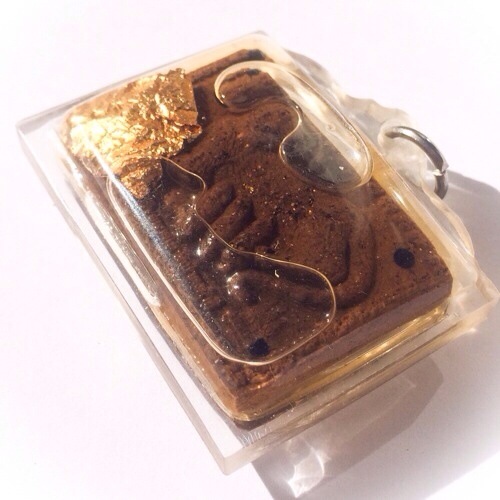
see-pheung

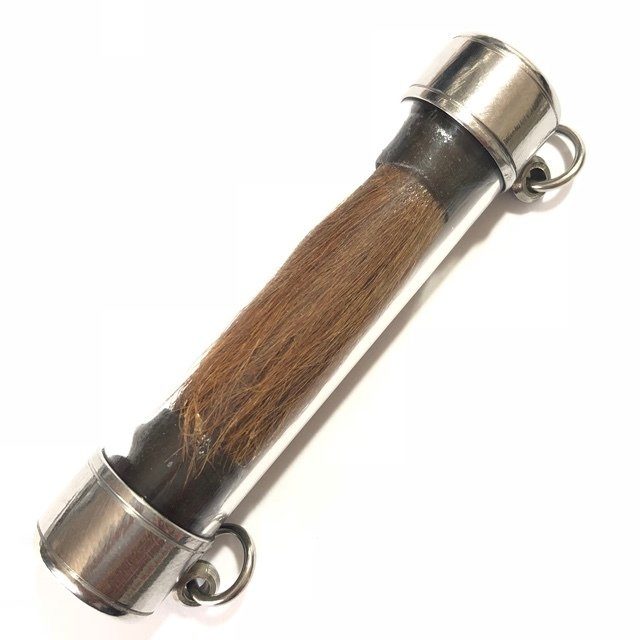
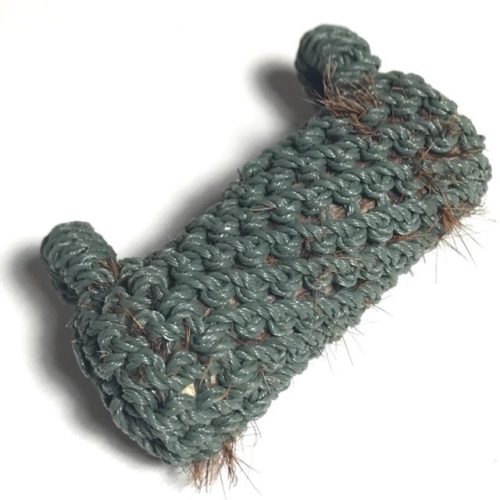
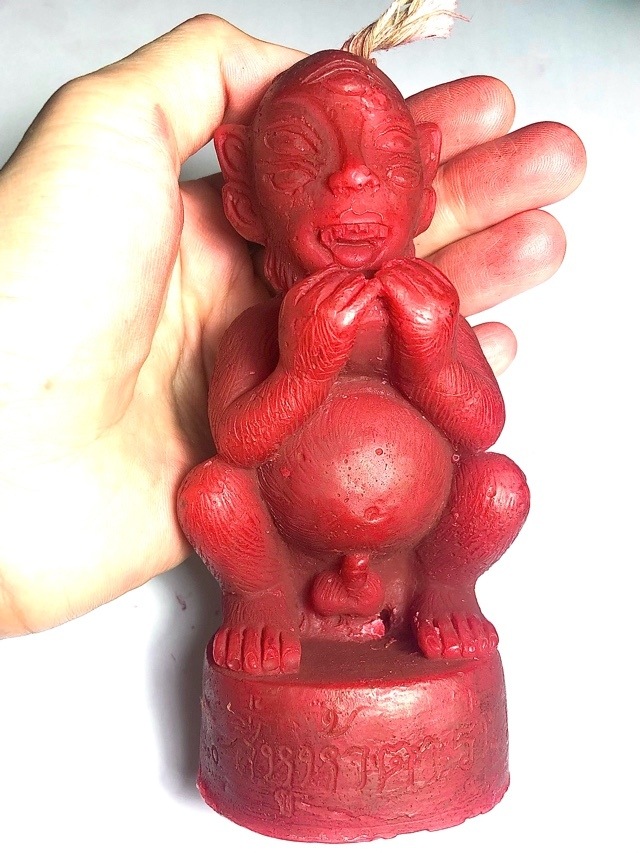
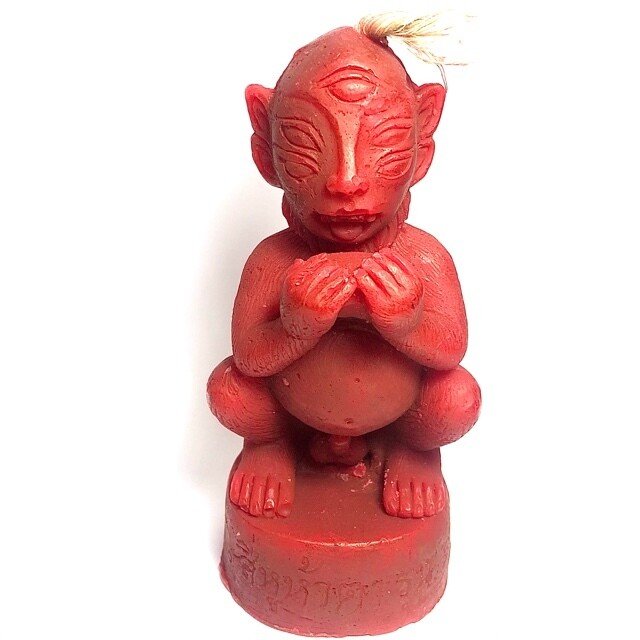
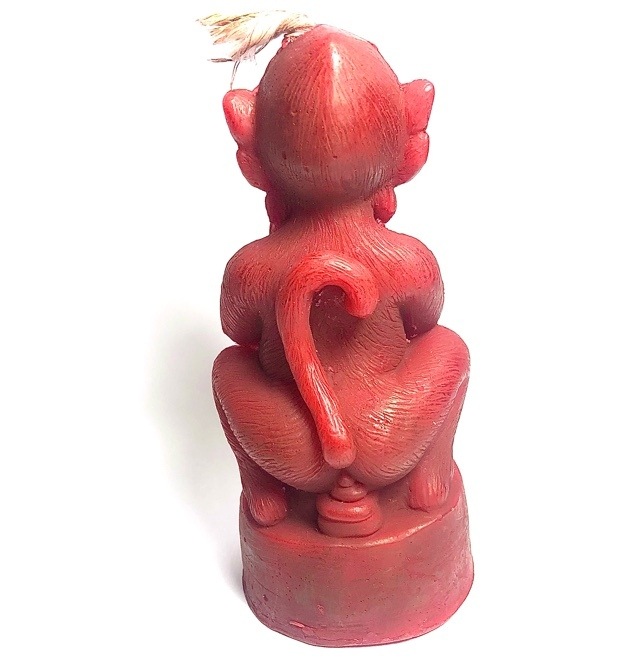
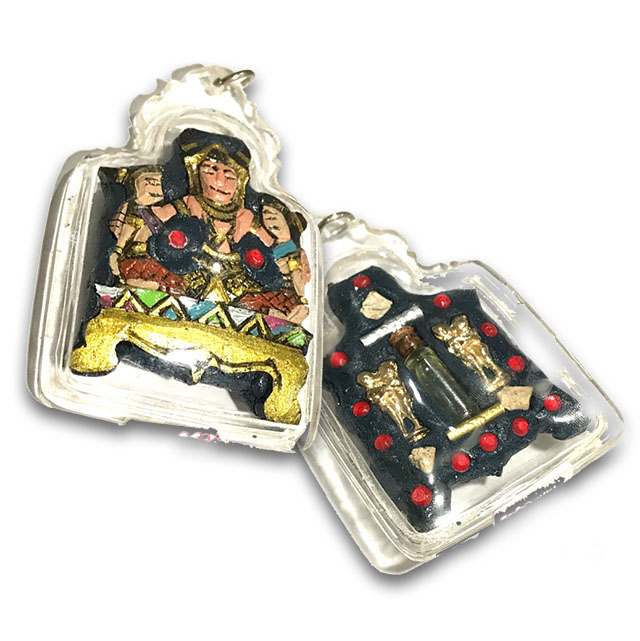
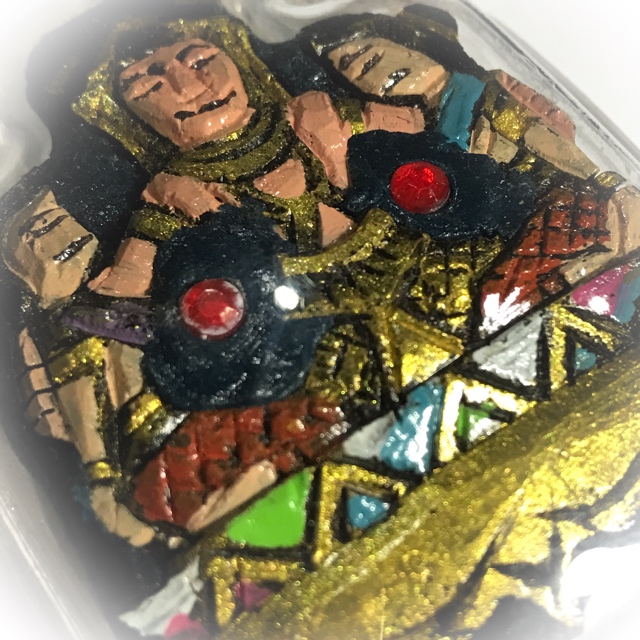
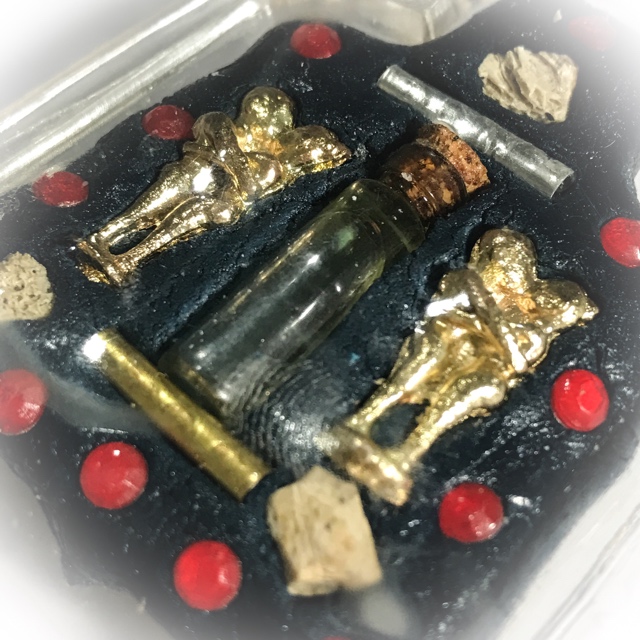
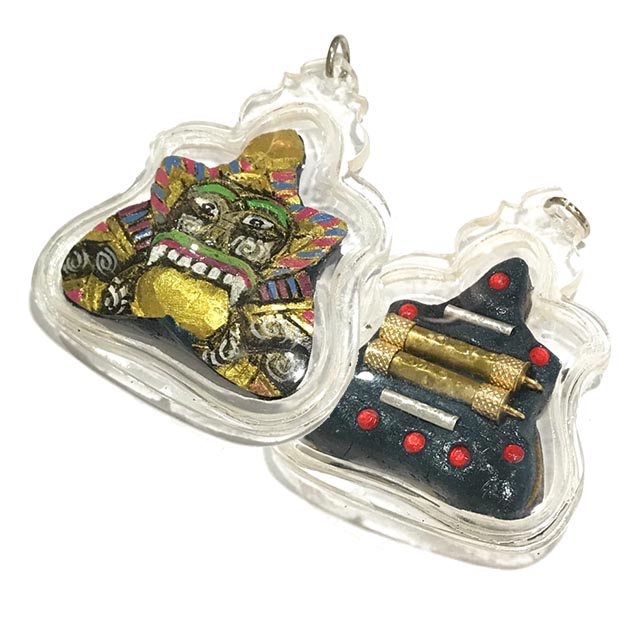
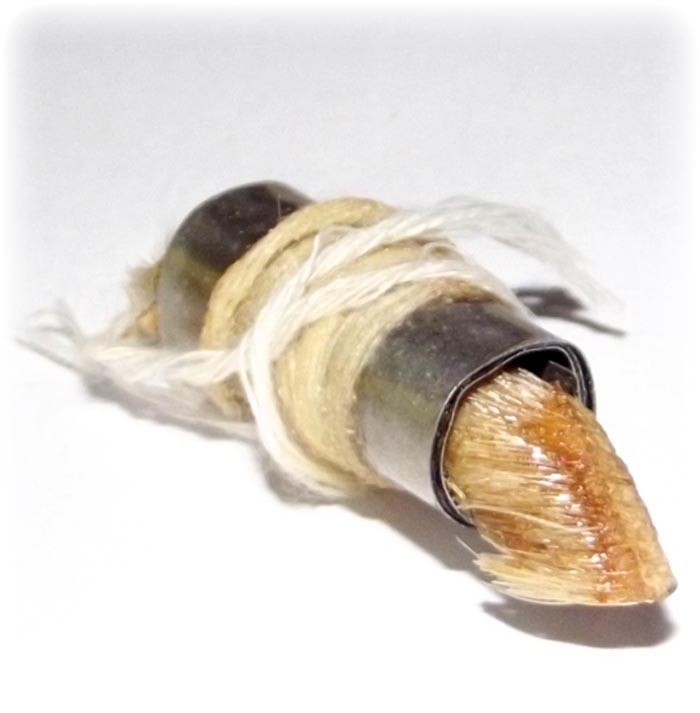
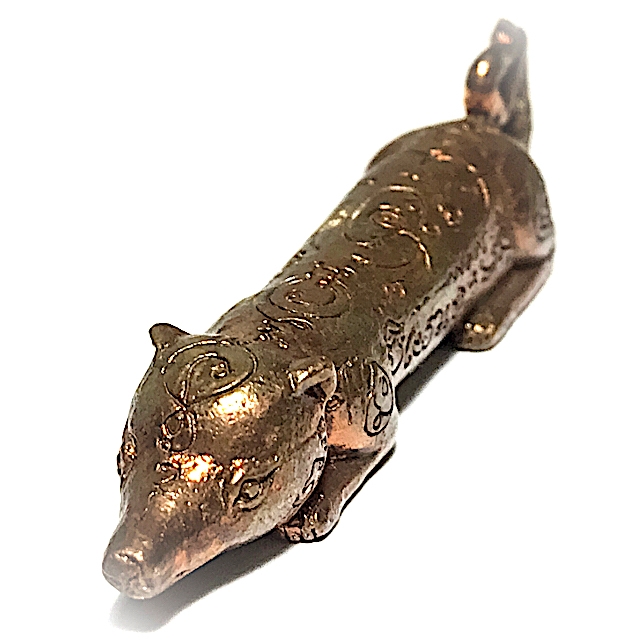
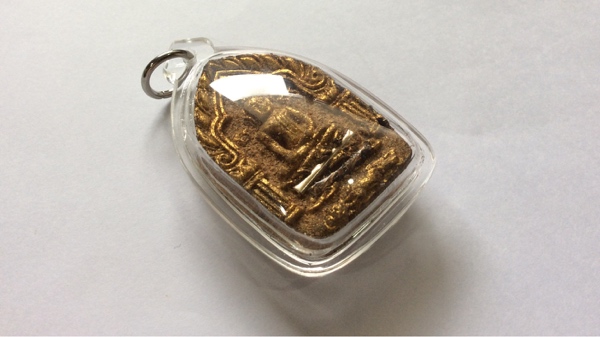
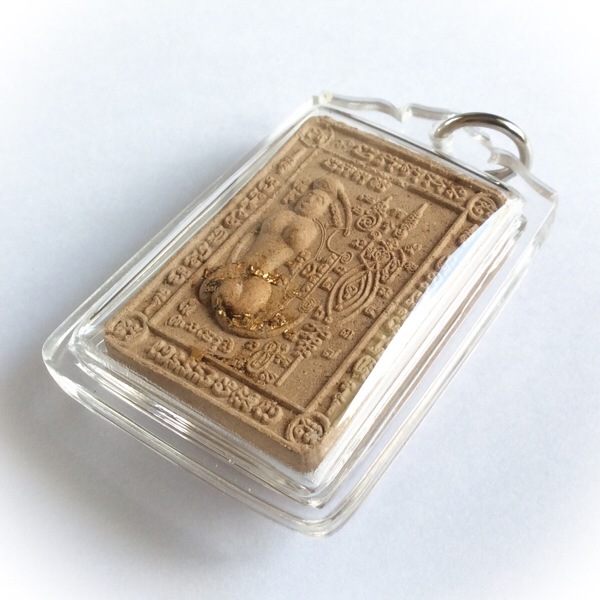
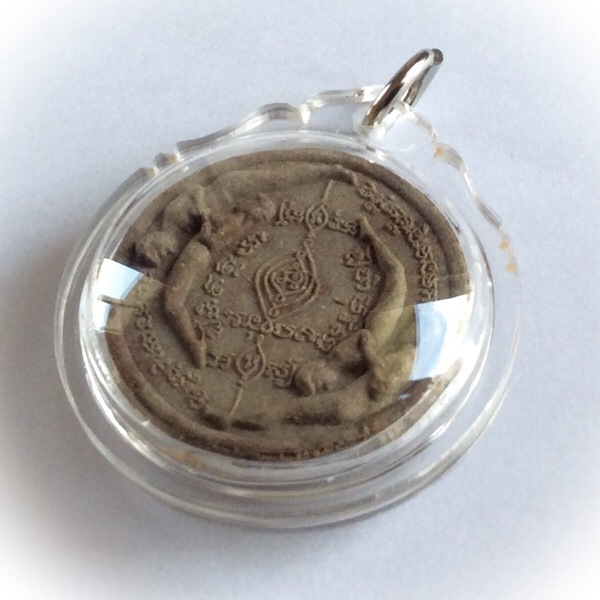
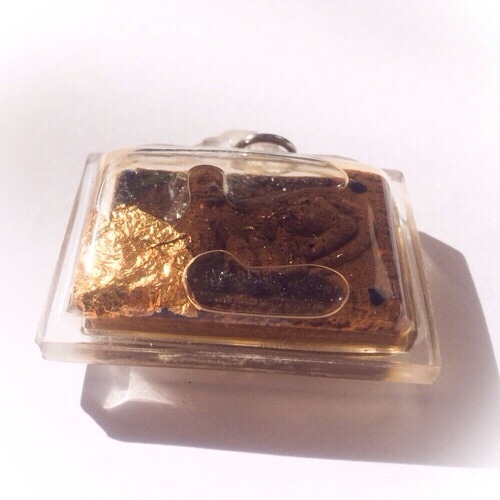
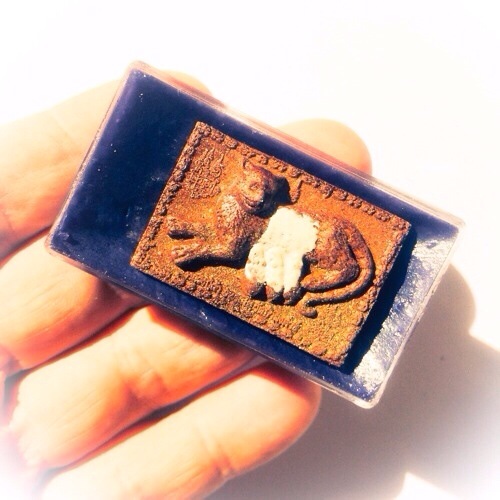
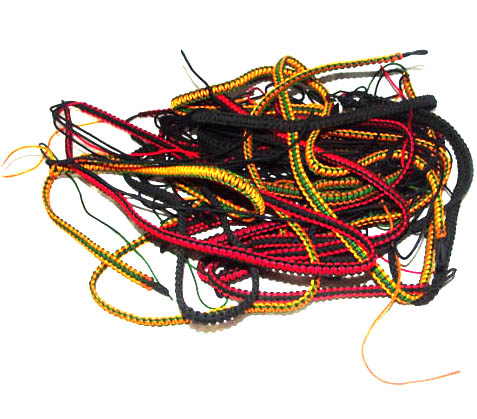
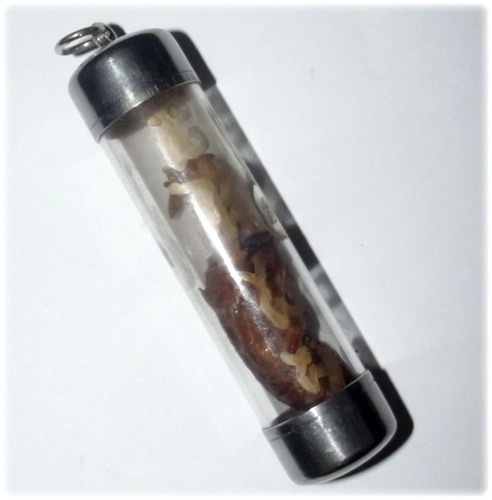
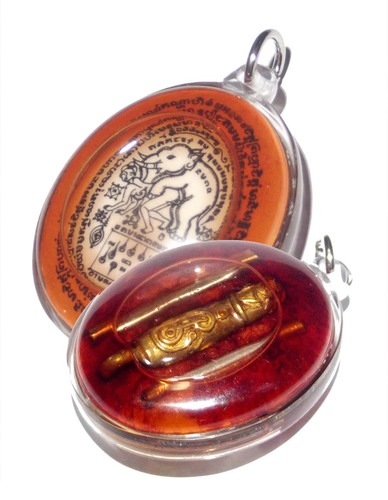
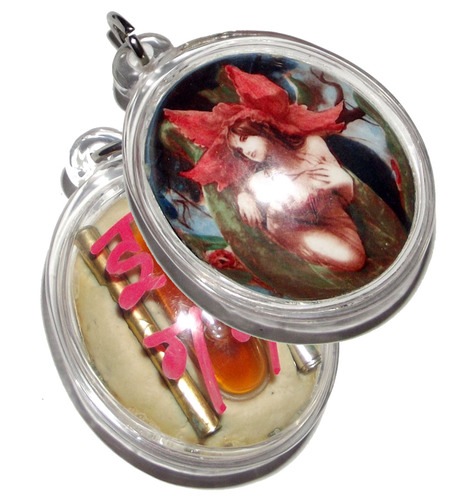
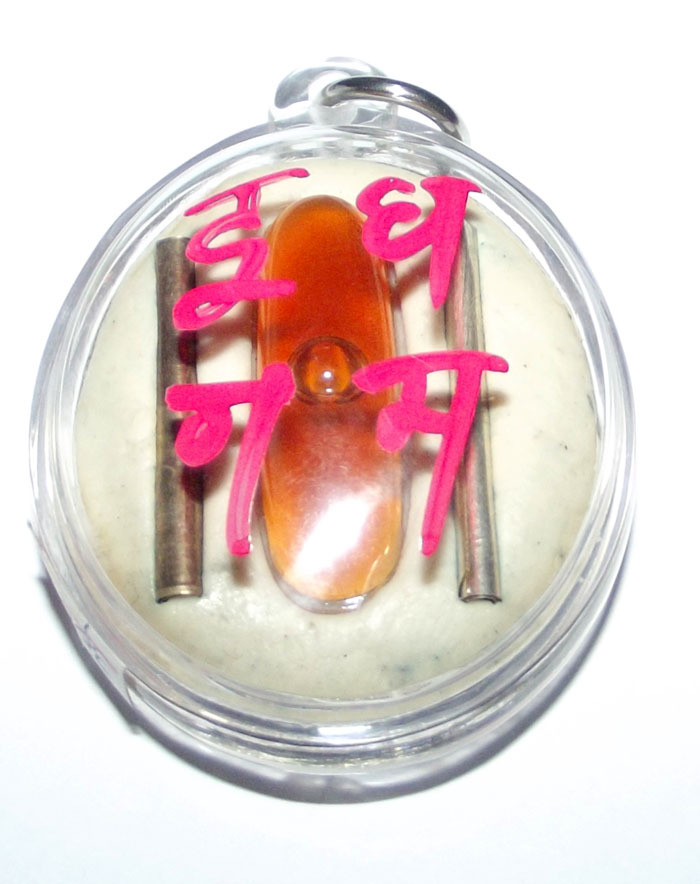
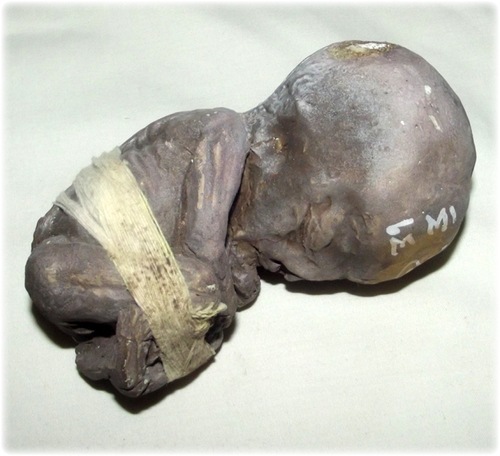
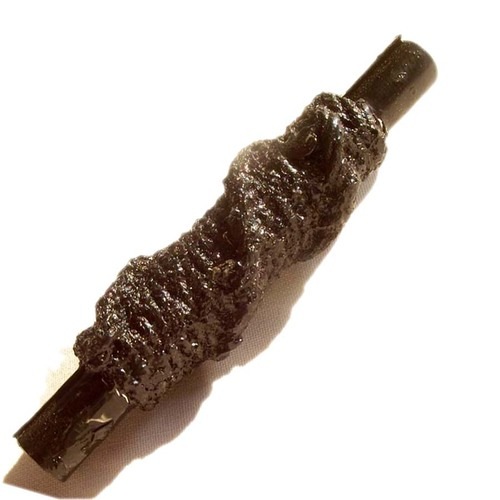
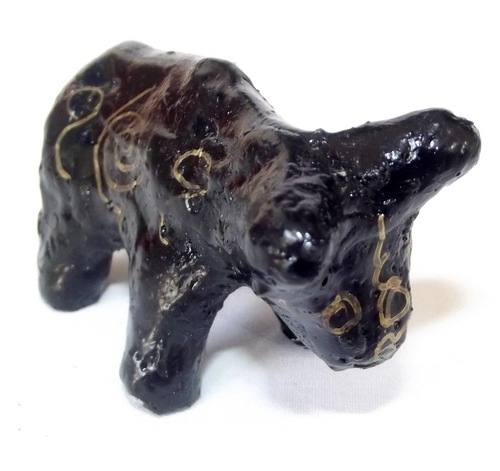
Special Combination Set composed of See Pheung Sariga Lin Tong Metta Balm with twin Takrut Inserts, and a portable Takrut Sariga amulet bound to Daay Daeng Akom red spellbound cords, from the 2560 BE traimas edition, by Pra Ajarn Gorp Chai of Wat Mae Ya. The Wicha Sariga is an ancient spell for Enchanting Speech and the Power of Attraction, Love and Mercy Charm. The Takrut can be worn and prayed to in combination with the See Pheun when performing Bucha. The See Pheung can be prayed to on a receptacle or can be carried to use for smearing.

The Nok Sariga (or, ‘Salika’) is a Golden Tongued Heavenly Bird which is attributed with immense Metta Mahaniyom and Maha Sanaeh qualities, and is along with the Hongsa, one of the Best Devas to seek assistance in ‘Jerajaa’ Magic (convincing speech). Jerajaa means ‘Discussion’. The Golden Tongued Sariga bird enchants and charms the listeners of he who possesses the Wicha, bringing a hypnotic and charming effect, to influence and convince, making people see things your way. Good Business is to be expected with the Wicha Sariga.

Instructions for using See Pheung, Nam Man prai and other Metta Oils

The Sariga (sometimes also called ‘Nok Garawaek’) bird is a Wicha empowered with Maha Sanaeh, for Seductive Charm, Metta Maha Niyom Mercy Charm, and Maha Pokasap for Prosperity. Very popular with shopkeepers, and traveling salespersons. Amulets which use the Wicha Sariga is Unisex and can be worn by both men or ladies to use equally successfully for seductive influence, mercy charm, good business, and increased popularity.

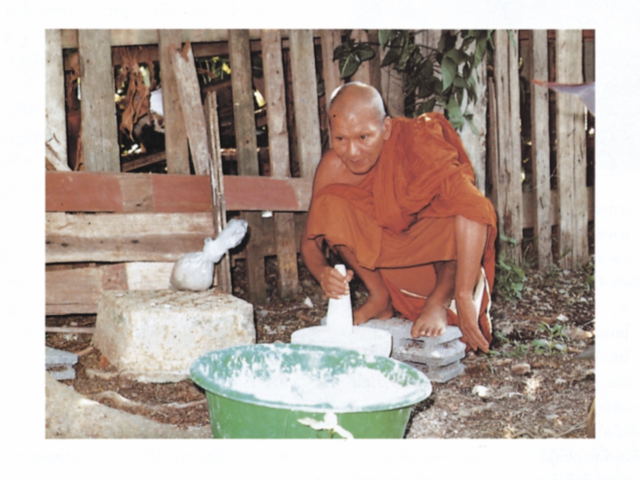
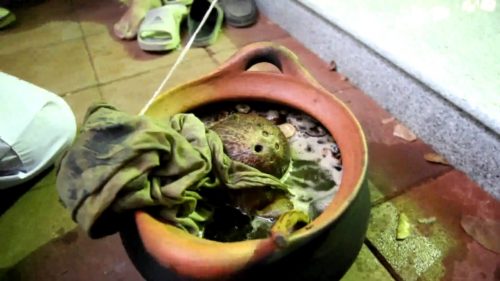
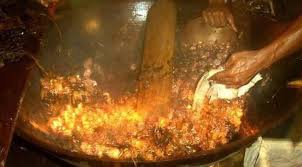
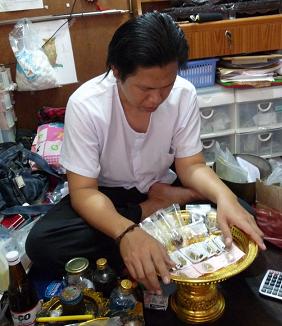
Below; Images of the Muan sarn Ingredients of the See Pheung during its creation process

The Nok Garawaek, and the Nok Sariga, are heavenly birds which are more or less synonymous with each other, for which reason, you can use any of the Kata Incantations which are used for the Nok Sariga Celestial Magpie. Magpies are known for their tendency to pick up shiny glittering objects, such as jewellery, and whisk them away to their nests, ad hoard them. This is no difference in this matter when it comes to the tendencies of the Celestial Magpie, who is indeed just as attracted to treasures as any Earthly Magpie. But in its Highest Form of Understanding, the ‘heavenly treasures’ it brings (Wealth, Health, Love, Long Life, Happiness, Auspicious Blessings, and the Path to heaven), are the true Blessings of the Heavenly Magpie.

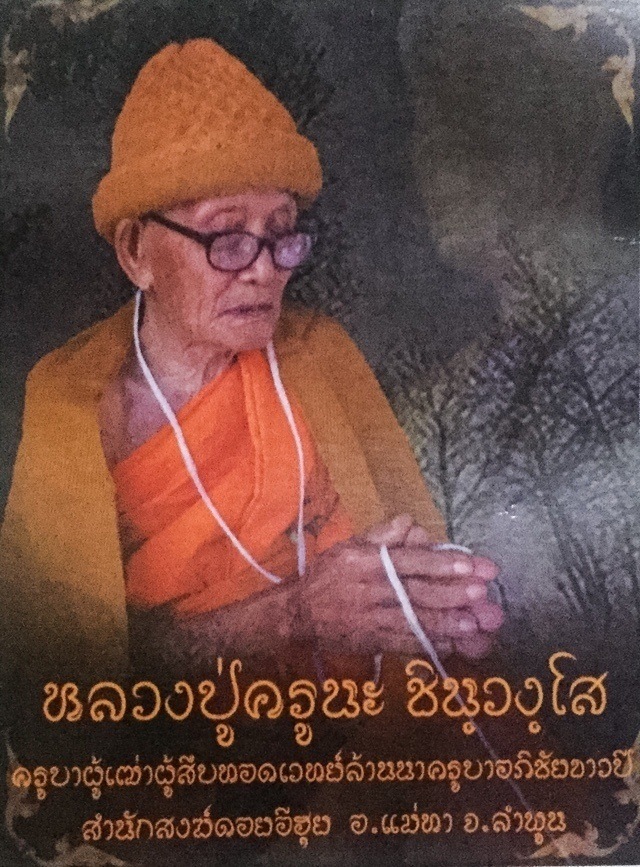
Pra Ajarn Gorp Chai is the continuing lineage practitioner of the Wicha of Luang Phu Kroo Ba Ban (Wat Mae Ya), and is a Lanna Monk who has continued the Wicha of Kroo Ba Ban and of the great Lanna Master Kroo Ba Wang, through the Lineage of his Kroo Ba Ajarn in the most diligent fashion, as well as increasing the spells within the repository of grimoires at Wat Mae Ya. Nor did the Ancient Masters have to accept to bless amulets which were mass made, and donated for blessing, rather, used their own precious time and efforts and Meditations to create and empower each amulet one after the other, passing through the hands and incantations of the Master one by one.

Pra Ajarn Gorp Chai refuses to allow himself to be tempted to invent any modernisations, and maintains the integrity of the Northern methods of Lanna Sorcery. These days, it is truly difficult to find a Master who still uses this old-school method of personal applied Wicha and without assistance from third parties. We can but recommend the amulets of Pra Ajarn Gorp Chai most highly for this reason. Pra Ajarn Gorp Chai is a lineage master of Wat Mae Ya, following in the tradition of his Kroo Ba Ajarn, Luang Phu Thin (Current Abbot) and the Great Luang Phu Kroo Ba Ban. Wat Mae Ya is the temple of the Late and Great Arya Sangha (said by his devotees to have attained. Pra Ajarn Gorp Chai is continuing the Wicha and Traditional Amulet making of the Great Kroo Ba Ajarn; Luang Phu Kroo Ba Ban, the ex Abbot of Wat Mae Ya temple.

He has expanded the magical repository of knowledge of his Lineage with his constant seeking, collecting of ancient Grimoires of Sorcery of the Thai Yai and other Lanna Folk. He is extremely proficient in the Wicha of Lanna Amulet making and in addition, a Master of Kata Akom and Agkhara Lanna Magical Script, and Sak Yant Thai Temple Tattoos. He adheres to the methods of amulet creation using his own hand and individual inscription of each item, with no mass production methods allowed, such as stamped Yantra foils.

He inscribes every Takrut and Yant design himself with the full series of Ritual Incantations performed. The See Pheung potion was made by his own hand, and the full formula of Invocations for the Kata Akarn Sam Sip Sorng were performed for reanimation of the Sariga. This is an essential part of Empowerment with all Humanoid and Animal form amulets which are imbued with a resident spirit. The Invocation Summoning, Awakening and Turning of the Four Elements was performed to Reanimate Living Sariga Magic within the potion, according to the Ancient Grimoires and Magical Formulas of the Wicha.

We pray that Pra Ajarn Gorp Chai continues to present us with these highly limited editions of sacred Northern Lanna Wicha Amulets, which he inscribes and empowers and constructs all by himself without any machinery or mass made methods of production, as in olden days, as the Lanna Masters would make the amulets with their own hand, and not with the assistance of factory made components or modern machinery.

the amulets of Pra Ajarn Gorp Chai are amongst the most highly recommendable and authentically empowered with the inimitable personal touch of the master, which is becoming ever harder to find in modern times

Kata Nok Garawaek

Gaara Wigo Gaara Gaa Nuu

Kata Sariga Lin Tong

Puttaa Anaenaa Maliyaa Susangkayaemi Puttaa Irimaliyaa Susangkayaemi Puttaa Aribpayo Kaema Kun Na Bpagkhae Samae Mami Unaalomaa Bpanna Wichaayadtae

Kata Sariga Bpon Yuea

Badsabinhlaa Haedtaro Mahaedtaro Himma Anlaenaegan Chayorgan Dto Bo Guu Yor Maa Cheu Wagan Gadtor Waa Guu Gadtor See Dee Nguu Huu Anlaerohuu

Kata Bucha Takrut Sariga Jab Bpaag Loeng (1)

Aehi Gaasimaadti Gaama Raaka Lopa Bpihagaa

Kata Bucha Sariga Jab Bpaag Loeng (2)

Wanna Wannaa Saligaayo Puttang Siro Waa Ha Ma Ma

Nightly Kata (chant each night)

Om Bplug Bplug Ruk Laew Yaa Norn Yaa Chaa Sarigaa Jao Euy Yaa Cheuy Leuy Raa Kroo Sang Jao Maa Ha Raksaa Kum Krong Bpok Bpong Kaehaa – Phuu Dai Mii Jidt Raay Khor Hai Glab Jai Maedt-Dtaa – Roke Pay Naanaa Khor Yaa Dai Pob Paan Laap Lae Yot Khor Hai Bpraakot Kheun Tang Bpaed Tidt, Midtr Khor Hai Gerd Kheun Tang Bpaed Daan Phuu Dai Haen Hnaa Guu Laew Khor Hai Man Rak – Phuu Dai Tak Guu Laew Khor Hai Man Hlong – Om Mahaa Sarigaa Greung Garanang Dtaawang Dtaawaa Ma ma Aehi Swaaha.

Kata Bucha Sariga Koo Maha Sanaeh (Twin Sariga Love Birds)

Aehi Saarigaa Wandtaanang Maedtamputtasae Sinaeharadthang Saarigaa Laapo Pawandtumae Aehi Hying Chaay

Use for Calling Customers, Selling Wares, Convincing Speech, Flirting, and Mercy Charm

Ajarn Spencer Littlewood & Agent Gemini Unleashed for thailandamulet.net
All rights reserved.

In Pae Gaama Suudt Saep Rak Saep Som Ongk Kroo Animist Charm Goat Incubus - Chanuan + Chin Aathan Hand Inscriptions - Ajarn Gao

Ongk Kroo Masterpiece Version of the In Pae Gaama Suudt Khmer Yab-Yum Kama Sutra Amulet from Ajarn Gao in powerful extra pure concentrated Prai Maha Sanaeh powders with sorcerous substance inserts. This amulet is one of a very few made by this Lay Master, in extreme limited edition, using only the most highly concentrated Muan Sarn Sacred Powders gathered from the forest cemeteries by his Kroo Ba Ajarn.

The Wicha Pae Gaama Suudt and Wicha Pae Tong Kam are two Ancient and Extremely Rarely Mastered Wicha of the Khmer Necromantic Maha Sanaeh Sorcery Grimoires of the Kroo Ba Ajarn of Ajarn Gao’s Lineage, inherited from Khmer Forest Lersi Masters in Kampuchea, and his Kroo Ba Ajarn of the Isan forest regions. The Wicha is so rare that most people may never have seen this particular form of Animist Imagery of the Golden Kama Sutra Goat.

Created in the image of the Pae Gaama Suudt ‘Horny Lucky Goat’ Animist Deva in Yab-Yum Sexual Tantric Union with a Beautiful Nymph, representing the communion of Metta Maha Niyom and Maha Sanaeh, to bering Erotic Attraction and Mercy Charm within one symbiotic Animist Entity. Apart from Maha Sanaeh seductive Influence, the Pae Gaama Suudt also provides Lucky Fortunes, as is ubiquitous with all Animist spells which use the goat in their imagery.

Made from the finest concentrated Prai Sanaeh Necromantic and herbal Powders, with Sorcerous Chanuan Muan Sarn, and Chin Aathan Necromantic Substance inserted into the rear face of the amulet. The rear face has been inscribed with Sacred Na and Khom Agkhara Spells and Incantations, and sprayed with Nam Man Prai Oil to imbue Immense Maha Sanaeh Power within the Muan Sarn Sacred Powders of the amulet.

The amulets are empowered with the invocations of the Wicha Pae Tong Kam Golden Goat Spell, and the Wicha In Koo Maha Sanaeh for Symbiotic Yab-Yum Tantra Magick, to attract, entice and enchant all who wander within the magickal aura of the In Pae Gaama Suudt. The Sacred Prai Powders include Pong Saneh Hua Jai Sadtri (Heart Of A Lady Enchantment Powders), Pong Hua Jai Burut, Pong Na Bpathamang Lokee, and Pong Wan Maha Sanaeh, all 5 kinds of Pong Wan Sanaeh Jantr, various kinds of Pong Wan Dork Tong, Pong Wan Maha Sanaeh 108.

Ajarn Gao is one of the New Era of Lay Masters of the North East of Thailand along the Khmer Border, who has amassed a number of the rarest Khmer and Lanna Sorcery spells of the Maha Sanaeh Metta Maha Niyom, Siang Choke, Maha Lap Maha Pokasap type.

These Prai powders were mixed with Necromantic ingredients of the Dark Arts variety, including ‘Nam Ga’ of a mating Goat, Nam Man Prai Chang Pasom Khlong (mating elephant in heat oil), and Pong Wan Paya Tae Kruam, a rare and powerful Maha Sanaeh Enchanted herb used in Khmer Kama Sutra Tantric Necromancy.

The Front face of the amulet features the Pae Gaama Suudt consummation of the sexual act with a maiden invoking fertile fruits. This can mean to Have One’s way with Others, Seduce and Enchant, Increase Prosperity in Business, Gambling. Luck in Love and Money.

A very recommendable occult charm, for Mercy Charm and Seduction, the In Pae Gaama Suudt is a powerful Mery Charm and Kama Sutra Sex Magick Animist amulet of the “IN KOO” type. The Wicha is most certainly derived from ancient Vedic Kama Sutra sciences, which can be seen from the various postures found in the many different designs of In Koo Deities found within the Pantheon of the Dtamra Saiyasart of all regional forms of Sorcery.

A very usable amulet for for Singles to attract a Lover, and then Bind them with the Love Spell of the Pae Gaama Suudt. If the amulet is worn as a love charm, or carried on ones person as an attraction agent, then it will cause everyone the wearer meets to feel friendly and compassionate towards them.

The amulet endows the wearer with the power over the minds of those of the other Sex (or same Sex if that is the Inclination). For those who already have a Lover, but who seems to be a little distanced and not too close, the In Pae Gaama Suudt is the best kind of charm to improve and increase the persons love towards you, and increase intimacy in the bedroom. For those who practice Tantric Sex Magick, this amulet can serve to enhance and intensify the ritual and the inner experience of Kundalini when performing Tantra.

For use as a Mercy Charm for Business, simply wear the amulet to attract customers and reel them in with the immense Prai Maha Sanaeh power of this powerful piece of Khmer Necromantic Sorcery, or place it in the cash till. You can also place it inside a box in the same method and manner as performed with other types of In Koo amulets; For Choke Lap wealth increase, place the In Koo inside a money bowl or savings box. Before you put or remove any money from the box, you must tap or knock on the side of the container with the same hand you shall be using to remove or place money in the box with.

The Pae Gaama Suudt Magick should provide an immense source of increase in your power of attraction, to entice and seduce partners through Maha Jang-Ngang (stun) and Maha Hlong (Enchantment). The Powerful Kama Sutra Invocations should incite passionate affairs and increase sexual arousal with those you entice and enchant.

Chant the Kata In Pae Gaama Suudt 7 times, before putting your hand inside the container. It is said that if you do this regularly, that money will never cease to flow. Those who perform this well will find time to sit and meditate and chant the Kata whilst tapping on the container. About 5 minutes each time is enough.

Kata Pae Gaama Suudt

Or Ae Ae Ae Dor Dā Di Dī Hī Mā Hā Dor Or Ae

Chant 7 Times before using/wearing.

Ajarn Spencer Littlewood & Agent Gemini Unleashed for thailandamulet.net
All rights reserved.

Sariga Bon Hyuea Nuea Pong Bpathamang Lokee Golden Tongued Magpies 2 Takrut 2 Mai Hyae Yae - Ajarn Phu Ee

Sariga Bon Hyea Celestial Magpie Grabbing its Prey in Nuea Pong Sanaeh Sariga Bpon Huea Fang Mai Hyae Yae Wicha Sriga Lin Tong Lan Chang – Sacred Animist Mercy Charm spell for Enchanting Speech and the Power of Attraction, Love and Mercy Charm, from from Agéd Lay Sorceror, Ajarn Phu Ee.

This particular Necromantic Powders Wicha comes from an ancient Laoatian Sorcery Formula from one of the Ancient Grimoires of Ajarn Phu Ee and his Master Lineage, dating back many centuries. Ajarn Phu Ee made the Muan Sarn Sacred Powders for these amulets by performing the series of Yantra inscriptions ona Sacred Blackboard with Ruesi Chalk, and collecting the residue powders from the repeat inscriptions of hundreds of Yantra spells on the board.

each round of spells were inscribed with Wicha Sariga Lin Tong, Wicha Sariga Bon Hyuea, and the many other Incantations of the Celestial Magpie. he performed the formula for the making of Pong Sariga Bon Hyuea and Pong Sariga Lin Tong Powders, and mixed them together into one Muan Sarn Clay, using Prai Oils and Holy Water, and waxy balms.

The amulet is further empowered and charged with Maha Lap Metta Maha Niyom Maha Sanaeh Maha Pokasap power with the insertion of a Takrut Sariga Bon Hyuea Sai Lang Dark Arts style Takrut, which was empowered using Kama Sutra ritual, by method of the man drawing the Takrut out of the mouth of a woman during sexual intercourse at the moment of orgasm. Ajarn Phu Ee had to wait a long time to get enough Takrut from his devotees through this strict Kama Sutra rule of magical empowerment. The Takrut possesses very powerful Enchantment magic and is naturally imbued with the golden tongued charm of the Sariga Lin Tong.

The Sariga amulet is encased in decorative transparent casing, and has received hand made spell inscriptions from Ajarn Phu Ee on the rear face in white ink, as final empowerment. The Sariga (sometimes also called ‘Nok Garawaek’) bird is empowered with spells with the Invocations of Maha Sanaeh, for Seductive Charm, Metta Maha Niyom Mercy Charm, and Maha Pokasap for Prosperity.

Very popular with shopkeepers, and traveling salespersons. Amulets which use the Wicha Sariga is Unisex and can be worn by both men or ladies to use equally successfully for seductive influence, mercy charm, good business, and increased popularity. The Nok Garawaek, and the Nok Sariga, are heavenly birds which are more or less synonymous with each other, for which reason, you can use any of the Kata Incantations which are used for the Nok Sariga Celestial Magpie

Pray to the Nok Garawaek or Sariga Bird Deities using the following Heart Mantra;

Gārawigō Gāragānū

The Nok Sariga (or, ‘Salika’) is a Golden Tongued Heavenly Bird which is attributed with immense Metta Mahaniyom and Maha Sanaeh qualities, and is along with the Hongsa, one of the Best Devas to seek assistance in ‘Jerajaa’ Magic (convincing speech). Jerajaa means ‘Discussion’. The Golden Tongued Sariga bird enchants and charms the listeners of he who possesses the Wicha, bringing a hypnotic and charming effect, to influence and convince, making people see things your way. Good Business is to be expected with the Wicha Sariga.

Magpies are known for their tendency to pick up shiny glittering objects, such as jewellery, and whisk them away to their nests, ad hoard them. This is no difference in this matter when it comes to the tendencies of the Celestial Magpie, who is indeed just as attracted to treasures as any Earthly Magpie. But in its Highest Form of Understanding, the ‘heavenly treasures’ it brings (Wealth, Health, Love, Long Life, Happiness, Auspicious Blessings, and the Path to heaven), are the true Blessings of the Heavenly Magpie.

Kata Nok Garawaek

Gaara Wigo Gaara Gaa Nuu

Kata Sariga Lin Tong

Puttaa Anaenaa Maliyaa Susangkayaemi Puttaa Irimaliyaa Susangkayaemi Puttaa Aribpayo Kaema Kun Na Bpagkhae Samae Mami Unaalomaa Bpanna Wichaayadtae

Kata Sariga Bpon Yuea

Badsabinhlaa Haedtaro Mahaedtaro Himma Anlaenaegan Chayorgan Dto Bo Guu Yor Maa Cheu Wagan Gadtor Waa Guu Gadtor See Dee Nguu Huu Anlaerohuu

Kata Bucha Takrut Sariga Jab Bpaag Loeng (1)

Aehi Gaasimaadti Gaama Raaka Lopa Bpihagaa

Kata Bucha Sariga Jab Bpaag Loeng (2)

Wanna Wannaa Saligaayo Puttang Siro Waa Ha Ma Ma

Nightly Kata (chant each night)

Om Bplug Bplug Ruk Laew Yaa Norn Yaa Chaa Sarigaa Jao Euy Yaa Cheuy Leuy Raa Kroo Sang Jao Maa Ha Raksaa Kum Krong Bpok Bpong Kaehaa – Phuu Dai Mii Jidt Raay Khor Hai Glab Jai Maedt-Dtaa – Roke Pay Naanaa Khor Yaa Dai Pob Paan Laap Lae Yot Khor Hai Bpraakot Kheun Tang Bpaed Tidt, Midtr Khor Hai Gerd Kheun Tang Bpaed Daan Phuu Dai Haen Hnaa Guu Laew Khor Hai Man Rak – Phuu Dai Tak Guu Laew Khor Hai Man Hlong – Om Mahaa Sarigaa Greung Garanang Dtaawang Dtaawaa Ma ma Aehi Swaaha.

Kata Bucha Sariga Koo Maha Sanaeh (Twin Sariga Love Birds)

Aehi Saarigaa Wandtaanang Maedtamputtasae Sinaeharadthang Saarigaa Laapo Pawandtumae Aehi Hying Chaay

Use for Calling Customers, Selling Wares, Convincing Speech, Flirting, and Mercy Charm

Kata Bucha Sariga Bon Hyuea Ajarn Phu Ee

Gara Wigā Gāla Wi Ga Na

Kata Sariga Bon Hyuea

Om In Oi Mae Noi Jai Dtid Her Bpaag Guu Yam Her Kam Guu Bpid Dtar Ner In Ner Er Rak Om Swaahum Dtid

Ajarn Phu Ee of the Samnak Baramee Kroo Bpagam, is the creator of the legendary Nam Man Prai Gua Po, and the Wicha Phii Hlonmg Long Sariga Long Rang. He is a lineage master of the Khmer Sorcery Arts and an fully fledged adept of the Wicha of the Samnak Kroo Tam Dton Nam Huay Sai Badtr of Kalasin.

He has mastered the Wicha Saliga Lin Tong and the Montr Kroo Phii Pasom Khloeng. Phu Ee was born in the year 2476 BE, and was from a very young age already interested in Sorcery and would seek out the Kroo Ba Ajarn of his district to beseech apprenticeships in Wicha Maha Sanaeh, Metta Maha Niyom Maha Laluay, Klaew Klaad Kong Grapan Chadtri.

During his early adult life he ordained and spent many years on Tudong crossing over the Border Areas between Thailand and Cambodia, gathering knowledge and Wicha from the forest Hermits and Monks. He also traveled through Buriram, Surin and Sri Saket Provinces to meet with the Great Sorceror Monks of the region and receive Wicha from the great Luang Por Mum (Wat Prasat Yer), Luang Phu Sangkh (Khmer Sorceror Monk), and Luang Por Dam of Wat Kuti, famous for his Buddha amulets with wolf tooth inserts.

He learned many dark and White Arts spells, some of which he still uses, and some forbidden Arts spells he now refuses to use, due to the dangers of certain Black Magic spells. Amongst those spells he no longer uses are the curses that bring ailments and death, spells to cause lovers or husbands and wives to separate, and other types of harmful magic.

He now only practices the Dark and White Sorcery Arts for blessings but no curses, such as healing spells, holy water blessings, make Nam Man Prai for wealth and business and seduction, make Pong Lob Yantra Powders for amulets, Hun Payont, Takrut, and his famous See Pheung Khiaw green waxy potion.

Below; a piece of Mai Hyae Yae wood is inserted above and below the amulet within the casing. Mai Hyae Yae is a very rare and powerful magical wood with Maha Sanaeh properties

Phu Ee has mastered many of the secret forbidden arts such as the Wicha Sek Tapu Khao Tong (enchant nails to appear inside a persons stomach) and Ya Sang (deadly potions and curses), and the Wicha Bang Fan, the Wicha Hnang Kwai Khmer (Buffalo Skin Curse), and many other rare and ancient Wicha of the Khmer Dark Arts, too many to mention. These days Ajarn Phu Ee does not perform Curses for Devotees, and only performs auspicious spells and creates amulets to help achive worldly goals with the help of spirit companions and guardians.

Ajarn Spencer Littlewood & Agent Gemini Unleashed for thailandamulet.net
All rights reserved.

Understanding the Wicha Bia Gae

This article presents detailed information regarding the Bia Gae  amulet. Bia Gae (Cowrie Shell Amulet):  Known for its Protective Power against Black magic, Charm, Protection, and  Ppower of Ayraction for Wealth and Popularity

The Bia Gae is renowned for its powers in metta mahaniyom (great loving-kindness and popularity), invulnerability, and protection from dangers. It is regarded as a sacred object that wards off various perils and, importantly, deflects and nullifies black magic, curses, poison spells, and even jungle fevers. It is seen as an itthiwatthu (magical object) that openly challenges all forms of sorcery, malevolent spells, and black magic.

Origins and Symbolism

The tradition of the Bia Gae is deeply rooted. Thai people have long revered the bia or chan (cowrie shell). In ancient times, the cowrie was considered a symbol of the gods, and it became customary to hang it on children’s necks as a talisman of protection—a practice that continues even today. Beyond its role as a sacred item, cowries were once used as currency in Siam.

Kanchana Nakphan, in her research, explains that besides the Brahmanical worship of Ganesha as a major deity in Siam, there were other traditions absorbed from the Brahmins of Angkor. For example, Thais once used the bia chan as a form of money. These shells mostly came from the Maldives Islands (off the west of Sri Lanka in the Indian Ocean), where the kingdom of Angkor obtained them through trade and used them as currency.

Thus, the Thai custom of using cowries as currency likely originated from Angkor. A strong support for this view is the similarity in reverence for the cowrie: the Angkorian people worshipped it as a manifestation of Lakshmi, while the ancient Thai also saw it as representing a divine being. Traditionally, cowries were worn by children as protective amulets associated with luck and safety.

Cultural Mentions

Thai literature shows that the cowrie was treated as sacred. In the classic tale Khun Chang Khun Phaen, when Nang Thepthong gives birth to Khun Chang, a verse describes:

<

“Some chanted blessings while scattering rice grains,
affixing consecrated cowries across the house walls.”

Similarly, in Inao, when the hero secretly visits Chintara, there is mention of using cowries in ritual offerings to deities, again showing their role as divine symbols. The cowrie as a symbol of Lakshmi also appears in ancient Thai law, where it was called Phakaw Chan. A section states:

“When dressing sons or grandsons, only allow them to wear a ji sama phakaw chan (cowrie pendant) decorated with red and green gemstones. Do not use diamonds or enamels reserved for nobility… Goldsmiths and commoners are forbidden from crafting pendants of this kind with precious stones under penalty of law.”

Here, Phakaw Chan breaks down into Phakaw (from Bhagavati, an epithet of Goddess Lakshmi) and Chan (cowrie). This clearly shows its association with Lakshmi.

Bia Gae Luang Phu Juea Wat Klang Bang Gaew

Social Status and Taboos

These ancient laws also reveal a rigid social hierarchy. Commoners were forbidden from wearing lavishly decorated cowries, which were reserved for the aristocracy. Only simple versions were permitted for ordinary people. Today, in democratic times, such discriminatory restrictions are obsolete.

Therefore, those who own a Bia Gae—such as the famous Bia Gae of Luang Pu Bun of Wat Klang Bang Kaew—may now encase them in the most ornate settings, even adorned with precious stones. For in truth, the Bia Gae is nothing less than the most exalted Phakaw Chan, a sacred cowrie empowered with consecrated mercury and endowed with full Buddhist supernatural power.

created by Luang Por Klom of Wat Nong Bua in 2012, highlighting its limited nature of only 500 pieces. It explains that this Thai animist protective charm is traditionally made with a cowrie shell filled with consecrated mercury, sacred powders, and two silver Takrut Na Sethee to enhance fortune and protection. The text further discusses the specific esoteric science (Wicha) used in its creation, noting its ability to repel black magic, correct bad destiny, and ensure prosperity. The document also introduces Luang Por Klom as a renowned master in Eastern Thailand who inherited his lineage from Luang Por Pan and identifies Wat Nong Bua as a significant centre for these traditional amulet consecration rituals.


Rian Gai Fa Paya Gai Gaew Thai Amulet Luang Pu Suang Solid Silver

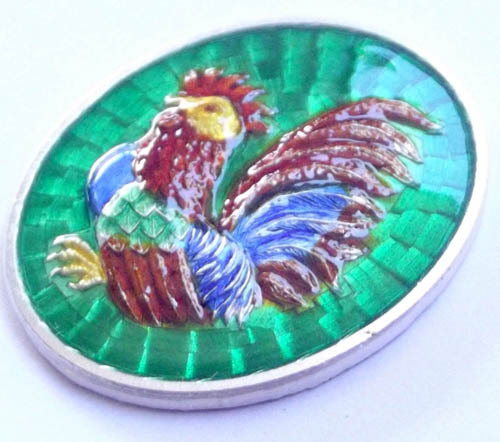
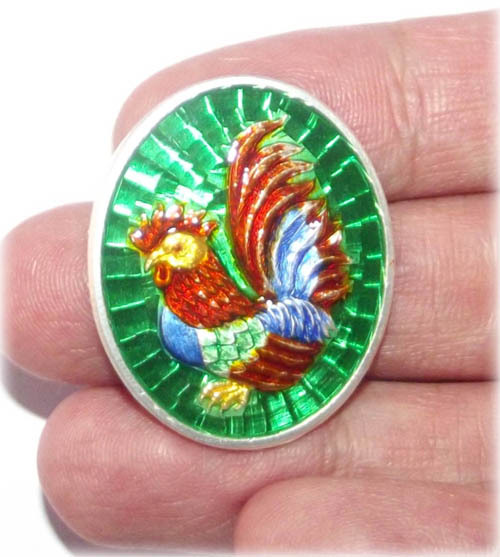
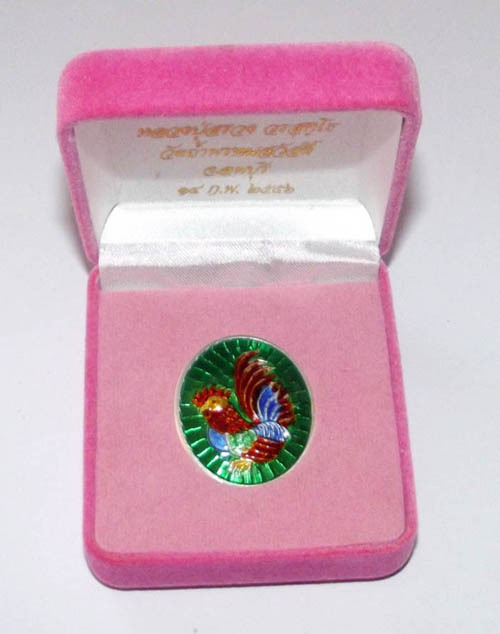
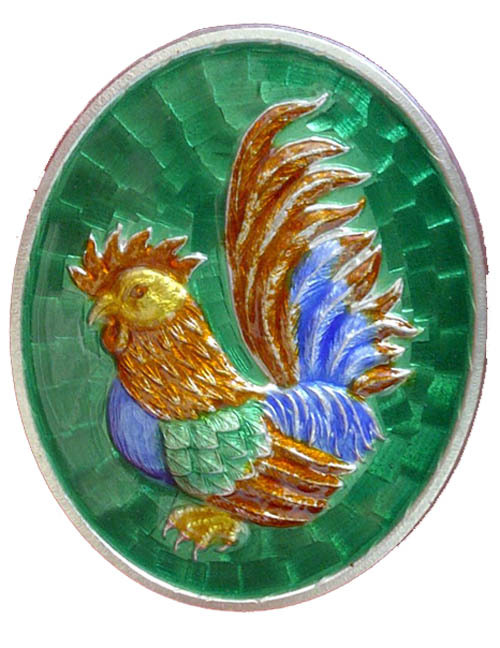
Presenting a rare and unusual Thai Buddhist Amulet; The Rian Gai Fa (Paya Gai Gaew Crystal Cockerel) Pim Yai Ongk Kroo Medallion Amulet – this particular exhibit being in Solid Silver with Green Rachawadee Animals – LP Suang 80th Anniversary Edition in 2556 BE, with Only 80 amulets Made. Luang Por Suangs Cockerel Amulets have become not only Legendary and a Tradition of his Amulet Making Wicha, in now its third edition. It is also traditional and meritorious of Luang Por Suang, That he uses his editions of amulets to help other temples in need. In the case of this edition which is a fundraiser To raise funds for the building of a Sala Brian, a building for study, at Wat Tham Prohm Sawad; the Building is for Buddhist monks to study the Dhamma, and the Suttas of the Buddhist Canon. The making of amulets in the image of a Cockerel is rare in Thai Buddha Magic, but has been seen by some of Thailand’s great masters of the past To have been for those few a preferred form of sorcery, That is not as I need missed as it may at first same in its origins for indeed the cockerel represents the first of the five self enlightened Buddhas of this universes Lifespan, ‘Pra Kakusanto’ or ‘Kakusanta Buddha’.
solid silver Gai Fai fa heavenly cockerel coin amulet by LP Suang
a
One famous master, whose amulet of a Buddha sitting on top of a Cockerel, Was of course the great Luang Por Parn, of Wat Bang Nom Kho, in Ayuttaya, and his Loksit ‘Luang Por Ruesi Ling Dam’. Luang Por Suang has created this edition All special coin amulets in sacred solid silver With a Luxurious glaze of ‘Ya Rachawadee’ Enamels To deco rate the surface of the solid silver coins with color and Lustre of Luminosity, Which only the Authentic Ya Rachawadee can bring to the surface of sacred metal coin amulets.

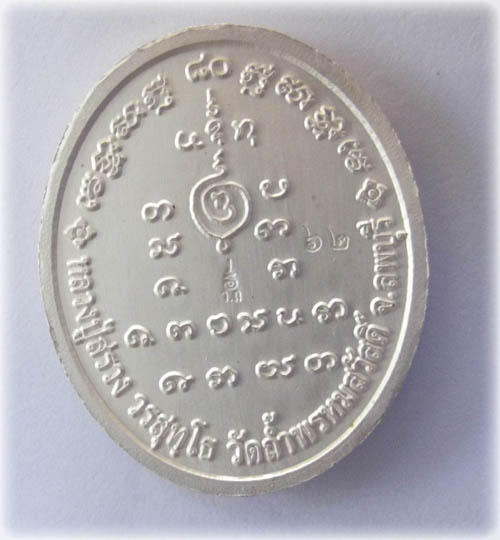
rear face of solid silver cockerel coin amulet LP Suang

The rear face of the amulets have sacred Yantra and Khom Agkhara spell inscriptions embossed, and the name of Luang Por Suang Worasutto, and his temple, Wat Tham Prohm Sawad.
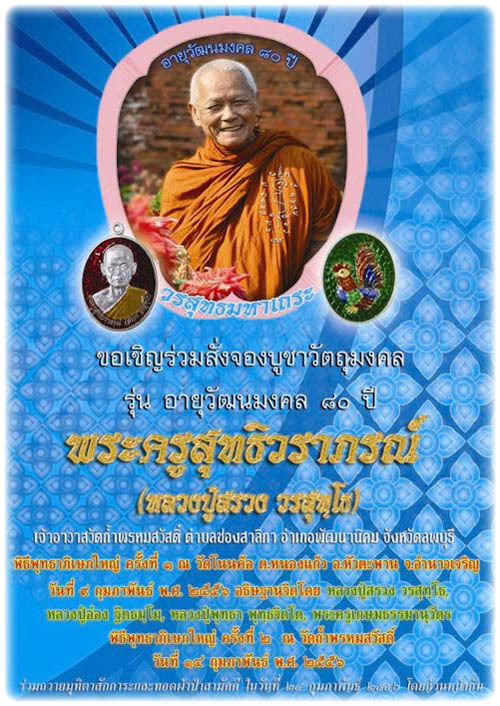
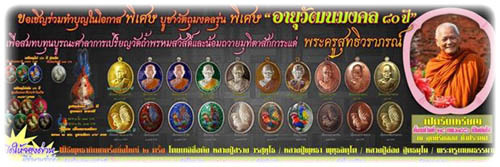
amulet edition poster of the Rian Gai Fa

The amulets were made in Pim Yai (large size) and Pim Lek (small size), in two different colored enamels; blue, and green. The coins were made in solid silver, as well as in albaca and sacred brass with enamelled image. The albaca and brass versions had no back surface enamels behind cockerel though, which is only applied to these Ongk Kroo models. They were also released in plain sacred metals without enamels. It is notable for students of the collectorship scene, that only the Ongk Kroo models of this edition have taken on fanaticism and become highly praised collector coins, whereas the other models are still relatively easy to find in circulation.
Comes in original felt box from the Temple. Can be encased if wished to be worn.

We believe however, that Sacred is Sacred, and that collector-ship and speculation of collector class amulets is not related to sacred value, or Miracle power. An Ongk Kroo or a standard versions would in principle, as Metallic coins, without sacred herbs or magical ingredients, have the same power. This rule of course, does not apply to sacred powder amulets or oils or Necromancy, where the ingredients used are sometimes different with different price models and also have different levels of power. But in the case of Sacred Buddhist Coin amulets, most of the Miracle power comes from Faith and the Purity of the Monk who blesses them, more than in the metal used to make them.

comes with original felt box

Comes in original felt box from the Temple. Can be encased if wished to be worn.

Still, the Ongk Kroo models are apart from sacred, also a long term worthwile investment which will increase in both sacred, Monetary and Collector scene value, as well as providing the essential Blessings and Magical aid to the Devotee. Maha Lap, Maha Pokasap, Metta Mahaniyom, Kaa Khaay; This amulet possesses all of the aforesaid blessings, for wealth increase, happy social and professional environments, great treasures, gifts and successful profession. Great Mercy Charm for Business and Social Seduction.

a picture of various models of the edition of Gai Fa amulets

As Luang Por Parn and LP Ruesi Ling Dam were the Masters of Celestial Cockerel (Gai Fa) amulets, in the present Era, it is Luang Por Suang who is second to none in this Wicha. LP Suang has inherited Wicha from some of History’s Great Masters such as Luang Por Khom of Wat Phai Rong Wua, Luang Por Khaeg of Wat Huay Khao (Supanburi Masters), and learned Mastery of Kammathana (Mastery of Kammathana is almost a Prerequisite to Psychic Power), with some of the Masters of the time; Luang Phu Khaw Analayo, Luang Phu Kam Dee, Luang Por Der, Luang Phu Taes Taep Rangsri, Luang Phu Chorp, and the great Kammathana Master Luang Phu Fan Ajaro.

Buddha Abhiseka

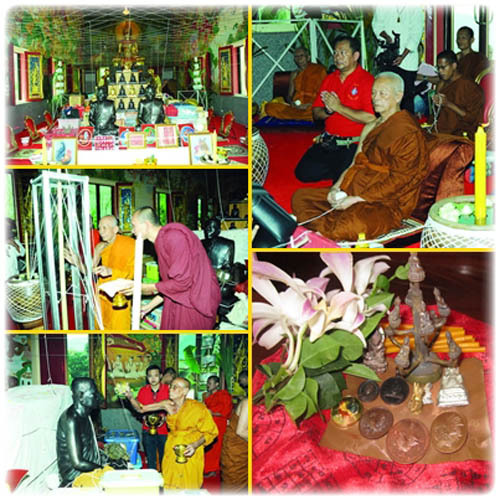
Picture of the Buddha Abhiseka Blessing Ceremony

Puttapisek, or ‘Buddha Abhiseka’ empowerment and Blessings Ceremony was performed at Wat Tham Prohm Sawad in Lopburi on the 14th of February 2556 BE at 13.09 PM.


This special piece was created by the revered Luang Por Suang to commemorate his 80th birthday, making it a highly collectible and meaningful item, with only 80 ever produced.

Luang Por Suang’s Cockerel Amulets have achieved legendary status, becoming a cornerstone of his unique amulet-making tradition (Wicha). This edition marks the third iteration of these powerful talismans, further solidifying their significance. True to Luang Por Suang’s benevolent nature, this special edition serves a noble purpose: raising funds for the construction of a Sala Brian at Wat Tham Prohm Sawad. This Sala Brian will provide a dedicated space for Buddhist monks to diligently study the Dhamma and the sacred Suttas of the Buddhist Canon, contributing to the preservation and propagation of Buddhist teachings.
Rian Gai Fa
The creation of amulets in the image of a cockerel is a rare practice within Thai Buddhist Magic, setting these amulets apart. However, this unique symbolism has been favored by select past masters of high esteem, indicating its profound power. While the symbolism might seem unusual at first glance, its origins are deeply significant. The cockerel represents none other than the first of the five self-enlightened Buddhas of this universe, ‘Pra Kakusanto’ (Kakusanta Buddha). This connection elevates the amulet beyond a mere charm, imbuing it with the potent energy and blessings of this primordial Buddha. This amulet is not just a beautiful object; it’s a tangible link to ancient wisdom and a powerful tool for spiritual growth.

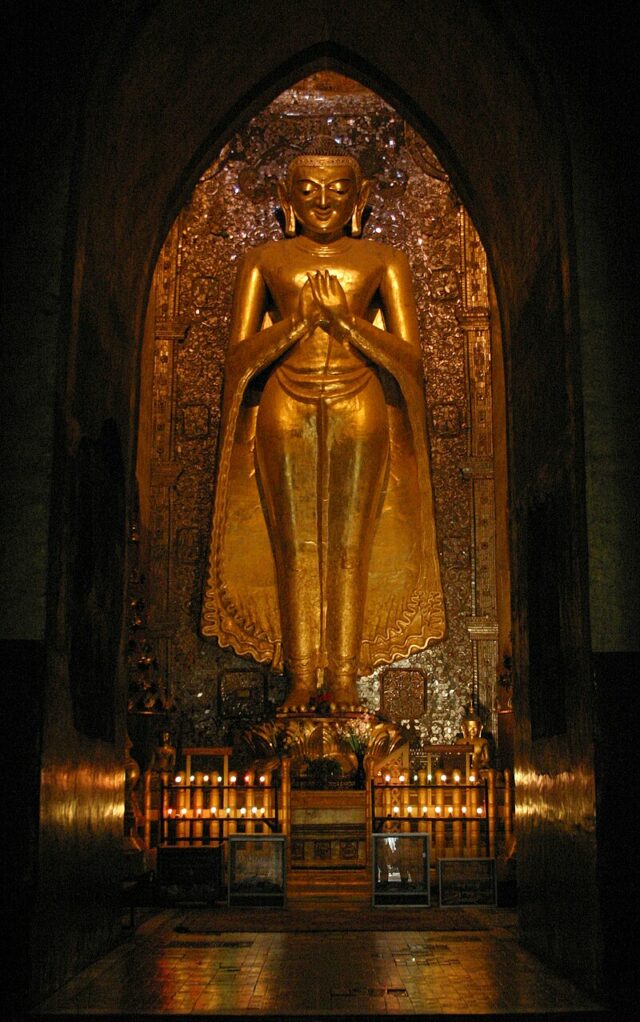
Kakusanta Buddha Statue Myanmar

Kakusanta Buddha Statue Myanmar

Kakusanta Buddha is not, as many believe, one of the Five Dhyani Buddhas. He is considered to be one of the seven ancient Buddhas who appeared before Gautama Buddha in previous cycles of time. He is said to have lived many eons ago and is associated with the element of earth. The creation of amulets in the image of a cockerel is a rare practice within Thai Buddhist Magic, setting these amulets apart. However, this unique symbolism has been favored by select past masters of high esteem, indicating its profound power. While the symbolism might seem unusual at first glance, its origins are deeply significant within Thai Buddhist tradition. The cockerel, especially in the context of the Kata Gai Thuean chant, represents Kakusandha Buddha (Pra Kakusanto), the first of the five self-enlightened Buddhas of this current cosmic era.

YouTube player

This connection is a key element in understanding the power and significance of these amulets. This association is not as widely known in other Buddhist traditions, but it holds particular importance within Thai Buddhist beliefs, where Kakusandha Buddha is sometimes depicted with a cockerel. This link elevates the amulet beyond a mere charm, imbuing it with the potent energy and blessings of this primordial Buddha. This amulet is not just a beautiful object; it’s a tangible link to ancient wisdom and a powerful tool for spiritual growth

The Seven Buddhas of Antiquity

In the earliest Pali Buddhist texts, particularly the first four Nikayas, only seven Buddhas, known as the Seven Buddhas of Antiquity (Saptatathāgata), are explicitly named. These Buddhas are:

  • Vipassī (lived ninety-one kalpas ago)
  • Sikhī (lived thirty-one kalpas ago)
  • Vessabhū (lived thirty-one kalpas ago, in the same kalpa as Sikhī)
  • Kakusandha (the first Buddha of the current1 good eon)
  • Koṇāgamana (the second Buddha of the current eon)
  • Kassapa (the third Buddha of the current eon)
  • Gautama (the fourth and present Buddha of the current eon)2

Additional Information

The Chakkavatti-Sīhanāda Sutta, found in the Digha Nikaya, further mentions that a Buddha named Maitreya is predicted to arise in the world after the Seven Buddhas of Antiquity.

Subsequently, the Theravada Buddhavamsa, a later text (between the 1st and 2nd century BCE), added twenty-one more Buddhas to this initial list of seven.

Kalpas and Buddhas

According to Theravada tradition, there can be up to five Buddhas in a kalpa, or world age. The current kalpa is believed to have had four Buddhas, with Gautama being the fourth and Maitreya being the fifth and final Buddha of this kalpa. This makes the current aeon a bhadrakalpa, or fortunate aeon.

However, some Sanskrit and northern Buddhist traditions propose that a bhadrakalpa can have up to 1,000 Buddhas, with Gautama and Maitreya still recognized as the fourth and fifth Buddhas of this kalpa, respectively.

Koṇāgamana Buddha

The Koṇāgamana Buddha is of particular interest, as he is mentioned in a 3rd-century BCE inscription by Ashoka at Nigali Sagar, in present-day Nepal. This inscription, written in the Brahmi script, records Ashoka’s visit to the site and his order to enlarge a stupa dedicated to the Koṇāgamana Buddha. Moreover, according to the writings of the Chinese Buddhist monk Xuanzang, Koṇāgamana’s relics were once housed in a stupa at Nigali Sagar, which is now located in the Kapilvastu District of southern Nepal.

Wicha Suea Maha Amnaj Power of the Tiger

What is the Wicha Suea Maha Amnaj?

Emperor Tiger of Commanding Power

The Wicha Suea Maha Amnaj refers to the sacred knowledge or occult practice related to tiger amulets endowed with powerful command and dominion, and defensive attributes. “Wicha” translates to magical knowledge or occult science in Thai. “Suea” means tiger, and “Maha Amnaj” signifies great dominion or commanding power. Thus, Wicha Suea Maha Amnaj can be understood as the mystical practice of producing tiger amulets that confer great dominion and commanding presence upon the wearer. . The tiger, or “Suea” in Thai, is a symbol of strength, courage, and ferocity. Tiger amulets are believed to channel the animal’s inherent power, providing the wearer with protection, authoritative presence, and the ability to overcome obstacles. These amulets are often created and blessed by revered monks and lay masters, who perform intricate rituals to imbue them with spiritual power.

Takrut Hnang Suea Kroeng Luang Phu Nong

Takrut Hnang Suea Kroeng Tiger Fur Amulet by the Great Luang Phu Nong Tammachodto (Wat Wang Sri Tong, Surin)

These amulets are believed to imbue the bearer with qualities akin to a tiger—strength, fearlessness, influence, and invincibility. The amulets are often used for safeguarding, invulnerability (Klaew Klaad), and to instill respect and command (Maha Amnaj).

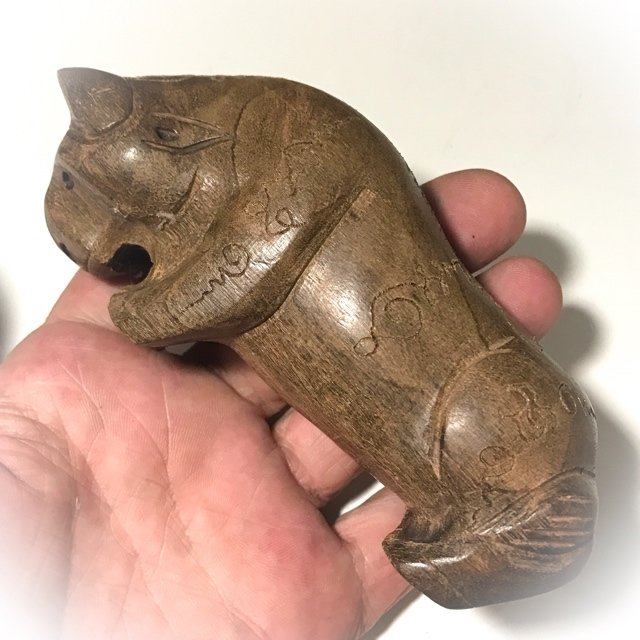
Khiaw Gae Palad Suea Carved Tiger amulet LP Sawai Wat Bridaram

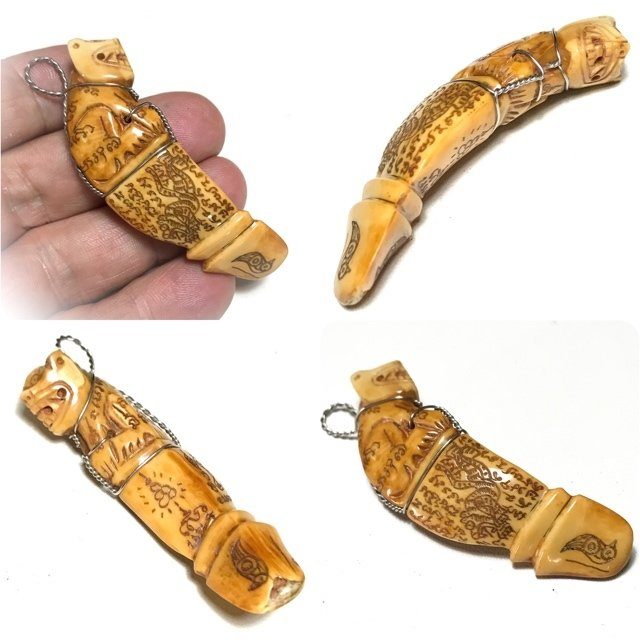
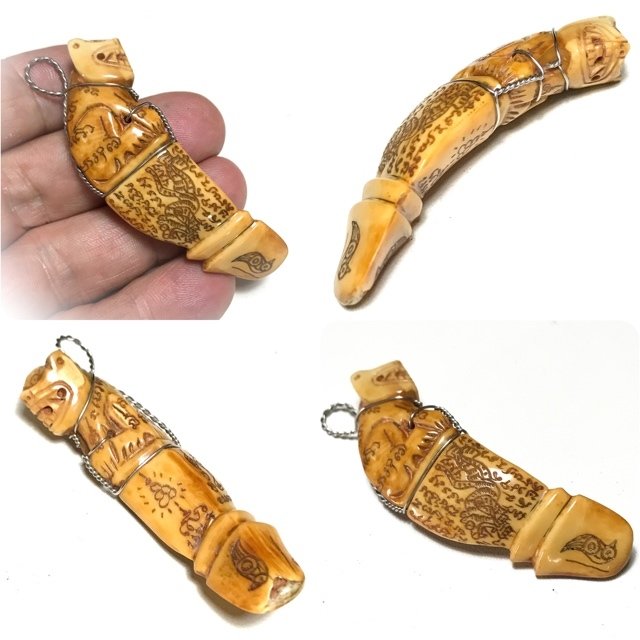
Hand carved and inscribed tiger amulet in the form of a Palad Khik Lingam, created by Luang Por Sawai of Wat Bridaram. Known for his distinctive hand inscriptions, Luang Por Sawai’s talismanic charms are highly sought after. This particular amulet features a wild boar’s tooth, a carved tiger on the hilt, and Sariga Yantra spell inscriptions.

The “Top Thai Tiger Amulets and Their Masters” include:

Luang Por Parn (Wat Bang Hia / Wat Bang Bor) is highly revered for his powerful protective and commanding tiger amulets, often featuring intricate designs. His predecessor, Luang Por Ruean, also made significant contributions to this tradition.

Luang Phu Nak of Wat Arun, also known as the Temple of the Dawn, was an extremely revered monk, and his status for Tiger amulets is said to be among the top five of all Masters of all Time, particularly noted for his Tiger forehead skin amulets.

YouTube player

Luang Por Nok (Wat Sangkasi), as the first direct apprentice of Luang Por Parn, continued the legacy of creating potent tiger amulets known for their protective and dominant qualities. His amulets are highly regarded and are considered essential for serious amulet collectors.

Luang Por Say (Wat Bang Bor), a significant figure in Luang Por Parn’s lineage, created amulets from bear and tiger teeth and fangs, cvsrved bone and ivory like his Kroo Ba Ajarn before him (Kroo Ba Ajarn Means ‘Root Guru Mentor Teacher’), and empowered with the same powerful protective and commanding presence. His apprenticeship under both Luang Por Nok and Luang Por Parn ensured the continuation and enhancement of this potent Wicha.

The Famous and rare 4th edition suea tiger amulet Luang Por Wongs

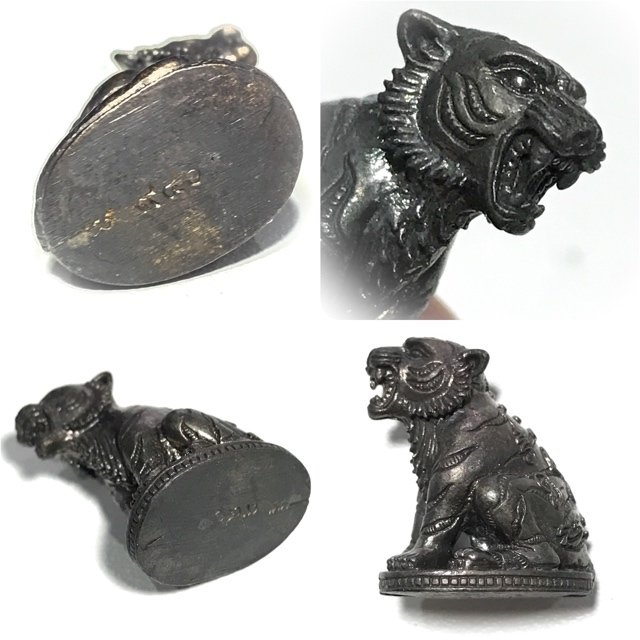
Luang Por Wongs (Wat Bariwas) is famed for his Loi Ongk statuettes of seated tigers, known for their unique designs and potent protective qualities. These amulets are considered some of the most beautiful and effective tiger amulets ever created.

Luang Phu Sukh (Wat Pak Klong Makham Tao) is known for his Hnaa Phaag Suea (tiger forehead) and Hnang Suea (tiger skin) amulets, highly esteemed for their spiritual and protective powers, believed to offer invincibility and commanding presence.

Luang Por Phern Tidtakuno (Wat Bang Pra) is synonymous with the Wicha Suea Maha Amnaj. His tiger amulets, including the ‘Ride the Tiger’ and Suea Koo, are legendary for their power to bestow invincibility and influence. Luang Por Phern’s amulets are among the most sought-after in the realm of Thai amulets.

Takrut Hnang Suea Luang Por Phern Wat Bang Pra.

Takrut Hnang Suea Luang Por Phern Wat Bang Pra

Luang Por Phern Tidtakuno of Wat Bang Pra is a revered figure in Thai Buddhism, known for his unparalleled mastery of the Wicha Suea, which includes the powerful Sak Yant and tiger amulets. His expertise in these mystical arts has earned him a legendary status among devotees and collectors alike.Luang Por Phern's image is often depicted as seated riding upon the back of a tiger, symbolizing his command over the fierce and protective energies associated with the tiger spirit. This imagery underscores his mastery of the Wicha Suea, a sacred knowledge that harnesses the tiger's formidable power for protection and authority

Luang Por Phern of Wat Bang Pra; Luang Por Phern Tidtakuno of Wat Bang Pra is a revered figure in Thai Buddhism, known for his unparalleled mastery of the Wicha Suea, which includes the powerful Sak Yant and tiger amulets. His expertise in these mystical arts has earned him a legendary status among devotees and collectors alike.
Luang Por Phern’s image is often depicted as seated riding upon the back of a tiger, symbolizing his command over the fierce and protective energies associated with the tiger spirit. This imagery underscores his mastery of the Wicha Suea, a sacred knowledge that harnesses the tiger’s formidable power for protection and authority

Luang Por Tong Sukh (Wat Tanode Luang) is renowned for his Takrut Hang Hnaa Phaag Suea (tiger forehead) amulets, known for their potent protective and commanding qualities. These amulets are highly valued by collectors and practitioners alike.

Luang Por Te Kong Ton (Wat Sam Ngam) is known for his Takrut Hnaa Phaag and Hnang Suea amulets, celebrated for their powerful spiritual properties and highly sought after for safety and dominance.

YouTube player

Tiger forehead skin amulets, or Hnaa Phaag Suea, are renowned for their potent protective and commanding qualities. These amulets are crafted using the skin from the forehead of a tiger, which is believed to imbue the wearer with the tiger’s strength, dominance, and invincibility. The tradition of creating these amulets is deeply rooted in Thai occult practices and has been carried forward by several esteemed masters.

The Meaning of Maha Amnaj Magic

Suea - Tiger Wicha

The Wicha Suea is a highly effective technique, frequently utilized for enhancing personal strength, ensuring safety, and drawing wealth and prosperity. Given its origins in the mysterious and powerful dark arts, those who engage in this practice must do so wisely and respectfully.

The word “Maha Amnaj”in Thai, roughly translates to “grand authority” or “commanding power,” and is significant in the context of tiger amulets. These amulets are believed to confer upon the wearer an aura of influence, respect, and fearlessness, which is highly valued in Thai culture, particularly in leadership and protective contexts.

Below; “Nam Man Suea Saming Prai  of Kroo Ba Sri”

This potion is a creation of the respected and revered figure in the spiritual world, Kroo Ba Sri. Nam Man Suea Saming Prai Oil is a type of spiritual oil, often used in rituals and prayers for various purposes, including seeking protection, enhancing personal power, and attracting good luck. The word “Saming” refers to the wild jungle ghosts or spirits, and “Prai” refers to the animistic spirits of the earth, air, fire, and water. This potion is believed to contain the essence of these spirits, harnessing their power to benefit the user. Kroo Ba Sri is a well-known and trusted spiritual practitioner, adding to the credibility and desirability of this potion.

Nam Man Suea Saming Prai Oil Potion by Kroo Ba Sri

Nam Man Suea Saming Prai Oil Potion by Kroo Ba Sri.

Nam Man Prai Suea Saming has been used by Warriors, Sorcerors, Gangsters and Policement and Business Millionaires for centuries, as a method of remaining on top, and in control, and defence against Black Magick of all kinds. If a person is afflicted with a spirit, possessed or cursed, or ill from Black Magick, then Luang Phu Kroo Ba Sri says that to smear some of the oil will banish the Afflictive Magick

Nam Man Prai Boiling Ceremony

Nam Man Prai Boiling Ceremony

Nam Man Suea Prai Oil Being Made in Cauldron using Herbal Method, for the later immersion of Guru Monk Coins in a later empowerment ceremony

Nam Man Suea Prai Oil Being Made in Cauldron using Herbal Method, for the later immersion of Guru Monk Coins in a later empowerment ceremony

Wicha Suea Maha Amnaj is a deeply respected and significant field within the realm of Thai occult practices. This discipline is primarily concerned with the creation of intricate tiger amulets, which are believed to provide substantial dominion and protection to their bearers. These amulets are not merely viewed as spiritual artifacts, but also as symbols of historical significance, showcasing the rich cultural heritage of Thailand.

The top ten tiger amulets,  as documented popularly by some of the most prominent authors and experts in the field, about the Tiger amulets of the great Sorcerer-Monks, Lersi Sages and Lay Masters of Thai history, are highly prized. These 10 or a dozen or so masters, include Luang Por Parn, Lusang Phu Sukh, Luang Por Sawai (Wat Bridaram), The Great Luang Por Phern of Wat Bang Pra, Luang Por Nok, and Luang Por Say, have made significant contributions to the tradition of Thai amulet-making. Their works are not only admired for their spiritual and protective qualities but also for their intricate artistry, which reflects the high level of skill and dedication involved in the creation process.

Takrut Hnaa Bpaag Suea - Tiger Forehead Skin amulet spellbound hide scroll from Luang Phu Nak of Wat Arun (Temple of the Dawn). Believed powerful Maha Amnaj (Commanding Power), Kong Grapan Chadtri (Invincibility), Klaew Klaad (Evade Dangers), Maha Ud (Gunstopper), and Gae Athan (Anti Black Magick)

Takrut Hnaa Bpaag Suea – Tiger Forehead Skin amulet spellbound hide scroll from Luang Phu Nak of Wat Arun (Temple of the Dawn). Believed powerful Maha Amnaj (Commanding Power), Kong Grapan Chadtri (Invincibility), Klaew Klaad (Evade Dangers), Maha Ud (Gunstopper), and Gae Athan (Anti Black Magick)

The Wicha Suea Maha Amnaj, as preserved and advanced by these revered masters, continues to endure, providing a spiritual link to the past for future generations. Each amulet is a testament to the deep-rooted belief in the power of these symbols and the respect accorded to the masters who created them.

[ecwid widgets=”productbrowser search minicart” default_category_id=”10267009″ default_product_id=”0″ minicart_layout=”MiniAttachToProductBrowser”]


Si Hu Ha Ta 4 ears 5 eyes Indra God Magic Candle LP Na

Maeng Si Hu Ha Ta 4 ears 5 eyes Indra God Magic Candle for Ritual Bucha & Spellcasting 6 Inches Kroo Ba Na Chinawangso Final Edition

The Thaep Si Hoo Ha Ta Magic Ritual Candle, is for Invoking the Manifestation of the God Indra, in the form of the 4 eared 5 eyed Maeng Si Hu Ha Ta Charcoal Eating Gold Maker Demi-God. Made shortly before the passing of the great Luang Phu Kroo Ba Na, and is the last edition ever empowered by Luang Phu Na Chinawangso, of Samnak Songk Doi Ihuy, before his passing. Luang Phu Na Chinawangso, was a Looksit of Kroo Ba Srivichai, and is the inheritor of the Master Lineage Sorcery of Kroo Ba Apichai Khaw.

This final edition was released in 2561 BE, and Blessed by Luang Phu Na, under Auspicious Astrological Alignments for that year, after which Kroo Ba Na passed away, which is strange as his edition was deliberately named ‘Na Sethee Run Raek Lae Run Sud Taay’ (first and last edition), as if he knew that this would be his last.

The Thaep Maeng Si Hu Ha Ta, is part of a legend attached to the building of the Temple of Wat Khao Kway Gaew in Chiang Rai – this creature exists in the temple there as a statue. This Mythical creature’s dung (excrement) is pure gold. Si Hu Ha Ta is also the Deity supposed to be the reason that men love their mistress more than their first and main wife (in Thailand many men have a  second wife/mistress).

The four ears and the five eyes are part of the maintenance of the Buddhist principles of Dhamma practice; namely, Bhramavihara (the four ears representing; four practices of compassion – Metta (loving friendliness), Garuna (Compassion and generosity), Mutitaa (Mutual concern for the welfare of others) and Upekha (equanimity).

The five eyes on Meng Si Hu ha Ta mean the five precepts (not killing not stealing not indulging in perverse sexual or adulterous behavior, not lying and not taking alcohol or intoxicating substances such as drugs). Taep Si Hu Ha Ta is rather like a bear in appearance, and small in stature, it eats coals and excretes solid gold.

Kata Na Sethee for Wealthiness

Chant Kata Maha Namasakara 3 Times;

Namō Dtassa Pakawadtō Arahadtō Sammā Samputtassa

Namō Dtassa Pakawadtō Arahadtō Sammā Samputtassa

Namō Dtassa Pakawadtō Arahadtō Sammā Samputtassa

Then Chant (3 Times);

NA MAA MEE MAA NGERN KAM MAA TONG KAM MAA NA CHAA LI DTI NA MA PA TA NA MOE PUT TAA YA

Banneng Ancient Khmer Exhumed Bone Carving

Presenting an extremely rare chance to admire a historically and extremely sorcerous piece of ancient Khmer Necromancy, in the form of this Banneng Human Skull-Bone carving of a Khmer Hoeng Prai Ghost, exhumed from the grave many many years ago in ancient times, by a Khmer Necromancer, and invoked with the spirit of the Hoeng Prai Ghost who once inhabited the mortal remains during its lifetime. A Hoeng Prai Ghost is often described in English, as ‘Death whilst screaming”, meaning screaming during an accident or being murdered, drowning or falling from heights. In truth, a Hoeng Prai Ghost is the spirit of a person who suffered a premature death, suddenly without any kind of pre-warning.

Banneng ghost bone carvings are considered, along with Nam Man Prai Tang Glom Oil, is considered to be the highest and most powerful and adept form of Necromantic Sorcery in existence, and Khmer Necromancy is considered to be the number one form of Dark Arts in South East Asia, for its many thousand year old tradition and ancient formulas, which have been preserved through even the time of the Kampuchean Civil War.

To make a Banneng, one must first find a person who died under the proper circumstances to be a Hoeng Prai, and then have permission from the family of the dead spirit, or perform according to the will and testament of the dead person, and then perform the ritual to gain permission from the protector spirit of the cemetery where the Hoeng Prai is interred, before then using Wicha to find and intuit, which of the three protective magical seal stones on the grave to remove before attempting to exhume the body of the Hoeng Prai.


There are three stones hidden on the grave area, which are inscribed, with Khom Kata Akom, and placed there by the gravedigger himself ,who also uses sorcery to seal the graves of angry spirits or powerful Hoeng Prai Ghosts to stay within the grave, and not wander around the neighborhood.
Banneng became internationally popular after many South East Asians from Malaysia, Singapore, Hong Kong and other countries began to hear of the powerful magic of the Banneng, and rumors of its power to attract immense wealth.

They are wildly sought after, and there are many Ban Neng derivative type amulets providing for the massive demand, such as skeletal pieces, which then are known as ‘Chin Aathan‘, instead of ‘Ban Neng’ But it is the skull bone itself, which is the rarest and most highly prized, and of course the largest of all Necromantic Bone Carvings. Usually only found in the museums of wealthy collectors and serious devotees of Necromancy / Barang (Malaysian Term).

[ecwid widgets=”productbrowser search categories” default_category_id=”545105″ default_product_id=”0″ minicart_layout=”MiniAttachToProductBrowser”]

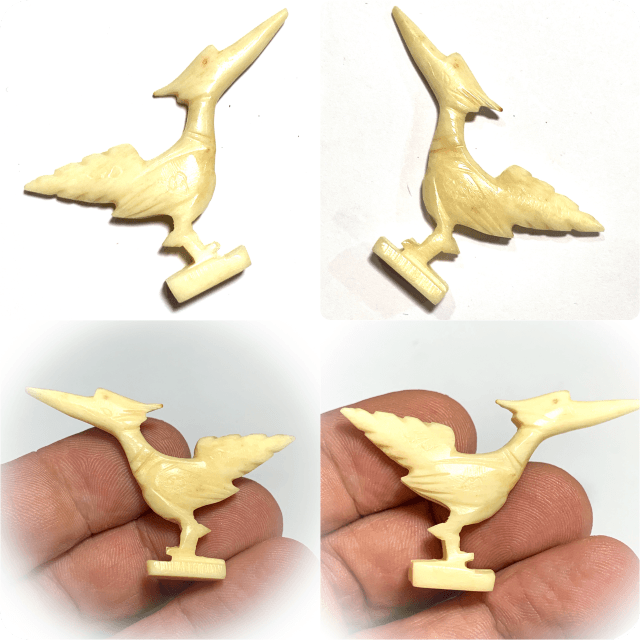
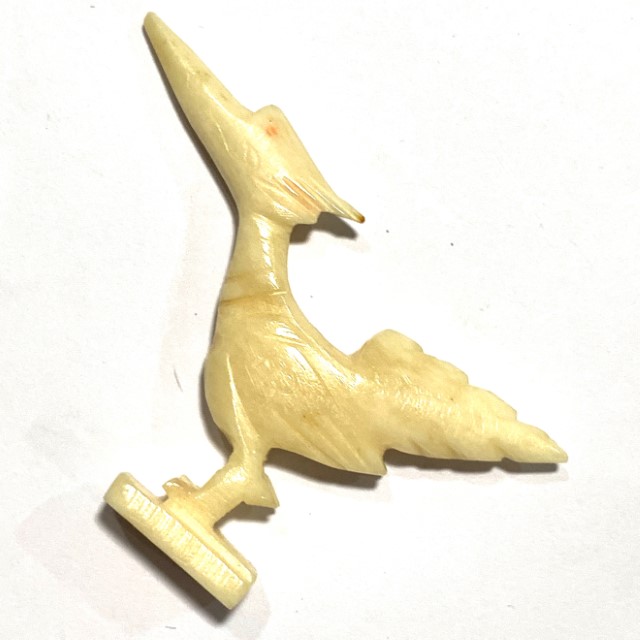
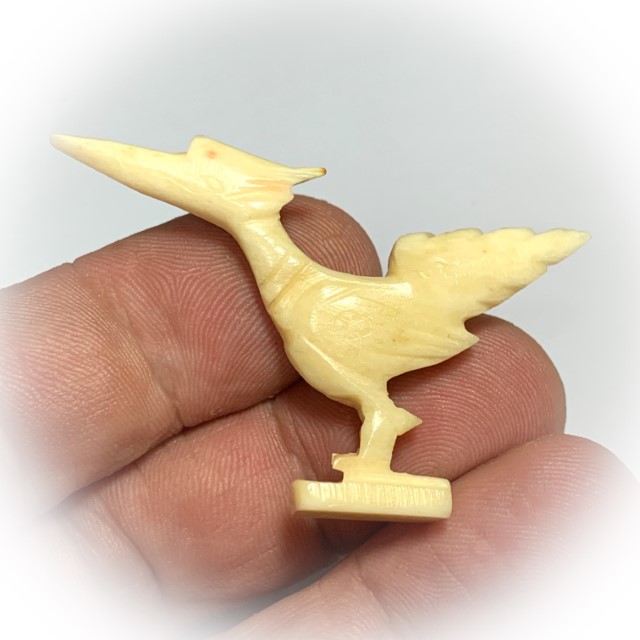
Carved Himapant Hongsa Ivory Swan Amulet LP Lae

Paya Hongs Golden Hongsa Himapant Swan in Hand Carved Ivory with Hand Inscriptions of Khom Agkhara spells, from the Great Petchburi Master Monk Luang Por Lae, of Wat Khao Song. A most beautiful hand carved amulet that is Extremely rare to see from this Master, the Paya Hongs Tong Golden Celestial Swan, in hand carved ivory. with hand inscriptions, for Metta Maha Niyom Mercy Charm, Maha Sanaeh attraction, Jerajaa Convincing Speech, Kaa Khaay Business Success.

The Golden Hongsa is for Thai Buddhists, regarded as a past incarnation of the Lord Buddha, and the Hongsa amulet itself, is believed to be very powerful Mercy Charm for Majestic Wealth Attraction and Impressive Effect to Attract Courtiers, Increased Business, Improve Social and Love Life, and Oratory skill

Paya Hongs Tong Nuea Nga Gae Luang Por Lae Wat Khao Song

Paya Hongs Tong Nuea Nga Gae Luang Por Lae Wat Khao Song


The Paya Hongs Tong Golden Swan, represents a past Incarnation of the Lord Buddha in the Jataka Legends, and is Imbued with the Highest Metta Mahaniyom Mercy Charm, absorbing all Evil, dissolving Antimonies and Arguments, and Turning friends into Enemies. The Paya Hongs is immensely useful for praying to to attract customers and business opportunities.

It is also reputedly powerful for using to approach superiors or plead for mercy, as well as to win friends, lovers and admirers. The Hongs Swan is also the Celestial Steed of the God Brahma, and is considered to be an emanation of a Bodhisattva.


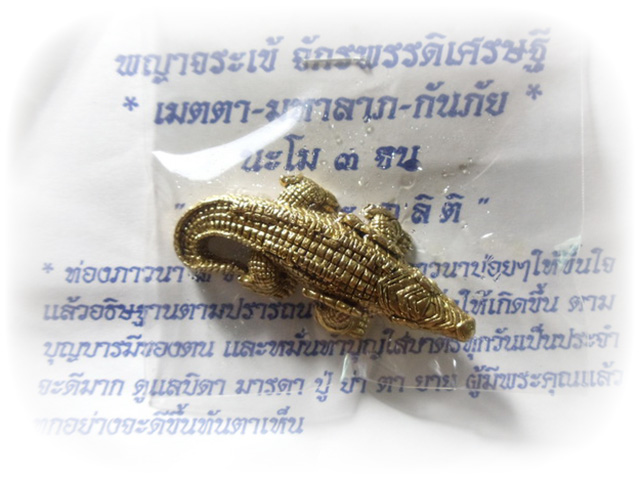
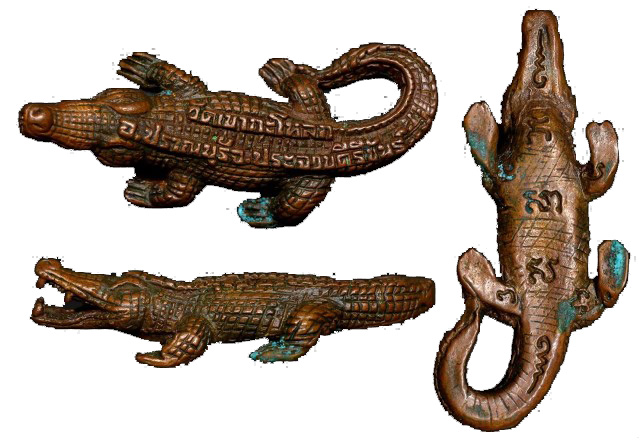
Jorakhae Crocodile Amulet Pantheon of Wat Khao Galoke

Dtamra Jorakhae Aathan Wat Khao Galoke

When speaking of the sacred crocodile Animist Charm, the Wicha Jorakhae sorcerous crocodile spell of Pra Kroo Samun Tam, can be said to be synonimous with the name of the temple of Wat Khao Galoke. Pra Kroo Samun Tam is the first ever abbot of Wat Khao Galoke, and ordained at age 31 in the year 2522 BE, as Wat Tamma Pracharam with the Great Luang Por Tong Sukh of Wat Sapan Sung as his Upachaya Ordaining Officer, Luang Por Phaew, of Wat Tanode Luang as his Pra Gammawajajarn Prompting Officer, and Luang Por Pan of Wat Tamma pracharam as his Anusawanajarn Witness. The Paya Jorakhae Aathan of Wat Khao Galoke is so popular that it has been made in more than a dozen or so editions.

The Jorakhae Akom most probably Represents the Chalawan Giant Crocodile, who ate his fill and grew to giant size, and was a highly feared Deified beast of Thai Folk Tales and Literary Fable. They are a very rare kind of animist charm to find made, for so few masters possess the Wicha. This makes them very special because of their rarity and exclusivity, and of this particular Niche of the Thai amulet scene. Apart from this, we should look at the magical properties all the magic spell used in this very ancient animist Charm. The Jorakhae is of course a type of Mara (Underworld being), and thus protects against other Maras during the time it serves you.

11th edition Jorakhae Wat Khao Galoke 2556 BE

11th edition Jorakhae Wat Khao Galoke 2556 BE in Nuea Tong Hlueang

The first edition was released in Nuea Tong Daeng Rom Dam only, with 6000 made, on 1st January of the year 2550 BE, 6000 amulets made, with the words ‘Wat Khao Galoke embossed. The edition was so successful and popular, that a second edition was required.

The 2nd edition was released in the same year on the 10th of May 2550 BE, with 4,400 amulets made in Nuea Tong Hlueang, and Nuea Tong Lueang Rom Dam. This edition also depleted fast, and made a third edition necessary, to fulfil the needs of the devotees who missed out on the first two editions.

This third edition was then released on the 28th October 2550 BE in the same year as the first edition, with 10,999 made in Nuea Tong Hlueang, . Then a 5,999 in Nuea Tong Hlueang Rom Dam, and 1000 made in Nuea Tong Daeng.

Paya Jorakhae 3rd edition Wat Khao Galoke Nuea Tong Daeng

Paya Jorakhae 3rd edition Wat Khao Galoke Nuea Tong Daeng

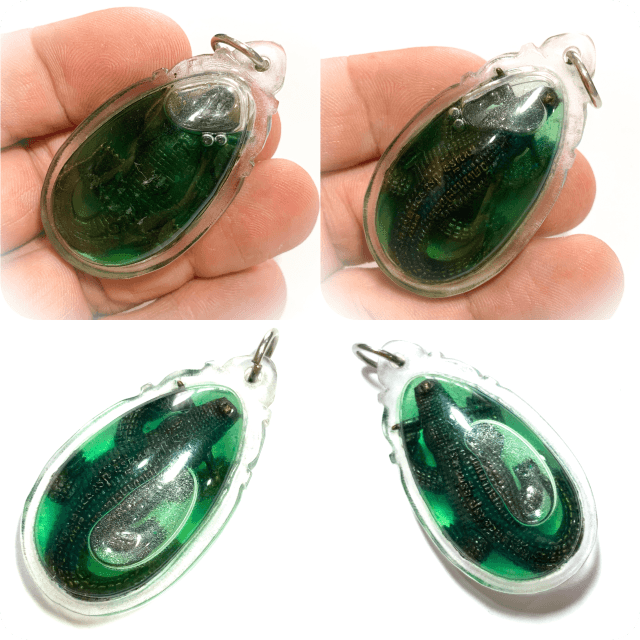
Below; special ongk kroo version of third edition Jorakhae Akom Wat Khao Galoke in Nuea Tong Hlueang Rom Dam immersed in Green Prai Oil

Paya Jorakhae amulet Pra Kroo Samun Tam Wat Khao Galoke

Paya Jorakhae amulet Pra Kroo Samun Tam Wat Khao Galoke

The Fourth edition was also released in the very same year during the ceremony of receiving the Royal Pat Yos Monk’s Fan of Status. This 4th edition came after the third edition depleted, much to everyones’s surprise (considering many more than the previous editions were made to avoid depletion). By this time, the Jorakhae Akom of Wat Khao Galoke had become nationally famous, and was in demand around the whole country.

So the 4th edition was blessed and released on 13th December 2550 BE with 500 made in Nuea Tong Daeng, and 100 made in Nuea Tong Hlueang. This edition had crocodile with open mouth like the third edition, but is rarer top find due to less numbers.

The 5th edition was made with much larger numbers and released on 13th April 2551 BE with 15,000 amulets made in Nuea Tong Hlueang, 13,000 in Nuea Tong Hlueang Rom Dam, and 2000 made in Nuea Tong Daeng.

The 6th edition is identified by the fact the crocodile is holding three lotus flowers in its mouth.The 6th edition was blessed and empowered and released on 11th June 2561 BE. 4,500 amulets were made in Nuea Tong Hlueang Rom dam, and 3000 in Nuea Tong Hlueang, with only 500 being made in Nuea Tong Daeng.

The 7th edition was released on 13th April 2551 BE, with 12,935 amulets made in Nuea Tong Hlueang Rom Dam, 6000 in Nuea Tong Hlueang, and 6000 in Nuea Tong Daeng. Since then there have been various editions released occasionaly over the years (up to 14 editions), continuing the Dtamra of the Paya Jorakhae Wat Khao Galoke.


Lanna Wicha 1 Eye Coconut Carved Amulets KB Dtu Ing

Presenting a Special series of limited edition Jumbo Size Masterpiece Hand Made amulets in Kala Ta Diaw 1 eyed coconut shell, from Lanna Monk Kroo Ba Dtu Ing, of Wat Intrataep in Chiang Mai. The amulets of this extreme limited hand made series, were made from a small number of one eyed coconuts, which are extremely rare (1 in 100,000 or less), in the form of various Lanna Popular Deities, including Pra Rahu, and Paya Khao Kham (Lanna style Khun Phaen/Paetch Payatorn).

The Naturally Imbued Power Within One Eyed Coconut Shell

Kala Ta Diaw (one eyed coconut shell), is a highly sacred and powerful substance in Thai Sorcery, with power of Maha Pokasap Wealth and Treasure Attraction. Gae Aathan Anti Black Magick, and Kong Grapan Maha Ud Protective Power. Just the substance itself is said to possess extreme magical power, even without blessing or empowerment by any sorceror or monk.

Paya Khao Kam

Paya Khao Kam Nuea Kala Ta Diaw Gae Kroo Ba Dtu Ing

Paya Khao Kam Nuea Kala Ta Diaw Gae Kroo Ba Dtu Ing

Paya Khao Kam Golden Horned Maha Sanaeh Seduction Demon amulet, released by Kroo Ba Dtu Ing imbued with the powerful Wicha Paya Tae Krua Maha Sanaeh. This Paya Khao Kam Pim Jumbo size Ongk Kroo amulet is hand carved from Nuea Kala Ta Diaw, 1 eyed coconut shell, considered a very powerful substance for Maha Ud, Ud Sap, Maha Pokasap, and Maha Lap.Pure Wicha Thai Lanna Northern Sorcery. Filled with a mass of powerful magical substances in the rear face.

Paya Khao Kam, often called the ‘Lanna Khun Phaen’. or Lanna ‘Golden Horns’ Deva, in hand carved hand painted one eyed coconut shell, filled with Muan Sarn Maha Sanaeh Powders, 2 In Koo statuettes, 3 pieces of Chin Aathan Bone Pieces 14 Ploi Sek Maha Pokasap enchanted wealth attracting gemstones (2 in front face, 12 in rear face), and a small Glass Phial of Nam Man Prai Tang Glom Necromantic Serum inserted in the rear face from Kroo Ba Swatu Jao Ing (Pra Ajarn Rit Chai), otherwise lovingly known by the Lanna style Monk’s Nickname of ‘Dtu Ing’, of Wat Intra Taep in Chiang Mai (Wat In Taep).

The front face features a Northern Lanna Style carved image of Paya Khao Kham Golden Horned Seductive Demon Deity, an ancient Animist Deity of the Thai Lanna Sorcery Tradition surrounded by his ubiquitous entourage of beautiful Maidens. As Lord and Master, Paya Khao Kam is full of Maha Amnaj (commanding power and influence) over his entourage.

Closeup Image of Paya Khao Kam Kroo Ba Dtu Ing

Closeup Image of Paya Khao Kam Kroo Ba Dtu Ing

This large Ongk Kroo Paya Khao Kam amulet is an extreme limited series Ongk Kroo Masterpiece Version amulet, hand carved and embellished with exquisitely detailed colored front face, with 2 red Ploi Sek Gemstone inserts. The amulets were released in a small limited edition of traditional Lanna Amulets, which adhere to the Ancient Wicha Lanna Methods of Creation and Empowerment, including an extensive invocation of the Wicha Paya Tae Krua..

The rear face has two In Koo Devas of Love statuettes, three pieces of Necromantic Chin Aathan bone pieces of a Hoeng Prai Ghost, 2 Takrut Spells and 12 Ploi Sek Maha Pokasap Gemstones inserted into Black Maha Sanaeh Sacred Powder Muan Sarn, which is highly resinous through the mixture of herbal saps and prai oils.

Closeup Image of Rear Face of Paya Khao Kam Kroo Ba Dtu Ing

Closeup Image of Rear Face of Paya Khao Kam Kroo Ba Dtu Ing

The Wicha In Koo can also be invoked using Kata, to increase Maha Sanaeh within the amulet.

Pra Kata for Bucha and Synopsis of the In Koo Lanna Amulet.

The Paya Khao Kam is the Pra Khun Phaen Paetch Payatorn of the Lanna tradition). Paya Khao Kam is traditionally pictured in Lanna Mythology as a Man dressed in full rich regalia with a crown bearing two golden horns of plenty. He is embracing a harem of Attractive Ladies.


The rear face of the one eyed coconut shell is filled with powerful Muan Sarn Sacred Powder admixture with 2 Takrut Spells and 12 Enchanted Wealth Attracting Gemstone spells, with twin In Koo Devas of Love statuettes, 3 pieces of Necromantic Chin Aathan Bone pieces from a Hoeng Prai Deva who was Lucky in Gambling and became Rich, and a small glass phial with green Nam Man Prai Tang Glom Necromantic Serum Inserted into the sacred Muan Sarn clay.

The Paya Khao Kam, is a powerful Seduction and Mercy Charm, known for its power to possess many lovers and keep them all happy and fulfilled, to attract admirers, customers and friends. It is highly reputed for its Maha Lap and Maha Pokasap powers. This is of course a reminiscently similar imagery and indeed, similar magical effect as the Khun Phaen Jet/See Nang Lorm Wicha, which also features a Virile Successful Wealthy man (Khun Phaen) of Great Status and Power, encircled by Lovely Maidens.


Kroo Ba Dtu Ing empowered the amulets with the Wicha Paya Khao Kam, and Wicha Khun Phaen Paetch Payatorn. The Wicha invokes immense Maha Sanaeh, Jerajaa, Kaa Khaay, Metta Mahaniyom, Maha Lap, Siang Choke, and Maha Pokasap power, for seductive attraction, Mercy Charm, Convincing Speech, Selling Power, Lucky Fortunes in Life and with Gambling, Lottery or Speculative Market Investments, and Status with Treasure Accumulation


The Paya Khao Kam, is a powerful Seduction and Mercy Charm, known for its power to possess many lovers and keep them all happy and fulfilled, to attract admirers, customers and friends. It is highly reputed for its Maha Lap and Maha Pokasap powers. This is of course a reminiscently similar imagery and indeed, similar magical effect as the Khun Phaen Jet/See Nang Lorm Wicha, which also features a Virile Successful Wealthy man (Khun Phaen) of Great Status and Power, encircled by Lovely Maidens. Thai Lanna Sorcery is a subject you can read about in Ajarn Spencer Littlewood‘s Epublication ‘The Book of Thai Lanna Sorcery


Kata Paya Khao Kam(Paya Tae Krua)

 Pra Rahu Kala Ta Diaw

This large Ongk Kroo Pra Rahu amulet is an extreme limited series Ongk Kroo Masterpiece Version amulet, hand carved and embellished with exquisitely detailed colored front face, 4 Takrut Spells and 8 Ploi Sek Maha Pokasap Gemstones inserted into Black Maha Lap Sacred Powder Muan Sarn in the rear face

Pra Rahu Kala Ta Diaw Ongk Kroo Carved 1 Eye Coconut Shell Asura Eclipse God 4 Takrut 8 Ploi Sek Gems Kroo Ba Dtu Ing

Pra Rahu Kala Ta Diaw Ongk Kroo Carved 1 Eye Coconut Shell Asura Eclipse God 4 Takrut 8 Ploi Sek Gems Kroo Ba Dtu Ing


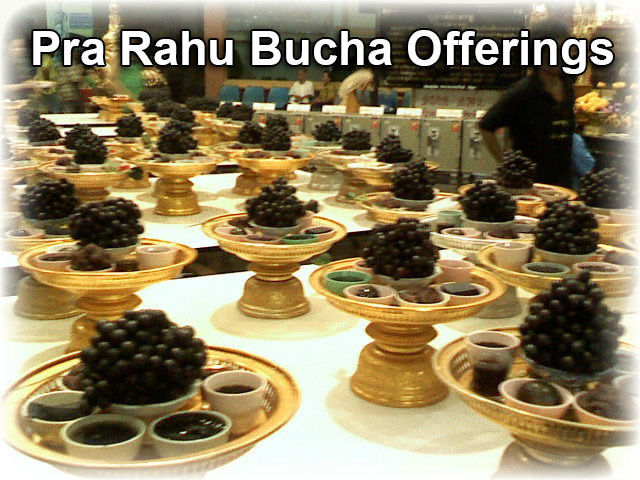
The front face features a Northern Lanna Style carved image of Pra Rahu Asura Deva, swallowing the moon/sun (Eclipse God). The rear face of the one eyed coconut shell is filled with powerful Muan Sarn Sacred Powder admixture with 4 Takrut Spells and eight Enchanted Wealth Attracting Gemstone spells inserted into the sacred Muan Sarn clay. If you feel that your Fate and Horoscope is not Auspicious, then it could be that Pra Rahu is interfering. You can solve this problem by making Bucha offerings to Pra Rahu every Wednesday; Light 10 black incense sticks (‘Toop’ in Thai), and five types of black offerings (e.g. black sticky rice, black jelly grass drink, black semolina or sago pudding and the like).
Black Food Offerings to Pra Rahu

Black Food Offerings to Pra Rahu

Kroo Ba Dtu Ing (Pra Ajarn Rit Chai), is an up and coming Lanna Master who is in his early era of his magickal trajectory, and is continuing the Lanna Wicha Magickal Sorcery traditions and Formulas of his Kroo Ba Ajarn of the Lineage of Wat Intra Taep, and his other Lineage Masters.

Bua Bang Bai Rare Amulets of Ajarn Suntorn

The Bua Bang Bai Seductive Deva Amulet has come to be associated with Ajarn Suntorn, for his revival of common knowledge of this very rare, and till recently almost forgotten Maha Sanaeh Wicha for Seduction. Ajarn Suntorn’s Bua Bang Bai amulets are prized as the most powerful Bua Bang Bai of the present Era (of which there are not many to find for comparison, for only a very few masters possess this Wicha).

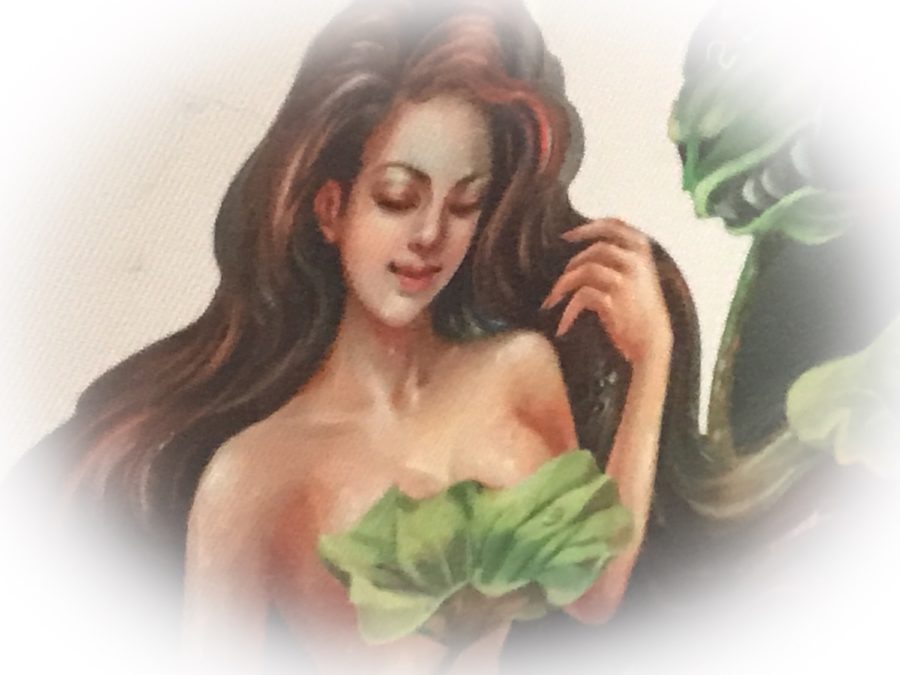
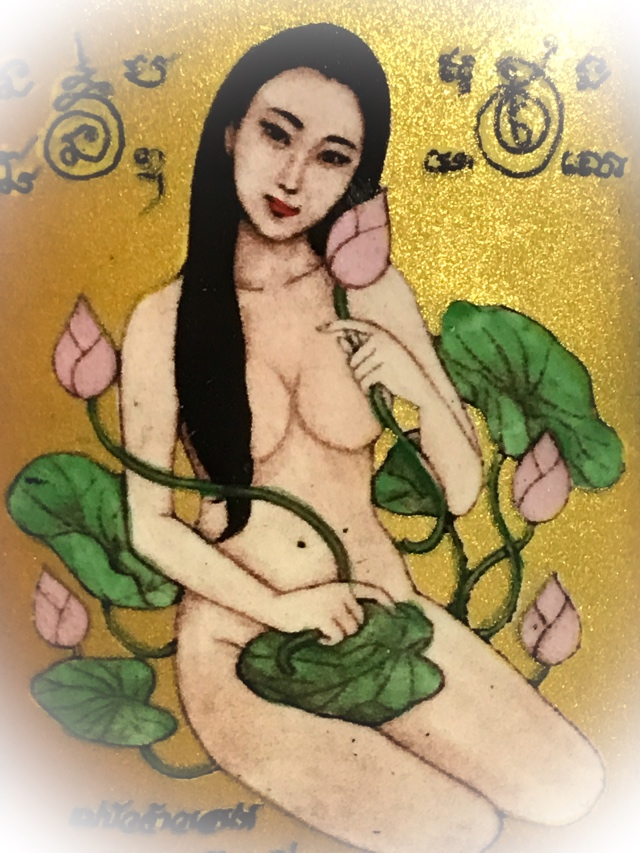
Mae Nang Prai Bua Bang Bai Lotus Nymph Deva

Mae Nang Prai Bua Bang Bai Lotus Nymph Deva

Only once every few years does Ajarn Suntorn release any amulets, and when he does, the Bua Bang Bai is always expected to be included. His amulets are always special, intensively empowered, and deplete almost immediately due to the small number of limited editions he makes. Now this year Devotees are extremely glad to see some Bua Bang Bai amulets appear, which Ajarn Suntorn has been empowering and preparing for a long time, finally released.

This is a long awaited event, since the depletion of previous editions, and a good 3 years of shortage from this master, who is not interested in mass production, and focused on highly concentrated sacred powders, and powerful lengthy empowerment methods, rigidly adhering to the Traditional Rules and Requirements for Correct and Powerful Applied Magickal Wicha

The Bua Bang Bai were made as Lockets, and were released in 2560 BE after some years of empowerment of the Muan Sarn Powders, and in two different models;

  1. Chak Tong Ongk Kroo Pim A Gold faced locket version, In Koo, 3 Takrut, 3 glass phials (1 Nam Man Prai Gai Daeng Red Cockerel Oil Potion, 1 See Pheung Khiaw waxy potion, & 1 Pong Sanaeh Ya Faed powder filled) 4 Gemstone inserts. The special gold faced ‘Chak Tong Ongk Kroo Pim A’ model was released at a considerably higher price due to the extreme limited numbers, higher concentration of Muan sarn and the addition of the pure concentrated extremely rare, hard to create and empower, and expensive to make Pong Sanaeh Ya Faed Necromantic Powders Flask.
  2. Chak Khaw Ongk Kroo Pim B (white locket face version) – with Nuea Pong Bpatamang Kama Sutra (Mai Hyae Yae) powders, with In Koo Lovers statuette, Nam Man Prai Wan Gai Daeng (red Prai Oil) See Pheung Khiaw (Green Waxy Potion) 2 Takrut, 4 Ploi Sek Maha Pokasap (Enchanted Gemstones) Dtid Pha Hor Sop (Corpse Cloth)
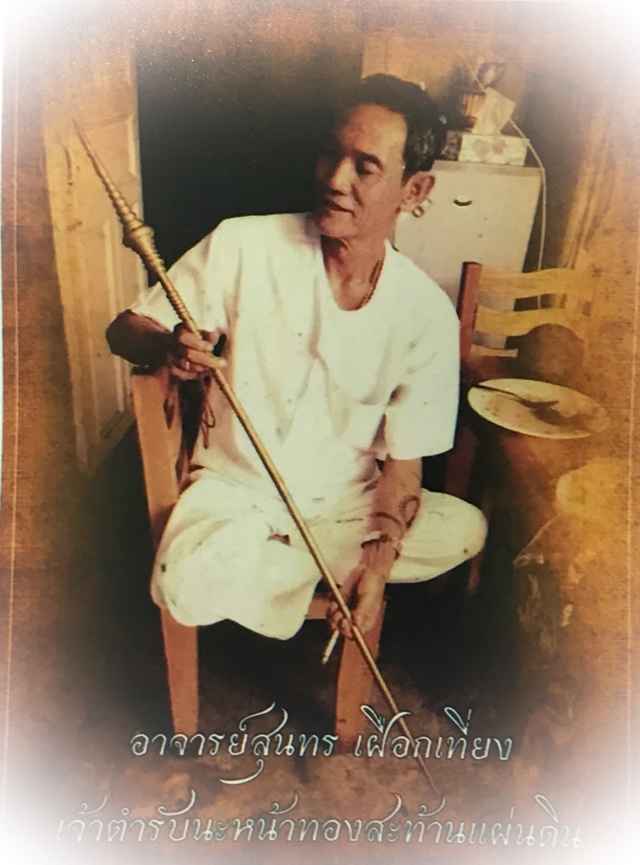
Ajarn Suntorn Phueak Tiang

Ajarn Suntorn Phueak Tiang – Master of the Wicha Bua Bang Bai, and Wicha Na Hnaa Tong Sataan Phaen Din

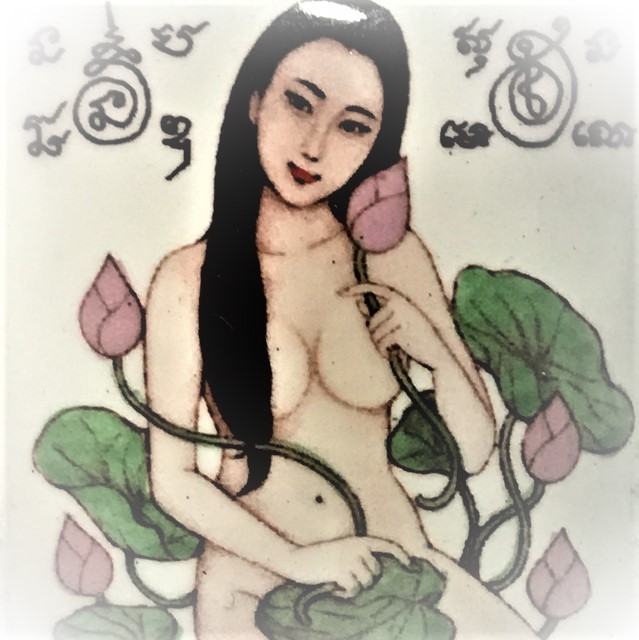
The Wicha Bua Bang Bai is said to be so powerful in its Maha Sanaeh properties, with the invocation of a Deva whose sexuality is said to be so appealing and enticing, which is why she is depicted as a Bousomous Nymph, with breasts so large that even the Lotus Leaf only barely covers her breasts.


The Wicha Bua Bang Bai and ther name of Ajarn Suntorn have come to go hand in hand with each other in the present Era, as this Master is considered to be the Current Living Master Adept of this Ancient Wicha.

The Bua Bang Bai is full of Maha Sanaeh, Jerajaa, Kaa Khaay, and Metta Maha Niyom type magic, which is ideally intended for going out to seduce and enchant people, in both social, and professional environments, be it for social climbing, attracting lovers, or for professional advancement, sealing business deals with your charming speech, or simply to improve popularity and increase Mercy and Compassion towards you, and recieve a more helpful and friendly attitude from others. As a Love Charm, the Bua Bang Bai Enchantment spell is said to be second to none, but works in a more subtle, merciful and loving manner than the obviously and aggressively forceful Prai Khmer Necromancy.


First made nationally famous by Luang Por Sawai of Wat Bridaram, with his famous Pha Yant Bua Bang Bai, Ajarn Suntorn now holds the highest esteem in the present day of all living Masters for the Wicha Bua Bang Bai.

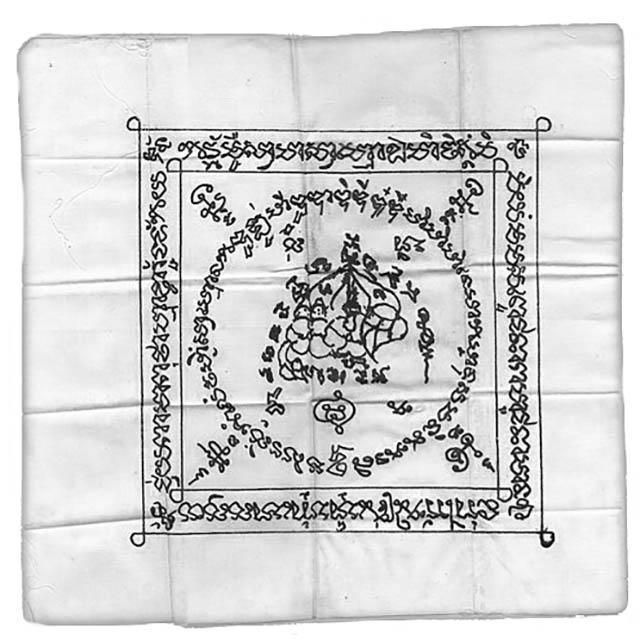
Below; the famously powerful and extremely rare Pha Yant Bua Bang Bai Yantra Spell Cloth from LP Sawai, of Wat Bridaram.

Pha Yant Bua Bang Bai LP Sawai Wat Bridaram

Pha Yant Bua Bang Bai LP Sawai Wat Bridaram

Kata Bucha Bua Bang Bai

O Dtinno So Taaya Wad-Dta Madt-Dta Ga Ma Ya

Su Su Na Na Raa Cha Dtang Waa Bpup-pPhang Waa Kandang Waa Raa Cha Gu Maa Rii Waa

Raa Cha Gu Maa Ro Waa Id-Thii Yo Waa Taa Ni Yo Waa Aehi Aehi Ka Wa Gam Sae Dti Bpi Su Su Na Na Ima Sa Ming Aa Raa Mae Kae Hae Taewadaa Sukhidtaa Ho Dtu

Locket Chak Tong Bua Bang Bai Lotus Leaf Fairy Ajarn Suntorn Phueak Tiang

Locket Bua Bang Bai Lotus Leaf Fairy Pim A Ongk Kroo Chak Tong Ajarn Suntorn Phueak Tiang

Kata Bua Bang Bai

Intajidt Dtangmaani (Chant 9 Times)

If using for increasing Business Sales, place the Bua Bang Bai in a glass of pure water. The put some of the water on the palm of your hand, and use the rest of the water to spray on your wares.

[ecwid widgets=”productbrowser search” categories_per_row=”3″ grid=”8,3″ list=”20″ table=”20″ default_category_id=”31987428″ default_product_id=”0″ category_view=”grid” search_view=”list” minicart_layout=”MiniAttachToProductBrowser”]


Thai Animist Occult Charms and Amulets

A look at some of the various animist occult charms in the world of Thai Amulets and Thai Occult, to see the grand variation of Wicha contained within the grimoires of Thai Sorcery.

There are many forms of animist charms, ranging from personified effigies to inanimate objects  without the shape of a living being, imbued with a spirit (such as a Takrut made from hide, A piece of Sacred Lek Lai, or a Chin Aathan bone carving).

Below; Takrut Hnang Wua Fa Pa Talay Bor Nam Dtaay – (Hide of a Bull struck by lightning, fall in Water Well + Die) – Gambling Ghost Whisperer – Pra Ajarn Taep Into. 

Takrut Hnang Wua Fa Pa Talay Bor Nam Dtaay - (Hide of a Bull struck by lightning, fall in Water Well + Die) - Gambling Ghost Whisperer - Pra Ajarn Taep Into.

Pra Ajarn Taep Into created the Takrut using Leaden Yantra Foil with Sacred Khom Agkhara Spell inscriptions, wrapped around a piece of Hide from a Bull that was struck by Lightning, also inscribed with yantra spells, and bound with Sorcerous Binding Cords from a Funeral of a Corpse that was a ‘Phii Dtaay Hoeng’ (Died in Unnatural Events).
Phii Dtaay Hoeng are Prai Ghosts that, because of their unexpected death and premature passing into the Spirit World, are quite anguished and have a very high level of Psychic and Magical Powers, which are lent to the Powers within the amulet.


Prai Spirits are prone to show off their psychic powers more often than Celestial devas, which is one of the reasons for the high popularity of Necromantic Charms, for people these days wish for fast and effective results.

Below; Ling Pid Ta Mai Gae Carved closed eyes Pidta Vanora Monkey, by Luang Phu Bpun Tammabalo


Hand carved and inscribed Bucha size Ling Pid Ta Vanora Monkey deity with Pidta Posture (hands covering eyes), empowered with Wicha Hanuman and Wicha Pidta, the statue is hand inscribed with Khom Agkhara and Yantra inscriptions, and incantations, made from Sacred Wood of a Deva inhabited tree, from the Great Luang Phu Bpun Tammabalo of Wat Ban Sangkh in Roi Et. This Bucha item is intended for altar worship or for placement in the office , home or business in a shrine. The statue measures 1.8 Inches wide base x 4.8 Inches High.

Below; Suea Payak Akom Nuea Loha Rom Dam 2559 BE Blessed by Luang Por Foo Wat Bang Samak + Luang Por Chan Wat Bang Bor

Suea Payak Akom Nuea Loha Rom Dam Wat Bang Bor
Himapant Tiger Suea Akom Sorcerous Tiger Loi Ongk Statuette in Nuea Loha Rom Dam Black Oiled Sacred Iron Alloy, with 1,999 amulets made in this particular type of sacred metal. Released in the Payak Pratan Porn Edition Blessed with the Wicha Luang Por Kong and Luang Por Parn at Wat Pratan Porn, by the Wicha Holders, Luang Por Foo (Wat Bang Samak), and Luang Por Chan, (Wat Bang Bor).

Below; Wua Tanu Mai Gae Sacred Arrow Bull Bucha Statue Carved Sacred Wood LP Bpun

Wua Tanu Mai Gae 5 Inches Carved Sacred Arrow Bull Hand Inscribed Sacred Wood Statue Luang Por Bpun
Hand carved and inscribed Bucha size Wua Tanu Sacred Arrow Bull Treasure and Homestead Guardian with Anti Black Magick Powers, empowered with hand made Khom Agkhara and Yantra inscriptions, and incantations, made from Sacred Wood of a Deva inhabited tree, from the Great Luang Phu Bpun Tammabalo of Wat Ban Sangkh in Roi Et. This Bucha item is intended for altar worship or for placement in the office , home or business in a shrine. The statue measures 5 Inches Long x 3 Inches High. Released in the ‘Khlang Raeng Dee’ edition to revere and continue the magical lineage of the Kroo Ba Ajarn Great Forest Masters of the Dhammayut Tradition through which Luang Phu Bpun received his Magical Wicha and Trajectory. The Wua Tanu can be used as a single Bucha item on the altar for prayer and protective magic within the household, and to prevent wealth from diminishing, or you can use various other methods of Wicha Wua Tanu depending on your needs, such as using 4 for the full household protection ritual, or the holy water making ceremony.

Below; Khiaw Gae Palad Suea Carved Tiger amulet LP Sawai Wat Bridaram

Khiaw Gae Palad Suea Carved Tiger amulet LP Sawai Wat Bridaram
Sacred solid Wild Boar’s Tooth carved Palad Khik with Tiger and Sariga Yantra spell Inscriptions, and Carved Tiger on the hilt from Luang Por Sawai, of Wat Bridaram. The Carved Talismanic Animist Charms with their famous and instantly recognisable Hand Inscriptions of Luang Por Sawai, are amongst the most highly sought after and preferred amulets of Luang Por’s Pantheon, and are very rare to encounter.

This exhibit is carved from a Wild Boars Tusk into the shape of a Palad Khik Lingam with a Tiger seated on the hilt of the Lingam. The tusk is not just any old Boars Tusk, rather, ‘Khiaw’ Dtan’. Khiaw Dtan is a tusk that has no hollow inner, which is very rare anomaly, and seen to be powerful magic especially for Kong Grapan Chadtri and Maha Amnaj.

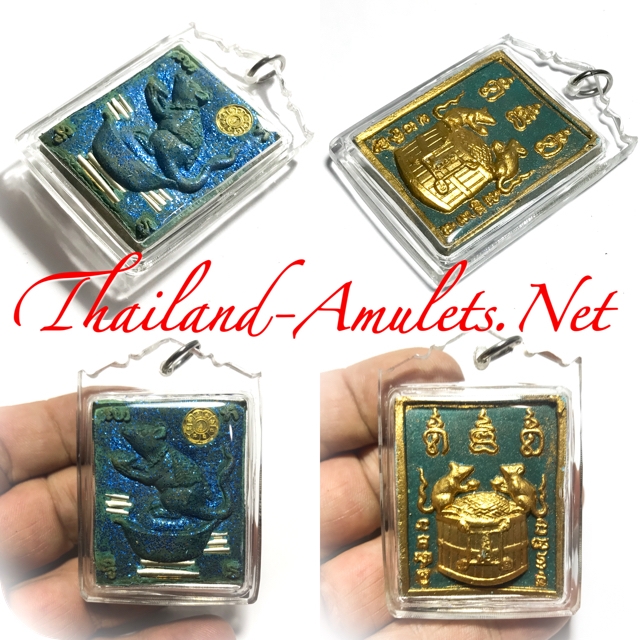
Hnoo Dtok Thang Khaw Sarn 8 Takrut Maha Lap 1 Look Namo Serm Duang – Luang Phu Leng – Wat Nong Gae


Hnoo Dtok Thang Khaw Sarn (Mouse who fell into the Rice Barrel) Maha Pokasap Rap Choke Edition Animist Mercy Charm in Turqoise Muan Sarn Sacred Powders, with 8 Takrut Spells in rear face, with one Look Namo Serm Duang horoscope improvement spell.

In Thai language, the phrase ‘Mouse fell into the Rice Barrel’. is an analogy for a person who is not born into money or higher social standing, but who marries into a wealthy family, and gains great wealth and treasures through the power of seduction. The front face of the amulet features the image of Mice feasting on the overflowing rice barrel. The rear face of the amulet has a mouse perched upon a Chinese style Gold Ingot, partaking of plentiful resources. The rear face is empowered further with a Sacred Look Namo magic Spell insert, with Pokasap and Serm Duang Magic to increase Good Karma and attract Prosperity. Eight silver Takrut scroll spells are inserted into the Muan Sarn Sacred Powders of the rear face.

Below; Look Krok Chamot Akom Nuea Samrit Long Yant Dtem Dtua 2552 BE Necromantic Civet Cat – Kroo Ba Buddha 552 Amulets Made


Look Krok Chamot Akom Necromantic Civet Cat Loi Ongk Statuette – Nuea Loha Aathan (Sorcerous Metallic Alloy) with ‘Yant Khom’ spell inscriptions, from the year 2552 BE, by Luang Phu Kroo Ba Buddha – Wat Nong Wua Kam (Lampun). 552 Made in Nuea Samrit Phiw Rung (Sunrise Tone Brazen Alloy), with Look Krok Powders within the forged effigy.

Luang Phu Kroo Ba Buddha, or, ‘Dtu Jao Dtā’, is a Gaeji Ajarn Master Monk of the Northern Thai Lanna Region. His fame is unusual because he has always tried to remain inconspicuous and quietly reclusive in his temple in the Province of Lampun. His Patipatā (Practice) is of Notable Interest for being direct Lineage with the Great Kroo Ba Srivichai, who is perhaps the Greatest Lanna Master Guru Monk of all time.


You can browse the Amimist Charm Category of the store below, to view the myriad of Animist Charms we have in store, and read all about each different animist charm in their respective writeups

[ecwid widgets=”productbrowser search” categories_per_row=”3″ grid=”10,3″ list=”10″ table=”10″ default_category_id=”419451″ default_product_id=”0″ category_view=”grid” search_view=”list” minicart_layout=”MiniAttachToProductBrowser”]

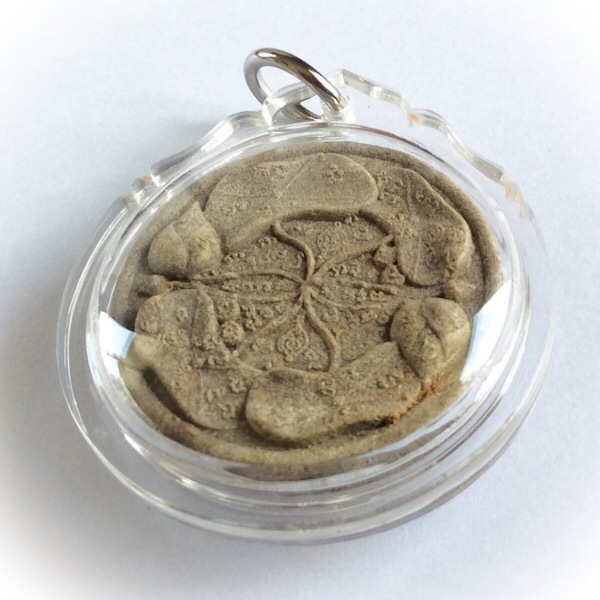
A look at the latest amulets added this 24th of December 2014. Some surprising appearances of older amulets, which we did not expect to be able to put back in stock have reappeared for those who missed them the first time around; Lockets from Luang Phu Nong, Pra Khun Phaen Prai Kumarn from Luang Phu In, Bua Bang Bai Prai Deva Seduction Charms, and a new appearance of Hwaen Dtakror magic rings of protection, from Pra Ajarn Waet Surint.


Bua Bang Bai - Ajarn Suntorn Phueak Tiang

Bua Bang Bai – Ajarn Suntorn Phueak Tiang

 Two kinds of Bua Bang Bai have been added, one from Ajarn Suntorn, and one from Pra Ajarn Num of Wat Bang Waek, also blessed by Ajarn Prakong. 

Bua Bang Bai - Pra Ajarn Num Wat Bang Waek

Bua Bang Bai – Pra Ajarn Num Wat Bang Waek


Bua Bang Bai Lotus Leaf Fairy - Wat Bang Waek

Bua Bang Bai Lotus Leaf Fairy – Wat Bang Waek

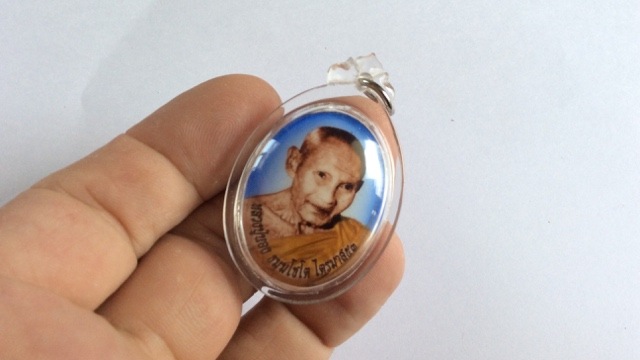
Some Lockets from the Traimas 2553 Ceremony at Wat Wang Sri To g by Luang Phu Nong Tammachodto 


Locket Luang Phu Nong

Locket Luang Phu Nong

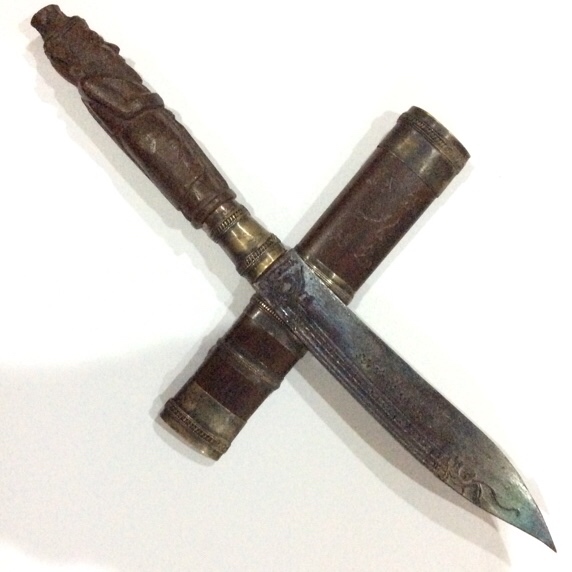
 Some Mitmor Por Gae Lersi Dta Fai Ritual Knives. 

Mitmor Por Gae Lersi Dta Fai

Mitmor Por Gae Lersi Dta Fai

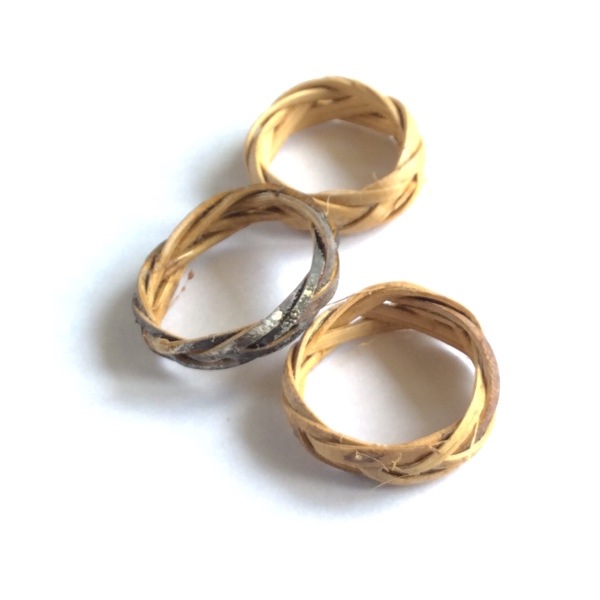
Some Magic Rings (Hwaen Dtakror) for Protection and Evasion, from Pra Ajarn Waet Surint.

Magic Rattan Rings from Ora Ajarn Waet Surint

Magic Rattan Rings from Ora Ajarn Waet Surint

 And the last Khun Phaen Pong Prai Kumarn Ongk Kroo from Luang Phu In, of Wat Nong Meg.


Khun Phaen Prai Kumarn Luang Phu In Wat Nong Meg

Khun Phaen Prai Kumarn Luang Phu In Wat Nong Meg

Below you can enjoy a video with narrative from Ajarn Spencer Littlewood.  

Hnoo Dood Nom Maew Ongk Kroo Masterpiece Version in Nam Man Prai, with sacred gold leaf blessing.

Hnoo Dood Nom Maew sacred powder amulet (mouse drinking milk from the cats teat), for Metta Mahaniyom & Maha Sanaeh Maha Pokasap blessings, by Luang Phu Ta Analayo, of Wat Pha Tosapon Mangalaram.

From the miraculous dark arts of Luang Phu Ta Analayo, comes a most excellent Maha Sanaeh and Metta Mahaniyom charm of the ‘Hnoo Dood Nom Maew’ Mouse suckling milk from a cat. The ‘Hnoo Dood Nom Maew’ was created in a very limited number of pieces. 

Ongk Kroo Masterpiece Version of Hnoo Dood nom Maew amulet by Luang Phu Ta Analayo

Ongk Kroo Masterpiece Version of Hnoo Dood nom Maew amulet by Luang Phu Ta Analayo

Apart from this special Nam Man Prai oil immersed version, there was also a dry sacred powder version made and a special potion version, which immerses one of the sacred powder amulets in the purple coloured sticky balm, made from ‘See Peung’ edition in a very specific and auspicious number of only 999 and as such is a quite rare and very sought after amulet by a very well respected elder in the Buddha Dhamma and Thai/Khmer Occultism.

cat feeding a mouse sacred powder amulet, in sacred oils. this example is one of the Ongk Kroo Masterpiece Versions

cat feeding a mouse sacred powder amulet, in sacred oils. this example is one of the Ongk Kroo Masterpiece Versions

The ‘Muan Sarn’ sacred admixture for this amulet is concentrated from sacred herbs, powders and substances that have been meticulously collected for the purpose of generating a most powerful gift of ‘Metta’ Loving Kindness and compassion, ‘Kaa Kaai’ success in business as well as ‘Perm Sap’ call to riches. This amulet aids by means of a supernatural field of charming and fascination for both men and women. The possessor of the ‘Hnoo Dood Nom Maew’ (because of the extreme Metta Maha Niyom quality) will feel the effects of a shift to a tranquil heart and a serene sense of mind both outward and receiveing, evading any and all confrontation, even those that would of beforehand been seemingly a normal occurance i.e. “cat and mouse”.

rear face of the amulet

The rear face of the amulet has sacred smell inscriptions on its surface.

The Metta quality of the ‘Hnoo Dood Nom Maew’ gives to those that possess it a clarity of mind and heart that supresses arrogance, conceit and absent mindedness. Regardless of whether a person is not attractive, this amulet when carried gives that person a certain charm causing others to become unaware of mere physicality and instead draws attention to an innate serenity that is apparent in a heart full of compassion that seeks the same.

For any person who has trouble with retaining one’s desires the ‘Hnoo Dood Nom Maew’ helps to control the heart and mind which also helps how one appears in the eyes of another. For those who are seemingly uninterested or harbor any ill feelings toward the owner of this amulet will turn over a new leaf once again returning to friendship. Any bad effects of temptation, envy or general bad luck will shift to be constructive.

The Wicha of the ‘Hnoo Dood Nom Maew’ Mouse Suckling Milk from a Cat is an ancient formula ‘Wicha Boran’ used to keep primal passions from erupting into a chaotic mess yet allows the pairing of sworn enemies, redirecting a negative energy to a usable passion. It is expected that a mouse upon meeting a cat would be killed but the fact that it does not is a true testament to the real power of this Wicha. Luang Phu Ta Analayo watched over a nursing cat, to see how it behaved with a local temple mouse, periodically playing with the mouse in the day and never harboring any animosity towards it. At night the cat would nurse the mouse like one of it’s own kittens in a show of extreme abnormal compassion and mercy.

The front face of the amulet, displays the image of a Mouse feeding from a cats breast

The front face of the amulet, displays the image of a Mouse feeding from a cats breast.

To utilize this magical compassionate formula ones who wears the amulet or carries it in their pocket can expect to be loved, embraced, played and flirted with like a cat affectionately bating its toy. One will be cared for by their desired as if they are being raised and nurtured by the love of a mother cat and her young, giving of them self to support the enchantment of their union. Those who live a life of risking fate such as gamblers, police, military and the like can utilize the ‘Hnoo Dood Nom Maew”s Metta Mahaniyom and Maha Sanaeh properties to win the favor of their opposites. Gamblers and those who speculate stocks, lotteries and horse races can gain an upperhand in knowing proper paths of play, knowing when and how much to bet.

Ongk Kroo Masterpiece Version of Hnoo Dood nom Maew amulet by Luang Phu Ta Analayo

To use, one merely needs to tap gently on the amulet 3 times to awaken it, notifying it of your intentions and need for its help. One should donate merits earned to the ‘Hnoo Dood Nom Maew’, to increase its powers. The ‘Muan Sarn’ consists of a very difficulty obtained admixture, some of which include the primary powdered remains of 9 black cats, ‘Nam Dtaa Bplaa Payoon’, herbs of ‘Saao Long’, ‘Dork Tong’ ‘Mai Rak’ powders of protection, ‘Mai Kanun’ and ‘Mae Ok Dtaek’.

These were all blended together in a mixture with ‘Nam Montr’ holy water, and reduced by boiling over a ‘Fai Kieow’ auspicious green flame until it reached a consistency and was charged by incantations the point it could be pressed into a mold and further charged in it’s new form inside earthen jars.

These amulets were made in a few different versions, both in dry powder, or in pots of See Pheung Balm, and also as special collection of Ongk Kroo Masterpiece Versions were released, which were immersed in Sacred Nam Man Prai.

See Pheung Hnoo Dood Nom Maew

See Pheung Hnoo Dood Nom Maew Luang Phu Ta Analayo 

 These amulets are now available in the Amulets store here on Thailand amulets

Ma Saep Nang LP Bpan

The Achanaree is basically the Ma Saep Nang Wicha in the gariang Kor Ma tradition of Luang Por Bpan’s Lineage of Masters, and is known to be as powerful as his Wicha Paetch Payatorn (Khun Phaen Tewada Hlong Hong). With three Takrut Na Hlong Hlai enchantment spells, and two Takrut Ma Saep Nang (Horse and Lady Symbiotic Yab-Yum Deity) Inserted.

Made using a subtle mixture of Maha Sanaeh powders gathered and empowered by Luang Phu Bpan. The powders are empowered to attract great business and for Kama Sutra magic. Also good for Tantra practitioners to intensify the practice.

Ma Saep Nang LP Bpan

The front face features the Ma Saep Nang Deity , Takrut Hua Jai Na Hlong Hlai, with some Na Hlong Hlai spells and the Kata ‘Aehi Bpiyang Jijeruni’

the rear face has a further set of Incantations inscibed, and two Ma Saep nang Takrut spells inserted

Kata for chanting to amulets which use Wicha Gariang Kor Ma, by Luang Phu Bpan

Kata Ma Saep Nang

Gu Gu Dto Muni Aehi Samma Maa Maa Sammaa Ma Ma Jidtang Sinaehang Pakinee Aehi Samma Maa Maa Sammaa Maa Ma

(LP Saneh, Wat Chiang Khang, Chiang Mai)


Thai Amulet

Luang Phu Bpan Gadtabanno of Wat Na Dee is considered ever more the most powerful creator of Maha Sanaeh charm amulets for good business and romance. His amulets are of the finest sacred ingredients and designed by some of Thailands most proficient Fine Artists and Artisans.

Biography of Luang Phu Bpan – Wat Na Dee

Rare and Exclusive Lockets from Ajarn Perm Prai Dam in Store

Thailand Amulets’ store has some of the rarest and most exclusive lockets made and blessed by the famous laymaster Ajarn Perm Prai Dam. The various lockets have a very strong prai magic nature due to the extremely rich and potent prai ingredients used for the making of the sacred muan sarn mixture. Magic herbs, flowers, and sacred powders are also included in Ajarn Perm’s lockets. Some of the lockets are immersed in powerful prai oil, and have takrut foils along with various animist charms (in koo, gecko charms, palad khik, etc.) inserted to the rear face of the locket. Furthermore, Ajarn Perm performed hand inscriptions on several kinds of lockets he made.

Rare and Exclusive Lockets from Ajarn Perm Prai Dam in Store

These rare and sacred items have received extensive empowerments by Ajarn Perm. He thus consecrated the lockets with metta mahaniyom, maha sanaeh, and khaa khaay powers, which make them powerful amulets for attraction, romantic seduction, and success in business. Moreover, Ajarn Perm’s lockets can help to increase lucky fortunes through gambling and lottery wins. This is because most of his lockets are empowered by invoking a certain prai deva which serves to fulfill the desires of its worshipper.

Ajarn Perm Prai Dam

Among the lockets of Ajarn Perm Prai Dam are: Mae Nang Prai Tip Suwan (Pasanee maiden in prai oil with gecko charm, hand inscription, 2 takrut, and Dork Tong powders); Paya Leungk Tong Mia Mak (with Paya Khao Kam immersed in red cockerel prai oil); Kamataep locket (Deva of Love immersed in prai oil + In Koo and two silver takrut Maha Sanaeh); Prai Nam (Water Sylph Queen in Dork Tong and Gai Daeng prai oil + two takrut and sacred powders); Khun Chang Um Nang Pasanee (Khun Phaen’s competition seducing a nang prai sylph maiden with Wan Dork Tong prai oil, a lingam and four takrut); and many more…

To view the various kinds of amulets and lockets made by Ajarn Perm Prai Dam, click here.

Alternatively, you can view all lockets in our store here.


New accessories for Thai amulets in store

We now have various options for hanging your animists charms and amulets at waist level in the traditional type method using our new range of takrut belts. These belts are called ‘Chuak Takrut Kart Aew’, which are hand plaited cord belts for takrut, palad khik, and other occult charms such as tiger claws and wild boar tusks. One can thus hang them tied to the waist cord according the traditional Thai way of wearing these kind of amulets. Depending on the type of the amulet, one can place the amulet on the front, left, right, or back of the Chuak Takrut Kart Aew, using metal rings to attach them with. Also, as a closure method, a loop is attached to one end of the belt to feed the cord through and tie it.

The waist cords are hand woven with multiple threads that will allow you to attach your amulets in such a way that there will be no chance of losing them. Moreover, the cord is extremely durable and it is even washable, making this waist belt a perfect choice for everyday wear. Due to the triple plaid weave, it is unlikely that it will break. Thus, the Chuak Takrut Kart Aew will last for a very long time indeed.

New accessories for Thai amulets in store

The new belts have been added been added to the shop in various colors, namely black, red/black, and yellow/green. Two different sizes are available: 24–34 inch and 34–40 inch.

Thailand Amulets store also offers various other accessories and peripherals for your amulets, such as Buddhist rosaries, neck chains, cords, takrut casing, bracelets, rings, amulet cases, eyeglass, pliers, and pendant rings which can be viewed here: Accessories.

Paya Wan Jakkajan Taep Rae Rai: Sacred Cordyceps Cicada with Inscriptions by Ajarn Pleng + Blessings by Luang Por Prohm & the Khao Or Masters

The Paya Wan Jakkajan, otherwise known as the ‘Taep Rae Rai’ (Deva of the Farm Fields), is a sacred cordyceps cicada, which is transformed into a symbiosis of an insect and a plant.

It is ancient belief in Thailand, that the one who possesses the Taep Rae Rai Paya Wan Jakajan, will be able to attract wealth and possessions with incredible ease, have great luck increase, and attracts promotion in the professional and social status. A perfect cashflow is constantly available.

Fame and fortune come easily, friends flock to the owner of the Paya Wan Jakkajan. The Wan Jakajan is even known by science to have healing properties, which is also part of its magical effect on the person who carries it, to help maintain health.

sacred cicada

Bosses don’t complain, or punish so much; those who were unfriendly become firendly and helpful, and those who already greeted shyly, become very friendly and kind companions.

Paya Wan Jakkajan Taep Rae Rai

The amulet is inscribed and empowered firstly by the great still living lay master of Khao Or Sorcery; Ajarn Pleng, at Wat Ban Suan.

cicada talisman in the hand

The amulets were then empowered again in the uposadha shrine room and the Khao Or Cave, with Luang Por Prohm and other guru masters of the Southern Academy of Sorcery to perform blessings and empowerment.

Ajarn Pleng

Kata Taep Rae Rai Wan Jakajan (chant 3 times)

Chaanang Dtigkhadti Chaanang Dtigkhadti

Dtikkatammang Adtagang

Mala Chaadtrii Potiyaa Sadtang Tammang

Mano Tammang Suwabpo Dtago Ayang Raachaa

Wanna Wannaa Mahab-Palaa

Saarigaanang Ragkhandtu Mahosadt-tho

Suwabpodtago Bpiyang Ma Ma

Niam Mi-A-Khao Maa

Charadtang Omma Guu Ja Saadtaa I-See

Gor Laeg Yor Yerm

Na Mo Dtassa Pia Wia Aehi Ma Ma

Puttang Ragkhajidtang Aehi Ragkhajidtang

Tammang Ragkhajidtang Aehi Ragkhajidtang

Sangkang Ragkhajidtang Aehi Ragkhajidtang

LP Prohm empowers amulets with the Khao Or Masters

View this amulet in our store here: Paya Wan Jakkajan Taep Rae Rai: Sacred Cordyceps Cicada with Inscriptions by Ajarn Pleng + Blessings by Luang Por Prohm & the Khao Or Masters

Special Maha Sanaeh locket made and blessed by Ajarn Perm Prai Dam. Can be used for attracting lovers, for gambling (lottery), and business.

In Chang Pasom Khloeng Hlang Paya Luengk Tong Paetch Payatorn (‘Golden Phallic God’) is a special maha sanaeh locket from Ajarn Perm Prai Dam. It can be used for attracting lovers, for gambling (lottery), and business. The In Chang is a symbiotic kama sutra Yab Yum-like double deva, with the image of an elephant consummating kama sutra sex magic with a human lady, surrounded by Khmer Sanskrit Agkhara and dark arts kata akom.

The locket iself is immersed in a powerful mixture of red cockerel oil and Nam Man Chang Pasom Khloeng (‘Mating Elephant Prai Oil’). In addition, the oil has had herbal Chang Pasom Khloeng oil potions to imbue it to the fullest potential of its maha sanaeh attraction power. The In Chang Pasom Khloeng is a Lanna wicha and a Tai Yai/Karen hill tribe sorcery, as is the In Ma Saep Nang (‘Horse-Lady’). The Paetch Payatorn relates to the Shiva lingam and the male phallic proactive maha sanaeh power of libido.

amulets

The In Koo (also known in South East Asia as ‘Yin Tong’) is a symbiotic deity in the form of a man and a woman embracing each other. It is a magical animist effigy which ancient people believed represents the first ever pair of man and woman (male and female) in the history of the world, and is a symbol of love between a man and woman. It is believed that the holder of an In Koo talisman is endowed with maha sanaeh power over the other sex, and that they will feel attracted to the wearer of the In Koo, and wish to approach and get to know you. If they approach, then they will be helpless against the attraction power of the Palad In Koo. This is due to the love charm magic of maha sanaeh (charm and attraction).

amulets

If the In is kept in the house as a domain dweller, then all the family and people in the household will love each other and be happy together. If it is worn as a love charm or carried on ones person, then it will cause everyone the wearer meets to feel friendly and compassionate towards them, and even make others fall in love with the wearer if bucha is made to the In Koo, and this request is asked for in exchange for bucha. Business will flourish, money and gifts will flow in, good fortune will come, and life will be without disturbances. 

amulets

Kata Bucha In Koo (‘Yin Tong’)

Kata for all Thai Buddhist amulets

paetch payatorn and chang pasom khloeng locket in prai oil ACV Perm Prai Dam

The Paetch Payatorn Paya Leung Tong which is inserted into the rear face, is a powerful seduction charm, and commerce induction agent, with very powerul abilities to influence lottery numbers known for its power to possess many lovers and keep them all happy, and fulfilled as well as for its maha lap and maha pokasap powers.

This is, of course, a reminiscently similar imagery, and indeed, similar magical effect as the In Ma Saep Nang (‘lady entwined with a stallion’) wicha, which also features a virile horse consummating with a beautiful lady. It is an amulet of great influence with speech and power over others through attraction and charm, encircled by lovely maidens, and win the games of the nocturnal seduction artist and gambler.

amulets

Be it seduction of lovers, or customers and prey, the In Chang Pasom Khloeng locket calls upon the highly seductive power of the lingam (Paetch Payatorn) Phallic God of Luck and Sexual Attraction to boost it from within, with pure kama sutra energy, empowering with further use to increase in strength as it slowly absorbs the prai oils it is immersed in. 

The prai oils used for the immersion were boiled and empowered in a cauldron with magical inscriptions, and an empowered holy wooden paddle to stir the oils and herbs. The rear face of the locket has herbal magic using Wan Saw Hlong, Wan Saen Nang Lorm, Wan Paya Gai Daeng, and a host of other ingredients many of them kept secret by Ajarn Perm.

amulets

Mantras for In Koo, In Ma, In Chang

All lockets of maha sanaeh type by A.C. Perm have an extra special kata given for you to use to empower and to call upon it for your needs.

Use this version to call ladies:

Om Jidtang Idthiiyang Aehi Jid-Dta Gaama Raakang  Raaka Ma-Ma Maa Maa.

Use this version to call other men:

Om Jidtang Buriso-o Aehi Jid-Dta Gaama Raakang  Raaka Ma-Ma Maa Maa.

Perform the Maha Namasakara (‘Namo tassa’) three times before any other chanting to amulets.

We recommend using the kata Aaratanaa Pra Krueang as a prelude to asking for wishes to be fufilled from any Buddhist amulets.


View this amulet in our store here: In Chang Pasom Khloeng & Paetch Payatorn Paya Leungk Tong (‘Golden Phallic God’) Immersed in Mating Elephant Prai Oil – Ajarn Perm Prai Dam


Mae Nang Dork Mai Flower Fairy Deva Locket, with double Takrut Hua Jai Maha Saneh, and a phial of concentrated ultra rare 'Nam Man Chamot'(civet oil) Sanaeh, and amulet embedded in rear face.

The Mae Nang Dork Mai, or ;Flower Fairy Deva’ locket has a double takrut Hua Jai Maha Saneh, a phial of concentrated ultra rare ‘nam man chamot sanaeh’ (civet oil), and an amulet embedded in the rear face.

Mae Nang Dork Mai Flower Fairy Deva Locket

The Mae Nang Prai Deva is a nature spirit flower fairy image representing the Nang Prai Fairy Enchantres, who is inclined to enjoy the pleasures of seduction, particularly those of flirting, teasing and charming. The powers of attraction can be used both in the personal and professional areas in life. Hence, corporate spying is a cinch with this amulet.

2 takrut maha sanaeh and a phal of civet oil are inserted ino the rear face

The Nang Dork Mai Prai Deva is a powerful attraction magic spirit who dwells within the fertility aspect of all flowering vegetation. Its spirit is the magical force of attraction, which causes all fertility instincts – from the pollen to the bee – to be attracted. The hummingbird, butterfly, and even humans will be enchanted by the magic of a flower in bloom.

Her powers are invoked within the sacred Prai Maha Sanaeh Laluay powders, which are formed into an enchantment locket. The magic power of this amulet is further enhanced with a bottle of prai oil from the rare glandular secretions of a civet cat, which is inserted into the sacred prai powder base.

Nang Dork Mai Deva Locket in the hanf=d for size comparison

This amulet is recommended for all sexes, regardless if that person is either hetero or gay. The locket can be used for improvement of one’s love affair(s). Yet the seductive character of the Flower Fairy Deva also works very well for success in business and commerce. Moreover, as a powerful attraction charm, wearing this amulet can lead to gaining access to higher levels of social and professional status.


Kata for all Ajarn Perm Prai Dam’s maha sanaeh lockets

The special kata for this locket as given by A.C. Perm for correct activation of this amulet is available within the files tab of your account page here after successful purchase of the amulet. It is an MP3 file with correct pronunciation for chanting demonstrated by Ajarn Spencer Littlewood, with fast and slow versions. The kata is also written as a PDF-text file download to assist in pronouncing as you listen; simply go to your acount, log in and visit the downloads tab to get this kata tutorial.

Nang Prai, Phii Thai – Thai ghosts and devas

Kata and bucha method for Hun Payont, Mae Nang Prai, and Mae Takian deities

List of kata chants – Metta maha niyom/maha sanaeh


View this amulet in our store here: Mae Nang Prai Nang Dork Mai Locket (‘Flower Fairy Deva’) – Ongk Kroo Model – Ajarn Perm


Look Krok Prai Perm Sap – 5 x 2.5. x 2 inch necromantic bucha statue – ‘Bucha Kroo Traimas’ Edition 2555 BE – Pra Ajarn Somchart Bparimudto.

Look krok prai perm sap is made for increasing wealth and treasured possessions, gambling and flourishing commerce. These sacred powder amulets and bucha images took the world of kumarn tong collectors and devotees by storm in 2012, and were received with great popularity.

The look krok is made from a very highly concentrated muan sarn composed of prai oils, bone powders and funeral ashes, sorcerous earths and magical herbal ingredients.

108 cemeteries have provided 108 sources of sorcerous powders with nine kumarn from nine provinces who were nine years old. Earths from the traditional necromantic wicha were of course also included such as seven earths from seven ports, seven salt licks, and earth from the sump of the funeral pyre with the fats of the corpse.

The most powerful herbal prai ingredients were ground up and added including wan kumarn tong, wan sanaeh jantr, and the rare and powerful gambler’s favorite magical herb wan udom choke.

Use for beseeching luck in lottery, commerce and sales, metta from superiors, success, love and attraction to watch over and protect the household, gambling and most other wishes.

Like all prai spirit deities, to worship a look krok will bring great luck and fortune to its owner, increasing wealth, and causing income and treasures to flow in from all around. Gambling is much more of a cinch with the help of the look krok, and travelling is blessed with the safety given by the look krok’s kong grapan and klaew klaad power.

The look krok will warn both of forthcoming dangers and of coming luck. When luck is about to have a burst or a lucky streak, you will notice people showing much more attention than even usually, and a lot of friendly approaches in a short time. This is the time to lay your bet. The way of worship is similar to that for kumarn tong, hun payont, mae hong prai, mae takian and most other prai spirit deities as far as offerings are concerned, but the kata is personalized, as is usually the case with each different type of prai deity.

Blessing of the look krok

The invocation of the prai deva spirits and empowerment of this 2555 BE Wai Kroo edition was performed with Pra Ajarn Somchart presiding and performing the opening and entrance to the cemetery for the ritual incantations to be performed. He conversed with the guardian deities of the cemetery, and asked for permission from the Sarn Dtaa Yaay shrine of the local ghosts.

Next, the ‘Piti Buang Suang Plii Phaa Hor Rang Prai’ was performed. This is a ritual for the removal of wrapping and binding of corpses. The prai spirits inside prai necromantic kumarn, look krok and other effigies, are often bound using corpse cloth or cords, colored daay akom threads, colored pha sam see/jet see bucha ribbons, or other simliar sorcerous binding materials, depending on the wicha.

The look krok amulets, bucha images and pha yant cloths were then made and empowered using the montr wicha yant dhamma dhatu ruu maha gamnerd. This empowerment was performed for one whole traimas (‘trimester’, a three months period during the rainy retreats where the monks stay in their temples and spend the nights practicing and empowering their amulets).

A final empowerment was given to the whole edition, before they were released to leave the temple for distribution. The look krok recieved a final individual blessing with hand inscription from Pra Ajarn Somchart.

Pra Ajarn Somchart’s look krok bucha statues and prai look krok powder amulets of this edition are now approaching the status of legendary, and received massive interest from foreign shores such as Malaysia, Taiwan and Singapore.

The head of the look krok has some prai oil and wax with a piece of bone inserted.

Kata Bucha Look Krok Prai Perm Sap

Ji Je Ru Ni Jidt Dtang Gae Bpa Si Bpang Ruu Bpang Ni Midt Dtang Aa Kaj Chaa Ya Aa Kaj Chaa Hi Ma Ma Maa Maa Ma Haa Luuk Grorg Praay perm Sap.

Chant seven or nine times and make your wish.

How to worship the Kuman Tong

Kata Kuman Tong

For a higher increased understanding of how to worship the kumarn and prai type amulets and bucha images, we recommend that you read all of the information contained in the below links. Correct understanding of how to bucha is the real reason for success with your amulet, and incorrect or lazy bucha, is also a reason why some people feel that their amulet is not working.

It is important to bucha properly and correct performance of the bucha method will bring success with almost all amulets. For this reason we recommend that you read all of the below info pages (see links below), in order to inform yourself of the various methods of bucha and increase your adepthood when performing ritual offerings.

Kata Look Krok and how to bucha (worship) Look Krok

How to pray to Mae Nang Prai, Kumarn Tong Look Krok Hoeng PraiHun Payont & Mae Takian amulets (how to bring into the house)

Nang PraiPhii Prai Thai Ghosts and Spirit Devas

Kata for Metta Mahaniyom and Maha Sanaeh Amulets, Charms and Oil


Maker: Pra Ajarn Somchart Bparimudto

Magical Effects: Maha lap, maha pokasap, maha sanaeh, metta mahaniyom, fao ban ruean

Material: Prai powders, necromantic earths, oils, bone

Recommended Uses: Luck in lottery, commerce and sales, shop guardian, metta from superiors, success, love and attraction, to watch over and protect the household, gambling, lottery

Number of Amulets Made: 999

Edition: Bucha Kroo Traimas edition


The Takrut Maha Jone was empowered using the dark arts sorcery for which Ajarn Waet’s necromantic amulets have come to be so respected for, and this time, with no strings attached, no punches pulled power, resulting in an amulet that at first hearing, sounds like not only the good, but also the bad, and the ugly can use . In truth, Ajarn Waet has empowered the takrut with the name ‘Kon Dee Chai Dai, Kon Lew Chai Dee’, which although sounds as if it means, ‘good people can use, bad people can use well’, actually means ‘good people will benefit well from using the takrut, and bad people, will become good if they use it’. This is of course a form of Wicha Jone Glab Jai (‘Change the Heart of a Criminal’).

8 Cm Long x 1.5 Cm Diameter

This takrut with such an imposing name is thus ironically imbued with the power to change the heart, and is therefore also highly recommendable for any person who wishes to improve him or herself, and the way one lives one’s life.

It also means, the takrut will work whatever the case, be your intentions good or bad, or be it for something within or outside of the five Buddhist precepts. But, Ajarn Waet warns, the takrut spell carries a curse with it, that says: “He who uses it for good purposes, will encounter nothing but good luck and prosperity, happiness, health and long life, but he who uses it for evil purposes, will be cursed to die and live on as a hoeng prai ghost in the next life”. The name of this takrut is thus slightly deceptive, for it does not help the evil bandit, but perhaps, the Robin Hood, who returns what was stolen, or the Good Samaritan, who fights for the weak who cannot defend themself.

The takrut applies a wicha that requires a very meticulous series of inscriptions, incantations and meditative empowerment methods which must be simultaneously applied during the creation of the yantra, the inscription of the Agkhara lettering, and the rolling of the takrut into the scroll form. Pra Ajarn Waet charged the takrut with further power by binding them with cords and boiling them in prai oils, finally sealing them with black lacquer coating.

Perhaps the most tiring aspect of the making of this difficult takrut with the master wicha of the ‘Gangster Takrut‘, is the fact  that the takrut must be empowered many times each day, beginning with before dawn, at dawn, afternoon, evening, midnight, and in the early hours. This forces the practitioner to remain awake most of the day with only small naps between the nocturnal empowerment sessions, if any at all.

Eight types of magic are invoked within the amulet:

(1) kong grapan; (2) klaew klaad; (3) maha ud; (4) maha sanaeh; (5) metta; (6) mahaniyom; (7) maha laluay; and (8) maha lap.

Ajarn Waet invoked the Hua Jai Maha Jone (‘Heart Mantra of the Great Bandit’) within this takrut; first and foremost imbuing them with maha ud and kong grapan power, and then with the maha laluay spell, and the Hua Jai Maha Jone which is the metta of the bandit who is never able to be incriminated by his persecutors, and always favored by the folk as a hero. He meets with friendly reception wherever he goes. His luck at gambling is that of the master gambler. His charm with the ladies is that of the suave villain and smooth talker; smooth talking in business and convincing power to get what one asks for is also a quality of the Wicha Maha Jone.

Kata Bucha ‘Takrut Maha Jone’

Gan Ha Nae Ha Na Ga A Bi Hu Luu Swaa Ha.

Chant 3 times.

Useful info for bucha:

For bucha, use Buddhist prayers to increase power, with any or all of the below kata.

All kata for amulets should begin with chanting of the Maha Namasakara (‘Namo Tassa’) 3 times first, before beginning any other incantations.


Maha Namasakara – How to Chant ‘Namo Tassa

Psalm to the Triple Gem    Kata ‘Aaratanaa Pra Krueang

Pratītyasamutpāda – Chant of ‘Dependent Origination

Chinabanchara Kata (‘Chinabanchorn’) of Somdej Dto Prohmrangsri (Wat Rakang Kositaram)

Kata Pra Putta Jao Haa Pra Ongk (‘Na Mo Put Taa Ya’)

Buddhist Morning Prayer Chanting

Buddhist Evening Prayer Chanting

Maker: Pra Ajarn Waet Surint

Magical Effects: Kong grapan, klaew klaad, maha ud, maha sanaeh, metta, mahaniyom, maha laluay, maha lap

Material: Leaden takrut foil, magical cord binding, prai oils, lacquer

Recommended Uses: Protection, prosperity, mercy, charm, evasion, popularity, convincing speech

Number of Amulets Made: Unknown

Edition:Wai Kroo 2555 BE

Wua tanu fai is a truly ancient style animist spirit charm by the master of the devotees of the Thai-Burma Mon and Karen hill tribe people, Luang Por Kane ‘Duang Gaew Sivali’, of Wat Kho Phu. This sacred earths effigy is hand moulded, inscribed with Khom spells and empowered all individually by the hand of Luang Por Kane.

This wua tanu is empowered to burn all evil and dark magic to ashes with its spiritual fire element. Using fire kasina to imbue the wua tanu with incredible power to completely eradicate with a fiery gaze that emits a burning beam of energy as it looks around to guard the perimeter around you and your household, business and treasures.

Muan Sarn

The muan sarn for the wua tanu is composed of a large array of sacred earths, including pong look krok wua tanu (powdered arrow bull stillborn), Taw Waes Suwan powders, yant ‘Wua Tanu Tone Jet Gamlang Chang Sarn’, giant termite nest powders of 7 nests, 7 cemetery earths, khui pu (sandballs made by crabs) from 7 beaches, 7 swamps, krang Putsa paste from 7 Putsa trees that died as a prai, takrai sema (pieces of old temple wall and sacred stone ruins), pong hnang wua fa pha (powdered bull skin that was killed by a lightning bolt), powdered bones and horns of a bull that charged and killed a human being, and earths from 7 ports. These ingredients were ground up into one powder and empowered as pong wua tanu fai. This was then further strengthened with the addition of wan Mahesworn herb, bringing power, and strength of victory.

Luang Por Kane performed a mass empowerment of the wua tanu under the full moon, invoking the 4 elements and the kata ‘Akarn 32’ for the complete reanimation and awakening of the spirits within the wua tanu effigies. Luang Por stared kasina powers into them until he recieved the nimitta of the wua tanu.

You can either use the wua tanu on a bucha tray (‘pan kroo’), or altar, to watch the house during your absence, and also worn, or carried, to take with you for protection or entering into places where much dark magic is present, such as the jungles and forests, mountainous wilderness and caves. Always make sure any Buddha images are placed higher than the wua tanu, be it on the altar or worn.

If there is black magic or curses attacking you, problems occurring  enemies or ghosts and demons are bothering, then chant the kata ‘Wua Tanu Fai’ 3 times and pray for assistance to the wua tanu, and the problems will be met by the wua tanu who will send them back to where they came from or burn them to cinders with its gaze.

To use on the altar, give offerings of water and seven blades/leaves of hay or grass on a Tuesdays and on Buddhist holy days.

Enemies who attack will end up suffering the same thing they tried to commit against you, as the wua tanu sends all curses and evils back to their origin, to attack their own maker.

This also then stops any bad luck that may have been blocking the lucky influences from entering by removing any black magic or other obstacles, and calling in wealth and lucky events.

The wua tanu is in Thailand an essential magical assistant for houses that are on the edge of forests or jungles, on a T-junction or a fork in the road, or where the local spirits are very powerful and not always benevolent, and easily angered. If you have a household in one of these situations then the wua tanu is an especially recommended protective spell to eliminate inauspicious influences.

Anybody who needs to protect their valuables, or to defend themselves agains black magic, will do well with Luang Por Kane’s authentic sorcerous earths original ancient wicha magical ‘Wua Tanu Fai’.

Luang Por Kane is recognized amongst those in the know, and by us too, as one of the truly powerful sorceror monks of this era, whose kumarn tong are not less powerful than those of the great, one and only Luang Por Dte of Wat Sam Ngam, who is now superceded by the great Luang Phu Yaem, who is also considered by most people to be Thailand’s number one kumarn tong master.

In truth, we feel that although we speak of mastery of the adept class, that Luang Por Kane’s original and still item-for-item hand empowered sacred earth amulets and kumarn effigies, have the edge, and are much more reminiscent of the primitive looking kumarn and other amulets of the great Luang Por Dte, than those of Luang Por Yaem. In whatever case, or whoever you yourself find to be the more evident master, Luang Por Kane is our personal choice of kumarn tong master in the vote for the country’s number one necromancer.

If we were to dither and doubt as to which other master could possible have as much power as Luang Por Kane for this type of ancient animist or necromantic amulet, we would perhaps name Luang Por Dam of Wat Pra Puttabat, whose kumarn tong are also of the finest that can be found in the present era.

Luang Por Kane’s sorcery is ancient and primal, and animist magic is at its most powerful when it is allowed to emanate through its most promal fashion, not need for fancy or modern looks or decoration. We admire his adherence to the act of personal involvement with the making of the effigies and the mixing and empowerment of the muan sarn, and hand inscription, with invocations of the wua tanu fai spirit deva, and subsequent empowerment with incantations of reanimation spells.

You can ask the wua tanu to bring good business, lottery and lucky fortunes as one of its blessings too, so is not only a protective amulet, but indeed also a magical source of increased prosperity, possessing choke lap and maha pokasap (‘Dood Sap’) power, as an added benefit.

For perfect house protection put 4 wua tanu in the earth, one in each of the four corners of your house, or of your land. The four cardinal points also are valid to use. If four are used, they cover all four directions better and do not have to turn from side to side, leaving corners unwatched. This is the traditional method of using wua tanu to protect from outside of the house to protect the grounds of the house and keep evil forces even further away from the home.

Always chant the ‘Maha Namasakara’ first before chanting the kata ‘Wua Tanu’ if you are Buddhist. If you are Hindu then perform your usual poojahs or chalisa to your allocated deity first and then perform the kata for the wua tanuIf you are Muslim, then say your prayer to Allah first, before chanting to the wua tanu.

Kata ‘Wua Tanu Fai’

Om Ko No Ko No.

โอมโคโน โคโน

Then make your request as a prayer and wish to the wua tanu.

If you wish to empower the wua tanu and charge it with more strength, then chant the kata ‘Hnun Taat See’ (invocation of the four elements):

Na Ma Na ANor Gor Na GaGor Or Nor ANa A Ga Ang (3 times).

And the long kata for wua tanu:

Om Kono Kono Wua Tanu Gao Pan Waa Saay Dtaa Gao Pan Muay Tiaw Plaay Duay Tuk Kam Chao Bpen Jao Gae Fhoong Phii Tang Hlaay Puudt Phii Lae Phii Prai Chin Hai Dtaay Ya Hai La Thoi Ju Lai Ju Sitti Puttang Sitti Tammang Sitti Sangkang Sitti Swaaha Pa Ta Na Ma.

Read How to Worship and Chant Kata for Wua Tanu Bull and Kwai Tanu Buffalo


Maker: Luang Por Kane, Wat Kho Phu

Magical Effects: Laang aathan, pongan phuudt pisaj, gae khun sai, fao baan ruean, glab raay bpen dee, choke lap, maha pokasap

Material: Sacred earths, herbs, bone powders, bull skin

Recommended Uses: Anti black magic, turn bad luck into good luck, remove curses and protection against demons, protect the household from enemies, thieves and ghosts, attract wealth

Number of Amulets Made: Unknown

Edition: Traimas 2555 BE