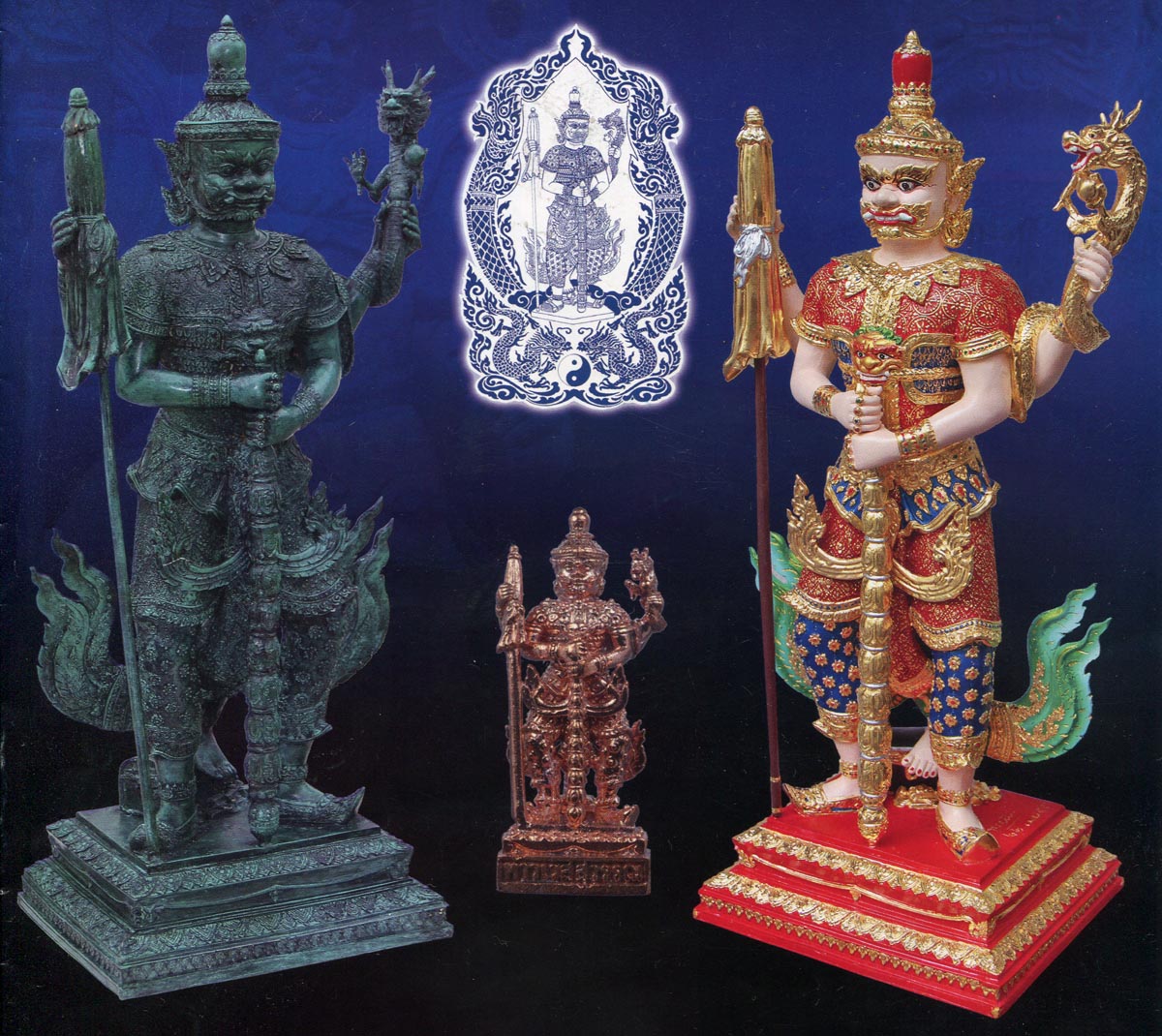
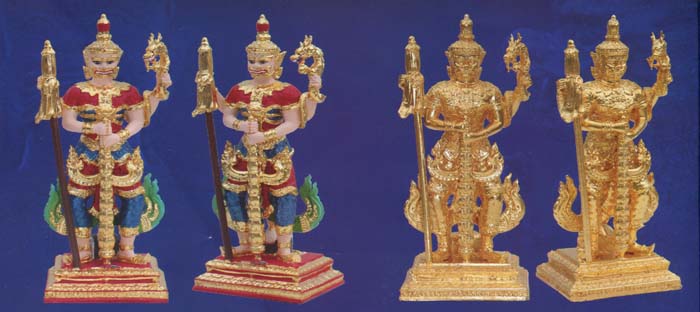
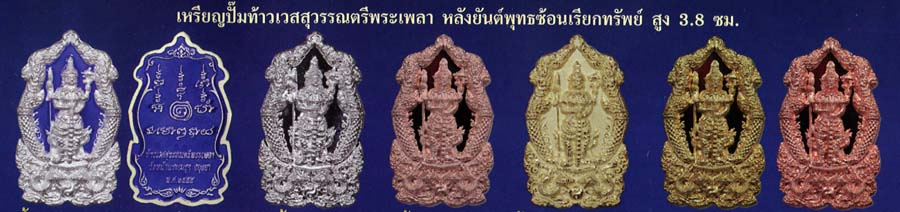
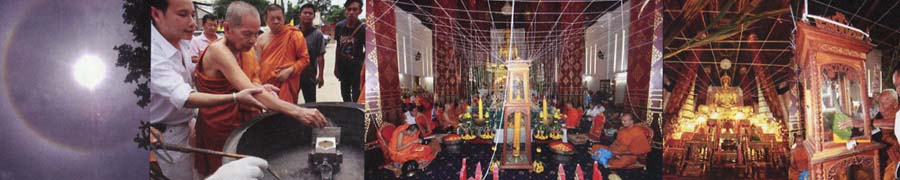
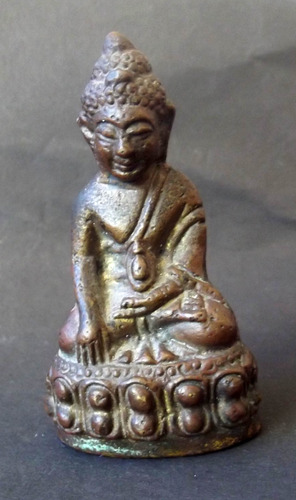
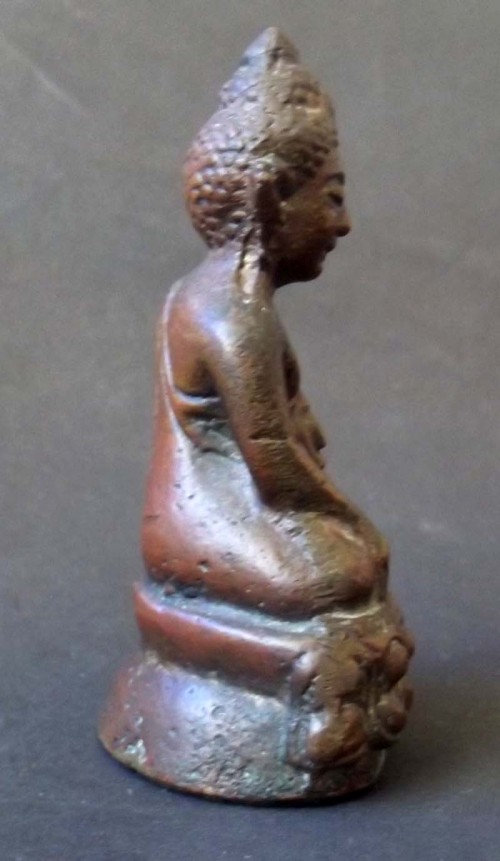
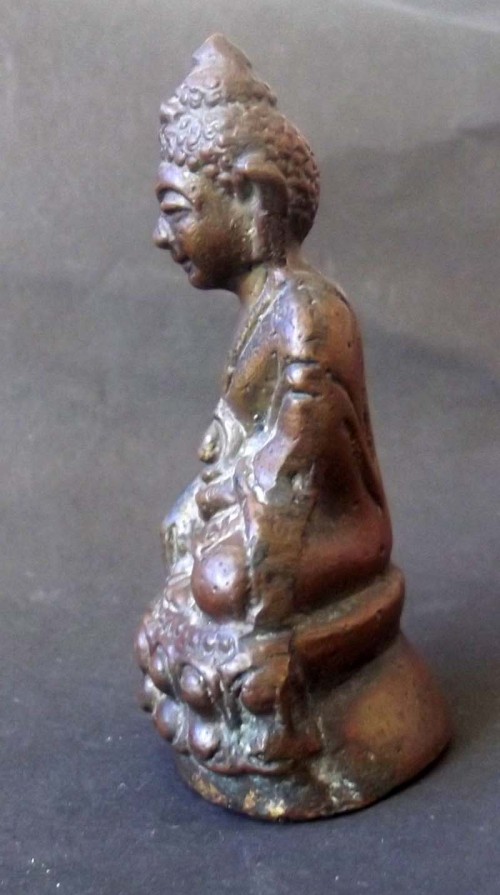
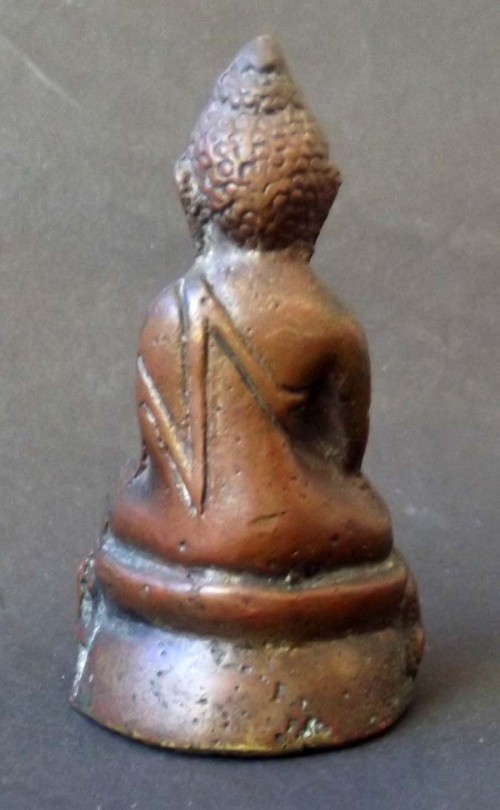
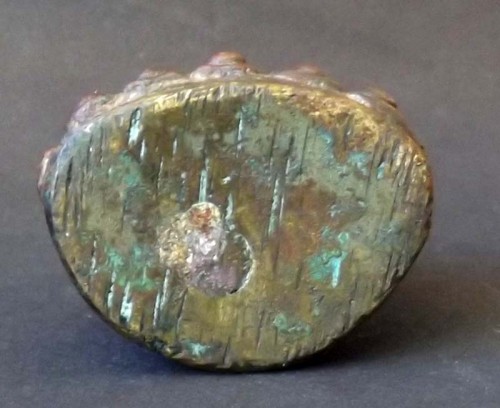
Special Series Jumbo size Painted Sacred Powders with Gold Leaf Brahma God Amulets, released in a new series, along with a range of Ganesha Gods, and planetary angelic talismans, from Wat Pleng, the temple of the pink chapel (Uposada). Released in 2557 BE in the Prasitti Choke Edition.

This edition of Amulets featuring the god Brahma as the flagship of the range, has been released, to raise funds for the restoration of the pink shrine room at the temple of Wat Pleng, which is a very famous temple.

This is the first time that the temple releases sacred powder Amulets which have received a glazed ceramic in emerald coloured surface finish, and gold leaf painted on the surfaces of the front faces. This comes as a very special edition, for the first time in the history of this temple.

The Muan Sarn Sacred Powders used in the making of these Amulets, contains a vast variety of sacred and powerful holy substances, which were mixed together to make the final sacred powder.

Five kinds of holy substances were mixed with Pong Agkhara Laekh Yant (A sacred Buddha magic powder, made with the ritual inscription of Sacred geometry, and ancient Khmer Sanskrit spells, on a blackboard using chalk. The chalk, which remains as residue from the inscriptions of the sacred spells, is then used as a sacred powder).

The rear face of the amulet bears a Yant Duang Sacred Geometry spell, for improving Karma, raising the line of Fate, and bringing the Fortune of a Lucky Millionaire.

This sacred powder made with spell inscriptions, comes from the great Luang Por Singh, of Wat Pai Lueang. This great master in turn have made the powders using the Wicha that had been revealed and talked to him from his Kroo Ba Ajarn, The great Luang Por Ngern (Wat Don Yay Hom).

In addition, sacred powders from a house of other great world-famous historical Buddhist masters was also added to the Muan Sarn Sacred Powders.

Powders from the following masters were included; Luang Por Te of Wat Sam Ngam, Luang Por Samniang. Sacred powder from the making of the famous Pra Somdej Singh Koo, Buddha sitting above 2 lions Amulets, was also added.

Hence, we can say that sacred powders from an already accepted and proved sacred and magically powerful addition of Amulets has also been added to the admixture used in these Amulets. Powders from Pra Somdej Wat Rakang Kositaram and Pra Somdej Wat Bang Khun Prohm, were also added to the mixture.


A colored enamel glaze with the herbal lacquer using sacred herbal admixture is applied to the front face of the Amulets, and a gold leaf coating is applied. Brahma sits upon his traditional steed, the sacred Hongsa.

Earth from 16 different Buddhist sacred places, including broken pieces of break and tiles from the Chedi stupa spire which has Buddha relics inside in the country of India, was added to bring sacred power to the Amulets. Powdered in senses and earth from enchanted parts of the deepest forest from many places was also gathered and added and incense powders from burned incense sticks from Buddhist shrines of over 100 different locations.

Incense powders of burned incense sticks from Buddhist relic shrines around the country. Many sacred herbs with magical properties that possess Metta Mahaniyom, Maha Lap, and Maha Pokasap how are, were also mixed in, as well as other sacred words herbs and pollens, for increasing the power of Kong Grapan Chadtri.

Dried flowers which had been offered to the Buddha, by monks and great masters from a large number of different sacred shrines around the country, were also used, and from Buddha image shrines. Holy water with Buddhist blessings from sacred ceremonies gathered throughout 1500 years of ceremonially making was used to mix the powders together.

The Amulets were empowered and blessed twice, the first occasion being performed 24 November the year 2556, at the temple of Wat Maha Preukataram, in Bangkok. Many great masters were present to empower these Amulets including some of the most famous of all, like Luang Por Foo (Wat Bang Samak), Kroo Ba Krissana Intawano, Luang Por Poon (Wat Ban Paen), Luang Por Chan (Wat Bang Bor), and Pra Maha Surasak, of Wat Pradoo.

The second empowerment was performed in solo, on 5 January in the year 2557 by Pra Kroo Sangkaraks Prasit Sittigo the abbot of Wat Pleng, otherwise known as the temple of the pink Uposadha.

This edition of Amulets was made using traditional engine methods, and the metallic kinds of the edition, will possess the tell-tale signs of ancient Amulets making around the edges. This means that the ancient method was used and can result in irregularities around the edges of the coins.

This is not seen as a flaw, rather as a sign of authenticity and authenticity recognition. It is difficult to find these methods used in the modern era, and one can consider any addition of Amulets would use these methods to be an act of preservation, conserving the ancient methods and preserving the historical directory of Buddhist amulet making, which is now in, halfway through, its second millennium.


As far as the sacred powder Amulets are concerned, these, are large in size, and intended to stand out from the crowd. They possess a very bombastic effect, attracting attention to the eye. This is of course, one of the magical properties of the god Brahma.


Brahma’s 4 faces, attract customers are interested admirers, from all of the four cardinal directions. In Thailand, you will see that Brahma God as an image on his altar, placed in most places of business, and also places where many people are expected to gather. This is because the god Brahma will attract people to convert and congress in such places. This is very good for business success and for prosperity.


The temple of the Pink Uposadha, is already very famous with south-east Asians from Malaysia, Singapore, Hong Kong, and other countries.

This is because they know the name of the temple, for the existence of a non-ordained Lay Master, who makes the traditional Thai Sak Yant Thai Temple Tattoos. This particular Ajarn is called Ajarn Tong, and is a Master of international fame. The temple itself however despite being in the shadow of the tattoo master as far as international fame is concerned, is actually a very important temple with a very vast linage of sorcery masters.


Authors Rights:

Ajarn Spencer Littlewood  for thailandamulet.net
All rights reserved.

An extremely rare (less than 2000 amulets made), Gammagarn edition limited series model with special code stamp ‘NA’ n rear face (not present on standard models), from the Great Luang Por Sakorn, of Wat Nong Grub, form 2552 BE.

I (Ajarn Spencer Littlewood), present this account, as one who has studied and carefully researched the traditions of ritual potency and esoteric lineages of the Chonburi Masters over ,many years, especially during the time I lived within quick and easy visiting distance of the temple and the locals of Ban Khai. What follows concerns a highly regarded sacred object that has become legendary within the history of Wat Nong Grub in Rayong Province, namely the Rian Pokasap coin amulet of Luang Por Sakorn Manunyo, created in the Buddhist Era year 2552. All of the material conveyed here is compiled and arranged from long term field study, textual analysis, and direct engagement with the Thai amulet tradition.

The Pokasap coin of Buddhist Era 2552 was created with the express purpose of raising funds for the restoration of deteriorated monastic structures within Wat Nong Grub. The name Pokasap carries an explicitly auspicious meaning, emphasizing the Buddhist virtues of wealth attraction, prosperity, and material sufficiency. Artistically, the amulet is refined and carefully executed.

The nava loha alloy, which is of particular interest here, is composed according to ancient metallurgical doctrine using nine auspicious metals, namely gold, silver, copper, chin, blue alloy, zinc, liquefied iron, mercury, and lead. The successful fusion of these metals requires a disciplined and technically demanding process to achieve harmony, stability, and the dark, dignified tonal qualities associated with potent nava loha. Typically, nava loha Pokasap coins from this issue display a deep brown to near black surface, sometimes revealing natural silver or gold iridescence caused by oxidation interacting with the precious metal content.


The official registry of this amulet issue was clearly defined by metal type and form to support systematic collection and prevent forgery. The most popular formats were the standard round coin and the smaller oval form commonly referred to as melon seed or tamarind leaf style. Gold versions were produced strictly to order, not exceeding ninety nine pieces. Silver versions were limited to nine hundred ninety nine pieces. The nava loha version was produced in exactly two thousand five hundred fifty two pieces, corresponding to the Buddhist Era year of creation. Alpaca alloy versions numbered three thousand pieces. Blackened copper and fire copper versions together totaled approximately ten thousand pieces. In addition, one thousand special committee sets were produced, each bearing unique stamps and serial numbers, often incorporating special metals or enamel work that set them apart visually and ritually.


Other sacred objects created or consecrated in the same ritual cycle demonstrate that Buddhist Era 2552 was a prolific year. These included the Khun Paen Pong Prai Gumarn amulet, notable for its high concentration of Prai Gumarn material and its faithful derivation from Luang Por Tim’s original design. Talismanic objects were equally comprehensive, including Pokasap yantra cloths inscribed with the five yantra and the Na Kin Mai Roo Sin formula for charm and fortune.


Takrut Tone and Takrut Sarika were hand inscribed by Luang Por Sakorn himself at astrologically appropriate times. Maha Sanaeh wax was prepared using dok thong herbs and ancient spirit oils, housed in wooden or metal containers. Portable Choo Chok figures and cast Choo Chok statues emphasized fortune seeking. Floating images of Luang Por Sakorn were produced in multiple sizes, alongside old style temple issued photographs laminated at the source. Mercury filled Bia Gae shells bound in cord according to Wat Nong Grub lineage were also included, as were Prai Gumarn powder balls formed from leftover Khun Paen materials and stamped with the number nine or the sala code distinctive to the temple.

The consecration ceremony for the Pokasap amulets of Buddhist Era 2552 was conducted with exceptional care within the ordination hall of Wat Nong Grub. Luang Por Sakorn presided, performing prolonged solitary empowerment before the larger ceremony. Renowned masters of the era participated in the full ritual, including Luang Por Sin of Wat Lahan Yai, Luang Por Foo of Wat Bang Samak known for Kapila and Hanuman knowledge, Luang Por Joy of Wat Nong Nam Khiao, Luang Por Chan of Wat Bang Bor, and Luang Por Choei of Wat Lahan Rai. Their collective presence ensured a comprehensive spectrum of protective, charismatic, and prosperity oriented blessings, particularly emphasizing maha pokasap in alignment with the amulet’s name.


Detailed analysis of the yantra inscriptions on the reverse of this coin identifies them as a specific maha lap formula inherited from Luang Por Tim, with the Na Maha Setthi positioned in balanced configuration. Authentication of the nava loha version requires close attention to the crispness of the ornamental lines and lettering. The dies were produced using high resolution computerized engraving, making traditional casting forgery ineffective. The edge cuts of the coins also exhibit distinct characteristics unique to this issue and are difficult to replicate convincingly.


Accounts from devotees who have worn this amulet include narratives ranging from unexpected commercial success to narrow escapes from serious accidents. Luang Por Sakorn consistently taught that amulets serve as mental supports and reminders of the Buddha’s virtues. The foundation remains moral conduct and gratitude toward benefactors. When the wearer maintains purity of intention and regular merit making, the effects of the Pokasap amulet are said to manifest more readily.

Luang Por Sakorn’s amulet work further reflects his extensive knowledge of sacred botany and ritual herbalism. He was adept at identifying, harvesting, and ritually preparing herbs according to esoteric manuals. The Prai Gumarn powder inherited from Luang Por Tim was blended with additional materials gathered throughout his years of tudong practice, resulting in continuity of power rather than dilution. By Buddhist Era 2552 his reputation had spread beyond Thailand to Singapore, Malaysia, Hong Kong, and Western practitioners increasingly drawn to Thai Buddhist art and ritual efficacy.

In conclusion, the study of the Pokasap coin of Luang Por Sakorn Manunyo, Buddhist Era 2552, in nava loha and its associated sacred objects is not merely an examination of market value. It is an inquiry into faith, discipline, and the accumulated barami of a master who dedicated his life to the preservation of the Buddha Sasana. This account is offered to support informed understanding and responsible engagement with Thai sacred amulet traditions, grounded in direct study, long term observation, and fidelity to authentic lineage transmission


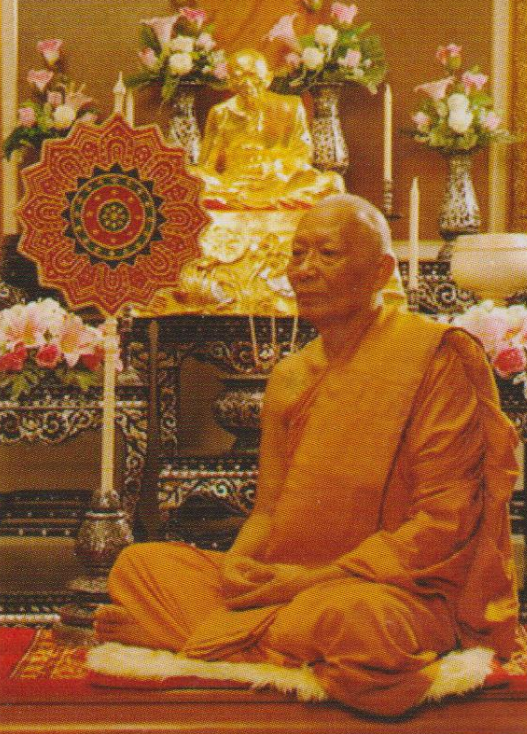
To properly understand this particular amulet, it is necessary to familiarize oneself with the life history of Luang Por Sakorn Manunyo, also known by his ecclesiastical title Pra Kroo Manoon Thammawat. He was the sole principal disciple to receive the complete transmission of knowledge from Luang Por Tim Issarigo of Wat Lahan Rai.

Luang Por Sakorn was born on Tuesday the third of February in the Buddhist Era year 2481 in Nong Grub subdistrict, Ban Khai district. He entered the monkhood at the age of twenty at Wat Nong Grub, with Pra Kroo Jantarothai serving as his preceptor. What distinguished Luang Por Sakorn and earned him wide recognition was his close personal service to Luang Por Tim and his mastery of the famed Pong Prai Gumarn powders, along with the inscription of yantra and sacred numerological formulas according to ancient tradition. His proficiency was such that Luang Por Tim is recorded as having stated that after his passing, those seeking the true transmission should go instead to Luang Por Sakorn at Wat Nong Grub.

Luang Por Sakorn is a revered figure in the realm of Thai amulets, and ex Abbot of Wat Nong Grub. His expertise in spiritual practices and amulet creation has made his works highly sought after for their perceived protective powers and spiritual significance.

Historical Background

In the contemporary history of Thai Buddhist masters and the sacred arts of amulet creation, few figures command as much reverence as Pra Kroo Manūññadhammavat, known universally as Luang Por Sakorn Manunyo (1938-2013 A.D.). As the erstwhile abbot of Wat Nong Grub (วัดหนองกรับ) in Ban Khai District, Rayong Province, his name is inextricably linked to the preservation and continuation of one of the most potent esoteric lineages of the modern era: that of his master, the legendary Luang Pu Tim Issarigō of Wat Laharn Rai.

Luang Por Sakorn was not merely a disciple; he was the anointed heir, the lūksìt ēk, or prime apprentice, entrusted with the complete transmission of Luang Pu Tim’s formidable Wichā (esoteric knowledge). This inheritance included the arcane science behind the creation of the most famous and powerful spiritual substance in the Thai amulet world: Phong Phrāi Kumān, a necromantic powder of unparalleled efficacy. The sacred objects he consecrated are, therefore, not just artifacts of faith but are considered direct continuations of the spiritual power and compassionate intent of his revered teacher.


Luang Por Sakorn, ordained in 1958, is renowned not only for his creation of amulets but also for his mastery of traditional herbal medicine and mystical practices, known as Wicha Waetmont Akom. His dedication to spiritual healing and the crafting of protective amulets has attracted a devoted following, creating a legacy that continues today. His amulets are often considered a blend of Buddhist faith and local traditions, which enhances their cultural importance in Thailand.

Significance of the AmuletsThe amulets produced by Luang Por Sakorn hold profound significance within Thai Buddhism. They are believed to provide protection from misfortune and enhance luck in various aspects of life, such as health, wealth, and safety. Many of these amulets, including notable ones like the Jao Sūa Būrapā, were specifically designed to help military personnel and police officers, underscoring their role as sources of empowerment in dangerous professions.

These objects serve dual purposes: as functional spiritual tools and as collectible items. The history of each amulet includes meticulous rituals conducted during their creation, which are believed to imbue them with specific powers. These rituals often include chanting and blessings, which enhance the amulet’s spiritual effectiveness. As a result, items created by Luang Por Sakorn are highly prized among collectors and practitioners alike

Cultural Context

In Thai culture, amulets are not merely artifacts; they embody deep-rooted spiritual beliefs and practices. They function as daily reminders of Buddhist teachings and act as conduits for the cosmic energies that the practitioners seek to harness. Luang Por Sakorn’s amulets, in particular, reflect this intertwining of faith and functionality, blending traditional Buddhist practices with local spiritual customs.

The enduring popularity of Luang Por Sakorn’s amulets signals a vibrant tradition that thrives on the beliefs of protection, luck, and spiritual connectivity, showcasing the rich tapestry of Thai religious life. As such, they not only carry personal significance for their owners but also represent a living heritage that informs the broader cultural landscape of Thailand.

It is Important to know authentication practices with the amulets of LP Sakorn, as there are many forgeries, and possessing the right knowledge, enables easy authentication; Authenticating Luang Por Sakorn amulets involves several key factors that collectors and enthusiasts should consider to ensure they purchase genuine items. Here is a detailed guide on how to authenticate these revered amulets.

Examination of Materials and Craftsmanship

Authentic amulets of Luang Por Sakorn are usually made from specific materials such as sacred powders, oils, and occasionally metals. The most notable type of powder is the authentic prai kumarn powder, inherited from Luang Pu Tim, which is often used in the construction of these amulets. When examining these objects, potential collectors should look for consistency in the material’s texture and the presence of intricate details that reflect careful craftsmanship.

Unique Stamps and Designs

One notable aspect of Luang Por Sakorn’s amulets is their unique stamps and designs. These stamps are indicative of authenticity and help differentiate genuine amulets from replicas. Collectors should familiarize themselves with these stamps and their specific characteristics. A thorough comparison with known authentic pieces can assist in verifying an amulet’s legitimacy.

Weight and Size

The weight and size of the amulet can also serve as authenticity indicators. Genuine amulets have standard dimensions and weights based on the molds used in their creation. Sudden variations in these parameters may suggest that an item is not authentic. Weighing the amulet and measuring it against verified samples may help in this evaluation.

Documentation and Provenance

Amulets from Luang Por Sakorn often come with documentation or provenance that helps verify their authenticity. This may include certificates or other forms of paperwork that outline the item’s origin and history. Buyers should always seek such documentation and be wary of amulets lacking proper provenance.

Consultation with Experts

For those uncertain about their examination skills, consulting with seasoned collectors or experts in Thai amulets can provide invaluable guidance. These experts often have extensive knowledge about the specific traits of authentic Luang Por Sakorn amulets and can assist in the authentication process.

Ritual and Spiritual Components

Lastly, authentic amulets usually carry spiritual and ritual significance, enhanced through ceremonies conducted during their creation. Understanding the significance of such rituals can provide additional insight into the authenticity of an amulet

By following these guidelines and remaining vigilant about the details associated with Luang Por Sakorn amulets, collectors and enthusiasts can significantly increase their chances of acquiring genuine items.
Legacy and Continuity

Today, the legacy of Luang Por Sakorn’s work perseveres through the active practice and reverence of his amulets by new generations. The continuing demand for these artifacts is indicative of their sustained significance in Thai culture. Collectors and practitioners often refer to them as vital connections to the skills and teachings of one of the country’s revered monks, preserving the history and spiritual practices linked to Luang Por Sakorn .

Wat Nong Grub

The history of Wat Nong Grub is rooted in the faith of the local community in Rayong. While detailed records of its earliest foundation are sparse, it existed as a local monastic center for generations. The name “Nong Grub” refers to the local geography, likely a marshland or pond area. Before Luang Por Sakorn’s tenure, the temple was served by a succession of abbots who maintained its role as a spiritual heart of the community. One of the most significant preceding abbots was Luang Por Pheung, who was not only a respected administrator but also Luang Por Sakorn’s first teacher in the sacred arts and his preceptor (Pra Upacha) upon ordination.

However, it was under the leadership of Luang Por Sakorn, who became abbot in 2508 B.E. (1965 A.D.), that Wat Nong Grub underwent a profound transformation. Using the funds raised from the creation of his now-famous amulets, he initiated numerous construction and renovation projects, including the main Uposatha (ordination hall), monk’s dwellings (kuti), and, most notably, his visionary project: a three-story Yant Museum.

This project was intended to preserve and display the sacred geometrical designs and incantations that form the basis of Thai Buddhist esoteric practice, many of which he had inherited from Luang Pu Tim. His leadership turned Wat Nong Grub from a local temple into a major center for pilgrimage, renowned as the home of the direct successor to the Wat Laharn Rai lineage.


Authors Rights:

Ajarn Spencer Littlewood  for thailandamulet.net
All rights reserved.

Welcome back to Thailand Amulets blog – After a week or two of silence on the Thailand-Amulets.Net Blog Section we are happy to announce our return, after moving the store to a more efficient Hosting Company and faster server. It has taken us two weeks to finalize the transfer and we are now safely in the hands of our new hosting company, which offers a much more efficient server. A revamp of the navigation design and the site banner has also been made.

So now we can safely begin to post new articles and info pages again, and will soon be adding the latest additions upcoming to the store. As a small taster, here are some previews of the latest editions of amulets which are about to be added to the store in the coming 2 weeks.
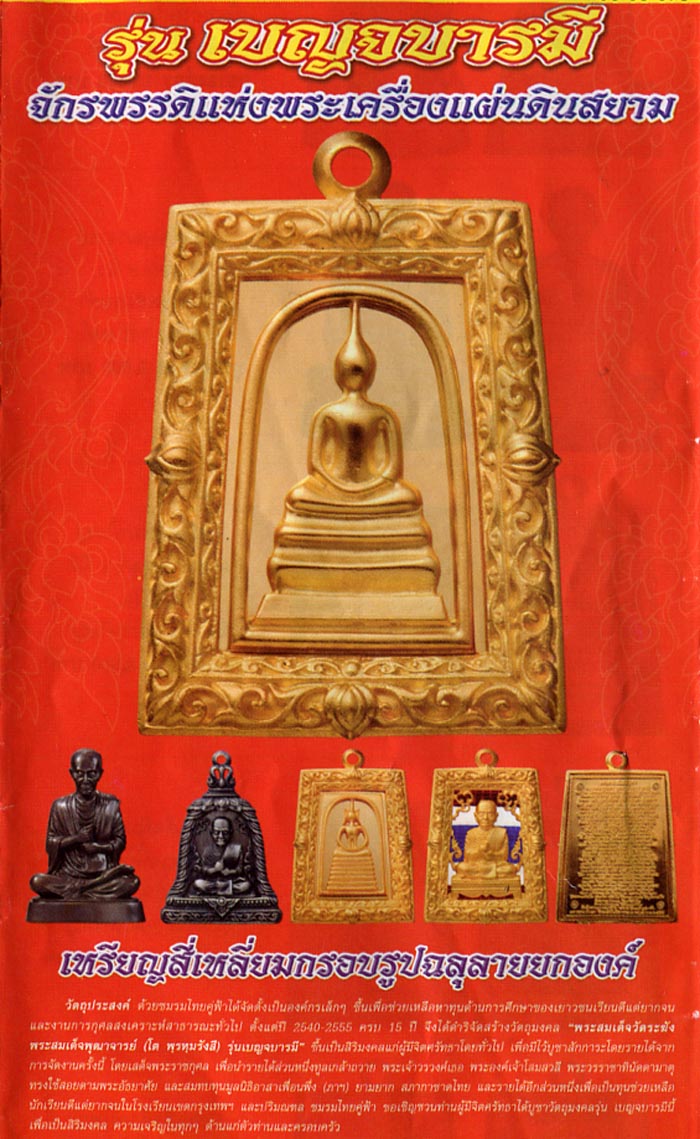
Amongst the Most Attractive and Interesting of the Upcoming Releases of Thai Buddhist Amulets about to arrive in the store, are the Benja Baramee Edition of amulets from Wat Rakang/Wat Gaes Chaiyo – ‘Rian See Liam Grorp Roop Chalu Lay Yok Ongk’ Sacred Metal amulets from Wat Rakang, and Wat Gaes Chaiyo Temple. The series is a large range of Pra Somdej Dto Prohmrangsri Images, in rectangular or bell shaped frames, Pra Somdej Wat Rakang and Pra Somdej Wat Gaes Chaiyo amulets. All the coins were made in a vast number of different combinations of sacred and/or precious metals, with most elegant and finely honed decorative frames. In addition, some large 9 inch base Statues of Somdej Pra Puttajarn (Dto) Prohmrangsri were released and some Pha Yant (Yantra Cloths), with a special Benjapakee set of amulets in box set being an eye-catching addition to the series.

Pra Somdej Run Benjamongkol Wat Rakang Kositaram

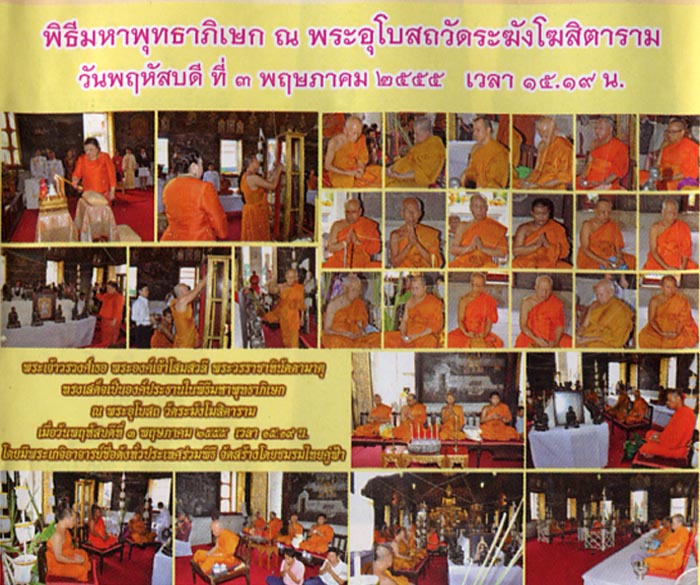
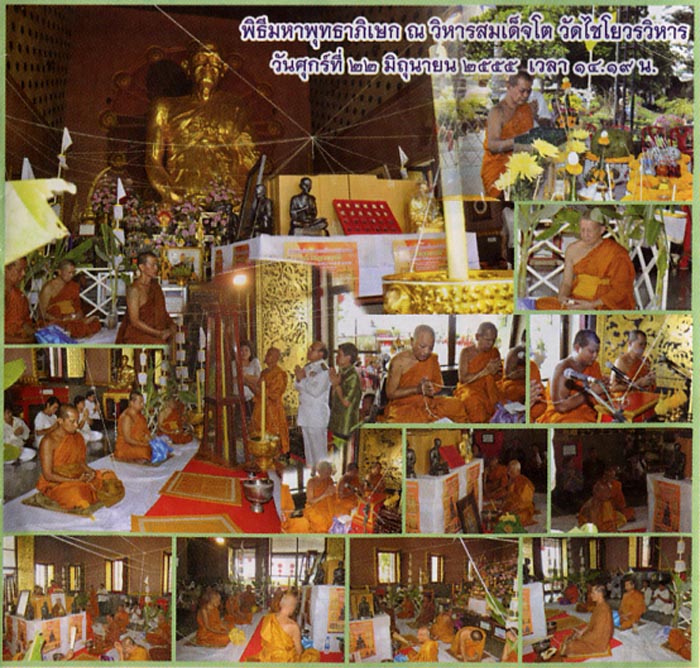
Blessed in Two Major Puttapisek Ceremonies of National and Historic Importance, the first Blessing being performed at Wat Rakang Kositaram in Bangkok, and the second Empowerment being performed at Wat Gaes Chaiyo temple in Ang Tong.


Above Pic; First Putta Pisek Empowerment Ceremony of the Run Benja Baramee edition of Sacred Buddhist Amulets, at Wat Rakang Kositaram.

Above Pic; Second Blessing Ceremony of the Run Benja Baramee 2555 BE Edition Amulets at  at Wat Gaes Chaiyo

Most interesting for me of this series, are the nine inch gold leaf covered bronze statues of Somdej Dto Prohmrangsri, of which only 50 or more were made and are certain to become classic rarities, whose value will quintuple in a very short time indeed in my opinion, but whatever the value will always be a difficult thing to let go of, because it is a most excellent Bucha statue for the altar for personal practice. Money can be found anywhere, but an item like this can not.

The next interesting series of Sacred Buddhist Amulets and Bucha Statues is the Exquisitely Beautiful edition of  Thai-Chinese Taw Waes Suwan Statues, Coins and Amulets from Wat Plab Pela, which has been awaited with great Anticipation. Considered to be the most important release of Taw Waes Suwan amulets in Decades, and destined to become a classic Thai Buddhist Amulet of Connoisseur Status. a total of 96 Guru Masters attended the massive Putta Pisek and Tewa Pisek Empowerment Ceremony in a Large ceremony of National  and Historic Importance.

Taw Waes Suwan Wat Plab Pela 2555 BE

The edition includes 19 Inch and 4.5 Inch high Bucha statues in various luxurious finishes and sacred metals. Special Taw Waes Suwan Coils with Dragons were also included in the series.

Taw Waes Suwan statues are fashioned into a special 3 legged posture holding a dragon. The third leg is standing on a treasure chest holding it safe from thievery, and the dragon prevents floods and Tsunamis and natural disasters from occurring and causing havoc to the economy of the household, and indeed, your Nation.

Taw Waes Suwan

Specially designed and empowered using a complex set of Wicha which have been gathered and applied in order to protect Human Beings and the Nation, from Natural and Economic Disaster, to acquire more Wealth and to Keep what Wealth that has been Gathered already from slipping away and disappearing. This editions is chosen specially by Me (Thailand-Amulets.Net’s owner Ajarn Spencer), for i have studied and selected this edition as a very recommendable choice for the customers of the store.

Two versions of coin amulets were made, with a special two sided two posture version being the collectors Gammagarn model.

Some miniature Loi Ongk Statuettes ware also released in various sacred metals. A very Important and sacred Ceremony was performed with accurate Astrological Alignments and a host of Thailand’s great Master Monks to Empower and give Blessings.

Blessing Ceremony

The Style of Future Additions

As a result of having read various feedback mails and consulted some of you about what you feel as the store has grown, the main message i have got from all of you , is that, because you all love amulets and seek the best most powerful and sacred ones from the best masters, but not always do you yourselves know which those are. I have noticed that you expect me to not stock amulets or masters that i myself do not find to be powerful, and that i present only the best or the worthy ones to you based on what i feel are truly powerful amulets from capable masters

I have thus decided to do this, but that because some masters work well for people that i myself may not find so attractive, i think i shall still continue to offer and increase the widest choice of amulets possible, but that i shall have a special section of the store with my personal recommendations for the best amulets, and that i shall post honest blog articles about any particular editions or particular amulets i feel should be appreciated but which may not catch the eye unless you know

For example, one amulet whose title does not reveal the true power and greatness of the amulet, is the Takrut Maha Jakkapat from Wat Tham Wua Daeng, because it is in fact a product from the hand of the Great Living Master ‘Luang Por Simplii’ who performed a constant nine day vigil of empowerment on the Takrut. They are heavy old school leaden Takrut Tone, wrapped in strong cord with gold leaf and lacquer and are empowered by a Monk who has eluded International and National fame but who is for a small circle of people in the know an ‘Undeclared Arya Sangha’

For those of you who don’t know, an Arya Sangha is one who has entered and past stream entry and bvecome one of the eight types of Enlightened Beings. It is this kind of Practitioner who Masters the Abhinya Powers, and it is the amulets of such masters which have the true Miracle Power as read about in Legends of Old.

Takrut Maha Jakkapat Luang Por Simplii

This is therefore the amulet which i would recommend in this post as the ‘so good you’d never know it if i didn’t tell you’ amulet of choice. It is probably sold out soon but i hope to restock if i can find a number of them because i seriously believe in this Takrut and wish to provide it for customers.

Takrut Maha Jakkapat Ying Mai Awk (Gun Stopper) – Ud Rae Lek Lai, Lek Nam Pi – Pokasap Riches and Kong Grapan Protection Amulet 4 Inches long – Wat Tham Wua Daeng + LP Simplii 9 day blessing
$69.99

Luang Por Juea 108 Takrut Sivali Lockets

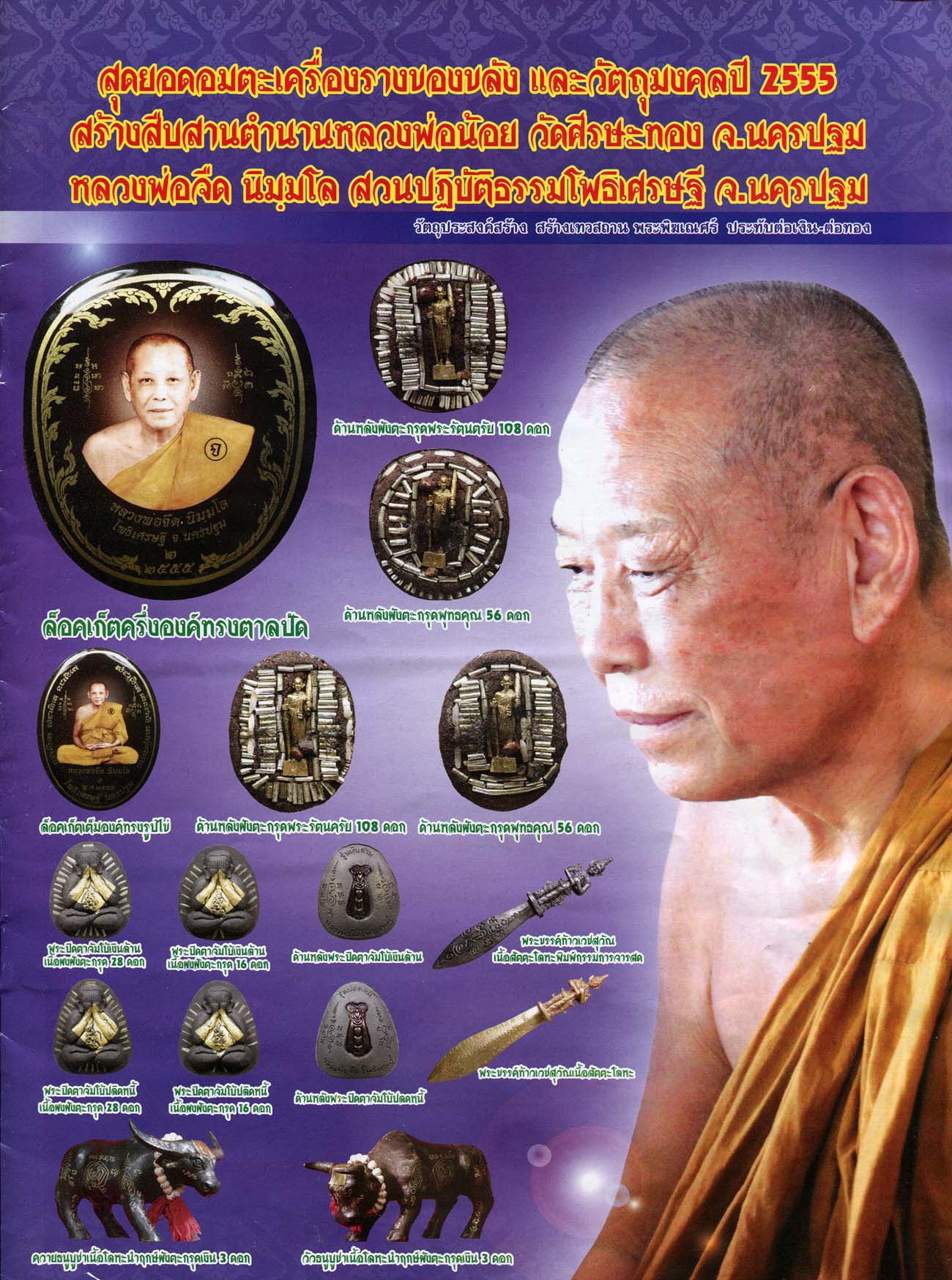
Coming up in the next Month, is the most amazing selection of Lockets, Pra Pid Ta Amulets, and Wua Tanu Bucha statues (and loi ongk amulets) coming from Luang Por Juea of Wat Klang Bang Kaew of Nakorn Patom. This edition is released for the Suan Badibat Tam Po Sethee with the funds going to the construction of a large Pra Pikanesworn (Ganesha) statue sitting on a gold and silver Bee at the temple. The statue will bring wealthy blessings to devotees who pray to it at the temple, and will help to reduce poverty. The wealthy blessings of those who support the building of the Deity with these amulets are also to be expected.

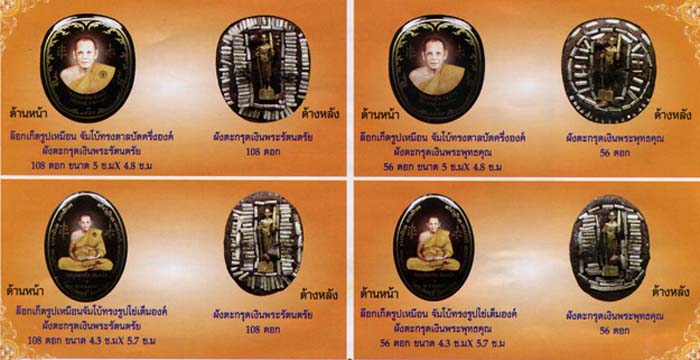
All of the above editions are of the best sacred ingredients and blessed by powerful Masters, according to our close study and pre-investigation of  each edition before making the decision to choose and select them for our customers. The Lockets by luang Por Juea are made using the finest magical sacred muan sarn and are exceptional in their outstanding originality, and immensely concentrated power. The Lockets have either 108 Takrut with a Pra Sivali Loi Ongk statuette or 56 Takrut with Pra Sivali. The Pra Pid Ta Amulets have 28 or 16 Takrut. The Takrut themselves contain various Wicha which i shall document in the descriptions of each amulet when i add them to the store. The Lockets and Pid Ta are both available in two different Pim, with a special three amulet locket and Pid Ta Gammagarn collector set making an extra three models to the complete series. The Gammagarn Locket has 112 Takrut (Takrut Pra Radtanatrai 108 + Takrut Pra Putta Jao Sip Hok Pra Ongk 16 = 124), the Ong Kroo Lockets have 108 Takrut Pra Radtanatrai, and the Pim B models have 56 Takrut Pra Puttakun.
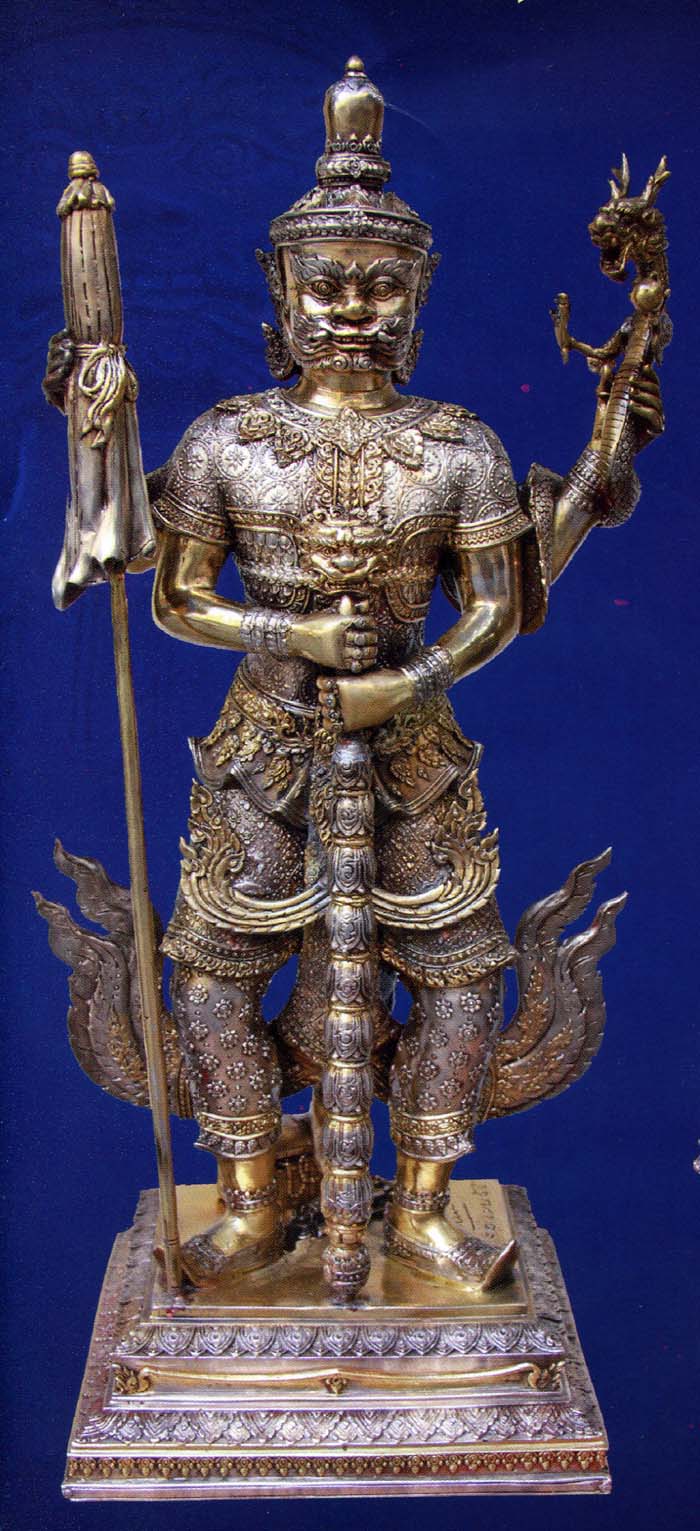
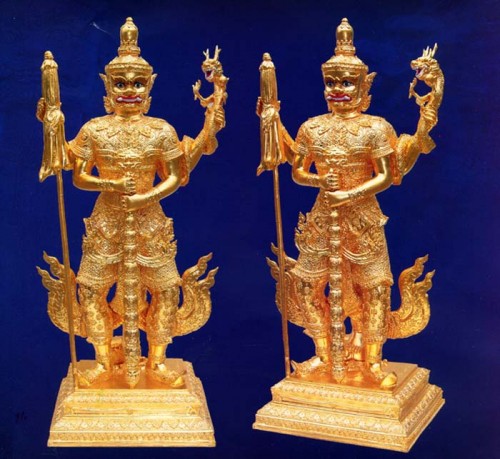
Apart from these, we are expecting to receive some exquisite Bucha statues in bronze with pure gold leaf, of Luang Por Supar sitting on a Money Spider. Wes shall also be stocking the ‘Rian Jao Sua’ amulets from this edition, which are Classic amulets of Maha Lap and Kong Grapan variety, and this edition looks set to become a classic from an Aged Master of the Generation of the Greats, with an immensely long and respectable trajectory of Practice and Merit accumulation behind him. An extremely collectible edition in my opinion, of the finest Artisanry.

A lot more  amazing amulets are of course on their way, including a host of occult Charms and Super Powerful ‘Chin Aathan’ carvings from Pra Ajarn Dtecharangsri. I hope you enjoy browsing and reading about the new amulets which are being released and coming to the store, and that they will be of interest and carry all the greatest blessings. Keep Your eyes peeled this week now to see the new additions!

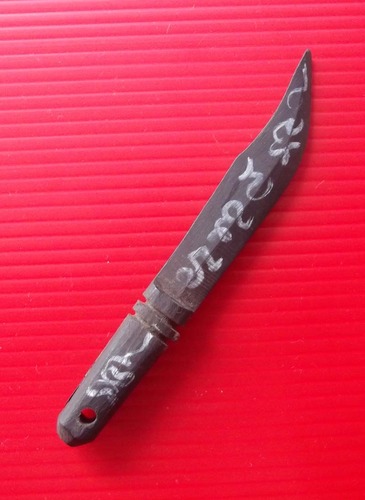
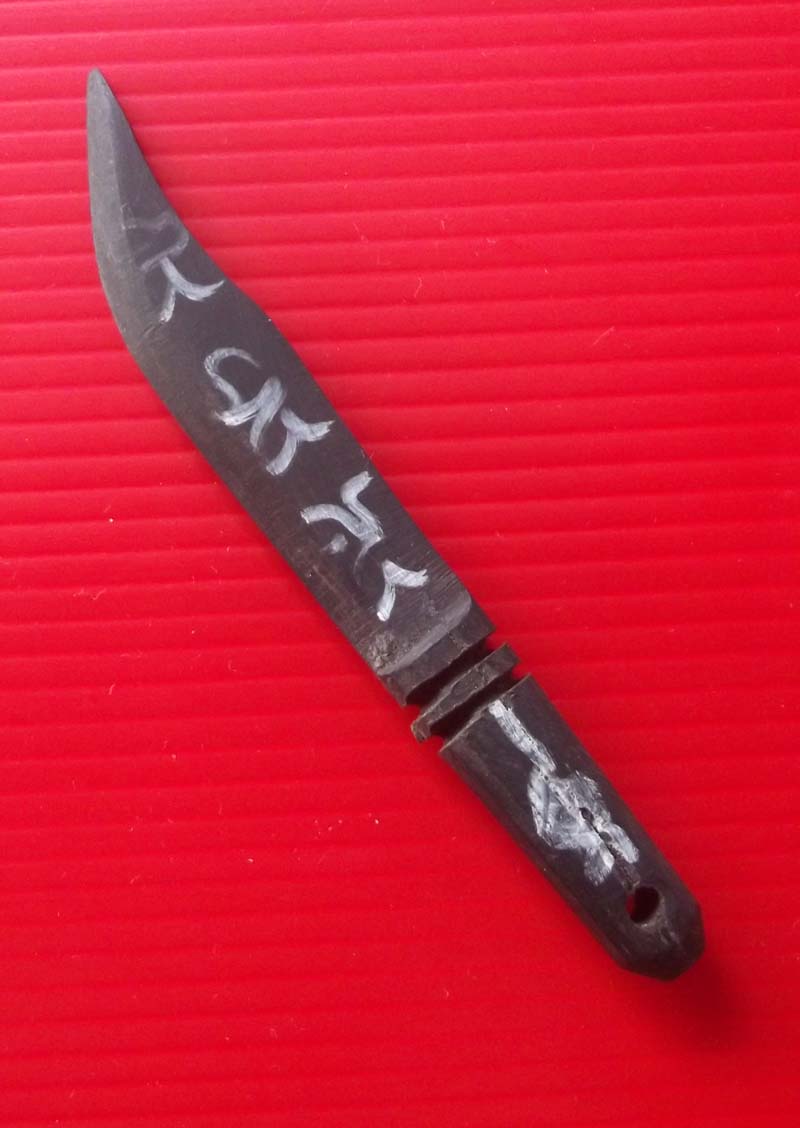
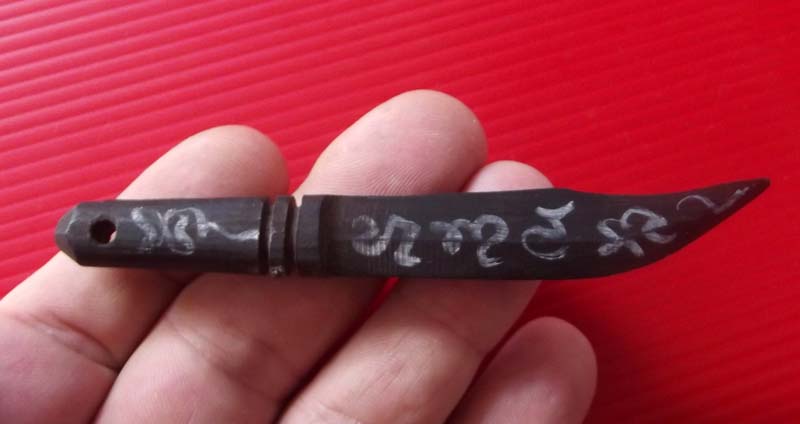
Meed Mor Mai Paya Ngiw Dam (Hand Carved Ritual Knife from Sacred Tree Spirit Wood) – Luang Por Kane – Wat Koh Phu – Only 49 Made

Hand Carved Ritual Knife Sacred Tree Spirit Wood

Hand Carved Meed Mor Ritual Spirit Knife made from Mai Paya Ngiw Dam, a very rare and Sacred Wood that has a Ruling Deva inhabiting it. The Ngiw Dam tree is considered to possess extremely powerful properties and natural anti Black magic powers. It is forbidden to cut these trees except with state or Royal permission, and a Ceremony must be performed to ask the Inhabiting Deity to willingly donate its material husk (the tree) to make Buddhist Amulets.

Hand Carved Ritual Knife Sacred Tree Spirit Wood

The knives have all recieved individual empowerment and spell insciptions from Luang Por Kane along each side of the ritual knife.

Only 49 Knives were made in this Extreme Limited Edition.

The Knife can be used for a vast array of purposes, either as a Bucha Item to ask for blessings and fortune, or for Adept Magicians to use as a Ritual Instrument for blessings and spell casting, making Holy prayer Water, performing Na Hnaa Tong, Sariga and other forehead, face or tongue blessings, inscription of Yantra on Yantra foils (the tip serves very well to inscribe Khom Agkhara). Can be easily carried in the pocket and being made from wood, does not present a legal problem for carrying in the pocket on the street, so for manby Ajarns and Healers who go on errands making house visits (for exorcisms and house blessings etc) it is a very useful and portable power instrument for their magical practice.

Hand Carved Ritual Knife Sacred Tree Spirit Wood

Size; 10 Cm Long

It is of course perfectly usable as an amulet for Bucha and can be carried or placed on altar for beseeching blessings from.

If using to remove Black Magic Curses, use this Kata whilst using the Knife;

Paa Maa Naa U Ga Sa Na Tu

Meed Mor Mai Paya Ngiw Dam (Hand Carved Ritual Knife from Sacred Tree Spirit Wood) – Luang Por Kane – Wat Koh Phu – Only 49 Made
$56.00

Pra Kring Maha Sitti Choke – Wat Prasat Bunyawas 2508 BE – Pim Hnaa Farang Hlang Mai Mee Bua

Pra Kring Maha Sitti Choke

The Pra Kring Maha Sitti Choke, or, ‘Pra Kring Wat Prasat’ was made and empowered in repeated editions each year in the years beteen 2506 + 2508 BE by the Abbot of the Temple ‘Pra Kroo Samuh Ampol’. he famous Luang Por Tuad amulets of Wat Prasat can also be said to have been created in this period too.

Pra Kring Maha Sitti Choke

The Chanuan Muan Sarn used for the amulets is composed of Sacred Metals obtained from Ajarn Taep Sarigabudtra, which were mostly taken from various editions of Pra Kring from Wat Sutat, along with a host of other precious metals, amulets and Yantra Foils from a mass of Great Guru Masters.

Pra Kring Maha Sitti Choke

The castings began in 2506 and continued to be released over the next two years until 2508, with various Pim being made; Pim Hnaa Lek (Kring Tibet) with a trident code stamp, Pim Yai (with a Khom Letter U on the base), and Pim Hnaa Farang (Caucasian Face).

Pra Kring Maha Sitti Choke

Most Pim Had a single Lotus leaf on the rear side, with only a few amulets having no Lotus leaf on the rear face. This particular edition is the rare ‘Hnaa farang’ (Caucasian Face), without the lotus leaf on the back (Mai Mee Bua Hlang).

Putta Pisek Empowerment Ceremony

More than 200 Guru Monks were present to assist in the empowerment and Incantations, so many were there, that they overflowed out of the Uposadha Shrine Room in numbers, due to its fullness. All the Famous Masters of all the Temples of Thailand were invited to come and assist.Amongst some of the most Famous Monks who attended were;

Pra Kring Maha Sitti Choke

Pra Ajarn Tim (Wat Chang Hai), Luang Por Tan Klai (Wat Suan Khan), Luang Por Dit (Wat Pak Sra) Luang Por Noi (Wat Tamma Sala), Luang Phu To (Wat Pradoo Chimplee), Luang Por Daeng (Wat Bandai it), Luang Por Muy (Wat Don Rai), Luang Por Ngern (Wat Don Yay Horm), Luang or Guay (Wat Kositaram), Luang Por Prohm (Wat Chong Kae), Luang Por Top (Wat Chon Daen), Luang Phu Tim (Wat Laharn Rai), Luang Por Khiaw (Wat Song Bon), Luang Por Jong (Wat Na Tang Nork), Luang Phu Doo (Wat Sakae), Luang Phu Si (Wat Sakae), Luang Por Pae (Wat Pikul Tong), Luang Phu Nak (Wat Rakang), Luang Por Boey (Wat Manau),, Pra Ajarn Nam (Wat Don Sala), Luang Por Seng (Wat Kanlaya), Luang Por Tira (Wat Pha Lae Lai), Luang Por Dtae (Wat Sam Ngam), Luang Por Nai (Wat Bang Jaeng), uang Por Bun Mee (Wat Khao Samo Kon),, Luang Por Hrian (Wat Bang Rahongs), Luang Phu Perm (Wat Klang Bang Gaew),Luang Por Kreun (Wat Sangko), Luang or Chaem (Wat Nuan Noradit), Luang Por Nor (Wat Klang Ta Ruea), Luang Por Pon (Wat Tian Dtat), Luang Por Do (Wat Na Madtum), Luang Por Chern (Wat Yan Sen), Luang Por Sud (Wat Ka Long), Luang Por Nueang (Wat Jula Mani), Luang Por Gee (Wat Hoo Chang), Luang Por Gaew (Wat Chong Lom),Luang Por Gan (Wat Khao Gaew), Luang Por Tong Yoo (Wat Mai Hnong Pra Ongk), Luang Por Toon (Wat Po Nimit), Jao Kun Jia (Wat pPo), Jao Kun Prayat (Wat Sutat), Luang Por dee (Wat Nuea),Luang Por Khaeg (Wat Hua Khao), Luang Por Yim (Wat Jao Jet), Luang Por Tong Sukh (Wat Sapan Sung), Luang Por Ming (Wat Gok), Luang Por Iang (Wat Pha), Luang Porr Juan (Wat Hnong Sum), Luang Por An (Wat Prayat),Luang Por Tiam (Wat Kasatratirat), Luang Por Son (Wat Singsang), Luang Por Taen (Wat Tam Sen), Luang Por Tian (Wat Bote), Luang Por Nin (Wat Kornburi), Luang Por Tong Yoo (Wat Ta Sao), Luang Por Budda (Wat Klang Choo Sri), Luang Por Mian (Wat Po Gop Jao), and a host of other Great Master Monks numbering over 200 in total.

Pra Kring Maha Sitti Choke – Wat Prasat Bunyawas 2508 BE – Pim Hnaa Farang Hlang Mai Mee Bua
$145.00