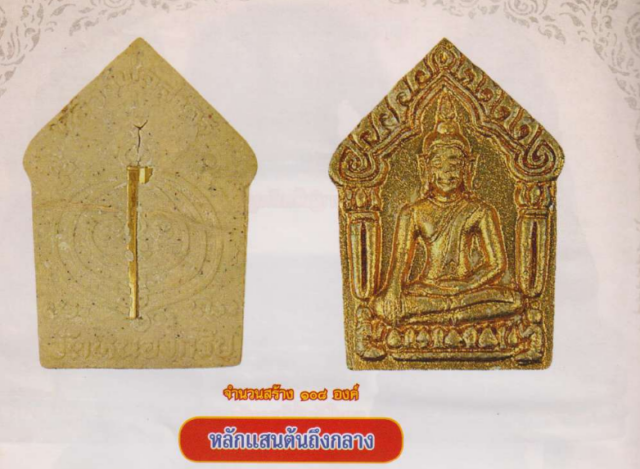
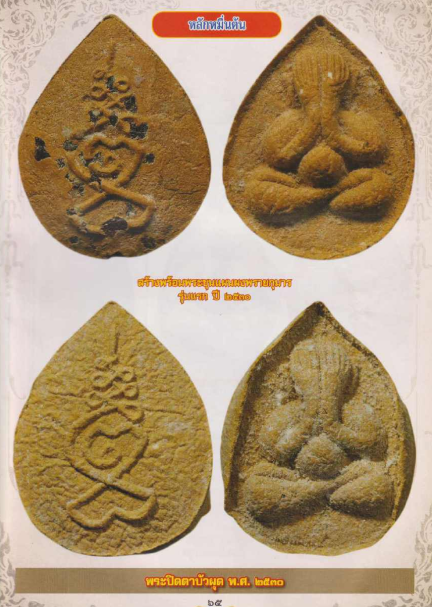
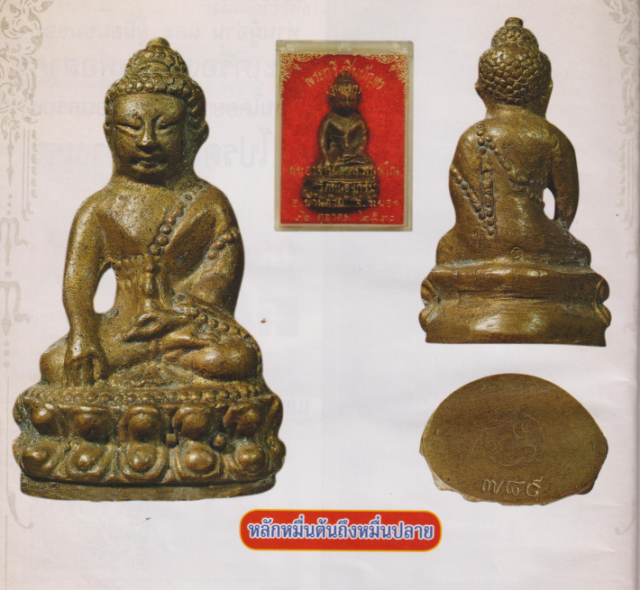
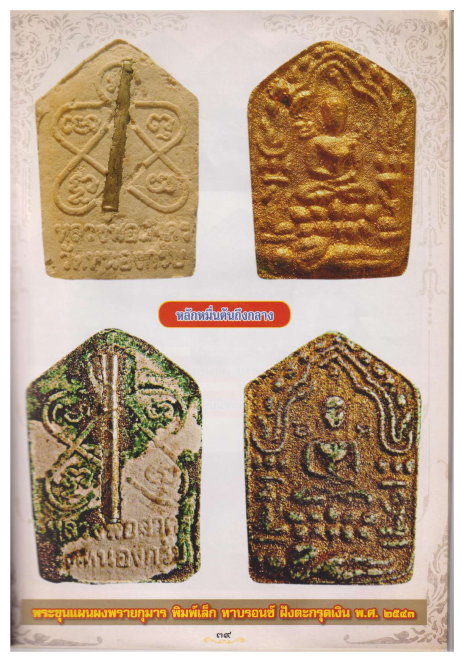
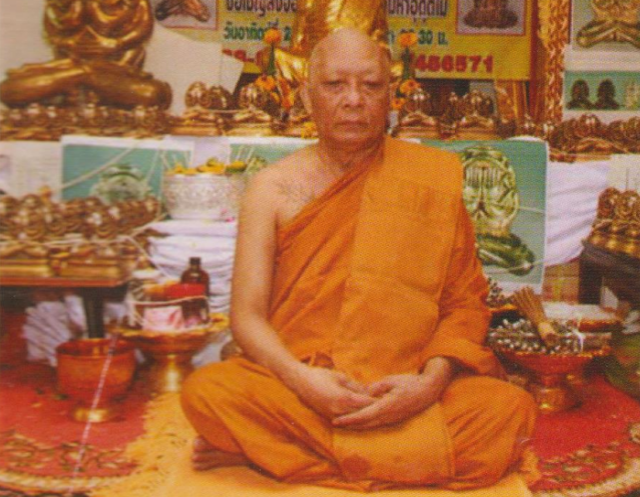
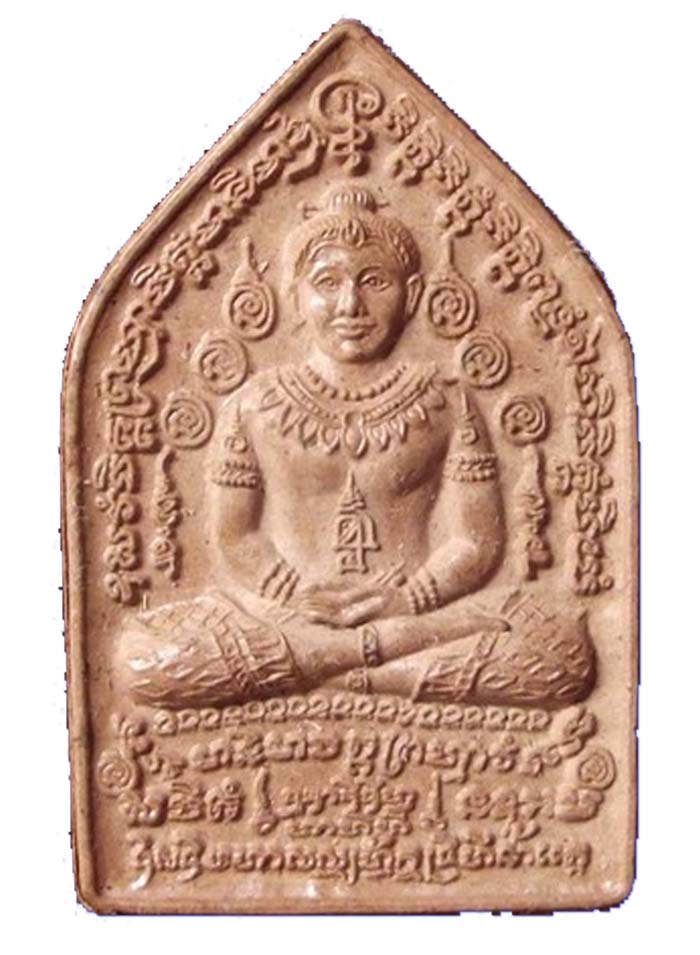
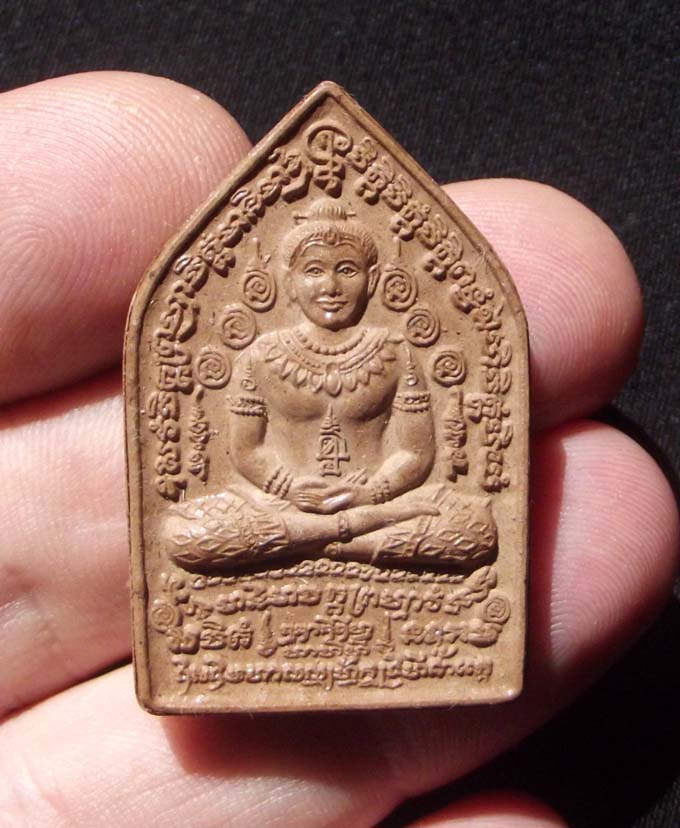
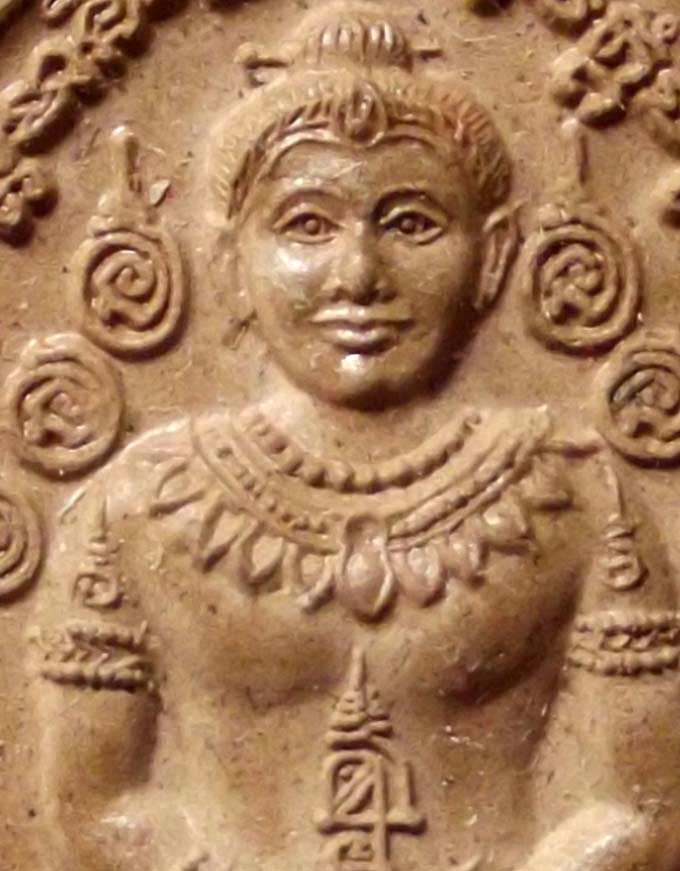
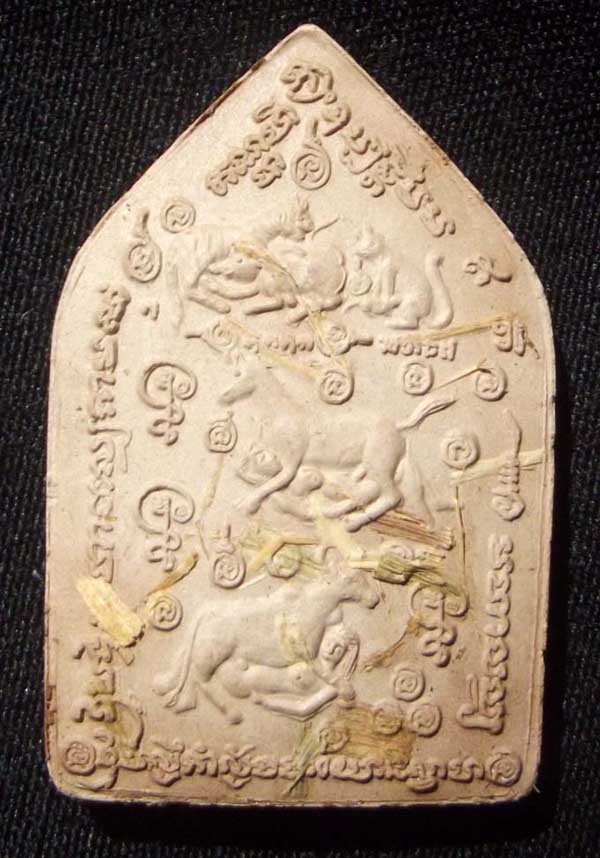
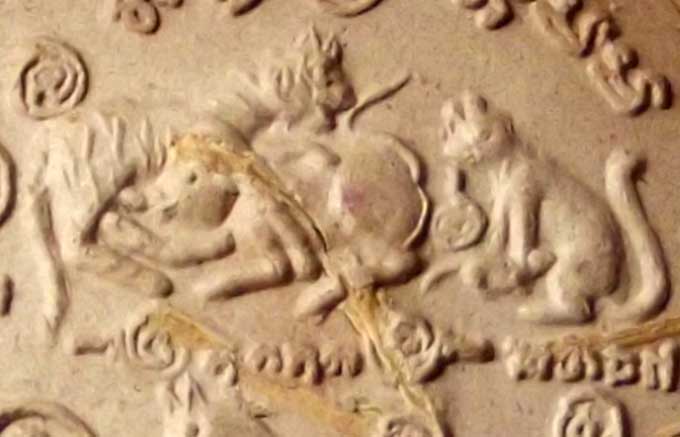
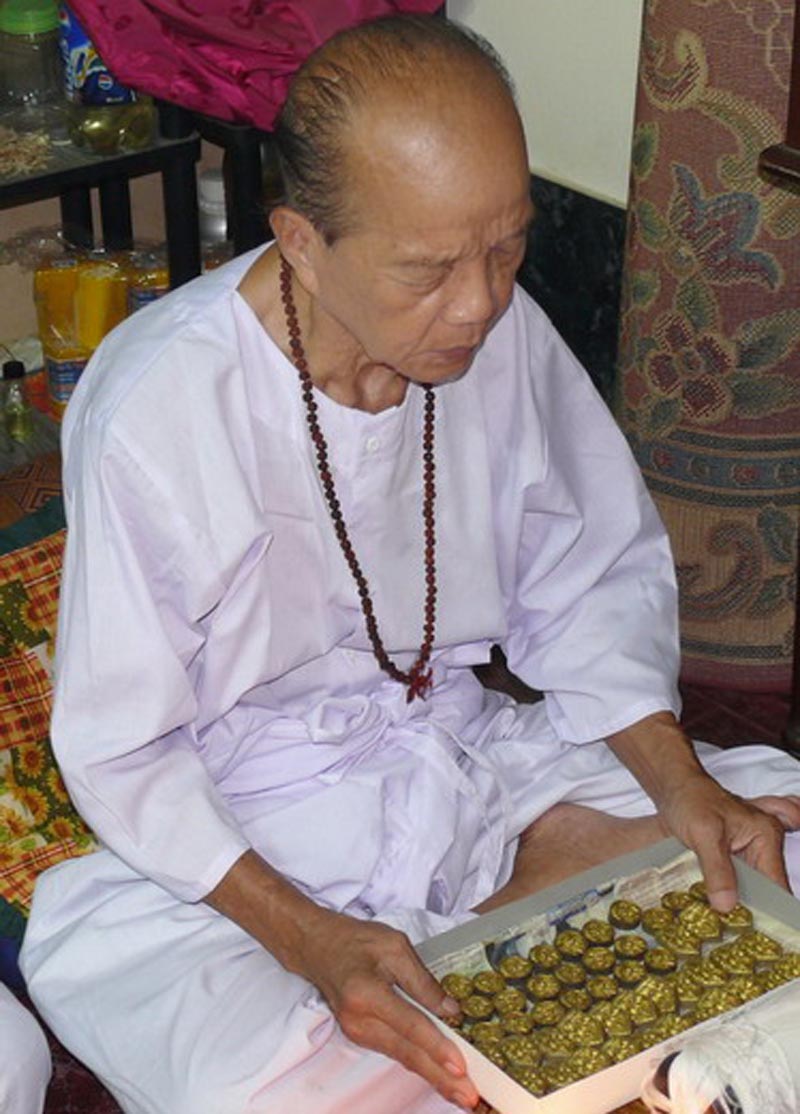
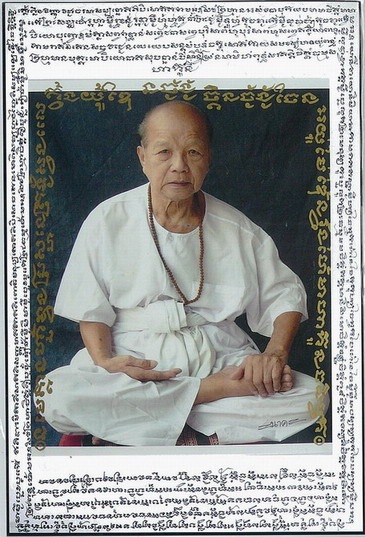
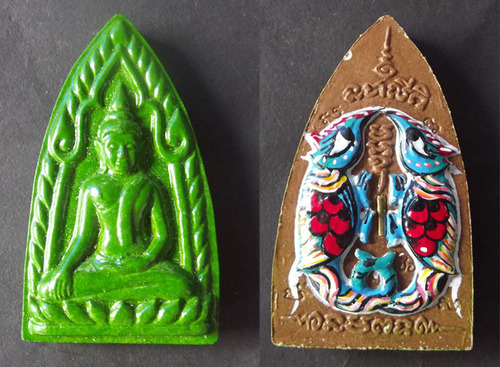
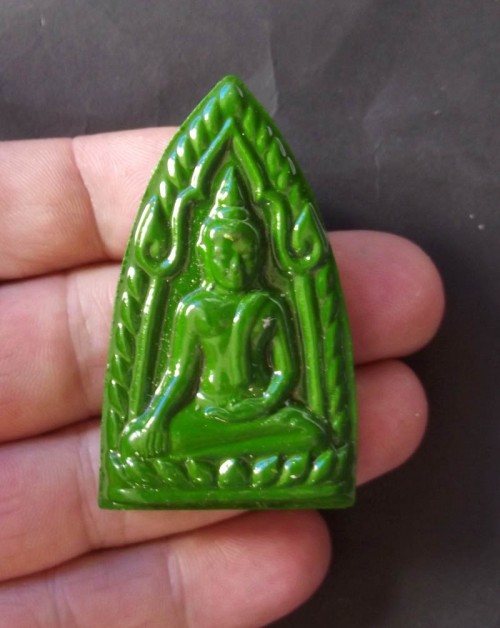
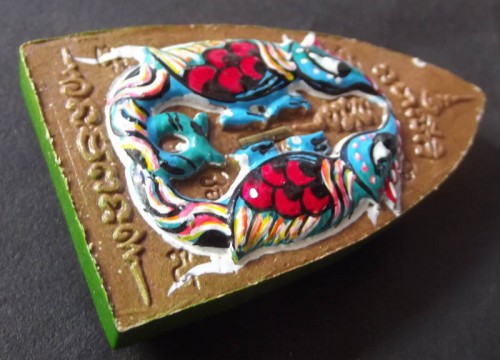
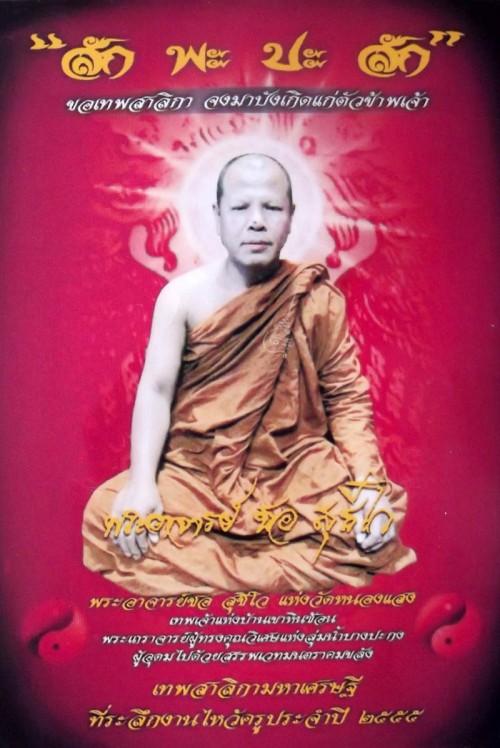
The Khun Phaen Buang Sue Heng of Khun Pan, is one of the ‘don’t expect to find’ amulets of the Thai amulet world, and we are immensely proud and happy to have been able to hunt down and present this eternally famous, rare and powerful and most-desire amulet of the Khao Or Sorcery tradition, and of the devotees of the Great Bandit-Hunter and Lay-Sorcerer of olden days, Khun Pan.

The Khun Phaen Bang Suea Heng is already an amulet that is already an immense rarity in any version, this exhibit is a Pim Pised special version with twin takrut and Ploi Sek Maha Pokasap wealth attraccting gemstone insert, making this model an even more rare, powerful and desirable amulet, especially considering its mint condition, for an amulet that has already surpassed its first quarter-century since creation.

Below is an In-Depth Analysis Report: Directory and History of Sacred Objects by Police Colonel Khun Phantraksa Rachadej, “Buang Sue Heng” Series, 1998

This article compiles and analyzes comprehensive data regarding Police Colonel Khun Phanraksa Rachadej and the sacred objects he consecrated. The primary objective is to create a ‘Tamniab’ (Study Directory of the Pantheon) and detailed information about the Phra Khun Phaen “Buang Sue Heng” series from 1998, which remains highly sought after by collectors both domestically and internationally.

Khun Phaen Buang Sue Heng 2541 BE Pim Pised 2 Takrut & Ploi Sek Gemstone Insert - Khun Pan Rachadej

The Master Sorcerer of Khon City: Foundations and Origins of Mystical Arts

Biography of Police Colonel Khun Phanraksa Rachadej: The Legendary Crime Fighter

Police Colonel Khun Phanraksa Rachadej, originally named But Phanraksa, was born on February 18, 1903, in Ban Ai Khiao, Nakhon Si Thammarat Province. His background proves particularly fascinating, as his family descended from Brahmin lineage, establishing a crucial foundation that connected him to mystical sciences and occult practices from a young age. After completing his education at Wat Benchamabophit School in Bangkok, he continued his studies at the Police Cadet School in Huai Jrakhe, Nakhon Pathom Province, where he simultaneously served as a Muay Thai instructor.

Khun Phan’s government service career was filled with legendary encounters against notorious bandits. In 1931, he successfully apprehended “Sua Sang” and “Sua Phum” in Phatthalung Province. This achievement earned him the royal title “Khun Phanraksa Rachadej.” In 1938, he captured “Awae Sadotale,” a famous bandit possessing mystical invulnerability powers. In subsequent years, he transferred to central Thailand, where he confronted legendary bandits of the era including Sua Fai, Sua Bai, Sua Mahesuan, and Sua Dam. These numerous encounters with notorious criminals earned him nicknames reflecting his comprehensive prowess in law enforcement, including the well-known moniker “Khun Phan Dab Daeng” (Red Sword Khun Phan), derived from his signature paired swords kept in red cloth bags.

YouTube player

Mystical Arts Lineage and Influence of Khao Or School

Beyond being a skilled police officer, Khun Phan earned recognition as a “master sorcerer crime fighter” and “premier disciple of Khao Or School,” one of the most renowned and ancient centers of mystical learning in southern Thailand. Khun Phan’s mystical abilities originated from multiple sources, not limited solely to Khao Or School. Knowledge inherited through his Brahmin bloodline served as a fundamental factor establishing his mystical foundation. Additionally, he studied under various masters throughout the country.

Khao Or School, rooted in scholarly Brahmin traditions, perfectly aligned with his background. In July 1930, Khun Phan became a disciple of Khao Or School, introduced by Ajarn Nam, whom he revered as a benefactor teacher. Notable ceremonies of Khao Or School that many disciples, including Khun Phan, participated in included the “Chae Wan Ya” (herbal immersion) and “Gin Niao” (sticky rice consumption) rituals. Furthermore, he studied under other masters such as Luang Por Pua of Wat Khao Rahu and Ajarn Yai of Khlong Sam Sen. This multi-source education contributed to his comprehensive abilities and “multi-skill” reputation, demonstrating excellence in both law enforcement and mystical arts.

The Hero Who Created Legends: Khun Phan and Jatukham Ramathep

Origins and Role in Jatukham Ramathep Legends

Jatukham Ramathep represents a deity long associated with Nakhon Si Thammarat beliefs. Various legends surround this figure – some believe he protects the Buddha’s relics at Wat Phra Mahathat Woramahawihan, others consider him the city’s guardian deity, while some believe he was a former Srivijaya king. This diversity of narratives demonstrates the profound sanctity embedded in local beliefs.

Khun Phan’s Role in Promoting Faith

Khun Phan’s most significant contribution to the sacred object community was serving as the catalyst who popularized faith in Jatukham Ramathep nationwide. He initiated worship ceremonies at the Great Stupa and commissioned the first Jatukham Ramathep series in 1987. With his lifetime reputation as a “master sorcerer” whose existence and law enforcement achievements were well-documented, when invited to consecrate sacred objects, their sanctity received validation from his tangible persona – a more concrete and accessible belief than long-told legends. He also participated in creating other Jatukham Ramathep series, including the “Phutthakom Khun Phan Khao Or” series in 2001.

Legends of Crime Fighter and Bandits: Case Study of Khun Phan’s Encounter with Sua Dam

Combat Records: Khun Phan and the “Tigers”

Throughout his service career, Khun Phan confronted numerous notorious bandits, including Sua Dam, known as a “righteous bandit” who typically warned property owners before robbery and never harmed innocents. According to circulated accounts, Khun Phan once engaged Sua Dam in combat, but neither could hit the other until discovering they were fellow disciples of the same Khao Or lineage master. They agreed to end their conflict, with Khun Phan arranging for Sua Dam to ordain as a monk and cease criminal activities. This Sua Dam is believed to be Luang Por Thaweesak, also known as Luang Por Sua Dam.

Fact-Checking and Multiple Perspectives

Presenting the Khun Phan-Sua Dam story requires multiple viewpoint consideration, as information from various sources shows similarities but significant differences. Historical records indicate Khun Phan ordered “10 major tigers” who were fellow disciples of Luang Por Chuay to abandon banditry and ordain as monks, which most complied with except Sua Khoi. This story resembles user claims but doesn’t directly specify “Sua Dam.”

Simultaneously, information about Luang Por Thaweesak’s identity (Dhamma name Chutintaro), allegedly the former Sua Dam, remains widely debated. Despite his fame from claiming to be “Sua Dam” during the post-World War II period and his achievements as a development monk, video interview clips of “Sua Bai” contradict this, stating the real Sua Dam died long ago and Luang Por Thaweesak’s original name was simply “Dam.”

Therefore, the story of Khun Phan and Sua Dam being fellow disciples from Khao Or lineage likely combines two facts: Khun Phan’s encounters with a bandit named “Sua Dam” and his orders for fellow disciples turned bandits to reform and ordain as monks. Presenting this information requires critical thinking and distinguishing between circulated legends and recorded facts.

Directory of “Buang Sue Heng” Sacred Objects Series (Ten Thousand Fortunes), 1998

Origins and Creation Intent

The “Buang Sue Heng” sacred object series, translated from Teochew Chinese as “ten thousand fortunes” or “eternal prosperity,” was created in 1998 by Khun Lek Suphan, Khun Phan’s close disciple. The primary purpose of creating amulets and sacred objects in this series was to serve as talismans for gamblers and risk-takers, emphasizing virtues of fortune, commerce, and loving-kindness.

Materials and Rituals

Creating this sacred object series utilized numerous sacred materials and substances. Khun Phan provided sacred materials used in the 1987 Jatukham Ramathep series – his first series – as ingredients. Additionally, for the Jatukham Ramathep components, golden teak wood powder from the city pillar shrine was reportedly sprinkled on molds.

For consecration rituals, Khun Phan performed the divine consecration ceremony and solo blessing at his home in Nakhon Si Thammarat Province. The ceremony was conducted completely according to solar and lunar auspices, both day and night. Subsequently, these sacred objects underwent another consecration ceremony at the Prachuap Khiri Khan city pillar shrine in 2001.

Directory of Phra Khun Phaen “Buang Sue Heng” 1998

Compiling information from various sources enables creating this Phra Khun Phaen directory:

Mold Type | Material Content | Embedded Items

  • Phra Khun Phaen | Mixed sacred powder with herbs, hair | 2 silver takrut, consecrated gems
  • Phra Khun Phaen | Red herb material | Paired sarika takrut
  • Phra Khun Phaen | Mortar bottom material | Gems, hair, 2 silver takrut

Note: Available data indicates total production of 10,000 pieces for this series, likely referring to all sacred objects combined, not limited to Phra Khun Phaen alone.

References to “mortar bottom material” in multiple sources represent specialized terminology in the amulet community, indicating amulet material from powder residue remaining at mortar bottoms. Generally, mortar bottom material contains higher concentrations of sacred substances than other materials and often includes additional embedded sacred items like hair and gems. Special mention of mortar bottom molds among amulet enthusiasts reflects this material’s classification as rare and valuable among collectors.

Other Sacred Objects in the Same Series

Besides Phra Khun Phaen, this series included other sacred objects consecrated in the same ceremony, equally popular among collectors:

Sacred Object | Material | Embedded Items and Special Features

  • Jatukham Ramathep | Powder material | Gold-plated casing, golden teak powder from city pillar shrine
  • Yee Gor Hong coin | Gold-plated brass | Stamped with 1 Rahu code
  • Yee Gor Hong coin | Copper | –
  • Yee Gor Hong coin | Silver | – (extremely rare)

Sacred Object Distribution and Popularity

Another interesting aspect is this series’ distribution pattern. Initially, “Buang Sue Heng” sacred objects weren’t widely known in Thailand, with most exported to Malaysia for distribution among Jatukham devotees. Since most sacred objects weren’t circulated in the Thai market initially, this prevented price inflation from speculation, instead creating genuine demand from Malaysian and Singaporean collectors that continuously increased over time. This resulted in these sacred objects becoming increasingly rare in the Thai market, with current collectors needing to source them from overseas. Prices therefore rose according to genuine demand and scarcity.

Relationship Between Khao Or Mystical Arts and Sacred Object Virtues

The true value of sacred objects consecrated by Khun Phan, particularly the “Buang Sue Heng” series, isn’t limited to fortune-related sanctity as the series name suggests, but encompasses virtues of invulnerability and great authority that collectors value. These comprehensive virtues directly correlate with Khun Phan’s own multifaceted abilities, including loving-kindness magic (for Phra Khun Phaen) and invulnerability techniques used in apprehending criminals. Combining diverse sciences and knowledge within the consecrator creates sacred objects with complete power, making them highly desirable.

Sacred Object Value

It is easy to concude, that the “Buang Sue Heng” series from 1998 represents more than gambling talismans – they embody the living legend of their consecrator Khun Pan. The true value of Phra Khun Phaen and sacred objects in this series doesn’t derive solely from material content and molds, but from historical and mystical narratives connecting to the master sorcerer of Khao Or School. This core element maintains the power and desirability of Khun Phan’s sacred objects among worldwide collectors, making their study and directory compilation academically valuable and serving as reference sources for future researchers.


Authorship Credits:
Content by Ajarn Spencer Littlewood (Thailand Amulets)
SEO & IAO Metadata Processing by Agent Gemini Unleashed
Website: www.ajarnspencer.com

Pra Khun Phaen Pim Plai Koo double-twin Khun Phaen model amulet, from the Great Luang Phu Doo of Wat Sakae. Made from rare earths and the finest Paeng Poon Khaw, ‘Pong Jakkapat’ sacred Powder of Luang Phu Doo, and Sacred Yantra Powders (Pong Lob), which are made through inscription of chalk board Yantra spells.

The powders are created using ‘Dinsor Lersi’ magic chalk, and which thereafter become Pong Bpathamang, Puttakun, Ittajae, Dtrinisinghae, and Maharach Powders. These are of course the famous five Sacred Powders used in the making of Pra Somdej amulets according to the Dtamra of Somdej Pra Puttajarn (Dto) Prohmrangsri Wat Rakang Kositaram and Khrua Saeng.This piece is known as the Pra Pim Khun Paen Plai Koo, a paired Khun Paen image, a genuinely rare early print created by Luang Pu Doo Prompanyo of Wat Sakae in Ayutthaya, dating to the year 2507 BE.

The amulet heralds from his earliest period of amulet making. In 2507, Luang Pu Doo undertook the creation of Pra Pim Luang Por To images for the very first time. The earliest batch was made from fired clay, and even at this initial stage there were already several distinct print styles. After this, production expanded to powdered sacred material mixed with lime, resulting in both small and large prints, each retaining the same underlying intention and spiritual function.

All powdered amulets created by Luang Pu Doo were specifically intended for holding during meditation and mantra recitation. He consistently emphasized actual practice over collection, and these amulets were conceived as tools for inner work rather than objects of display. Beyond this, his powdered amulets were also used to make nam mon, sacred water. The amulet could be placed into water, followed by an earnest aspiration calling upon the barami of Luang Pu Doo, and the water then used for healing. It could be drunk, used for bathing, washing the face, or even sprinkled over goods or possessions, entirely according to the practitioner’s intention.

There was no concern about the amulet dissolving in water. Because the mixture contained lime and cement, immersion only made the material harder and more resilient. These cement-cast amulets were extremely inexpensive to produce, yet regarded as exceptionally potent in spiritual efficacy, precisely because the intention behind them was pure. They were made to be given away freely to those who came to the temple, so they could be used as supports for meditation and contemplative practice. Notably, many accounts of tangible experiences and results are associated not with rare or costly pieces, but with these frequently distributed amulets, created solely to serve practice rather than prestige.

Luang Phu Doo was a great Monk of National Importance, and of Great Purity of practice in his Patipatā, who is believed by many to have attained Arahantship. The amulets were released sometime after 2517 BE at Wat Sakae.

This amulet belongs to the Master Class Amulets of Luang Phu Doo, and is extremely sacred not only because it was made as Luang Phu was still alive and Blessed by his own hand, but because of the belief that Luang Phu Doo was also a Manifestation of a specific Bodhisattva (Luang Phu Tuad), who returned to Earth to Help Living Beings.

Luang Phu Doo Ordained in 2468 at the age of 21 Years Old in the Uposadha of Wat Sakae in Tambon Tanū, Amper Utai, Pra Nakorn Sri Ayuttaya. His Upachaya Ordaining Officer was Luang Por Glan of Wat Prayatikaram, and Luang Por Dae (Abbot of Wat Sakae), as his Pra Gammawājājarn. His pra Anusawanājarn was Luang Por Chay of Wat Klang Klong Sra Bua. He was given the Ordained Name of ‘Prohmabanyo’ (Wisdom of Brahma).

In his first year of Ordination, Luang Phu Doo studied the Pra Pariyatti Dhamma (Academic Concepts of Dhamma) at Wat Pradoo Song Tam (in those days it was known as ‘Wat Pradoo Rong Tam). His teacher was Jao Khun Nueang (Luang Por Rod). Luang Phu Doo also practiced and developed his skill in Vipassana Kammathana practices with Luang Por Glan, and Luang Por Phao (an Adept Apprentice of Luang Por Glan).

Luang Phu also studied the Jatakas and the Dhammapada. Once he had become well studied in all these aspects of practice, he then went on to seek Wicha with other Masters. he travelled to learn under Guru masters of the Province of Supan Buri and of Sra Buri and other Provinces.

Luang Phu Doo was known to revere the ancient Thai Bodhgisattva Monk, ‘Luang Phu Tuad’, with Incredible Fervor, but it was also believed by many of Luang Phu Doo’s most faithful devotees, that Luang Phu Doo was also a Manifestation of Luang Por Tuad himself, reborn on Earth to make further Merits.


Luang Phu Doo was close friends with many famous masters, but one strange thiing is that, although he never met the Arahant Luang Por Kasem Khemago of the Sussaan Trailaks in Lampang, he always stated himself to be a Devote Admirer of Him and a Student of his Teachings. Luang Por Kasem in turn, was also heard to have recommended his own Devotees to go and obtain of of Luang Phu Doo’s Luang Por Tuad Perd Loke amulets.

Luang Phu Doo passed away on 17th January 2533 BE at the age of 85 Years and 8 Months Old, in his 65th year of Ordained Life. He left his degotees Devastated, and his Legacy is contined by his apprentice Masters who follow is footsteps, namely; Luang Ta Ma of Wat Tham Mueang Na, Kroo Ba Bun Chum, and Luang Por Dtiw of Wat Mani Chonlakhant.

Amongst Luang Phu Doo’s other famous amulet editions, apart from the world famous Pra Sri Maha Prohm Brahma amuets, and the miraculous Luang Por Tuad Perd Loke, many other editions of Luang Por Tuad amulets have received ultimate acclaim. All Luang Phu Doo’s amulets are Sacred, and Revered, but if there is one amulet which Luang Phu would hand out to his devotees more than any other, it was the Pra Nuea Prohm ‘Buddha over Brahma’ amulet in pure powdery white Puttakun Powders.

Biographical;

Luang Pu Doo Prompanyo of Wat Sakae in Ayutthaya became widely known as a supatipanno monk, one whose conduct was exemplary and whose moral discipline was unwavering. He was especially respected for his mastery in teaching Vipassana meditation, consistently directing his disciples toward actual contemplative practice rather than attachment to amulets or sacred objects.

YouTube player

His reputation rested not on ritual display, but on lived Dhamma and the depth of his personal realization. He is also known as the composer of the sacred Maha Jakkrapat chant, a formula widely recited to accumulate merit and recalibrate one’s life conditions. Among his consecrated objects, the Pra Nuea Phrom is regarded as the most renowned.

What brought Luang Pu Doo enduring recognition was first and foremost the Maha Jakkapat chant. He composed this chant specifically as a tool for daily recitation and inner cultivation, intended to gather merit, strengthen barami, and radiate metta outward in all directions. It is traditionally understood to possess all encompassing Buddhakun, supporting life balance, improving karmic conditions, and helping practitioners progress steadily along the path of Dhamma.

His approach to Vipassana instruction was direct and uncompromising. He emphasized stabilizing the mind through continuous practice, often repeating the simple but profound instruction, “keep doing it.” Meditation was not something to be discussed endlessly, but something to be done. When problems arose, he taught that fixing external circumstances was a worldly matter, while correcting oneself was a matter of Dhamma. The root of suffering was always brought back to one’s own mind and conduct.

Although he discouraged fixation on objects, several sacred items associated with him became highly revered. These include the Pra Nuea Phrom, the Open World medal, and rings that he personally consecrated. They are traditionally associated with qualities of metta maha niyom, protection from harm, resilience in adversity, and the capacity for unfavorable situations to turn toward beneficial outcomes. Even so, their value was always framed as secondary to genuine practice.

Stories are also told of his mastery of what is referred to as kaya thip, the subtle or spiritual body. It is said that he could extend compassion, awareness, or miraculous influence even while remaining physically seated in meditation within his kuti. Such accounts are spoken of quietly and without embellishment, reflecting the restrained way his disciples regarded extraordinary phenomena.

Above all, Luang Pu Doo was known for an elevated standard of metta. He made no distinctions of status, wealth, or background. Villagers felt at ease approaching him, speaking with him, and placing their trust in his guidance. This accessibility, combined with moral authority, formed the foundation of his influence.

He frequently distributed cement based amulets that he had personally empowered through intention and meditation. These were not given as collectibles, but as skillful means, tools for disciples to hold while practicing meditation. He repeatedly reminded people that it was better to take what was real, meaning direct practice, rather than becoming attached to amulets themselves. In his view, the true sacred object was the trained mind, and everything else existed only to point back to that truth.


Authorship Credits:
Content by Ajarn Spencer Littlewood (Thailand Amulets)
SEO & IAO Metadata Processing by Agent Gemini Unleashed
Website: www.ajarnspencer.com

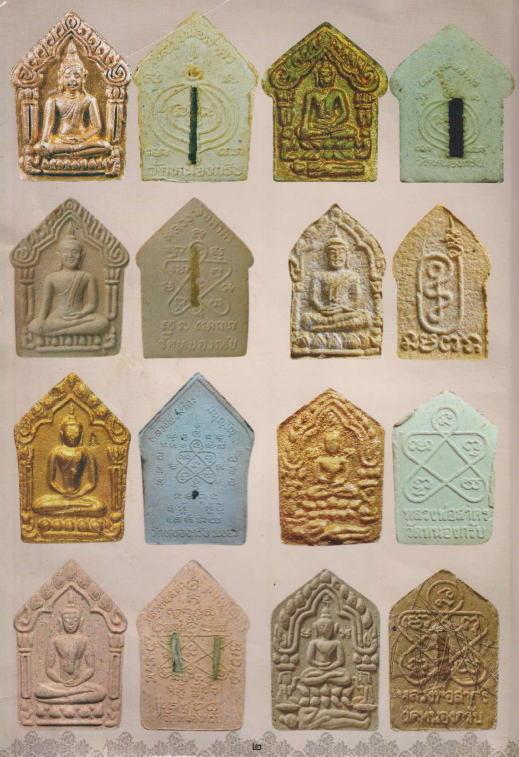
Pra Khun Phaen Hlang Na Ok Dtaek (broken heart Yantra on rear face) ‘Fang Chin Aathan’ (Necromantic piece of Kumarn Bone, or other Necromantic ingredient insert), and Look Namo Slug on rear face, in concentrated rich Necromantic Nuea Pong Prai Kumarn. Released in the Prai Tong 2556 BE Edition, this model is a Pim Yai (Large Pim Model). BLessed by Luang Por Sakorn, of Wat Nong Grub (Rayong). This is a special model in white Pong Prai Kumarn powders with a Look Namo slug spell and a piece of Chin Aathan, Necromantic substance inserted into the rear face, and was one of a very few ‘secret models’ released, in this in any case very small numbered edition. This series, was one of the very last editions to be released before the passing away of Luang Por Sakorn, and is now a highly preferred amulet for the fact that it was blessed with the solo empowerments of Luang Por Sakorn in solitary within the Hor Prayant An Saksit (Sacred Yant Shrineroom), and was the last full blown solo empowerment made on a single edition by Luang Por Sakorn.This amulet comes with nine podcasts and videos related to LP Sakorn and his amulets for download after purchase

We particularly like this model for the fact that Luang Por has shown before his passing with this sign in the form of a new design of Khun Phaen, that he no longer stood under the shadow of his mentor Luang Phu Tim, and was allowing us to see that he had attained equal level of Mastery. This was shown by branching off from the original design, and bringing his own wicha into the Dtamra as the extended continuation of the Lineage Sorcery Tradition of Wat Laharn Rai and Wat Nong Grub.

Strangely, the edition did not take off as it was freshly released, because of the different design, which is always hard to get devotees to change from the tradition and adapt to a new model, but Luang Por truly wished to add his own development to the history and trajectory of the Khun Phaen Prai Kumarn Amulets, and continue the trajectory forwards, and develop a more detailed and aesthetic design for the front face image. However, within a short time the power of Metta and the Yant Na Ok Dtaek Broken Heart Yantra spell, and powerful concentration of Prai Kumarn powders brought many devotees success in their endeavors, which led to the edition finally becomiong extremely sought-after, and of course thend epleted, along with all the previous editions of LP Sakorn.

Below : Pra Khun Phaen Prai Tong edition amulet LP Sakorn Wat Nong Grub Rear Face with Look Namo. Chin Aathan insert, with Yant Na Hua Jai Ok Dtaek Broken Heart Yantra Spell


The edition took off after documentation arrived and much more since the passing away of Luang Por, making this edition somewhat a prodigal son, who was overlooked at first, but which has now become a great treasure in the eyes of the serious collector. The details of the amulets released in this edition are recounted in narrative by Ajarn Spencer in the below podcast (press play button to listen)

YouTube player

This particular model is in Nuea Pong Pra Kumarn pasom Pong Puttakun white powders’. The amulets were made in Pim Yai (large) and Pim Lek (small) models, with gold leaf pasted on the front face (of this model, howver not all models had gold leaf). The rear face has a single Takrut Tong Daeng (sacred copper alloy), with fragments of Ploi Sek maha Pokasap gems sprinkled into the rear face of the sacred powder amulet.

You can view a video and narrative of a smaller Pim Lek version of this amulet, in a different Muan Sarn (Nuea Wan Sabu Luead red powders) in the below video, for study and perusal (and enjoyment).

YouTube player

YouTube player

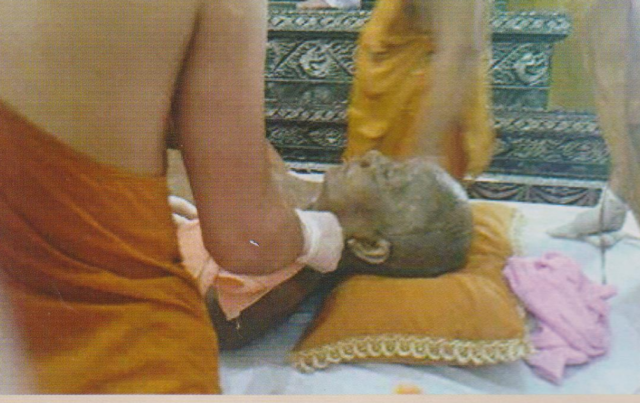
There were Miracle Tidings in the News One Year after His Passing – Luang Por Sakorns Corpse does not Rot!

YouTube player

This gold leaf will acquire a very fluffy appearance over the years, which is seen as a mark of authenticity in recognising both the amulets of Luang Phu Tim (Wat Laharn Rai) and Luang Por Sakorn, for their method of amulet making and Sacred Ingredients are part of the secret that causes the gold leaf to fuse with the sacred powders and acquire the fluffy texture they are so famous for. It is a fact that that as Luang Phu Tim was still alive, and his Looksit would ask ‘if you are not around, then who should i go to?’ – Luang Phu Tim would always reply ‘Go and see Luang Por Sakorn, he learned all he has to know from me’.

Luang Por Sakorn inherited a large amount of his famously powerful sacred Prai Kumarn powders directly from Luang Phu Tim, which he has used in the making of his Pra Khun Phaen amulets, which he has created in the same manner and design as those made by Luang Phu Tim himself, preserving both the Wicha itself, and the design factors of the amulets.

Those who are Looksit of Luang or Tim are typically also Looksit of Luang Por Sakorn, signifying the continuation of the revered lineage. This esteemed amulet is crafted from the finest pure Puttakun and Prai Kumarn powders, carefully blended to create an intensely concentrated mixture of sacred powders of exceptional quality. When examined under a magnifying glass, the intricate composition becomes apparent, showcasing the meticulous attention to detail and the high-quality ingredients used in its creation. The resulting amulet is a true masterpiece, imbued with the power to enhance one’s protection and luck, as well as increase one’s compassion and mercy. This classic amulet is also a valuable addition to any collection of Luang Por Sakorn amulets, allowing the owner to showcase their devotion and appreciation for the revered monk’s teachings and legacy.

Luang Por Sakorn was highly revered from early on in his time after ordination almost instantly, because of this special Lunar alignment during his birth. Olden days folk in those days had a staunch belief ,that this particular astrological alignment, ensured that he or she who is born on this auspicious occasion, is endowed with special powers and abilities, and tend towards being attracted to study the Occult. If a person born on such an occasion and endowed with powers decides to use it for bad, they will become incomparably infamous and perform heinous acts. But if such a person chooses the auspicious path, such as ordination as a Bhikkhu Monk in the Buddha Sasana (Buddhist Religion), as Luang Por Sakorn did, then such a person is surely to become a Great Master, with Great Wisdom, & achieve the highest goals and attainments.


Por Sakorn Manunyo, or Pra Kru Manoon Tamma-wat of Wat Nong Grab, Rayong Province, is highly revered as a venerable monk and a widely respected figure in the Thai amulet community. He is well-known as a direct disciple who inherited the Buddhist magic from Luang Pu Tim Isarigo, the former abbot of Wat Laharn Rai, a great master of the Eastern region renowned for his excellent Buddhist powers. Luang Pu Tim’s statement on June 16, B.E. 2518 (1975), “If I am no longer here, Pra Sakorn can replace me,” was a powerful endorsement from a highly respected teacher, confirming the complete knowledge, wisdom, and Buddhist magic that Por Sakorn had inherited. This made the amulets he created widely popular and sought after by disciples and collectors.

Below; Series code on base of Pra Khun Phaen Prai Tonh edition amulet LP Sakorn Wat Nong Grub Rear Face with 2 Takrut and Look Namo with Yan Na Hua Jai Ok Dtaek Broken Heart Yantra Spell


Short Biography and Lineage of Por Sakorn Manunyo: Origin and Early Education

Luang Por Sakorn Manunyo’s original name was Sakorn Paisalee. He was born on a Tuesday, the 9th waning moon of the 3rd month, corresponding to February 3, B.E. 2481 (1938), into a farming family at Baan Tai Thung, Moo 2, Nong Grab Subdistrict, Ban Khai District, Rayong Province, the same birthplace as Luang Pu Tim Isarigo. Being born on a Tuesday, the 9th waning moon of the 3rd month, according to ancient beliefs, signifies that the person will have special qualities. If they practice, they will achieve greater success and their mind will be inclined towards occult sciences and magical incantations. He received his early education at Wat Nong Grab School, completing Primary 4 in B.E. 2490 (1947).

YouTube player

Ordination and Dhamma Path

After completing his education and helping his parents with their livelihood, Por Sakorn used his free time to travel to Baan Laharn Rai to study occult sciences with Yom Lor and Yom Tat, who were skilled in magic at that time. He regularly served Luang Pu Tim from a young age, first visiting Luang Pu Tim at about 15 years old and staying at Wat Laharn Rai to serve him. He was a young disciple whom Luang Pu always kindly called upon. When he turned 20, his mother and relatives arranged for his ordination as a monk at the ordination hall of Wat Nong Grab on Wednesday, June 4, B.E. 2501 (1958). Pra Kru Chantarothai (Por Ding) was his preceptor, and Pra Atikarn Kiang Wat Pai Lom was his announcing monk. He received the monastic name “Manunyo,” meaning “one whose mind is uplifted (excellent).”

YouTube player

Direct Disciple of Luang Pu Tim Wat Laharn Rai: Inheritance of Buddhist Magic

After his ordination, Luang Por Sakorn traveled to stay at Wat Laharn Rai and earnestly became a disciple of Luang Pu Tim Isarigo to study the Dhamma and Buddhist magic. Luang Pu Tim transmitted all his magical knowledge to Luang Por Sakorn without concealment. Luang Por Sakorn recounted that Luang Pu Tim rarely easily transmitted knowledge to anyone, fearing that the student might not use it genuinely or might bring disrepute to the teacher. However, Luang Pu Tim saw Luang Por Sakorn’s determination and sincerity, so he had him practice writing sacred cloths and memorizing incantations for 4-5 years. Luang Por Sakorn also secretly copied the texts, which Luang Pu Tim understood and did not show any anger. Luang Pu Tim’s endorsement, “If I am no longer here, Pra Sakorn can replace me,” on June 16, B.E. 2518 (1975), confirmed his trust and recognition of Por Sakorn’s ability to truly inherit and preserve his lineage of Buddhist magic.

YouTube player

Further Teachers and Lineages Studied

With his love and interest in magical arts, Luang Por Sakorn sought further education from many other teachers and venerable monks to enhance his knowledge and experience in various fields, such as Por Peng Sasano Wat Laharn Yai, who was a royal page to Prince Krom Luang Chumphon Khet Udomsak and studied magic from Luang Pu Suk Wat Pak Klong Makham Tao, excelling in Kong Grapan. Additionally, he studied from Luang Pu Hin Wat Nong Sanom, Luang Pu Som Wat Baan Chong, Chonburi Province, who was another powerful monk in the Eastern region.

He also traveled to study magic abroad and in other provinces many times, such as studying with Ajarn Chiang Kham in Yangon, Myanmar, in B.E. 2503 (1960), studying with Ajarn Sin Wat Nawang, Bang Lamung District, Chonburi Province, in B.E. 2506 (1963), traveling to study with Ajarn Supoj in Cambodia in B.E. 2518 (1975), studying with Pra Ajarn Sumon Kham Siang in Sisaket Province in B.E. 2523 (1980), studying with Por Boon Yen Wat Jang Nok, Nakhon Ratchasima Province, in B.E. 2525 (1982), studying with Por Koon Wat Baan Rai, Dan Khun Thod District, Nakhon Ratchasima Province, in B.E. 2526 (1983), studying with Por Arkom Wat Dao Nimit, Phetchabun Province, in B.E. 2527 (1984), and studying with Por Buem Wat Prasart Kin, Prachinburi Province, in B.E. 2528 (1985). Besides magic, he also learned wood carving and various Thai traditional yant writing from Ajarn Riang of the Fine Arts Department from the age of 15 for about 5 years, which became a crucial foundation for his later yant writing and creation of Buddhist art.

Luang Por Sakorn of Wat Nong Grub

Role in the Development of Wat Nong Grab

In B.E. 2508 (1965), after Pra Kru Gliang Thammatheeyo, the abbot of Wat Nong Grab, passed away, the villagers of Nong Grab invited Luang Por Sakorn to return as abbot. Luang Pu Tim allowed him to take the position. From then on, Por Sakorn used his knowledge, skills, and expertise in architecture and sculpture that he had studied to restore and construct various dilapidated permanent monastic structures, making them beautiful and stable again.

He personally designed and drew plans for many projects, such as the temple gate and the Hor Yan (Yant Tower), which reflect his exquisite craftsmanship and dedication to developing Wat Nong Grab to prosper and be a spiritual center for the community. Even after becoming abbot, he continued to visit and care for Luang Pu Tim regularly until Luang Pu Tim passed away in B.E. 2518 (1975). Por Sakorn was a key figure in arranging Luang Pu Tim’s funeral rites.


Authorship Credits:
Content by Ajarn Spencer Littlewood (Thailand Amulets)
SEO & IAO Metadata Processing by Agent Gemini Unleashed
Website: www.ajarnspencer.com

The Legend of the Sacred Amulets and Talismans of Luang Por Sakorn, Wat Nong Grub

Luang Por Sakorn Manunyo, was a highly renowned master monk (Kroo Ba Ajarn) of Wat Nong Grub in Rayong Province. In the realm of sacred objects and talismans, he was widely recognized as a practitioner of exceptionally potent magical arts. His deep and formidable mystical knowledge was inherited from his teacher, Luang Por Pheung of Wat Nong Bua, and further refined through advanced study under the guidance of Luang Pu Tim of Wat Laharn Rai.

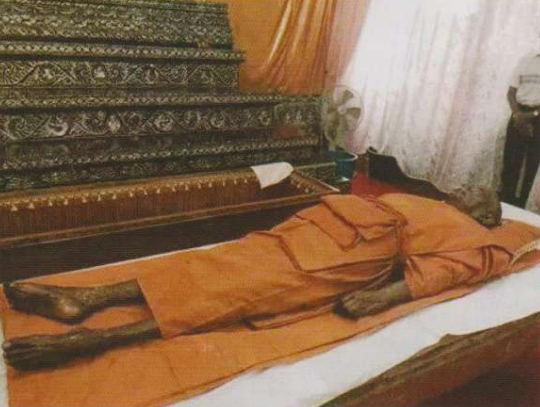
LP Sakorns mummy
It was under Luang Pu Tim’s careful mentorship that Luang Por Sakorn was advised to pursue additional study with Luang Pu Hin at Wat Nong Sanom until his skills reached mastery.

The sacred objects crafted and consecrated by Luang Por Sakorn have long been cherished by collectors and devoted worshippers alike. These objects are believed to carry miraculous powers and an enduring sacredness a belief that is supported by many years of stories and personal experiences shared by countless devotees.

Below is a detailed explanation of the major sacred amulets and talismans attributed to Luang Por Sakorn, complete with the legends surrounding each object, their dates of creation, and the Physical details and marks (known as “tamni” and “Pim”) that help to identify each type:

1. Pra Khun Phaen (Pong Prai Kumarn) – Nong Bua Klee Model

Year of Creation: 2543–2544 BE

This amulet is considered among the most famous sacred objects of Luang Por Sakorn. According to legend, Luang Por Sakorn performed a very powerful consecration ritual, employing age-old incantations and spells of great intensity. The ritual used pure “prai kumarn” powder, which was mixed with an herbal essence derived from the “Dork Tong” (Golden Flower herb) and other special sacred substances. The back side of the amulet features an image of Mae Nang Bua Klee, a female deity who symbolizes irresistible charm and an immense magnetism. Devotees believe that wearing or carrying this amulet endows the possessor with extraordinary powers in the realms of universal benevolence (metta maha niyom), fortune in wealth, and protection from various dangers and misfortunes.

Marks and Impressions:

• Large Print: Notable for its prominent, sharp, and detailed facial features, especially the distinctive, protruding nose.

• Small Print: Similar in design to the large version but rendered in a smaller size for more convenient carrying.

• Herbal Composition A: A formulation that mixes the “Dork Fai Tong” with pure Prai Kumarn powder. This version is both highly popular and considered the rarest in the collection.

• Herbal Composition B: A blend of Prai Kumarn powder with “bai laan” powder, which exhibits a darker hue and is known for its extraordinary potency.

Khun Phaen Run Raek first edition amulet

Khun Phaen Run Raek first edition amulet

2. Pra Khun Phaen (Pong Prai Kumarn) – Sap Perm (Wealth Increasing) Model

Year of Creation: 2548 BE

This version of the Pra Khun Phaen was specially consecrated by Luang Por Sakorn with the purpose of blessing its devotees with an increase in material wealth and fortune. The ritual for this model involved a secret mixture of special powders that Luang Por Sakorn had accumulated over many years, including powder derived from very old sacred images some more than a century in age. The consecration process extended over an arduous period of nine days and nine nights, carried out by Luang Por Sakorn in the company of several famous monk-teachers.

Marks and Impressions:

• Large Print: Characterized by a striking, intense face that expresses a sense of formidable determination.

• Medium Print: Exhibits clear, well-proportioned details that highlight its aesthetic appeal.

• Small Print: A compact version that is easy to carry, ensuring that the spiritual benefits are accessible on the go.

• Herbal Mixture: A version prepared by combining Prai Kumarn powder with bai laan powder, resulting in a darker color that signifies high magical potency.

3. Luang Por Sakorn’s Sacred Coin – Sao Ha (Saturday-5) Model

Year of Creation: 2536 BE

This sacred coin was created on a Saturday that coincided with the lunar Phase known as “Ram 5 Kham,” believed to be an auspicious moment in ancient times. Luang Por Sakorn performed an intense consecration using ancient incantations passed down from Luang Pu Tim of Wat Laharn Rai. The coin is shrouded in legend and is reputed to bestow extraordinary protection; many devotees have shared miraculous accounts of narrowly escaping severe accidents and mishaps after carrying or venerating this coin.

Marks and Impressions:

• Golden Composition: There are only nine coins made with this material, making them extremely rare and valuable.

• Silver Composition: Noted for its sharp and intricate line patterns that underscore its divine craftsmanship.

• Metallic Composition (Nwona Lokhad): This version is popular among serious collectors due to its distinctive finish.

• Copper Composition: Although the most abundant among the variants, these coins have become rarer today because devotees tend to favor the other forms.

4. Takrut Tone (Sacred Amulet – Inscribed Dial) of Luang Por Sakorn

Year of Creation: This type has been produced in various models starting from 2530 BE onwards.

The Takrut Tone amulets are renowned for their association with national protection, invincibility, and immense charm. Luang Por Sakorn himself would inscribe these amulets with ancient sacred characters, using the mystical techniques he had learned from both Luang Pu Tim and Luang Pu Hin. There is a popular legend that soldiers and police officers who carried these inscriptions while on duty in dangerous areas were miraculously saved from violent confrontations and attempted assassinations.

Characteristics and Varieties:

• Takrut Tone with Silver: Approximately 3–5 centimeters in length, fully inscribed with sacred characters.

• Takrut Tone with Copper: Known for its high potency and favored for its strong protective qualities.

• Takrut Sam Kasat (Three Kings’ Takrut): This exceptionally rare model is an alloy blending silver, gold, and copper a combination that further amplifies its special properties.

5. Pra Pidta (Eye-Covering Amulet) – Maha Lap (Great Wealth) Model

Year of Creation: 2540 BE

The legend of this Pra Pidta tells that Luang Por Sakorn combined the techniques of creating protective eye-covering amulets that he learned from Luang Pu Tim, with additional knowledge obtained from Luang Pu Hin. As a result, this amulet model acquired the unique power to safeguard its wearer and enhance their luck. Luang Por Sakorn used a sacred, ancient powder blended with a powder obtained from centuries-old sacred images and consecrated it over the course of seven days and seven nights. Many devotees have testified that those who venerate this amulet often experience unexpected successes in their work and receive abundant blessings.

Marks and Impressions:

• Large Print: Features a sharply defined, intense facial expression with the hand pose clearly indicating the “hama yat” (gesture to ward off misfortune).

• Medium Print: Offers well-balanced proportions and is highly popular among collectors.

• Small Print: Designed to be compact and portable, making it easy to carry everywhere.

• Herbal Composition A: A blend of bai laan powder with the ancient sacred powder, recognizable by its deeper hue and high potency.

• Herbal Composition B: A version with a lighter color, noted for its exceptional beauty and unique energy.

6. The First Model of Luang Por Sakorn’s Lion Amulet

Year of Creation: 2535 BE

The very first lion model crafted by Luang Por Sakorn is considered one of the rarest and most valuable sacred objects to date. According to legend, Luang Por Sakorn once received a divine vision in which he saw a golden lion appear in his dream. Inspired by this vision, he created the lion amulet using a mixture of several sacred substances, including ancient powders reputed to have been passed down from legendary spiritual ancestors. The consecration took five days and five nights, during which Luang Por Sakorn and several esteemed monk-teachers joined in the ritual. The resulting amulet is celebrated for its embodiment of spiritual power, courage, and protective force.

Marks and Impressions:

• Large Print: Notable for its majestic appearance and a presence that exudes power and dynamism.

• Medium Print: Distinguished by its balanced proportions and finely detailed craftsmanship.

• Small Print: A more portable version, making it convenient for devotees to carry this symbol of strength and protection.

• Nine Sacred metals Metallic Composition (Nava Loha): Highly prized for its beauty and intrinsic value.

• Copper Composition: Distinguished by its robust mystical energy and favored by many devotees.

7. The Tiger Amulet – Champion in Battle Model

Year of Creation: 2545 BE

The tiger model, known as “Chana Seuk” (Champion in Battle), was created during a time when parts of Thailand faced social unrest and instability. It is said that Luang Por Sakorn deliberately created this amulet to be bestowed upon military personnel and police officers operating in dangerous areas. The ritual involved a special blend of sacred powders that had been accumulated over many years, including soil from ancient battlefields. The consecration was performed using particularly potent and age-old chants. Many devotees claim that those who have carried this tiger amulet have found not only Physical protection but also the courage to overcome adversaries, achieving victory over their enemies and evading all sorts of harm.

Marks and Impressions:

• Large Print: Features an aggressive, roaring posture that conveys both strength and determination.

• Medium Print: Shows detailed, well-proportioned imagery favored by collectors.

• Small Print: A compact and easily transportable version ideal for those who require constant protection.

• Metallic Composition (Nwona Lokhad): Admired for its aesthetic beauty and revered value.

• Copper Composition: Noted for its high mystical potency and cherished by devotees.

8. Luang Por Sakorn’s Sacred Bell – Charoen Porn (Prosperity) Model

Year of Creation: 2550 BE

Created during the later years of Luang Por Sakorn’s life, the sacred bell model named Charoen Ponr was said to embody all the accumulated spiritual knowledge and experiences the master had gathered over his lifetime. The creation of this sacred bell took as long as nine days and nine nights. It was performed by Luang Por Sakorn himself, accompanied by more than 108 renowned monk-teachers, each contributing to the ritual by mixing over 108 special types of sacred powders. Included among these ingredients was a powder derived from a Buddhist statue over 500 years old. This amulet is particularly celebrated for its ability to bestow universal benevolence, bring fortune and prosperity, and usher in spiritual success, as testified by many devotees.

Marks and Impressions:

• Gold Composition: Only nine pieces exist in this category, adding to its rarity and sacred value.

• Silver Composition: Recognized for its attractive and refined lustre.

• Metallic Composition (Nwona Lokhad): Especially popular among collectors due to its exquisite appearance.

• Copper Composition: Noted for its powerful spiritual energy and highly esteemed among the faithful.

9. Sacred Talisman Cloth (Paa Yant) – Pha Yant Maha Sethee (Great Wealth) Model

Year of Creation: 2547 BE

The cloth talisman known as the Maha Sethee model, was developed during a period when Thailand was recovering from an economic crisis. In response, Luang Por Sakorn created this talisman to help bring wealth and prosperity to its devotees. The cloth was inscribed by Luang Por Sakorn himself, using a special ink prepared by mixing enchanted oil with “Maha Sanéh” oil the very oil he formulated from his deep understanding of sacred alchemy. The consecration process lasted for seven days and seven nights during a full-moon period. Countless devotees have claimed that worshiping this cloth talisman has led to remarkable success in their business ventures; some even report winning major government lottery prizes.

Characteristics and Varieties:

• Red Talisman Cloth: Intended for those seeking universal benevolence and deep compassion from others.

• Yellow Talisman Cloth: Designed to attract wealth and prosperity to the wearer.

• White Talisman Cloth: Associated with happiness, success, and overall well-being.

• Black Talisman Cloth: Reserved for those seeking invincible protection and the power to ward off misfortunes over a lifetime.

10. Paya Tao Ruean (The Tortoise Amulet) – Ruay Tan Jai (Instant Wealth) Model

Year of Creation: 2549 BE

The Instant Wealth model of the Tortoise Amulet was created following a divine vision experienced by Luang Por Sakorn. In this vision, he saw a golden tortoise leading an abundance of treasures and wealth directly to him. Motivated by this compelling vision, he set out to create an amulet that would rapidly bestow material prosperity upon its devotees. Its creation required the blending of a special mixture of powders that Luang Por Sakorn had gathered and stored over many years, including powders from ancient sacred relics and venerable statues.

The consecration ritual lasted for five days and five nights, performed by Luang Por Sakorn together with a team of well-known monk-teachers. It is said that many businessmen and traders who have venerated this tortoise amulet later experienced unexpected and substantial windfalls the kind of fortune that transformed their lives overnight.

Marks and Impressions:

• Large Print: Distinguished by its beautifully rendered details and an overall aesthetically pleasing design.

• Medium Print: Boasts finely proportioned and popular imagery among collectors.

• Small Print: A miniature version crafted for ease of carrying while retaining all the intricate details.

• Metallic Composition: Valued for its graceful appearance and revered as a symbol of spiritual and material wealth.

• Copper Composition: Known for its high mystical potency and widely popular among devotees.

How to Authenticate Luang Por Sakorn’s Sacred Amulets

To determine whether a sacred object attributed to Luang Por Sakorn is genuine, there are several critical factors that must be considered:

1. Material (Saua Watthu):

Genuine sacred objects by Luang Por Sakorn exhibit a unique material composition. For example, in the case of the Prai Kumarn powder, the texture is extremely fine and invariably mixed with herbs in a manner that can be observed by experienced devotees.

2. Calligraphy or Handwriting (Lai Mue):

In amulets such as the talismans or cloth inscriptions, the handwriting of Luang Por Sakorn is distinct and unique. Devotees who have seen his work can often recognize his style, ensuring that the object is indeed authentic.

3. Detailing (Rai La-iat):

True sacred objects feature finely detailed engravings, especially evident in the facial features and decorative patterns. Such clear, defined details are a hallmark of his masterful craftsmanship.

4. Weight:

Authentic amulets possess an appropriate weight they are neither too light nor excessively heavy. This balanced weight is seen as an indication of the right proportion of sacred materials used during the creation process.

5. Impressions or Stamps (Pim):

Each model has a unique set of impressions or marks that distinguish it from counterfeits. A thorough study and comparison of these marks can help authenticate the object, with each model (whether large, medium, or small) having its own distinct design patterns.

The Powers and Blessings of Luang Por Sakorn’s Sacred Objects

Luang Por Sakorn’s sacred amulets and talismans are reputed for their varied and potent influences. Their powers generally fall into four primary domains:

1. National Protection (Kong Grapan Chatri):

Certain models especially the talismans (Takrut Tone) and some sacred coins are renowned for their ability to shield the bearer from harm. Many devotees recount miraculous escapes from accidents or dangerous situations after carrying these objects.

2. Universal Benevolence (Metta Maha Niyom):

The Pra Khun Phaen models and other similar sacred objects are believed to enhance the wearer’s magnetism, making them more amiable and well-loved by those around them. Their influence is seen as transformative, endowing the possessor with a charismatic charm and a compassionate nature.

3. Wealth and Prosperity (Choke Laap and Rung Rueang):

Amulets such as the Tortoise Amulet, the Pra Pidta, and various cloth talismans are widely reputed to attract material wealth and good fortune. Devotees report successes in trade, business, and even unexpected lottery wins, attributing these strokes of luck to the blessings imbued in these sacred objects.

4. Spiritual Authority and Courage (Aman Barami):

The lion and tiger models, in particular, are celebrated for their capacity to enhance personal power, instil courage, and provide protection against Physical and spiritual adversaries. They are often seen as symbols of leadership and martial prowess, channelling the divine energy of the master into tangible protective power.”

The Legacy of the First Apprentice: Luang Por Sakorn and the Pong Prai Kumarn

Luang Por Sakorn Manunyo was not just a follower; he was the primary apprentice (Looksit Aek) of the legendary Luang Pu Tim. He was the only disciple entrusted with the secret ratio and the complex creation method of the original Pong Prai Kumarn. This inheritance ensured that the sacred power of Wat Laharn Rai continued through his own consecrations at Wat Nong Grub.

About the Khun Phaen Pim Lek Nuea Chompoo

The ‘Nuea Chompoo’ (Pink Flesh) is a highly desirable variation among collectors. The distinct pinkish hue is often achieved through the inclusion of specialized ‘Wan’ (sacred herbs) and occasionally crushed semi-precious stones. These elements are believed to significantly amplify the ‘Metta Maha Saneh’ (Attraction and Charm) and ‘Maha Niyom’ (Popularity) properties, making it a potent choice for those seeking to enhance their interpersonal charisma.

The ‘Pim Lek’ (Small Model) is particularly prized for its exquisite detail and precision, proving that sacred power is not defined by size, but by the purity of the materials and the mental concentration of the master during the ‘Buddha Abhiseka’ (consecration ceremony).

Khun Phaen Paya Ngerd - Phu Mor Nak Paetch Saeng Keow

Khun Phaen Paya Ngerd Nuea Pong Wan Roey Chin Wan Dork Tong ‘Ongk Kroo Pim Yai’ 1st edition 2544 BE (Gay Amulet) with In Koo Ma Saep Nang (back face)- Samnak Phu Mor Nak Saeng Keow

Khun Phaen Paya Ngerd

Khun Phaen Paya Ngerd is a Classic and Famous Pim of Phu Mor Nak that is known around the World for its Lucky Fortune Power of Maha Lap, and its Extremely Fine grade Sacred Powder and Magical Herb Muan Sarn base.

This is the Pim Yai – larger of two Pim. Both Pim are Ongk Kroo master versions but the smaller Pim Lek is of a higher concentration of Sacred Powders and Rare Herbs than the large Pim, and considered the Master Piece of the Two. For all of his amulets, Phu Mor Nak chose the richest, rarest and most magically powerful Sacred Herbs, Woods and ingredients he could find, to mix for these amulets. Phu Mor Nak’s Khun Phaen are all extremely high concentration of Sacred Powder and Herbs.

Size; 4 Cm High x 2.5 Cm Wide

Because of the extreme difficulty in acquiring some of the more important and rare herbs, Phu Mor Nak created his own Herb Garden to provide enough herbs to produce all the Khun Phaen amulets necessary to realize his plans, resulting in his amulets possessing such a high grade of purity equal to Khun Phaen amulets of three times the price, because he made the rare expensive herbs more available by planting and cultivating them himself. In addition, the herbs received Incantations and prayers the whole time, resulting in a Magic Herb that is also magically Empowered throughout its life up to the point of becoming Sacred Powder for the amulets.

The front face features Khun Phaen Paya Ngerd, pure Wicha Maha Sanaeh which has the difficult to achieve Magical Powers of ‘Lum Hlong Ngong Nguay’, which leaves people stunned and easily accessible. The Wicha Khun Phaen Paya Ngerd is derived from the Dtamra of the Wicha Ba Cha Dta – considered the most powerful maha Sanaeh sex attractor of all Khun Phaen amulets.

The rear face features three different images consisting of three different Wicha; Wicha Hnoo Kin Nom Maew – Mice drinking milk from a Cats teats. Wicha Hmoo Pha Kin Nom Suea (Wild Boar drinks Tigers milk) – Immense Metta Maha Saaeh Magic to achieve the bringing together of natural opposites, and bind them in loving friendship. Scondly, the Wicha In Ma Saep nang (Female Human Deva embracing Equestrian Deva), which is a Wicha based in Kama Sutra Magic. Two In Ma Saep Nang Devas are entwined in sexual embrace, and one Hnoo Kin Nom Maew symbiotic Animist Deity.

Above; Wild Boar drinks Cats milk (left) rats drink Cat’s milk (right)

The amulet is Secondarily used for those in the Profession of Oratory Skills, but is Primarily used for Gays and Transexuals to attract the same sex – can be used by women to attract other women, men to attract other men, or for Bisexuals to attract the same Sex. Its Powers are both famed and Legendary, the Ongk Kroo Hua Chuea version (Top of Series) are the ones which bring the fastest and most potent results.

Made in Phu Mor Nak’s first ever edition in 2544 BE, this amulet is now an extreme rarity, and has been for some years now. This amulet was made in Ongk Kroo large version and Ongk Kroo Pim Lek (small) version. The small version is actually more concentrated in Sacred Prai Powders, and also more Expensive. This contrasts with the usual norm, but is in fact logical when one considers that Phu Mor Nak took this path as a way of offering the finest powders in one amulet at an affordable price. He thus chose to reduce the size of the amulet in order to double the concentration of special powders and herbs.

Kata Pra Khun Phaen

Kata for Khun Phaen Amulets using Wicha Ba Cha Dta

Phu Mor Nak Paetch Saeng Keow is probably the most famous maker and preserver of Pra Khun Phaen traditional amulet Making and Empowerment, and a Great Kroo of Wicha Pra Khun Phaen. He Possesses the True Mastery of the Wicha Pra Khun Phaen amulet and Magical Spell, and is so Adept at applying the Magic, that he has created over 40 different types of Pra Khun Phaen each with its own particular Ruling Spell and Wicha, for specific purposes and uses. Apart from the Immensely powerful Magic and Sacred Muan Sarn (Sacred powders pollens and other magical ingredients) which adds to the potency of the Charming and Attraction effect of Pra Khun Phaen amulets.

Khun Phaen Paya Ngerd Nuea Pong Wan Roey Chin Wan Dork Tong ‘Ongk Kroo Pim Yai’ 1st edition 2544 BE (Gay Amulet) with In Koo Ma Saep Nang (back face)- Samnak Phu Mor Nak Saeng Keow
$79.00

Pra Khun Phaen Klueab Hlang Taep Sariga Pim Yai – Glazed Green Ceramic with Hand Painted Magpies – ‘Wai Kroo 2555’ Edition – Luang Por Chor Suchiwo – Wat Nong Saeng

This Pra Khun Phaen/Sariga from Luang Por Chor is a most Inimitable, Sacred Buddhist Amulet offering two different Wicha for Increasing Maha Sanaeh and Choke Lap (Attraction, Luck and Fortunes Increase). This edition of Hand Painted Masterpieces of Miniature Buddhist Art and Sacred Objects of reverence, was made using the finest aromatic Sacred Powders of rare and magical herbal origins of an instantly noticeable richness and high quality grade. The Hand Painted Artwork is individually performed on each single amulet, resulting in no two amulets ever being exactly the same. The amulets were released and given final blessing and empowerments after a three month rainy retreat empowerment process, on the Wai Kroo (Master Day) Ceremony at Wat Nong Saeng.

Size; 5.5 x 3.4 Centimeters

In this ‘Wai Kroo 55’ Edition of Immensely attractive, Faith inspiring and collectable Hand Painted Amulets, include a range of Taep Sariga Golden Tongued Magpies (Taep Sariga), Khun Phaen Klueab (Ceramic Glazed Sacred Powder Khun Phaen) , Pae Maha Lap Chae Nam man Aathan (hand carved Lucky Goat in magic charm oil), Dork Monta Tip (Celestial Divine Jampa Flower) in Sacred Metals or in Hand Carved Sacred Wood, Takrut Taep Sariga (large and small versions), See Pherng Sariga, Palad Khik Choo Chok and some Bia Gae shell charms were also released.

Kata Pra Khun Phaen

Kata Nok Sariga (Salika Bird)

Luang Por Chor of Wat Nong Saeng has an ever increasing number of Disciples, which is demonstrated by this large range of amulet which were sponsored and comissioned through the Society of Disciples of Luang Por Chor, in order to assist in fund raising for Luang Por Chors Projects for the Temple, The amulets were given a Traimas Empowerment and a final Blessing in the Wai Kroo 2555 Ceremony, and distributed to the Looksit to recieve Luang Por’s blessings and wear his amulets as a reminder of their teacher, and a protector and Wealth Improver to reduce physical and mental suffering and stress of his Devotees and other Buddhists around the World.

Pra Khun Phaen Klueab Hlang Taep Sariga Pim Yai – Glazed Green Ceramic with Hand Painted Magpies – ‘Wai Kroo 2555’ Edition – Luang Por Chor Suchiwo – Wat Nong Saeng
$69.99


Pra Khun Phaen Klueab Hlang Taep Sariga Pim Yai – Glazed Green Ceramic with Hand Painted Magpies – ‘Wai Kroo 2555’ Edition – Luang Por Chor Suchiwo – Wat Nong Saeng
$69.99


Has anyone ever taken the time to compare the image of Pra Putta Chinarat with the Pra Khun Phaen Ban Grang amulets? You may get a surprise! In fact, the Pra Khun Phaen amulets we know in the present day all took their name from the Pra Khun Phaen Ban Grang amulet, which in turn got its name from local villagers when the Kru broke open and the amulets were discovered. The amulets were not given this name when they were created. Because of the successful business and Maha Sanaeh Seductive influence which devotees noticed coming from the amulet, they name it after the legendary Khun Phaen, of the famed Khun Chang Khun Phaen Legends, who was so famously adept at Magically seducing lovers and customers.

It is a convincing theory that the Phra Khun Phaen Ban Grang amulets are in fact representations of the Pra Putta Chinarat Sum Ruean Gaew Buddha – check the arch and the posture of the Buddha. Notice the long flamed spire on the top of the Buddhas head.

Notice the upwardly curving palm of the hand on the lap, the long fingers of the hand on the knee..

It is supposed that the Khun Phaen name for the amulet came from local people, due to two reasons;

  1. After wearing the amulets, many people began to tell tales of their experiences of success and miracles, and compared the magic charm of the amulets to the charm of Khun Phaen who had so many ladies courting him.
  2. In addition to being an analogy to love charm power, Khun Phaen was also a denizen of Supannburi, where the ban Grang amulets come from, which is typical that local devotees wished to connect the amulet with their local history.