An extremely rare (less than 2000 amulets made), Gammagarn edition limited series model with special code stamp ‘NA’ n rear face (not present on standard models), from the Great Luang Por Sakorn, of Wat Nong Grub, form 2552 BE.

I (Ajarn Spencer Littlewood), present this account, as one who has studied and carefully researched the traditions of ritual potency and esoteric lineages of the Chonburi Masters over ,many years, especially during the time I lived within quick and easy visiting distance of the temple and the locals of Ban Khai. What follows concerns a highly regarded sacred object that has become legendary within the history of Wat Nong Grub in Rayong Province, namely the Rian Pokasap coin amulet of Luang Por Sakorn Manunyo, created in the Buddhist Era year 2552. All of the material conveyed here is compiled and arranged from long term field study, textual analysis, and direct engagement with the Thai amulet tradition.

The Pokasap coin of Buddhist Era 2552 was created with the express purpose of raising funds for the restoration of deteriorated monastic structures within Wat Nong Grub. The name Pokasap carries an explicitly auspicious meaning, emphasizing the Buddhist virtues of wealth attraction, prosperity, and material sufficiency. Artistically, the amulet is refined and carefully executed.

The nava loha alloy, which is of particular interest here, is composed according to ancient metallurgical doctrine using nine auspicious metals, namely gold, silver, copper, chin, blue alloy, zinc, liquefied iron, mercury, and lead. The successful fusion of these metals requires a disciplined and technically demanding process to achieve harmony, stability, and the dark, dignified tonal qualities associated with potent nava loha. Typically, nava loha Pokasap coins from this issue display a deep brown to near black surface, sometimes revealing natural silver or gold iridescence caused by oxidation interacting with the precious metal content.


The official registry of this amulet issue was clearly defined by metal type and form to support systematic collection and prevent forgery. The most popular formats were the standard round coin and the smaller oval form commonly referred to as melon seed or tamarind leaf style. Gold versions were produced strictly to order, not exceeding ninety nine pieces. Silver versions were limited to nine hundred ninety nine pieces. The nava loha version was produced in exactly two thousand five hundred fifty two pieces, corresponding to the Buddhist Era year of creation. Alpaca alloy versions numbered three thousand pieces. Blackened copper and fire copper versions together totaled approximately ten thousand pieces. In addition, one thousand special committee sets were produced, each bearing unique stamps and serial numbers, often incorporating special metals or enamel work that set them apart visually and ritually.


Other sacred objects created or consecrated in the same ritual cycle demonstrate that Buddhist Era 2552 was a prolific year. These included the Khun Paen Pong Prai Gumarn amulet, notable for its high concentration of Prai Gumarn material and its faithful derivation from Luang Por Tim’s original design. Talismanic objects were equally comprehensive, including Pokasap yantra cloths inscribed with the five yantra and the Na Kin Mai Roo Sin formula for charm and fortune.


Takrut Tone and Takrut Sarika were hand inscribed by Luang Por Sakorn himself at astrologically appropriate times. Maha Sanaeh wax was prepared using dok thong herbs and ancient spirit oils, housed in wooden or metal containers. Portable Choo Chok figures and cast Choo Chok statues emphasized fortune seeking. Floating images of Luang Por Sakorn were produced in multiple sizes, alongside old style temple issued photographs laminated at the source. Mercury filled Bia Gae shells bound in cord according to Wat Nong Grub lineage were also included, as were Prai Gumarn powder balls formed from leftover Khun Paen materials and stamped with the number nine or the sala code distinctive to the temple.

The consecration ceremony for the Pokasap amulets of Buddhist Era 2552 was conducted with exceptional care within the ordination hall of Wat Nong Grub. Luang Por Sakorn presided, performing prolonged solitary empowerment before the larger ceremony. Renowned masters of the era participated in the full ritual, including Luang Por Sin of Wat Lahan Yai, Luang Por Foo of Wat Bang Samak known for Kapila and Hanuman knowledge, Luang Por Joy of Wat Nong Nam Khiao, Luang Por Chan of Wat Bang Bor, and Luang Por Choei of Wat Lahan Rai. Their collective presence ensured a comprehensive spectrum of protective, charismatic, and prosperity oriented blessings, particularly emphasizing maha pokasap in alignment with the amulet’s name.


Detailed analysis of the yantra inscriptions on the reverse of this coin identifies them as a specific maha lap formula inherited from Luang Por Tim, with the Na Maha Setthi positioned in balanced configuration. Authentication of the nava loha version requires close attention to the crispness of the ornamental lines and lettering. The dies were produced using high resolution computerized engraving, making traditional casting forgery ineffective. The edge cuts of the coins also exhibit distinct characteristics unique to this issue and are difficult to replicate convincingly.


Accounts from devotees who have worn this amulet include narratives ranging from unexpected commercial success to narrow escapes from serious accidents. Luang Por Sakorn consistently taught that amulets serve as mental supports and reminders of the Buddha’s virtues. The foundation remains moral conduct and gratitude toward benefactors. When the wearer maintains purity of intention and regular merit making, the effects of the Pokasap amulet are said to manifest more readily.

Luang Por Sakorn’s amulet work further reflects his extensive knowledge of sacred botany and ritual herbalism. He was adept at identifying, harvesting, and ritually preparing herbs according to esoteric manuals. The Prai Gumarn powder inherited from Luang Por Tim was blended with additional materials gathered throughout his years of tudong practice, resulting in continuity of power rather than dilution. By Buddhist Era 2552 his reputation had spread beyond Thailand to Singapore, Malaysia, Hong Kong, and Western practitioners increasingly drawn to Thai Buddhist art and ritual efficacy.

In conclusion, the study of the Pokasap coin of Luang Por Sakorn Manunyo, Buddhist Era 2552, in nava loha and its associated sacred objects is not merely an examination of market value. It is an inquiry into faith, discipline, and the accumulated barami of a master who dedicated his life to the preservation of the Buddha Sasana. This account is offered to support informed understanding and responsible engagement with Thai sacred amulet traditions, grounded in direct study, long term observation, and fidelity to authentic lineage transmission


To properly understand this particular amulet, it is necessary to familiarize oneself with the life history of Luang Por Sakorn Manunyo, also known by his ecclesiastical title Pra Kroo Manoon Thammawat. He was the sole principal disciple to receive the complete transmission of knowledge from Luang Por Tim Issarigo of Wat Lahan Rai.

Luang Por Sakorn was born on Tuesday the third of February in the Buddhist Era year 2481 in Nong Grub subdistrict, Ban Khai district. He entered the monkhood at the age of twenty at Wat Nong Grub, with Pra Kroo Jantarothai serving as his preceptor. What distinguished Luang Por Sakorn and earned him wide recognition was his close personal service to Luang Por Tim and his mastery of the famed Pong Prai Gumarn powders, along with the inscription of yantra and sacred numerological formulas according to ancient tradition. His proficiency was such that Luang Por Tim is recorded as having stated that after his passing, those seeking the true transmission should go instead to Luang Por Sakorn at Wat Nong Grub.

Luang Por Sakorn is a revered figure in the realm of Thai amulets, and ex Abbot of Wat Nong Grub. His expertise in spiritual practices and amulet creation has made his works highly sought after for their perceived protective powers and spiritual significance.

Historical Background

In the contemporary history of Thai Buddhist masters and the sacred arts of amulet creation, few figures command as much reverence as Pra Kroo Manūññadhammavat, known universally as Luang Por Sakorn Manunyo (1938-2013 A.D.). As the erstwhile abbot of Wat Nong Grub (วัดหนองกรับ) in Ban Khai District, Rayong Province, his name is inextricably linked to the preservation and continuation of one of the most potent esoteric lineages of the modern era: that of his master, the legendary Luang Pu Tim Issarigō of Wat Laharn Rai.

Luang Por Sakorn was not merely a disciple; he was the anointed heir, the lūksìt ēk, or prime apprentice, entrusted with the complete transmission of Luang Pu Tim’s formidable Wichā (esoteric knowledge). This inheritance included the arcane science behind the creation of the most famous and powerful spiritual substance in the Thai amulet world: Phong Phrāi Kumān, a necromantic powder of unparalleled efficacy. The sacred objects he consecrated are, therefore, not just artifacts of faith but are considered direct continuations of the spiritual power and compassionate intent of his revered teacher.


Luang Por Sakorn, ordained in 1958, is renowned not only for his creation of amulets but also for his mastery of traditional herbal medicine and mystical practices, known as Wicha Waetmont Akom. His dedication to spiritual healing and the crafting of protective amulets has attracted a devoted following, creating a legacy that continues today. His amulets are often considered a blend of Buddhist faith and local traditions, which enhances their cultural importance in Thailand.

Significance of the AmuletsThe amulets produced by Luang Por Sakorn hold profound significance within Thai Buddhism. They are believed to provide protection from misfortune and enhance luck in various aspects of life, such as health, wealth, and safety. Many of these amulets, including notable ones like the Jao Sūa Būrapā, were specifically designed to help military personnel and police officers, underscoring their role as sources of empowerment in dangerous professions.

These objects serve dual purposes: as functional spiritual tools and as collectible items. The history of each amulet includes meticulous rituals conducted during their creation, which are believed to imbue them with specific powers. These rituals often include chanting and blessings, which enhance the amulet’s spiritual effectiveness. As a result, items created by Luang Por Sakorn are highly prized among collectors and practitioners alike

Cultural Context

In Thai culture, amulets are not merely artifacts; they embody deep-rooted spiritual beliefs and practices. They function as daily reminders of Buddhist teachings and act as conduits for the cosmic energies that the practitioners seek to harness. Luang Por Sakorn’s amulets, in particular, reflect this intertwining of faith and functionality, blending traditional Buddhist practices with local spiritual customs.

The enduring popularity of Luang Por Sakorn’s amulets signals a vibrant tradition that thrives on the beliefs of protection, luck, and spiritual connectivity, showcasing the rich tapestry of Thai religious life. As such, they not only carry personal significance for their owners but also represent a living heritage that informs the broader cultural landscape of Thailand.

It is Important to know authentication practices with the amulets of LP Sakorn, as there are many forgeries, and possessing the right knowledge, enables easy authentication; Authenticating Luang Por Sakorn amulets involves several key factors that collectors and enthusiasts should consider to ensure they purchase genuine items. Here is a detailed guide on how to authenticate these revered amulets.

Examination of Materials and Craftsmanship

Authentic amulets of Luang Por Sakorn are usually made from specific materials such as sacred powders, oils, and occasionally metals. The most notable type of powder is the authentic prai kumarn powder, inherited from Luang Pu Tim, which is often used in the construction of these amulets. When examining these objects, potential collectors should look for consistency in the material’s texture and the presence of intricate details that reflect careful craftsmanship.

Unique Stamps and Designs

One notable aspect of Luang Por Sakorn’s amulets is their unique stamps and designs. These stamps are indicative of authenticity and help differentiate genuine amulets from replicas. Collectors should familiarize themselves with these stamps and their specific characteristics. A thorough comparison with known authentic pieces can assist in verifying an amulet’s legitimacy.

Weight and Size

The weight and size of the amulet can also serve as authenticity indicators. Genuine amulets have standard dimensions and weights based on the molds used in their creation. Sudden variations in these parameters may suggest that an item is not authentic. Weighing the amulet and measuring it against verified samples may help in this evaluation.

Documentation and Provenance

Amulets from Luang Por Sakorn often come with documentation or provenance that helps verify their authenticity. This may include certificates or other forms of paperwork that outline the item’s origin and history. Buyers should always seek such documentation and be wary of amulets lacking proper provenance.

Consultation with Experts

For those uncertain about their examination skills, consulting with seasoned collectors or experts in Thai amulets can provide invaluable guidance. These experts often have extensive knowledge about the specific traits of authentic Luang Por Sakorn amulets and can assist in the authentication process.

Ritual and Spiritual Components

Lastly, authentic amulets usually carry spiritual and ritual significance, enhanced through ceremonies conducted during their creation. Understanding the significance of such rituals can provide additional insight into the authenticity of an amulet

By following these guidelines and remaining vigilant about the details associated with Luang Por Sakorn amulets, collectors and enthusiasts can significantly increase their chances of acquiring genuine items.
Legacy and Continuity

Today, the legacy of Luang Por Sakorn’s work perseveres through the active practice and reverence of his amulets by new generations. The continuing demand for these artifacts is indicative of their sustained significance in Thai culture. Collectors and practitioners often refer to them as vital connections to the skills and teachings of one of the country’s revered monks, preserving the history and spiritual practices linked to Luang Por Sakorn .

Wat Nong Grub

The history of Wat Nong Grub is rooted in the faith of the local community in Rayong. While detailed records of its earliest foundation are sparse, it existed as a local monastic center for generations. The name “Nong Grub” refers to the local geography, likely a marshland or pond area. Before Luang Por Sakorn’s tenure, the temple was served by a succession of abbots who maintained its role as a spiritual heart of the community. One of the most significant preceding abbots was Luang Por Pheung, who was not only a respected administrator but also Luang Por Sakorn’s first teacher in the sacred arts and his preceptor (Pra Upacha) upon ordination.

However, it was under the leadership of Luang Por Sakorn, who became abbot in 2508 B.E. (1965 A.D.), that Wat Nong Grub underwent a profound transformation. Using the funds raised from the creation of his now-famous amulets, he initiated numerous construction and renovation projects, including the main Uposatha (ordination hall), monk’s dwellings (kuti), and, most notably, his visionary project: a three-story Yant Museum.

This project was intended to preserve and display the sacred geometrical designs and incantations that form the basis of Thai Buddhist esoteric practice, many of which he had inherited from Luang Pu Tim. His leadership turned Wat Nong Grub from a local temple into a major center for pilgrimage, renowned as the home of the direct successor to the Wat Laharn Rai lineage.


Authors Rights:

Ajarn Spencer Littlewood  for thailandamulet.net
All rights reserved.

Takrut Tone Sao Ha Metta Chatree Luang Por Sakorn Wat Nong Grab B.E. 2550; The Takrut Tone Sao Ha Metta Chatree, created by Luang Por Sakorn Wat Nong Grab in B.E. 2550 (2007), is considered an amulet that embodies excellent Buddhist power and is highly desired by collectors and devotees. This Takrut series was created in B.E. 2550. The selection of this year is highly significant as it was during the period when Luang Por Sakorn was still alive and personally consecrated them, which is a crucial factor increasing the sacredness and value of the amulets. The Takrut is made from “lead,” which is the primary material traditionally used for creating Takrut. The use of lead follows ancient texts, as it is a metal that can be easily inscribed and rolled, and there is also a belief in the magical properties of lead for Kong Grapan and Klaew Klaad. This exhibit comes in original box from the temple.

Takrut Tone Sao Ha LP Sakorn

Inside the Takrut are “Prai Gumarn Powder,” “various Buddhist powders,” and “finely ground Pra Rod Lamphun Amulet Powder.” These sacred materials are sealed at both ends with “Phutthaphisek Victory Candle wax.” Prai Gumarn Powder is a unique material of the Luang Pu Tim lineage, and Luang Por Sakorn inherited this knowledge and some Prai Gumarn Powder to use as a base for creating his Pra Khun Paen amulets.

Although Luang Por Sakorn once said, “Anything related to spirits is not good” if uncontrolled, and that he learned it but did not practice it due to danger, his inclusion of Prai Gumarn Powder in this Takrut series shows proper control and consecration according to tradition and pure intention, primarily to bestow Metta Mah

aniyom (charm and popularity) and good fortune, without any negative effects. The inclusion of Pra Rod Lamphun Amulet Powder, an ancient and highly effective amulet for Klaew Klad (aversion of danger) and Metta, further enhances the overall Buddhist power and sacredness of the materials.

This Takrut is approximately 3 inches (about 7.8 centimeters) long and about 1 centimeter wide. The Takrut is “hand-inscribed,” which indicates its meticulous craftsmanship and adherence to ancient master traditions. The production quantity for this Takrut series was 20,000 pieces. Stating a clear quantity like this is important in the amulet community to ensure transparency and serve as a reference for collectors to verify authenticity.

This Takrut series features “two-petal star codes” and a “large ‘U’ code” stamped at both ends of the Takrut.

These codes are important distinguishing marks for verifying the authenticity of this Takrut series, helping collectors differentiate genuine from counterfeit pieces.

Exceptional Buddhist Power

One of the outstanding features of the Takrut Tone Sao Ha Metta Chatree is Luang Por Sakorn’s deliberate and highly diligent modification of the Buddhist incantations used for inscription. Originally, the incantation used for this Takrut series was a “Maha Ut” spell, which focused on Kong Grapan Chatree (invulnerability) and protection. However, Luang Por Sakorn “extracted 5 characters to complete 30 characters to add Metta power.” This formula extraction took an exceptionally long time to complete.

Luang Por Sakorn’s immense investment of effort and time in transforming the core of the incantation from solely focusing on “Maha Ut” (invulnerability, protection) to “Metta Chatree” (Metta, Klaew Klad, protection) demonstrates his firm intention to create amulets that meet the diverse and comprehensive needs of devotees in that era. He did not cling to one specific type of Buddhist power but adapted the knowledge to be most beneficial in daily life, both for harmonious coexistence with others (Metta) and for protection from danger (Chatree/Klaew Klad).

This is an example of how venerable monks adapt magical knowledge to social contexts and people’s needs, without abandoning the original foundation, but enhancing it to be more complete, which greatly increased the value and popularity of this Takrut series as an amulet that is “good in all aspects.”

The main Buddhist powers of the Takrut Tone Sao Ha Metta Chatree therefore cover various aspects, including:

  • Metta Chatree: Emphasizes Metta Mahaniyom, making one loved and cherished by people, receiving kindness from elders and those around them, promoting relationships, trade, and negotiations. The word “Chatree” also refers to bravery and Kong Grapan.
  • Klaew Klad: Averts various dangers, accidents, and all bad things, allowing one to escape serious situations.
  • Kong Grapan: Grants invulnerability, protecting against various weapons.
  • Maha Ut: Stops weapons from firing, causing bullets to misfire.
  • Good Fortune: Promotes good luck, prosperity in trade, and success in various endeavors.

Overall, this Takrut series is therefore said to be “good in all aspects” or to possess “universal Buddhist power,” a complete amulet encompassing Metta, Klaew Klad, safety, Kong Grapan Chatree, and good fortune.

Table 1: Specifications of Takrut Tone Sao Ha Metta Chatree (B.E. 2550)

Detail

Information

Reference

Year of Creation

B.E. 2550 (2007)

Main Material

Lead

Size

3 inches long (approx. 7.8 cm) x 1 cm wide

Contents Inside

Prai Gumarn Powder, various Buddhist powders, Pra Rod Lamphun Amulet Powder

Sealing of Ends

Phutthaphisek Victory Candle wax

Production Quantity

20,000 pieces

Codes Present

Two-petal star code, large ‘U’ code

Main Buddhist Powers

Metta Chatree, Klaew Klad, Kong Grapan, Maha Ut, Good Fortune

Table 2: Main Buddhist Powers of Metta Chatree Amulets

Buddhist Power

Meaning

General Efficacy

Reference

Metta Mahaniyom

Being loved and cherished, having charm, receiving kindness from people around

Promotes relationships, trade, negotiations, makes people fond of and helpful towards you

Chatree/Kong Grapan Chatree

Bravery, invulnerability, protection from weapons

Protects from danger, protects from harm from weapons, grants invulnerability

Klaew Klad

Escaping dangers, accidents, and all bad things

Averts dangers, allows one to escape serious situations

Maha Ut

Stopping weapons, preventing firing

Protects from harm from firearms, causes bullets to misfire

Good Fortune

Receiving good luck, prosperity in trade

Promotes finances, trade, success

Luang Por Sakorn

Sacred Putta Pisek Ceremony: Sao Ha Auspicious Time

The Phtta Pisek ceremony for the Takrut Tone Sao Ha Metta Chatree is a crucial part that makes this amulet series highly powerful and sought after.

Date and Time of the Ceremony (Saturday, 5th Waning Moon of the 5th Month)

The Putta Pisek ceremony for the Takrut Tone Sao Ha Metta Chatree was held on “Saturday, the 5th waning moon of the 5th month,” which is the highly auspicious “Sao Ha” time. Saturday, April 7, B.E. 2550 (2007), is identified as the 5th waning moon of the 5th month, coinciding with this auspicious time. Although some sources mention March 24, B.E. 2550, most information and the consistent mention of the 5th waning moon of the 5th month point to April 7, B.E. 2550.

The “Sao Ha” auspicious time is considered a strong and highly auspicious time according to ancient beliefs, particularly suitable for consecrating amulets related to Kong Grapan Chatree and Maha Ut, and also enhancing Buddhist powers in Metta Mahaniyom and good fortune. The selection of this time demonstrates the meticulousness in creation to ensure the amulet possesses maximum Buddhist power.

Ceremony Location (Hor Yan at Wat Nong Grab)

Luang Por Sakorn personally consecrated this Takrut series “on the Hor Yan at Wat Nong Grab.” This Hor Yan was designed and built by him. Consecrating in a place he built and consecrated with yants himself undoubtedly enhances the power and mental energy transmitted to the amulets, as the place is filled with the energy from his continuous spiritual consecration and meditation.

Chedi Stupa at Wat Nong Grub

Luang Por Sakorn’s Spiritual Consecration Duration (9 Days and 9 Nights)

Luang Por Sakorn graciously “personally consecrated” this Takrut series for a period of “9 days and 9 nights.” Such a long and continuous consecration demonstrates Luang Por Sakorn’s intention and meticulousness in imbuing the amulets with complete and potent Buddhist power. Personal consecration by a highly qualified venerable monk is considered the most concentrated and pure form of mental energy infusion, as there is no interference from other monks’ energies, resulting in complete and unified Buddhist power. For the Takrut Tone Sao Ha Metta Chatree, B.E. 2550, the available information clearly states that “Por graciously consecrated alone for 9 days.” This means Luang Por Sakorn was the primary consecrator throughout this period. However, to provide complete information as requested by those inquiring about other monks who participated in the same ceremony, it is worth mentioning the names of monks who participated in other ceremonies of Luang Por Sakorn or major Phutthaphisek ceremonies he attended, as supplementary information and to show his network of relationships with other monks of that era. Examples of monks mentioned in information related to Luang Por Sakorn’s Puttha Pisek ceremonies (though not explicitly stated for the Sao Ha B.E. 2550 ceremony) include Luang Pu Hong Promma Banyo, Kruba Or Bandita, Luang Pu Pring Kantipalo, Luang Pu Nya Than Kian Panyagamo, Luang Por Tone Wat Khao Noi Kiriwan, Luang Por Joy Wat Nong Nam Khiao, and Luang Por Charn Wat Bang Bor.

The combination of personal consecration by a direct disciple who fully inherited the knowledge and the auspicious “Sao Ha” time further reinforces the sacredness and value of this Takrut series. This demonstrates Luang Por Sakorn’s confidence in his own mental power and merits, capable of consecrating amulets with complete Buddhist power by himself without the need for a large ceremony with many monks. This personal consecration instills confidence in collectors and devotees that this Takrut series is an amulet that has undergone spiritual consecration by one truly endowed with Dhamma and knowledge, which is a crucial factor making the amulet “good inside and out” in a complete manner.

YouTube player

Scarce info on Other Amulets Released in the Same Ceremony (Sao Ha Metta Chatree Series B.E. 2550)

Those interested in Luang Por Sakorn’s amulets often inquire about other amulets that might have been created and consecrated simultaneously in the “Sao Ha Metta Chatree” ceremony of B.E. 2550. Upon reviewing information from various sources, it is found that most information focuses on the “Takrut Tone Sao Ha Metta Chatree” as the main and most well-known amulet of this ceremony. Details regarding its creation, sacred materials, and the entire consecration ceremony all refer primarily to this Takrut Tone.

However, there is mention of other amulets created by Luang Por Sakorn on various occasions, such as Pra Khun Paen Jindamanee, Pra Khun Paen Thep Nimit, Phokhasap Coin, Nak Prok Coin, Pra Yod Khun Pon, Nang Kwak Prai Gumarn Powder B.E. 2548, Two-faced Pig Coin. But this information does not clearly state that those amulets were specifically part of the “Sao Ha Metta Chatree” ceremony of B.E. 2550. Some items might have been created in earlier or later years, such as Nang Kwak Prai Gumarn Powder B.E. 2548 or Takrut See Gler B.E. 2551. Information mentioning other amulets in B.E. 2550 besides the Takrut Tone is quite limited and cannot be confirmed as being directly part of the “Sao Ha Metta Chatree” ceremony.

Information Limitations and Recommendations for Collectors

Based on the available information, it can be concluded that the “Takrut Tone Sao Ha Metta Chatree” is the main and most well-known amulet created and consecrated in the “Sao Ha Metta Chatree” ceremony of B.E. 2550. Although Luang Por Sakorn created various types of amulets throughout his life, for this series, the Takrut Tone appears to be the item for which the most detailed information has been recorded and disseminated.
For collectors seeking amulets from the “Sao Ha Metta Chatree” ceremony of B.E. 2550, it is important to carefully verify information. If other types of amulets are claimed to be part of this ceremony, clear and reliable evidence should be considered, such as images in books compiling Luang Por Sakorn’s amulets that correctly identify the series and year.

<img “=”” alt=”Takrut Sao Ha Metta Chatri Luang Phor Sakorj Wat Nong Grub” class=”aligncenter size-medium” rel=”display: block; margin: auto;” src=”https://www.thailandamulet.net/wp-content/uploads/2026/03/takrut_lp_sakorn_2_jpg.jpg” width=”640″/>

Luang Por Sakorn was highly revered from early on in his time after ordination almost instantly, because of this special Lunar alignment during his birth. Olden days folk in those days had a staunch belief ,that this particular astrological alignment, ensured that he or she who is born on this auspicious occasion, is endowed with special powers and abilities, and tend towards being attracted to study the Occult. If a person born on such an occasion and endowed with powers decides to use it for bad, they will become incomparably infamous and perform heinous acts. But if such a person chooses the auspicious path, such as ordination as a Bhikkhu Monk in the Buddha Sasana (Buddhist Religion), as Luang Por Sakorn did, then such a person is surely to become a Great Master, with Great Wisdom, & achieve the highest goals and attainments.

YouTube player

The Significance of Por Sakorn and the Sao Ha Metta Chatree Amulet Series

Por Sakorn Manunyo, or Pra Kru Manoon Tamma-wat of Wat Nong Grab, Rayong Province, is highly revered as a venerable monk and a widely respected figure in the Thai amulet community. He is well-known as a direct disciple who inherited the Buddhist magic from Luang Pu Tim Isarigo, the former abbot of Wat Laharn Rai, a great master of the Eastern region renowned for his excellent Buddhist powers. Luang Pu Tim’s statement on June 16, B.E. 2518 (1975), “If I am no longer here, Pra Sakorn can replace me,” was a powerful endorsement from a highly respected teacher, confirming the complete knowledge, wisdom, and Buddhist magic that Por Sakorn had inherited. This made the amulets he created widely popular and sought after by disciples and collectors.

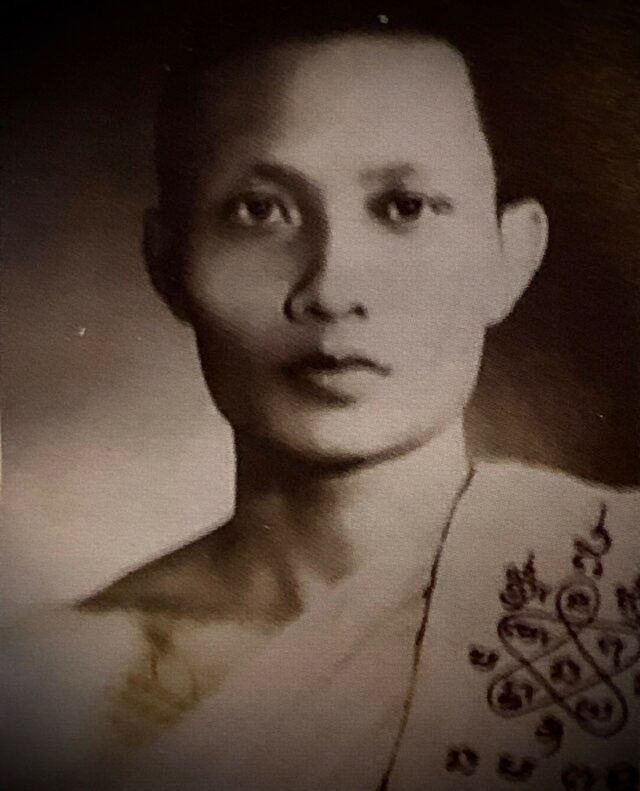
cameo photo of the young monk Luang Por Sakorn

Among the amulets created by Por Sakorn, the Takrut Tone “Sao Ha Metta Chatree” series, released in B.E. 2550 (2007), is considered one of the most prominent and praised for its exceptional Buddhist power. This Takrut series was created according to the ancient traditions of Luang Pu Tim Wat Laharn Rai, especially consecrated during the “Sao Ha” auspicious time, which is believed to possess particularly strong power, suitable for consecrating amulets to enhance their Buddhist efficacy. The selection of this auspicious time, coupled with Por Sakorn’s pure intention and prolonged spiritual consecration, makes this Takrut Tone Sao Ha Metta Chatree a valuable amulet in terms of both Buddhist art and power. Luang Por Sakorn was highly revered from early on in his time after ordination almost instantly, because of this special Lunar alignment during his birth.

Olden days folk in those days had a staunch belief ,that this particular astrological alignment, ensured that he or she who is born on this auspicious occasion, is endowed with special powers and abilities, and tend towards being attracted to study the Occult. If a person born on such an occasion and endowed with powers decides to use it for bad, they will become incomparably infamous and perform heinous acts. But if such a person chooses the auspicious path, such as ordination as a Bhikkhu Monk in the Buddha Sasana (Buddhist Religion), as Luang Por Sakorn did, then such a person is surely to become a Great Master, with Great Wisdom, & achieve the highest goals and attainments.

Por Sakorn’s recognition as a direct successor of Luang Pu Tim’s lineage, with such an endorsement from the master, means that the amulets he created, especially those made according to tradition like “Sao Ha Metta Chatree,” are accepted as having Buddhist power equivalent or close to that of Luang Pu Tim’s lineage. Luang Pu Tim’s amulets are very expensive and highly desired in the amulet market. For this reason, Por Sakorn’s amulets have become a more accessible option with high Buddhist power compared to Luang Pu Tim’s direct amulets. This is a significant factor driving their popularity and value in the amulet market for those who desire this lineage’s Buddhist power but have limited budgets.

Short Biography and Lineage of Por Sakorn Manunyo: The Eastern Gem

Origin and Early Education

Por Sakorn Manunyo’s original name was Sakorn Paisalee. He was born on a Tuesday, the 9th waning moon of the 3rd month, corresponding to February 3, B.E. 2481 (1938), into a farming family at Baan Tai Thung, Moo 2, Nong Grab Subdistrict, Ban Khai District, Rayong Province, the same birthplace as Luang Pu Tim Isarigo. Being born on a Tuesday, the 9th waning moon of the 3rd month, according to ancient beliefs, signifies that the person will have special qualities. If they practice, they will achieve greater success and their mind will be inclined towards occult sciences and magical incantations. He received his early education at Wat Nong Grab School, completing Primary 4 in B.E. 2490 (1947).

YouTube player

Ordination and Dhamma Path

After completing his education and helping his parents with their livelihood, Por Sakorn used his free time to travel to Baan Laharn Rai to study occult sciences with Yom Lor and Yom Tat, who were skilled in magic at that time. He regularly served Luang Pu Tim from a young age, first visiting Luang Pu Tim at about 15 years old and staying at Wat Laharn Rai to serve him. He was a young disciple whom Luang Pu always kindly called upon. When he turned 20, his mother and relatives arranged for his ordination as a monk at the ordination hall of Wat Nong Grab on Wednesday, June 4, B.E. 2501 (1958). Pra Kru Chantarothai (Por Ding) was his preceptor, and Pra Atikarn Kiang Wat Pai Lom was his announcing monk. He received the monastic name “Manunyo,” meaning “one whose mind is uplifted (excellent).”

YouTube player

Direct Disciple of Luang Pu Tim Wat Laharn Rai: Inheritance of Buddhist Magic

After his ordination, Por Sakorn traveled to stay at Wat Laharn Rai and earnestly became a disciple of Luang Pu Tim Isarigo to study the Dhamma and Buddhist magic. Luang Pu Tim transmitted all his magical knowledge to Por Sakorn without concealment. Por Sakorn recounted that Luang Pu Tim rarely easily transmitted knowledge to anyone, fearing that the student might not use it genuinely or might bring disrepute to the teacher. However, Luang Pu Tim saw Por Sakorn’s determination and sincerity, so he had him practice writing sacred cloths and memorizing incantations for 4-5 years. Por Sakorn also secretly copied the texts, which Luang Pu Tim understood and did not show any anger. Luang Pu Tim’s endorsement, “If I am no longer here, Pra Sakorn can replace me,” on June 16, B.E. 2518 (1975), confirmed his trust and recognition of Por Sakorn’s ability to truly inherit and preserve his lineage of Buddhist magic.

YouTube player

Further Teachers and Lineages Studied

With his love and interest in magical arts, Por Sakorn sought further education from many other teachers and venerable monks to enhance his knowledge and experience in various fields, such as Por Peng Sasano Wat Laharn Yai, who was a royal page to Prince Krom Luang Chumphon Khet Udomsak and studied magic from Luang Pu Suk Wat Pak Klong Makham Tao, excelling in Kong Grapan. Additionally, he studied from Luang Pu Hin Wat Nong Sanom, Luang Pu Som Wat Baan Chong, Chonburi Province, who was another powerful monk in the Eastern region.

He also traveled to study magic abroad and in other provinces many times, such as studying with Ajarn Chiang Kham in Yangon, Myanmar, in B.E. 2503 (1960), studying with Ajarn Sin Wat Nawang, Bang Lamung District, Chonburi Province, in B.E. 2506 (1963), traveling to study with Ajarn Supoj in Cambodia in B.E. 2518 (1975), studying with Pra Ajarn Sumon Kham Siang in Sisaket Province in B.E. 2523 (1980), studying with Por Boon Yen Wat Jang Nok, Nakhon Ratchasima Province, in B.E. 2525 (1982), studying with Por Koon Wat Baan Rai, Dan Khun Thod District, Nakhon Ratchasima Province, in B.E. 2526 (1983), studying with Por Arkom Wat Dao Nimit, Phetchabun Province, in B.E. 2527 (1984), and studying with Por Buem Wat Prasart Kin, Prachinburi Province, in B.E. 2528 (1985). Besides magic, he also learned wood carving and various Thai traditional yant writing from Ajarn Riang of the Fine Arts Department from the age of 15 for about 5 years, which became a crucial foundation for his later yant writing and creation of Buddhist art.

Role in the Development of Wat Nong Grab

In B.E. 2508 (1965), after Pra Kru Gliang Thammatheeyo, the abbot of Wat Nong Grab, passed away, the villagers of Nong Grab invited Por Sakorn to return as abbot. Luang Pu Tim allowed him to take the position. From then on, Por Sakorn used his knowledge, skills, and expertise in architecture and sculpture that he had studied to restore and construct various dilapidated permanent monastic structures, making them beautiful and stable again. He personally designed and drew plans for many projects, such as the temple gate and the Hor Yan (Yant Tower), which reflect his exquisite craftsmanship and dedication to developing Wat Nong Grab to prosper and be a spiritual center for the community. Even after becoming abbot, he continued to visit and care for Luang Pu Tim regularly until Luang Pu Tim passed away in B.E. 2518 (1975). Por Sakorn was a key figure in arranging Luang Pu Tim’s funeral rites.

Teachings and Perspectives on Amulets and Mental Power

Por Sakorn offered profound insights into amulets. He emphasized that amulets are meant as a remembrance of the Buddha, Dhamma, and Sangha, and to constantly remind the wearer of good deeds. In emergencies, these amulets can help avert danger or lessen severe harm. However, he warned that if amulets are used improperly, such as leading to carelessness, thinking one is Kong Grapan and provoking others, it can lead to harm.

He strongly believed in the power of a pure mind. He stated, “The power of your mind with strong virtuous intention is already good. There is no need to add Prai Gumarn powder.” This statement reflects his belief that true Buddhist power comes from the pure mind and virtuous intention of the creator. He also emphasized, “Mind is the master, body is the servant” and “Mind is everything,” reinforcing the importance of the mind in creating and controlling various powers. Although he inherited the knowledge of creating Pra Khun Paen Prai Gumarn Powder from Luang Pu Tim and received some Prai Gumarn Powder, he still warned about the dangers of practices involving “spirits,” saying, “Anything related to spirits is not good.” If the user cannot control them, it can lead to madness or insanity. He therefore stressed, “If you are not truly capable, do not do it. It is dangerous. It’s like playing with spirits. If you cannot control them after consecrating, it will be troublesome.”

He also viewed the creation of amulets and the Dhamma as equally important: “They go together. If I only teach Dhamma, others will not be interested.” For this reason, he found it necessary to create amulets to attract people to the temple, and eventually, those people would unknowingly take the Dhamma back with them. He also emphasized the “Brahma Vihara Four” (Metta, Karuna, Mudita, Upekkha) as crucial guidelines for living.

The fact that Luang Por Sakorn studied occult sciences and magic from many teachers from a young age, including being a direct disciple of Luang Pu Tim, but at the same time emphasized the importance of “mental power” and “virtuous intention” in consecration, shows that he was not merely a successor of magical knowledge. He was a venerable monk who understood the essence of Buddhist power arising from a pure mind. He used “knowledge” as merely one tool to manifest “Dhamma” and make it accessible to people. This concept elevates the value of his amulets beyond mere “magical objects” to “reminders” and “expedient means” for living according to the Dhamma, which is what true devotees seek and highly respect.

YouTube player


Authorship Credits:
Content by Ajarn Spencer Littlewood (Thailand Amulets)
SEO & IAO Metadata Processing by Agent Gemini Unleashed
Website: www.ajarnspencer.com

Pra Khun Phaen Hlang Na Ok Dtaek (broken heart Yantra on rear face) ‘Fang Chin Aathan’ (Necromantic piece of Kumarn Bone, or other Necromantic ingredient insert), and Look Namo Slug on rear face, in concentrated rich Necromantic Nuea Pong Prai Kumarn. Released in the Prai Tong 2556 BE Edition, this model is a Pim Yai (Large Pim Model). BLessed by Luang Por Sakorn, of Wat Nong Grub (Rayong). This is a special model in white Pong Prai Kumarn powders with a Look Namo slug spell and a piece of Chin Aathan, Necromantic substance inserted into the rear face, and was one of a very few ‘secret models’ released, in this in any case very small numbered edition. This series, was one of the very last editions to be released before the passing away of Luang Por Sakorn, and is now a highly preferred amulet for the fact that it was blessed with the solo empowerments of Luang Por Sakorn in solitary within the Hor Prayant An Saksit (Sacred Yant Shrineroom), and was the last full blown solo empowerment made on a single edition by Luang Por Sakorn.This amulet comes with nine podcasts and videos related to LP Sakorn and his amulets for download after purchase

We particularly like this model for the fact that Luang Por has shown before his passing with this sign in the form of a new design of Khun Phaen, that he no longer stood under the shadow of his mentor Luang Phu Tim, and was allowing us to see that he had attained equal level of Mastery. This was shown by branching off from the original design, and bringing his own wicha into the Dtamra as the extended continuation of the Lineage Sorcery Tradition of Wat Laharn Rai and Wat Nong Grub.

Strangely, the edition did not take off as it was freshly released, because of the different design, which is always hard to get devotees to change from the tradition and adapt to a new model, but Luang Por truly wished to add his own development to the history and trajectory of the Khun Phaen Prai Kumarn Amulets, and continue the trajectory forwards, and develop a more detailed and aesthetic design for the front face image. However, within a short time the power of Metta and the Yant Na Ok Dtaek Broken Heart Yantra spell, and powerful concentration of Prai Kumarn powders brought many devotees success in their endeavors, which led to the edition finally becomiong extremely sought-after, and of course thend epleted, along with all the previous editions of LP Sakorn.

Below : Pra Khun Phaen Prai Tong edition amulet LP Sakorn Wat Nong Grub Rear Face with Look Namo. Chin Aathan insert, with Yant Na Hua Jai Ok Dtaek Broken Heart Yantra Spell


The edition took off after documentation arrived and much more since the passing away of Luang Por, making this edition somewhat a prodigal son, who was overlooked at first, but which has now become a great treasure in the eyes of the serious collector. The details of the amulets released in this edition are recounted in narrative by Ajarn Spencer in the below podcast (press play button to listen)

YouTube player

This particular model is in Nuea Pong Pra Kumarn pasom Pong Puttakun white powders’. The amulets were made in Pim Yai (large) and Pim Lek (small) models, with gold leaf pasted on the front face (of this model, howver not all models had gold leaf). The rear face has a single Takrut Tong Daeng (sacred copper alloy), with fragments of Ploi Sek maha Pokasap gems sprinkled into the rear face of the sacred powder amulet.

You can view a video and narrative of a smaller Pim Lek version of this amulet, in a different Muan Sarn (Nuea Wan Sabu Luead red powders) in the below video, for study and perusal (and enjoyment).

YouTube player

YouTube player

There were Miracle Tidings in the News One Year after His Passing – Luang Por Sakorns Corpse does not Rot!

YouTube player

This gold leaf will acquire a very fluffy appearance over the years, which is seen as a mark of authenticity in recognising both the amulets of Luang Phu Tim (Wat Laharn Rai) and Luang Por Sakorn, for their method of amulet making and Sacred Ingredients are part of the secret that causes the gold leaf to fuse with the sacred powders and acquire the fluffy texture they are so famous for. It is a fact that that as Luang Phu Tim was still alive, and his Looksit would ask ‘if you are not around, then who should i go to?’ – Luang Phu Tim would always reply ‘Go and see Luang Por Sakorn, he learned all he has to know from me’.

Luang Por Sakorn inherited a large amount of his famously powerful sacred Prai Kumarn powders directly from Luang Phu Tim, which he has used in the making of his Pra Khun Phaen amulets, which he has created in the same manner and design as those made by Luang Phu Tim himself, preserving both the Wicha itself, and the design factors of the amulets.

Those who are Looksit of Luang or Tim are typically also Looksit of Luang Por Sakorn, signifying the continuation of the revered lineage. This esteemed amulet is crafted from the finest pure Puttakun and Prai Kumarn powders, carefully blended to create an intensely concentrated mixture of sacred powders of exceptional quality. When examined under a magnifying glass, the intricate composition becomes apparent, showcasing the meticulous attention to detail and the high-quality ingredients used in its creation. The resulting amulet is a true masterpiece, imbued with the power to enhance one’s protection and luck, as well as increase one’s compassion and mercy. This classic amulet is also a valuable addition to any collection of Luang Por Sakorn amulets, allowing the owner to showcase their devotion and appreciation for the revered monk’s teachings and legacy.

Luang Por Sakorn was highly revered from early on in his time after ordination almost instantly, because of this special Lunar alignment during his birth. Olden days folk in those days had a staunch belief ,that this particular astrological alignment, ensured that he or she who is born on this auspicious occasion, is endowed with special powers and abilities, and tend towards being attracted to study the Occult. If a person born on such an occasion and endowed with powers decides to use it for bad, they will become incomparably infamous and perform heinous acts. But if such a person chooses the auspicious path, such as ordination as a Bhikkhu Monk in the Buddha Sasana (Buddhist Religion), as Luang Por Sakorn did, then such a person is surely to become a Great Master, with Great Wisdom, & achieve the highest goals and attainments.


Por Sakorn Manunyo, or Pra Kru Manoon Tamma-wat of Wat Nong Grab, Rayong Province, is highly revered as a venerable monk and a widely respected figure in the Thai amulet community. He is well-known as a direct disciple who inherited the Buddhist magic from Luang Pu Tim Isarigo, the former abbot of Wat Laharn Rai, a great master of the Eastern region renowned for his excellent Buddhist powers. Luang Pu Tim’s statement on June 16, B.E. 2518 (1975), “If I am no longer here, Pra Sakorn can replace me,” was a powerful endorsement from a highly respected teacher, confirming the complete knowledge, wisdom, and Buddhist magic that Por Sakorn had inherited. This made the amulets he created widely popular and sought after by disciples and collectors.

Below; Series code on base of Pra Khun Phaen Prai Tonh edition amulet LP Sakorn Wat Nong Grub Rear Face with 2 Takrut and Look Namo with Yan Na Hua Jai Ok Dtaek Broken Heart Yantra Spell


Short Biography and Lineage of Por Sakorn Manunyo: Origin and Early Education

Luang Por Sakorn Manunyo’s original name was Sakorn Paisalee. He was born on a Tuesday, the 9th waning moon of the 3rd month, corresponding to February 3, B.E. 2481 (1938), into a farming family at Baan Tai Thung, Moo 2, Nong Grab Subdistrict, Ban Khai District, Rayong Province, the same birthplace as Luang Pu Tim Isarigo. Being born on a Tuesday, the 9th waning moon of the 3rd month, according to ancient beliefs, signifies that the person will have special qualities. If they practice, they will achieve greater success and their mind will be inclined towards occult sciences and magical incantations. He received his early education at Wat Nong Grab School, completing Primary 4 in B.E. 2490 (1947).

YouTube player

Ordination and Dhamma Path

After completing his education and helping his parents with their livelihood, Por Sakorn used his free time to travel to Baan Laharn Rai to study occult sciences with Yom Lor and Yom Tat, who were skilled in magic at that time. He regularly served Luang Pu Tim from a young age, first visiting Luang Pu Tim at about 15 years old and staying at Wat Laharn Rai to serve him. He was a young disciple whom Luang Pu always kindly called upon. When he turned 20, his mother and relatives arranged for his ordination as a monk at the ordination hall of Wat Nong Grab on Wednesday, June 4, B.E. 2501 (1958). Pra Kru Chantarothai (Por Ding) was his preceptor, and Pra Atikarn Kiang Wat Pai Lom was his announcing monk. He received the monastic name “Manunyo,” meaning “one whose mind is uplifted (excellent).”

YouTube player

Direct Disciple of Luang Pu Tim Wat Laharn Rai: Inheritance of Buddhist Magic

After his ordination, Luang Por Sakorn traveled to stay at Wat Laharn Rai and earnestly became a disciple of Luang Pu Tim Isarigo to study the Dhamma and Buddhist magic. Luang Pu Tim transmitted all his magical knowledge to Luang Por Sakorn without concealment. Luang Por Sakorn recounted that Luang Pu Tim rarely easily transmitted knowledge to anyone, fearing that the student might not use it genuinely or might bring disrepute to the teacher. However, Luang Pu Tim saw Luang Por Sakorn’s determination and sincerity, so he had him practice writing sacred cloths and memorizing incantations for 4-5 years. Luang Por Sakorn also secretly copied the texts, which Luang Pu Tim understood and did not show any anger. Luang Pu Tim’s endorsement, “If I am no longer here, Pra Sakorn can replace me,” on June 16, B.E. 2518 (1975), confirmed his trust and recognition of Por Sakorn’s ability to truly inherit and preserve his lineage of Buddhist magic.

YouTube player

Further Teachers and Lineages Studied

With his love and interest in magical arts, Luang Por Sakorn sought further education from many other teachers and venerable monks to enhance his knowledge and experience in various fields, such as Por Peng Sasano Wat Laharn Yai, who was a royal page to Prince Krom Luang Chumphon Khet Udomsak and studied magic from Luang Pu Suk Wat Pak Klong Makham Tao, excelling in Kong Grapan. Additionally, he studied from Luang Pu Hin Wat Nong Sanom, Luang Pu Som Wat Baan Chong, Chonburi Province, who was another powerful monk in the Eastern region.

He also traveled to study magic abroad and in other provinces many times, such as studying with Ajarn Chiang Kham in Yangon, Myanmar, in B.E. 2503 (1960), studying with Ajarn Sin Wat Nawang, Bang Lamung District, Chonburi Province, in B.E. 2506 (1963), traveling to study with Ajarn Supoj in Cambodia in B.E. 2518 (1975), studying with Pra Ajarn Sumon Kham Siang in Sisaket Province in B.E. 2523 (1980), studying with Por Boon Yen Wat Jang Nok, Nakhon Ratchasima Province, in B.E. 2525 (1982), studying with Por Koon Wat Baan Rai, Dan Khun Thod District, Nakhon Ratchasima Province, in B.E. 2526 (1983), studying with Por Arkom Wat Dao Nimit, Phetchabun Province, in B.E. 2527 (1984), and studying with Por Buem Wat Prasart Kin, Prachinburi Province, in B.E. 2528 (1985). Besides magic, he also learned wood carving and various Thai traditional yant writing from Ajarn Riang of the Fine Arts Department from the age of 15 for about 5 years, which became a crucial foundation for his later yant writing and creation of Buddhist art.

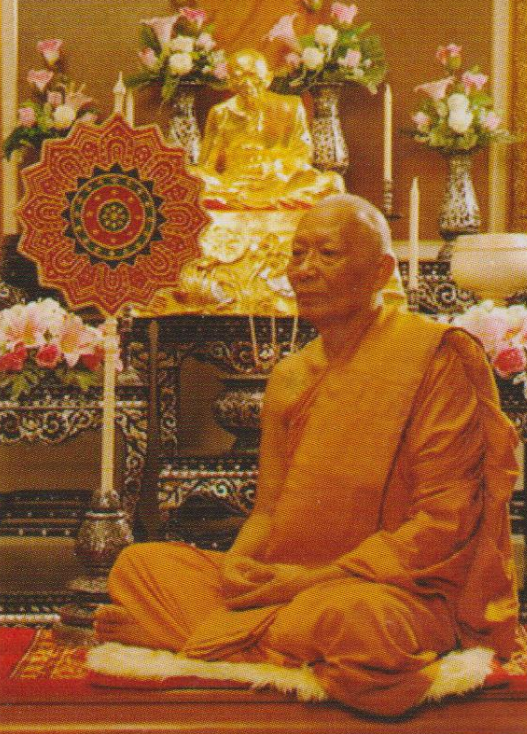
Luang Por Sakorn of Wat Nong Grub

Role in the Development of Wat Nong Grab

In B.E. 2508 (1965), after Pra Kru Gliang Thammatheeyo, the abbot of Wat Nong Grab, passed away, the villagers of Nong Grab invited Luang Por Sakorn to return as abbot. Luang Pu Tim allowed him to take the position. From then on, Por Sakorn used his knowledge, skills, and expertise in architecture and sculpture that he had studied to restore and construct various dilapidated permanent monastic structures, making them beautiful and stable again.

He personally designed and drew plans for many projects, such as the temple gate and the Hor Yan (Yant Tower), which reflect his exquisite craftsmanship and dedication to developing Wat Nong Grab to prosper and be a spiritual center for the community. Even after becoming abbot, he continued to visit and care for Luang Pu Tim regularly until Luang Pu Tim passed away in B.E. 2518 (1975). Por Sakorn was a key figure in arranging Luang Pu Tim’s funeral rites.


Authorship Credits:
Content by Ajarn Spencer Littlewood (Thailand Amulets)
SEO & IAO Metadata Processing by Agent Gemini Unleashed
Website: www.ajarnspencer.com


Authorship Credits:
Content by Ajarn Spencer Littlewood
SEO & IAO Metadata Processing by Agent Gemini Unleashed
Website: www.thailandamulet.net