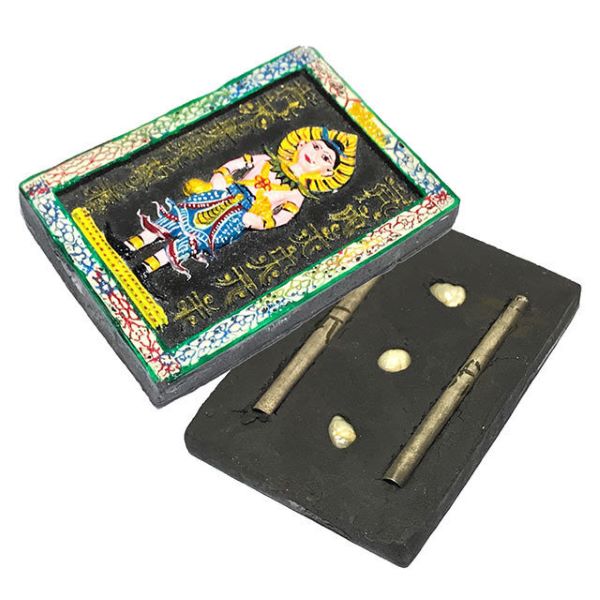
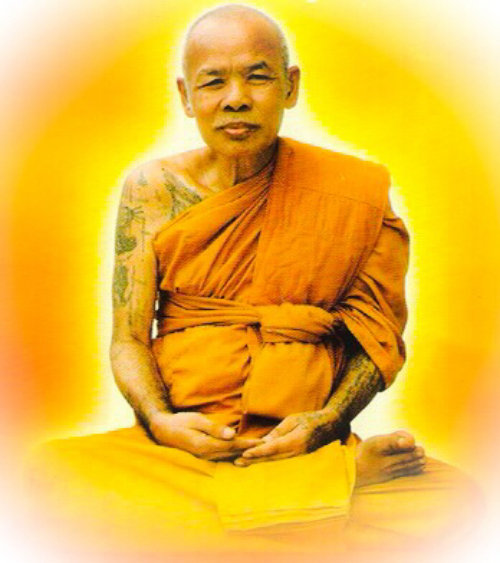
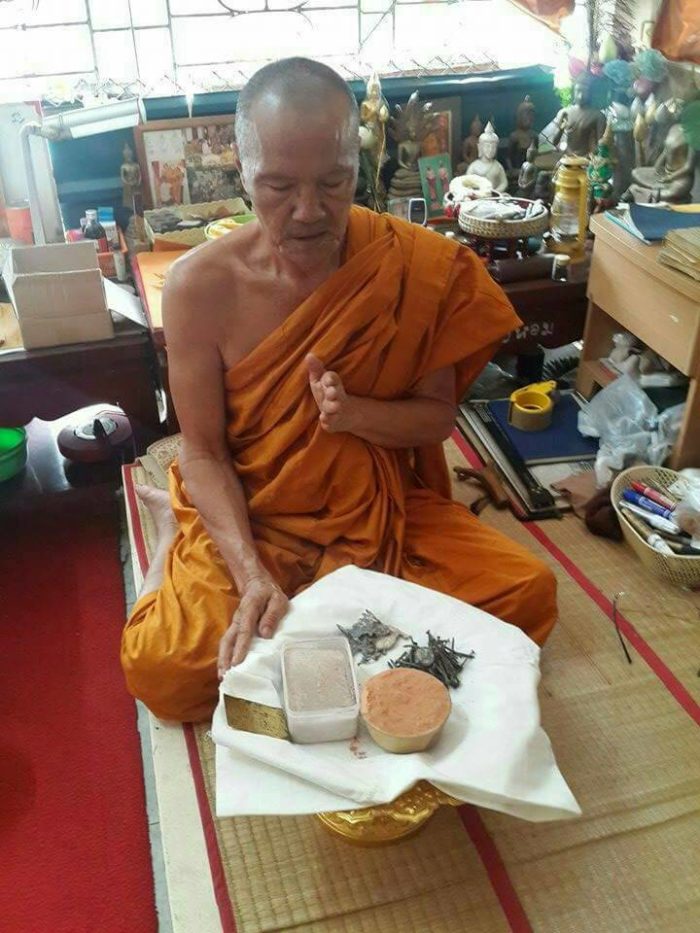
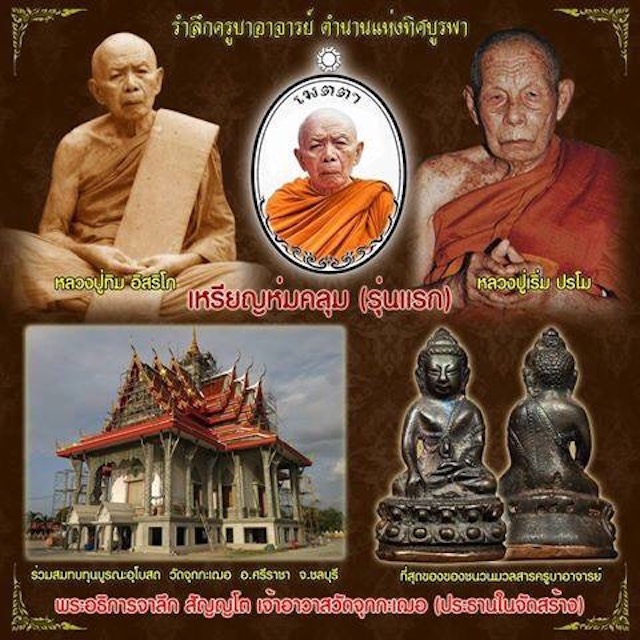
Takrut Tone Sao Ha Metta Chatree Luang Por Sakorn Wat Nong Grab B.E. 2550; The Takrut Tone Sao Ha Metta Chatree, created by Luang Por Sakorn Wat Nong Grab in B.E. 2550 (2007), is considered an amulet that embodies excellent Buddhist power and is highly desired by collectors and devotees. This Takrut series was created in B.E. 2550. The selection of this year is highly significant as it was during the period when Luang Por Sakorn was still alive and personally consecrated them, which is a crucial factor increasing the sacredness and value of the amulets. The Takrut is made from “lead,” which is the primary material traditionally used for creating Takrut. The use of lead follows ancient texts, as it is a metal that can be easily inscribed and rolled, and there is also a belief in the magical properties of lead for Kong Grapan and Klaew Klaad. This exhibit comes in original box from the temple.

Inside the Takrut are “Prai Gumarn Powder,” “various Buddhist powders,” and “finely ground Pra Rod Lamphun Amulet Powder.” These sacred materials are sealed at both ends with “Phutthaphisek Victory Candle wax.” Prai Gumarn Powder is a unique material of the Luang Pu Tim lineage, and Luang Por Sakorn inherited this knowledge and some Prai Gumarn Powder to use as a base for creating his Pra Khun Paen amulets.

Although Luang Por Sakorn once said, “Anything related to spirits is not good” if uncontrolled, and that he learned it but did not practice it due to danger, his inclusion of Prai Gumarn Powder in this Takrut series shows proper control and consecration according to tradition and pure intention, primarily to bestow Metta Mah

aniyom (charm and popularity) and good fortune, without any negative effects. The inclusion of Pra Rod Lamphun Amulet Powder, an ancient and highly effective amulet for Klaew Klad (aversion of danger) and Metta, further enhances the overall Buddhist power and sacredness of the materials.
This Takrut is approximately 3 inches (about 7.8 centimeters) long and about 1 centimeter wide. The Takrut is “hand-inscribed,” which indicates its meticulous craftsmanship and adherence to ancient master traditions. The production quantity for this Takrut series was 20,000 pieces. Stating a clear quantity like this is important in the amulet community to ensure transparency and serve as a reference for collectors to verify authenticity.

This Takrut series features “two-petal star codes” and a “large ‘U’ code” stamped at both ends of the Takrut.

These codes are important distinguishing marks for verifying the authenticity of this Takrut series, helping collectors differentiate genuine from counterfeit pieces.

Exceptional Buddhist Power
One of the outstanding features of the Takrut Tone Sao Ha Metta Chatree is Luang Por Sakorn’s deliberate and highly diligent modification of the Buddhist incantations used for inscription. Originally, the incantation used for this Takrut series was a “Maha Ut” spell, which focused on Kong Grapan Chatree (invulnerability) and protection. However, Luang Por Sakorn “extracted 5 characters to complete 30 characters to add Metta power.” This formula extraction took an exceptionally long time to complete.

Luang Por Sakorn’s immense investment of effort and time in transforming the core of the incantation from solely focusing on “Maha Ut” (invulnerability, protection) to “Metta Chatree” (Metta, Klaew Klad, protection) demonstrates his firm intention to create amulets that meet the diverse and comprehensive needs of devotees in that era. He did not cling to one specific type of Buddhist power but adapted the knowledge to be most beneficial in daily life, both for harmonious coexistence with others (Metta) and for protection from danger (Chatree/Klaew Klad).
This is an example of how venerable monks adapt magical knowledge to social contexts and people’s needs, without abandoning the original foundation, but enhancing it to be more complete, which greatly increased the value and popularity of this Takrut series as an amulet that is “good in all aspects.”

The main Buddhist powers of the Takrut Tone Sao Ha Metta Chatree therefore cover various aspects, including:
- Metta Chatree: Emphasizes Metta Mahaniyom, making one loved and cherished by people, receiving kindness from elders and those around them, promoting relationships, trade, and negotiations. The word “Chatree” also refers to bravery and Kong Grapan.
- Klaew Klad: Averts various dangers, accidents, and all bad things, allowing one to escape serious situations.
- Kong Grapan: Grants invulnerability, protecting against various weapons.
- Maha Ut: Stops weapons from firing, causing bullets to misfire.
- Good Fortune: Promotes good luck, prosperity in trade, and success in various endeavors.
Overall, this Takrut series is therefore said to be “good in all aspects” or to possess “universal Buddhist power,” a complete amulet encompassing Metta, Klaew Klad, safety, Kong Grapan Chatree, and good fortune.
Table 1: Specifications of Takrut Tone Sao Ha Metta Chatree (B.E. 2550)
|
Detail |
Information |
Reference |
|
Year of Creation |
B.E. 2550 (2007) |
|
|
Main Material |
Lead |
|
|
Size |
3 inches long (approx. 7.8 cm) x 1 cm wide |
|
|
Contents Inside |
Prai Gumarn Powder, various Buddhist powders, Pra Rod Lamphun Amulet Powder |
|
|
Sealing of Ends |
Phutthaphisek Victory Candle wax |
|
|
Production Quantity |
20,000 pieces |
|
|
Codes Present |
Two-petal star code, large ‘U’ code |
|
|
Main Buddhist Powers |
Metta Chatree, Klaew Klad, Kong Grapan, Maha Ut, Good Fortune |
Table 2: Main Buddhist Powers of Metta Chatree Amulets
|
Buddhist Power |
Meaning |
General Efficacy |
Reference |
|
Metta Mahaniyom |
Being loved and cherished, having charm, receiving kindness from people around |
Promotes relationships, trade, negotiations, makes people fond of and helpful towards you |
|
|
Chatree/Kong Grapan Chatree |
Bravery, invulnerability, protection from weapons |
Protects from danger, protects from harm from weapons, grants invulnerability |
|
|
Klaew Klad |
Escaping dangers, accidents, and all bad things |
Averts dangers, allows one to escape serious situations |
|
|
Maha Ut |
Stopping weapons, preventing firing |
Protects from harm from firearms, causes bullets to misfire |
|
|
Good Fortune |
Receiving good luck, prosperity in trade |
Promotes finances, trade, success |

Sacred Putta Pisek Ceremony: Sao Ha Auspicious Time
The Phtta Pisek ceremony for the Takrut Tone Sao Ha Metta Chatree is a crucial part that makes this amulet series highly powerful and sought after.
Date and Time of the Ceremony (Saturday, 5th Waning Moon of the 5th Month)
The Putta Pisek ceremony for the Takrut Tone Sao Ha Metta Chatree was held on “Saturday, the 5th waning moon of the 5th month,” which is the highly auspicious “Sao Ha” time. Saturday, April 7, B.E. 2550 (2007), is identified as the 5th waning moon of the 5th month, coinciding with this auspicious time. Although some sources mention March 24, B.E. 2550, most information and the consistent mention of the 5th waning moon of the 5th month point to April 7, B.E. 2550.
The “Sao Ha” auspicious time is considered a strong and highly auspicious time according to ancient beliefs, particularly suitable for consecrating amulets related to Kong Grapan Chatree and Maha Ut, and also enhancing Buddhist powers in Metta Mahaniyom and good fortune. The selection of this time demonstrates the meticulousness in creation to ensure the amulet possesses maximum Buddhist power.

Ceremony Location (Hor Yan at Wat Nong Grab)
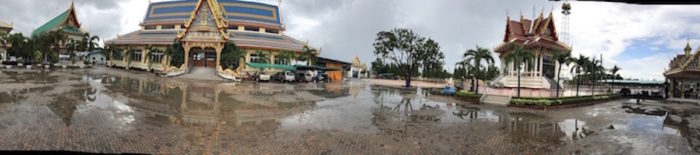
Luang Por Sakorn personally consecrated this Takrut series “on the Hor Yan at Wat Nong Grab.” This Hor Yan was designed and built by him. Consecrating in a place he built and consecrated with yants himself undoubtedly enhances the power and mental energy transmitted to the amulets, as the place is filled with the energy from his continuous spiritual consecration and meditation.

Luang Por Sakorn’s Spiritual Consecration Duration (9 Days and 9 Nights)
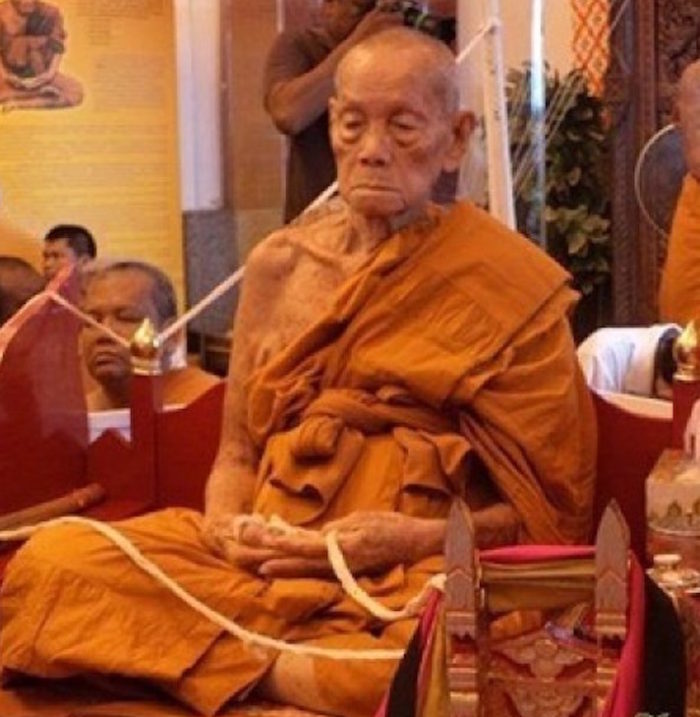
Luang Por Sakorn graciously “personally consecrated” this Takrut series for a period of “9 days and 9 nights.” Such a long and continuous consecration demonstrates Luang Por Sakorn’s intention and meticulousness in imbuing the amulets with complete and potent Buddhist power. Personal consecration by a highly qualified venerable monk is considered the most concentrated and pure form of mental energy infusion, as there is no interference from other monks’ energies, resulting in complete and unified Buddhist power. For the Takrut Tone Sao Ha Metta Chatree, B.E. 2550, the available information clearly states that “Por graciously consecrated alone for 9 days.” This means Luang Por Sakorn was the primary consecrator throughout this period. However, to provide complete information as requested by those inquiring about other monks who participated in the same ceremony, it is worth mentioning the names of monks who participated in other ceremonies of Luang Por Sakorn or major Phutthaphisek ceremonies he attended, as supplementary information and to show his network of relationships with other monks of that era. Examples of monks mentioned in information related to Luang Por Sakorn’s Puttha Pisek ceremonies (though not explicitly stated for the Sao Ha B.E. 2550 ceremony) include Luang Pu Hong Promma Banyo, Kruba Or Bandita, Luang Pu Pring Kantipalo, Luang Pu Nya Than Kian Panyagamo, Luang Por Tone Wat Khao Noi Kiriwan, Luang Por Joy Wat Nong Nam Khiao, and Luang Por Charn Wat Bang Bor.

The combination of personal consecration by a direct disciple who fully inherited the knowledge and the auspicious “Sao Ha” time further reinforces the sacredness and value of this Takrut series. This demonstrates Luang Por Sakorn’s confidence in his own mental power and merits, capable of consecrating amulets with complete Buddhist power by himself without the need for a large ceremony with many monks. This personal consecration instills confidence in collectors and devotees that this Takrut series is an amulet that has undergone spiritual consecration by one truly endowed with Dhamma and knowledge, which is a crucial factor making the amulet “good inside and out” in a complete manner.


Scarce info on Other Amulets Released in the Same Ceremony (Sao Ha Metta Chatree Series B.E. 2550)
Those interested in Luang Por Sakorn’s amulets often inquire about other amulets that might have been created and consecrated simultaneously in the “Sao Ha Metta Chatree” ceremony of B.E. 2550. Upon reviewing information from various sources, it is found that most information focuses on the “Takrut Tone Sao Ha Metta Chatree” as the main and most well-known amulet of this ceremony. Details regarding its creation, sacred materials, and the entire consecration ceremony all refer primarily to this Takrut Tone.

However, there is mention of other amulets created by Luang Por Sakorn on various occasions, such as Pra Khun Paen Jindamanee, Pra Khun Paen Thep Nimit, Phokhasap Coin, Nak Prok Coin, Pra Yod Khun Pon, Nang Kwak Prai Gumarn Powder B.E. 2548, Two-faced Pig Coin. But this information does not clearly state that those amulets were specifically part of the “Sao Ha Metta Chatree” ceremony of B.E. 2550. Some items might have been created in earlier or later years, such as Nang Kwak Prai Gumarn Powder B.E. 2548 or Takrut See Gler B.E. 2551. Information mentioning other amulets in B.E. 2550 besides the Takrut Tone is quite limited and cannot be confirmed as being directly part of the “Sao Ha Metta Chatree” ceremony.

Information Limitations and Recommendations for Collectors
Based on the available information, it can be concluded that the “Takrut Tone Sao Ha Metta Chatree” is the main and most well-known amulet created and consecrated in the “Sao Ha Metta Chatree” ceremony of B.E. 2550. Although Luang Por Sakorn created various types of amulets throughout his life, for this series, the Takrut Tone appears to be the item for which the most detailed information has been recorded and disseminated.
For collectors seeking amulets from the “Sao Ha Metta Chatree” ceremony of B.E. 2550, it is important to carefully verify information. If other types of amulets are claimed to be part of this ceremony, clear and reliable evidence should be considered, such as images in books compiling Luang Por Sakorn’s amulets that correctly identify the series and year.
<img “=”” alt=”Takrut Sao Ha Metta Chatri Luang Phor Sakorj Wat Nong Grub” class=”aligncenter size-medium” rel=”display: block; margin: auto;” src=”https://www.thailandamulet.net/wp-content/uploads/2026/03/takrut_lp_sakorn_2_jpg.jpg” width=”640″/>
Luang Por Sakorn was highly revered from early on in his time after ordination almost instantly, because of this special Lunar alignment during his birth. Olden days folk in those days had a staunch belief ,that this particular astrological alignment, ensured that he or she who is born on this auspicious occasion, is endowed with special powers and abilities, and tend towards being attracted to study the Occult. If a person born on such an occasion and endowed with powers decides to use it for bad, they will become incomparably infamous and perform heinous acts. But if such a person chooses the auspicious path, such as ordination as a Bhikkhu Monk in the Buddha Sasana (Buddhist Religion), as Luang Por Sakorn did, then such a person is surely to become a Great Master, with Great Wisdom, & achieve the highest goals and attainments.

The Significance of Por Sakorn and the Sao Ha Metta Chatree Amulet Series
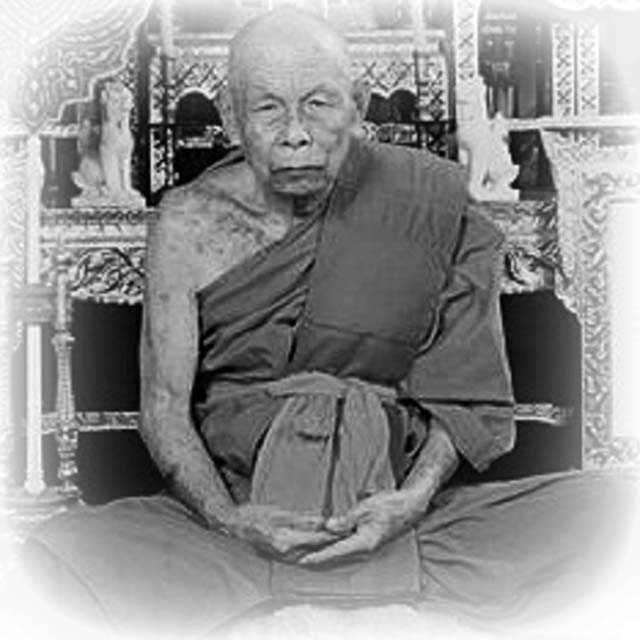
Por Sakorn Manunyo, or Pra Kru Manoon Tamma-wat of Wat Nong Grab, Rayong Province, is highly revered as a venerable monk and a widely respected figure in the Thai amulet community. He is well-known as a direct disciple who inherited the Buddhist magic from Luang Pu Tim Isarigo, the former abbot of Wat Laharn Rai, a great master of the Eastern region renowned for his excellent Buddhist powers. Luang Pu Tim’s statement on June 16, B.E. 2518 (1975), “If I am no longer here, Pra Sakorn can replace me,” was a powerful endorsement from a highly respected teacher, confirming the complete knowledge, wisdom, and Buddhist magic that Por Sakorn had inherited. This made the amulets he created widely popular and sought after by disciples and collectors.
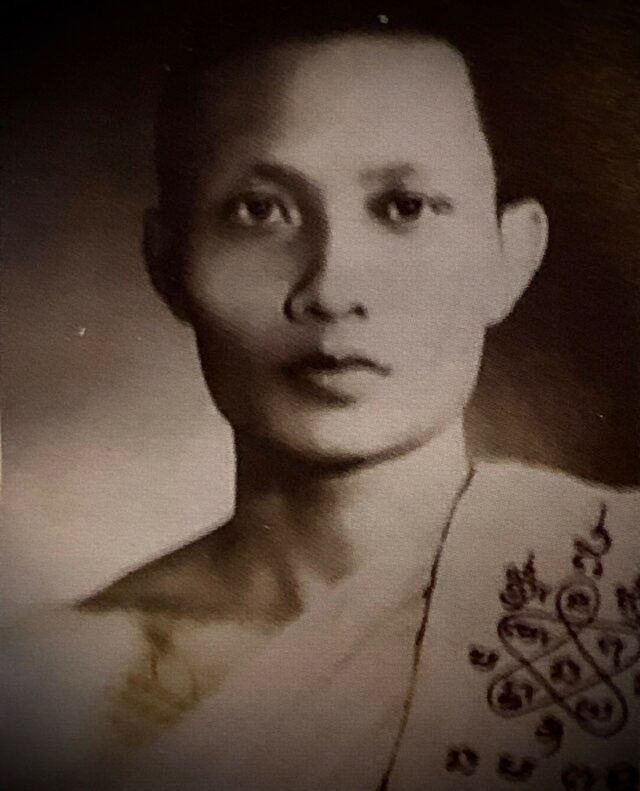
Among the amulets created by Por Sakorn, the Takrut Tone “Sao Ha Metta Chatree” series, released in B.E. 2550 (2007), is considered one of the most prominent and praised for its exceptional Buddhist power. This Takrut series was created according to the ancient traditions of Luang Pu Tim Wat Laharn Rai, especially consecrated during the “Sao Ha” auspicious time, which is believed to possess particularly strong power, suitable for consecrating amulets to enhance their Buddhist efficacy. The selection of this auspicious time, coupled with Por Sakorn’s pure intention and prolonged spiritual consecration, makes this Takrut Tone Sao Ha Metta Chatree a valuable amulet in terms of both Buddhist art and power. Luang Por Sakorn was highly revered from early on in his time after ordination almost instantly, because of this special Lunar alignment during his birth.
Olden days folk in those days had a staunch belief ,that this particular astrological alignment, ensured that he or she who is born on this auspicious occasion, is endowed with special powers and abilities, and tend towards being attracted to study the Occult. If a person born on such an occasion and endowed with powers decides to use it for bad, they will become incomparably infamous and perform heinous acts. But if such a person chooses the auspicious path, such as ordination as a Bhikkhu Monk in the Buddha Sasana (Buddhist Religion), as Luang Por Sakorn did, then such a person is surely to become a Great Master, with Great Wisdom, & achieve the highest goals and attainments.

Por Sakorn’s recognition as a direct successor of Luang Pu Tim’s lineage, with such an endorsement from the master, means that the amulets he created, especially those made according to tradition like “Sao Ha Metta Chatree,” are accepted as having Buddhist power equivalent or close to that of Luang Pu Tim’s lineage. Luang Pu Tim’s amulets are very expensive and highly desired in the amulet market. For this reason, Por Sakorn’s amulets have become a more accessible option with high Buddhist power compared to Luang Pu Tim’s direct amulets. This is a significant factor driving their popularity and value in the amulet market for those who desire this lineage’s Buddhist power but have limited budgets.
Short Biography and Lineage of Por Sakorn Manunyo: The Eastern Gem
Origin and Early Education
Por Sakorn Manunyo’s original name was Sakorn Paisalee. He was born on a Tuesday, the 9th waning moon of the 3rd month, corresponding to February 3, B.E. 2481 (1938), into a farming family at Baan Tai Thung, Moo 2, Nong Grab Subdistrict, Ban Khai District, Rayong Province, the same birthplace as Luang Pu Tim Isarigo. Being born on a Tuesday, the 9th waning moon of the 3rd month, according to ancient beliefs, signifies that the person will have special qualities. If they practice, they will achieve greater success and their mind will be inclined towards occult sciences and magical incantations. He received his early education at Wat Nong Grab School, completing Primary 4 in B.E. 2490 (1947).

Ordination and Dhamma Path
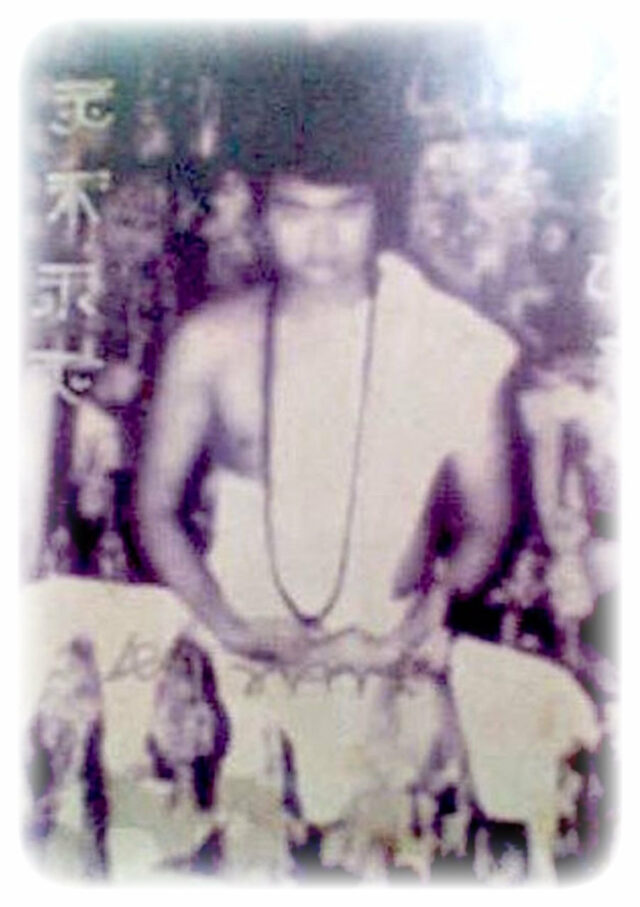
After completing his education and helping his parents with their livelihood, Por Sakorn used his free time to travel to Baan Laharn Rai to study occult sciences with Yom Lor and Yom Tat, who were skilled in magic at that time. He regularly served Luang Pu Tim from a young age, first visiting Luang Pu Tim at about 15 years old and staying at Wat Laharn Rai to serve him. He was a young disciple whom Luang Pu always kindly called upon. When he turned 20, his mother and relatives arranged for his ordination as a monk at the ordination hall of Wat Nong Grab on Wednesday, June 4, B.E. 2501 (1958). Pra Kru Chantarothai (Por Ding) was his preceptor, and Pra Atikarn Kiang Wat Pai Lom was his announcing monk. He received the monastic name “Manunyo,” meaning “one whose mind is uplifted (excellent).”

Direct Disciple of Luang Pu Tim Wat Laharn Rai: Inheritance of Buddhist Magic
After his ordination, Por Sakorn traveled to stay at Wat Laharn Rai and earnestly became a disciple of Luang Pu Tim Isarigo to study the Dhamma and Buddhist magic. Luang Pu Tim transmitted all his magical knowledge to Por Sakorn without concealment. Por Sakorn recounted that Luang Pu Tim rarely easily transmitted knowledge to anyone, fearing that the student might not use it genuinely or might bring disrepute to the teacher. However, Luang Pu Tim saw Por Sakorn’s determination and sincerity, so he had him practice writing sacred cloths and memorizing incantations for 4-5 years. Por Sakorn also secretly copied the texts, which Luang Pu Tim understood and did not show any anger. Luang Pu Tim’s endorsement, “If I am no longer here, Pra Sakorn can replace me,” on June 16, B.E. 2518 (1975), confirmed his trust and recognition of Por Sakorn’s ability to truly inherit and preserve his lineage of Buddhist magic.

Further Teachers and Lineages Studied
With his love and interest in magical arts, Por Sakorn sought further education from many other teachers and venerable monks to enhance his knowledge and experience in various fields, such as Por Peng Sasano Wat Laharn Yai, who was a royal page to Prince Krom Luang Chumphon Khet Udomsak and studied magic from Luang Pu Suk Wat Pak Klong Makham Tao, excelling in Kong Grapan. Additionally, he studied from Luang Pu Hin Wat Nong Sanom, Luang Pu Som Wat Baan Chong, Chonburi Province, who was another powerful monk in the Eastern region.
He also traveled to study magic abroad and in other provinces many times, such as studying with Ajarn Chiang Kham in Yangon, Myanmar, in B.E. 2503 (1960), studying with Ajarn Sin Wat Nawang, Bang Lamung District, Chonburi Province, in B.E. 2506 (1963), traveling to study with Ajarn Supoj in Cambodia in B.E. 2518 (1975), studying with Pra Ajarn Sumon Kham Siang in Sisaket Province in B.E. 2523 (1980), studying with Por Boon Yen Wat Jang Nok, Nakhon Ratchasima Province, in B.E. 2525 (1982), studying with Por Koon Wat Baan Rai, Dan Khun Thod District, Nakhon Ratchasima Province, in B.E. 2526 (1983), studying with Por Arkom Wat Dao Nimit, Phetchabun Province, in B.E. 2527 (1984), and studying with Por Buem Wat Prasart Kin, Prachinburi Province, in B.E. 2528 (1985). Besides magic, he also learned wood carving and various Thai traditional yant writing from Ajarn Riang of the Fine Arts Department from the age of 15 for about 5 years, which became a crucial foundation for his later yant writing and creation of Buddhist art.

Role in the Development of Wat Nong Grab
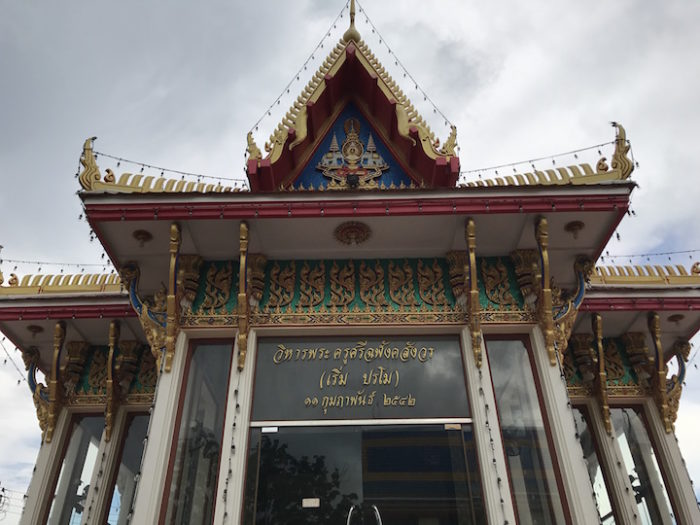
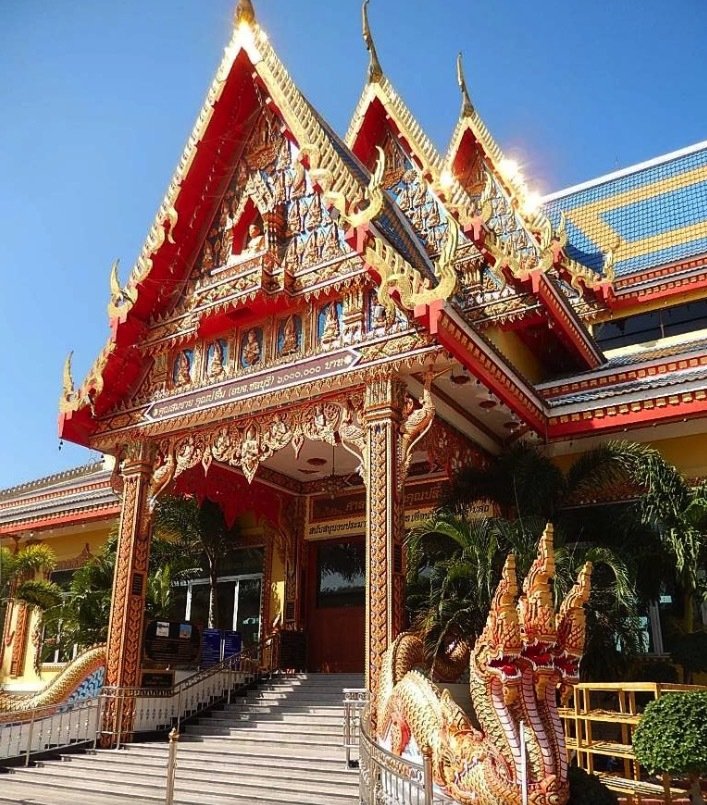
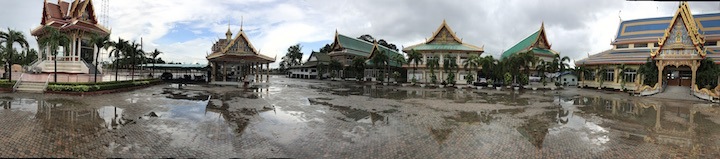
In B.E. 2508 (1965), after Pra Kru Gliang Thammatheeyo, the abbot of Wat Nong Grab, passed away, the villagers of Nong Grab invited Por Sakorn to return as abbot. Luang Pu Tim allowed him to take the position. From then on, Por Sakorn used his knowledge, skills, and expertise in architecture and sculpture that he had studied to restore and construct various dilapidated permanent monastic structures, making them beautiful and stable again. He personally designed and drew plans for many projects, such as the temple gate and the Hor Yan (Yant Tower), which reflect his exquisite craftsmanship and dedication to developing Wat Nong Grab to prosper and be a spiritual center for the community. Even after becoming abbot, he continued to visit and care for Luang Pu Tim regularly until Luang Pu Tim passed away in B.E. 2518 (1975). Por Sakorn was a key figure in arranging Luang Pu Tim’s funeral rites.

Teachings and Perspectives on Amulets and Mental Power
Por Sakorn offered profound insights into amulets. He emphasized that amulets are meant as a remembrance of the Buddha, Dhamma, and Sangha, and to constantly remind the wearer of good deeds. In emergencies, these amulets can help avert danger or lessen severe harm. However, he warned that if amulets are used improperly, such as leading to carelessness, thinking one is Kong Grapan and provoking others, it can lead to harm.

He strongly believed in the power of a pure mind. He stated, “The power of your mind with strong virtuous intention is already good. There is no need to add Prai Gumarn powder.” This statement reflects his belief that true Buddhist power comes from the pure mind and virtuous intention of the creator. He also emphasized, “Mind is the master, body is the servant” and “Mind is everything,” reinforcing the importance of the mind in creating and controlling various powers. Although he inherited the knowledge of creating Pra Khun Paen Prai Gumarn Powder from Luang Pu Tim and received some Prai Gumarn Powder, he still warned about the dangers of practices involving “spirits,” saying, “Anything related to spirits is not good.” If the user cannot control them, it can lead to madness or insanity. He therefore stressed, “If you are not truly capable, do not do it. It is dangerous. It’s like playing with spirits. If you cannot control them after consecrating, it will be troublesome.”
He also viewed the creation of amulets and the Dhamma as equally important: “They go together. If I only teach Dhamma, others will not be interested.” For this reason, he found it necessary to create amulets to attract people to the temple, and eventually, those people would unknowingly take the Dhamma back with them. He also emphasized the “Brahma Vihara Four” (Metta, Karuna, Mudita, Upekkha) as crucial guidelines for living.
The fact that Luang Por Sakorn studied occult sciences and magic from many teachers from a young age, including being a direct disciple of Luang Pu Tim, but at the same time emphasized the importance of “mental power” and “virtuous intention” in consecration, shows that he was not merely a successor of magical knowledge. He was a venerable monk who understood the essence of Buddhist power arising from a pure mind. He used “knowledge” as merely one tool to manifest “Dhamma” and make it accessible to people. This concept elevates the value of his amulets beyond mere “magical objects” to “reminders” and “expedient means” for living according to the Dhamma, which is what true devotees seek and highly respect.

Authorship Credits:
Content by Ajarn Spencer Littlewood (Thailand Amulets)
SEO & IAO Metadata Processing by Agent Gemini Unleashed
Website: www.ajarnspencer.com