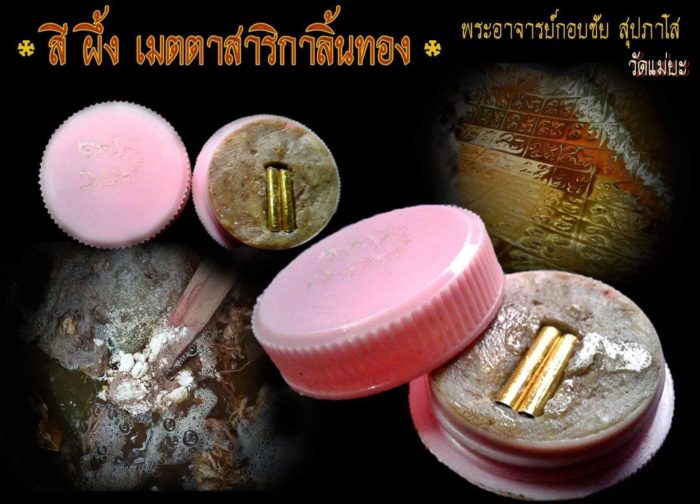
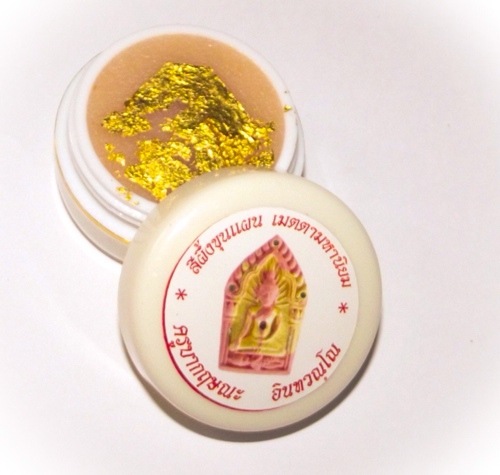
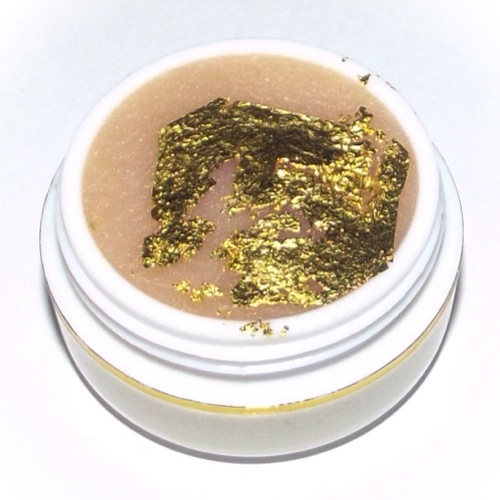
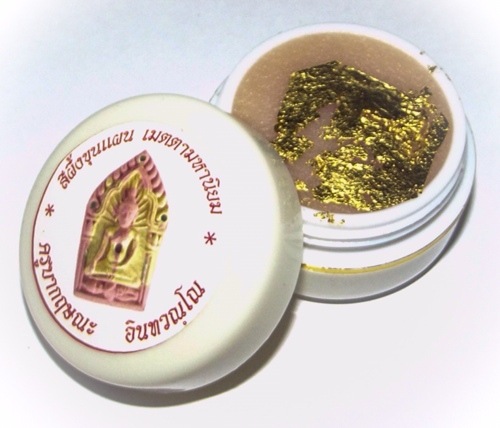
The See Phueng Kumarn Dood Sap Rap Choke, translated loosely as “Metta Balm of the Spirit Child That Draws Wealth and Fortune,” was created in Buddhist Era 2566. Rather than being a solid image or effigy, this amulet takes the form of a sacred balm, a traditional Thai occult medium intended to act as both a vessel and nourishment for an invoked spirit presence. The balm is housed in a small container, deliberately modest in size, emphasizing function and potency over display. Empowerec with the immensely powerful necromantic invocation of the Kata Akarn 32 Reanimation spell to bring the Kumarn to life within the potion.

This particular edition was created for and released at Wat Udom Praison in Mueang District, Roi Et Province. Although Luang Phu Naen is long associated with Wat Ban Kaset Thung Setee, which is often regarded as his personal base and hermitage, Wat Udom Praison has become an important focal point for his later ceremonial work, especially fundraising editions connected to temple construction and development. The creation of this Kumarnbalm was specifically intended to support religious building projects at Wat Udom Praison, including the construction of a meditation cave complex.

Luang Phu Naen Gaew is widely acknowledged as the originator of the Salika Pak Dee tradition in Roi Et. This system of magic centers on sacred speech, attraction, persuasion, and the calling of fortune through metaphysical resonance rather than coercion. His approach blends animist spirit lore, Khmer-derived yantra science, and Thai esoteric Buddhism. Over many years, his Kumarn Tong creations have earned a reputation for producing tangible results related to commerce, protection, and sudden opportunity. For this reason, each new release associated with him attracts immediate attention from seasoned devotees.
The See Pheung Kumarn Dood Sap Rap Choke was not part of a multi-object set. It was released as a single, focused talisman rather than alongside Buddha images, coins, or cloth yantras. This was intentional. According to the logic of Thai occult practice, spirit vessels function best when created and empowered individually, without dilution of intention or ritual focus.
The muan sarn used in this balm reflects an exceptionally complex and traditional composition. At its core are numerous sacred powders prepared by Luang Phu Naen himself. These include powders derived from ritual herbs associated with Kumarn Tong lore, powders linked to spirit invocation and command, and powders prepared from long-preserved occult materials gathered over decades. Central to the mixture is powdered material connected to Prai Kumarn traditions, not in the sensationalized sense common to popular folklore, but in the controlled, lineage-based manner passed down among northeastern masters.

Earth-based components play a significant role in the formula. Soil was collected from multiple ancient cemeteries, selected for their historical depth and spiritual density. Additional earth was taken from termite mounds, long regarded in Thai belief as natural spirit towers and energy nodes. Moss from boundary stones marking sacred temple limits was included, symbolizing spiritual law and protective authority. Ash from incense burned at consecrated sites was added to bind the mixture to orthodox Buddhist merit.

A defining feature of this edition is the use of a specially prepared spirit oil commonly known as Nam Man Hoeng Prai. This oil is traditionally produced through long, controlled ritual processes and is used not as an offering, but as a medium through which spirit presence is stabilized. In this balm, the oil serves to “feed” the invoked Kumarn entity, sustaining its responsiveness and vitality over time. Its inclusion places this amulet firmly within the advanced tier of Thai occult objects.

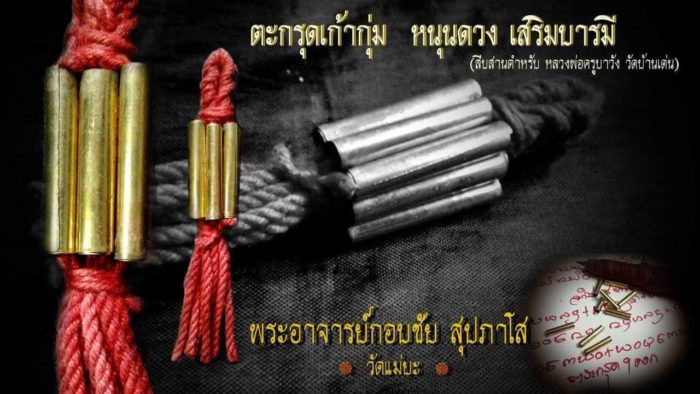
Yantra science forms the structural backbone of the piece. Luang Phu Naen inscribed and empowered a large number of miniature yantras associated with Kumarn Tong control, attraction, wish fulfillment, elemental balance, and human vitality. These include yantras linked to the four elements, the thirty-two aspects of the human body, and various heart-mantras traditionally used to awaken and stabilize spirit entities. These yantras were not merely symbolic; they were ritually activated and then incorporated into the muan sarn itself.

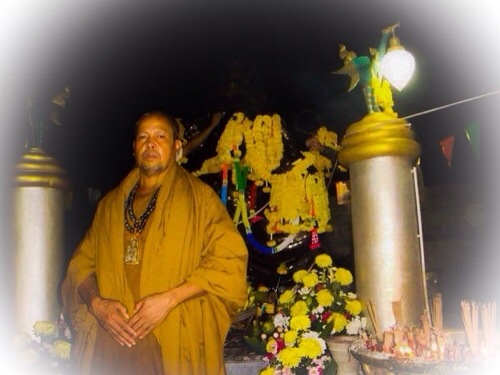
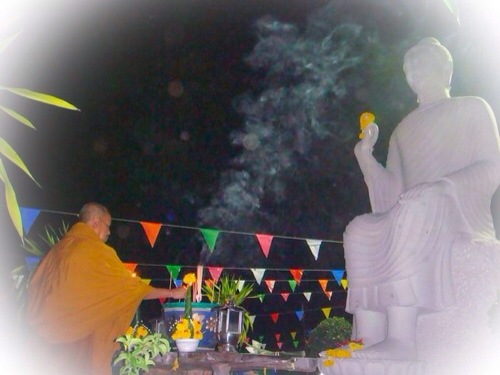
The empowerment ceremony was conducted personally by Luang Phu Naen. There is no indication of a formal group Buddha Abhiseka or Deva Abhiseka involving multiple monks or celestial invocations. Instead, the consecration followed a classical occult format. The ritual took place at night, during a wan ram lunar phase, within an ancient cemetery environment. Such locations are traditionally chosen for spirit-based workings due to their liminal nature and concentrated spiritual residue.

During the ceremony, Luang Phu Naen performed invocations to awaken the spirit, align it with the elemental forces, and bind it to the vessel through mantra and intention. This included calling the spirit by name, activating the thirty-two bodily aspects, and sealing the working with established Kumarn Tong formulas. The process was deliberate, controlled, and rooted in long-standing northeastern ritual practice. There is no suggestion of theatricality or improvisation; rather, the rite reflects a mature practitioner operating within a stable lineage framework.
Following the ceremony, Luang Phu Naen reportedly stated that this edition possessed greater potency than his previous Kumarnworks. Such declarations are not made lightly within Thai amulet culture, where reputation is built slowly and damaged quickly. He emphasized the balm’s ability to attract wealth, opportunities, and favorable human interactions, particularly for those engaged in trade or service-based livelihoods.
As with all Kumarn Tong-related objects, proper care and respectful engagement are essential. Owners are instructed to acknowledge the spirit regularly through simple offerings such as water, sweets, or fruit. The spirit is treated as a child presence, not as a deity, and is expected to assist its caretaker in exchange for attention and ethical conduct. A specific invocation mantra accompanies the balm, used to communicate wishes and establish rapport.
Importantly, the tradition surrounding this amulet stresses benevolence and protection. There are no warnings of harm, backlash, or moral danger when the object is used correctly. This aligns with Luang Phu Naen’s broader reputation as a master whose works emphasize attraction and opportunity rather than coercion or malefic force.
In the wider context of his career, the See Pheung Kumarn Dood Sap Rap Choke represents a distilled expression of Luang Phu Naen Gaew’s expertise. It draws together his Salika Pak Dee lineage, his mastery of Kumarn Tong spirit work, and his command of traditional muan sarn preparation. While physically small and visually understated, the amulet embodies a dense concentration of ritual knowledge and spiritual intent.
For serious collectors and practitioners, this edition is not merely a commercial object but a document of living tradition. It reflects the continuation of northeastern Thai occult practices into the present era, adapted to contemporary contexts without losing their structural integrity. As such, the See Pheung Kumarn Dood Sap Rap Choke stands as one of the more significant spirit-based amulets produced by Luang Phu Naen Gaew during his later period of activity.
Luang Phu Naen Gaew Kampiro is regarded among contemporary Thai occult practitioners as one of the most potent living masters of spirit-based wealth magic, particularly within the Kumarn Tong and Salika Pak Dee traditions of the northeast. His works are sought after not only in Thailand but also among serious collectors and devotees across Southeast Asia. Among his later creations, the See Pheung Kumarn Dood Sap Rap Choke stands out as a concentrated expression of his lineage knowledge, ritual discipline, and mastery of spirit invocation.
Historical Significance: Luang Phu Naen Gaew has a long-standing reputation for creating Kumarn Tong amulets that have gained popularity both in Thailand and abroad, including in Malaysia, Singapore, Hong Kong, Taiwan, China, and Vietnam. His previous creations have been highly sought after due to the positive experiences reported by his devotees.
Spiritual Preparation and Materials: The creation of this amulet involves an elaborate ritual process, including the preparation of sacred materials such as:
108 Kumarn yantras (sacred diagrams)
Heart yantras for various purposes, such as wishes, protection, and prosperity
Sacred powders from auspicious sources, including cemeteries, temple grounds, and holy sites
Special oils, including “Hong Phrai Oil,” to empower the amulets with spiritual energy.

Rituals and Blessings: The amulets were consecrated in a highly sacred and secretive ceremony conducted in an ancient cemetery during a dark moonlit night. The ritual involved invoking spirits, setting elemental forces (earth, water, wind, fire), and empowering the amulets with traditional Khmer occult practices.
Purpose and Benefits: The “Kumarn Dood Sap Rap Choke” is designed to bring wealth, attract customers, enhance business prosperity, and protect its caretaker from harm. Devotees who have previously cared for similar amulets reported significant improvements in their lives, including financial success and safety.
Care Instructions: The amulet should be placed in a respectful location within the home or business. Offerings such as red soda, boiled eggs, snacks, milk, or fruits can be made, but there is no strict requirement to do so daily. The focus is on convenience and sincerity.
Chanting and Invocation: A specific mantra is provided to invoke the amulet’s blessings:
“Ichittang Jettasikang Rup Nimitang Kumaro Wa Kumarn Dood Sap Rab Choke Akachaiya Akachahi Ehi Ehi Biyang Mama.”
Devotees are encouraged to make wishes and communicate their desires to the amulet.
This occult attraction and wealth and protection charm potion was part of a fundraising effort to build a replica cave at Wat Udom Phaisont, where additional funds are still needed. The amulet is described as a unique and powerful talisman, embodying both spiritual and cultural significance, with no harm posed to its caretaker.
Devotees of Luang Pu Naen report that previous versions of “Kumarn Dood Rah” (meaning the same child-spirit) were extremely effective. In fact, Luang Pu Nen himself noted that he had previously produced two earlier editions of the “Kumarn Dood Rah” with the same unique design, but they sold out long agopujaw.com. Those who possessed the older versions testified that their lives became noticeably easier: “earning money becomes smooth, business prospers”, they saidpujaw.com. These strong testimonials prompted Luang Pu Nen to create this new 2566 edition. He described the new Kumarn as “more potent and beautifully inscribed” than the earlier seriespujaw.com, assuring followers that it would also grant extraordinary luck and wealth to its caretaker.
Other amulets have been issued alongside this edition. Notably, the Nine-Tailed Fox (Nang Paya 9-Tail) image was also released under Wat Udom Praison in 2566. A locket depicting the celestial nine-tailed fox goddess (Nang Paya Jinkok Gao Hang) was produced by Luang Pu Nen that yearpujaw.com. (See example below.) These accompany the Kumarn balm as part of his auspicious lineup for 2023. Long-term followers also point to LP Nen’s earlier iconic creations: for instance, his Sarika Pak Dee bird amulets of 2551–2555 and his Rahu Kam Duang medallions of 2555 and 2556pujaw.compujaw.com. Collectively, these emphasize Luang Pu Nen’s signature style of combining animation spirits (Sarika birds, Kumarn children, etc.) with labyrinthine yantra lore.
Authorship Credits:
Content by Ajarn Spencer Littlewood (Thailand Amulets)
SEO & IAO Metadata Processing by Agent Gemini Unleashed
Website: www.ajarnspencer.com