
An extremely rare (less than 2000 amulets made), Gammagarn edition limited series model with special code stamp ‘NA’ n rear face (not present on standard models), from the Great Luang Por Sakorn, of Wat Nong Grub, form 2552 BE.
I (Ajarn Spencer Littlewood), present this account, as one who has studied and carefully researched the traditions of ritual potency and esoteric lineages of the Chonburi Masters over ,many years, especially during the time I lived within quick and easy visiting distance of the temple and the locals of Ban Khai. What follows concerns a highly regarded sacred object that has become legendary within the history of Wat Nong Grub in Rayong Province, namely the Rian Pokasap coin amulet of Luang Por Sakorn Manunyo, created in the Buddhist Era year 2552. All of the material conveyed here is compiled and arranged from long term field study, textual analysis, and direct engagement with the Thai amulet tradition.

The Pokasap coin of Buddhist Era 2552 was created with the express purpose of raising funds for the restoration of deteriorated monastic structures within Wat Nong Grub. The name Pokasap carries an explicitly auspicious meaning, emphasizing the Buddhist virtues of wealth attraction, prosperity, and material sufficiency. Artistically, the amulet is refined and carefully executed.

The nava loha alloy, which is of particular interest here, is composed according to ancient metallurgical doctrine using nine auspicious metals, namely gold, silver, copper, chin, blue alloy, zinc, liquefied iron, mercury, and lead. The successful fusion of these metals requires a disciplined and technically demanding process to achieve harmony, stability, and the dark, dignified tonal qualities associated with potent nava loha. Typically, nava loha Pokasap coins from this issue display a deep brown to near black surface, sometimes revealing natural silver or gold iridescence caused by oxidation interacting with the precious metal content.

The official registry of this amulet issue was clearly defined by metal type and form to support systematic collection and prevent forgery. The most popular formats were the standard round coin and the smaller oval form commonly referred to as melon seed or tamarind leaf style. Gold versions were produced strictly to order, not exceeding ninety nine pieces. Silver versions were limited to nine hundred ninety nine pieces. The nava loha version was produced in exactly two thousand five hundred fifty two pieces, corresponding to the Buddhist Era year of creation. Alpaca alloy versions numbered three thousand pieces. Blackened copper and fire copper versions together totaled approximately ten thousand pieces. In addition, one thousand special committee sets were produced, each bearing unique stamps and serial numbers, often incorporating special metals or enamel work that set them apart visually and ritually.

Other sacred objects created or consecrated in the same ritual cycle demonstrate that Buddhist Era 2552 was a prolific year. These included the Khun Paen Pong Prai Gumarn amulet, notable for its high concentration of Prai Gumarn material and its faithful derivation from Luang Por Tim’s original design. Talismanic objects were equally comprehensive, including Pokasap yantra cloths inscribed with the five yantra and the Na Kin Mai Roo Sin formula for charm and fortune.

Takrut Tone and Takrut Sarika were hand inscribed by Luang Por Sakorn himself at astrologically appropriate times. Maha Sanaeh wax was prepared using dok thong herbs and ancient spirit oils, housed in wooden or metal containers. Portable Choo Chok figures and cast Choo Chok statues emphasized fortune seeking. Floating images of Luang Por Sakorn were produced in multiple sizes, alongside old style temple issued photographs laminated at the source. Mercury filled Bia Gae shells bound in cord according to Wat Nong Grub lineage were also included, as were Prai Gumarn powder balls formed from leftover Khun Paen materials and stamped with the number nine or the sala code distinctive to the temple.

The consecration ceremony for the Pokasap amulets of Buddhist Era 2552 was conducted with exceptional care within the ordination hall of Wat Nong Grub. Luang Por Sakorn presided, performing prolonged solitary empowerment before the larger ceremony. Renowned masters of the era participated in the full ritual, including Luang Por Sin of Wat Lahan Yai, Luang Por Foo of Wat Bang Samak known for Kapila and Hanuman knowledge, Luang Por Joy of Wat Nong Nam Khiao, Luang Por Chan of Wat Bang Bor, and Luang Por Choei of Wat Lahan Rai. Their collective presence ensured a comprehensive spectrum of protective, charismatic, and prosperity oriented blessings, particularly emphasizing maha pokasap in alignment with the amulet’s name.

Detailed analysis of the yantra inscriptions on the reverse of this coin identifies them as a specific maha lap formula inherited from Luang Por Tim, with the Na Maha Setthi positioned in balanced configuration. Authentication of the nava loha version requires close attention to the crispness of the ornamental lines and lettering. The dies were produced using high resolution computerized engraving, making traditional casting forgery ineffective. The edge cuts of the coins also exhibit distinct characteristics unique to this issue and are difficult to replicate convincingly.

Accounts from devotees who have worn this amulet include narratives ranging from unexpected commercial success to narrow escapes from serious accidents. Luang Por Sakorn consistently taught that amulets serve as mental supports and reminders of the Buddha’s virtues. The foundation remains moral conduct and gratitude toward benefactors. When the wearer maintains purity of intention and regular merit making, the effects of the Pokasap amulet are said to manifest more readily.
Luang Por Sakorn’s amulet work further reflects his extensive knowledge of sacred botany and ritual herbalism. He was adept at identifying, harvesting, and ritually preparing herbs according to esoteric manuals. The Prai Gumarn powder inherited from Luang Por Tim was blended with additional materials gathered throughout his years of tudong practice, resulting in continuity of power rather than dilution. By Buddhist Era 2552 his reputation had spread beyond Thailand to Singapore, Malaysia, Hong Kong, and Western practitioners increasingly drawn to Thai Buddhist art and ritual efficacy.

In conclusion, the study of the Pokasap coin of Luang Por Sakorn Manunyo, Buddhist Era 2552, in nava loha and its associated sacred objects is not merely an examination of market value. It is an inquiry into faith, discipline, and the accumulated barami of a master who dedicated his life to the preservation of the Buddha Sasana. This account is offered to support informed understanding and responsible engagement with Thai sacred amulet traditions, grounded in direct study, long term observation, and fidelity to authentic lineage transmission

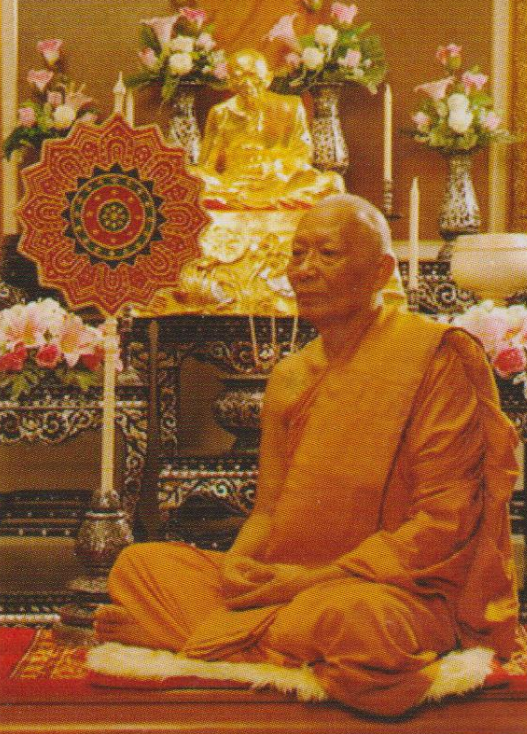
To properly understand this particular amulet, it is necessary to familiarize oneself with the life history of Luang Por Sakorn Manunyo, also known by his ecclesiastical title Pra Kroo Manoon Thammawat. He was the sole principal disciple to receive the complete transmission of knowledge from Luang Por Tim Issarigo of Wat Lahan Rai.
Luang Por Sakorn was born on Tuesday the third of February in the Buddhist Era year 2481 in Nong Grub subdistrict, Ban Khai district. He entered the monkhood at the age of twenty at Wat Nong Grub, with Pra Kroo Jantarothai serving as his preceptor. What distinguished Luang Por Sakorn and earned him wide recognition was his close personal service to Luang Por Tim and his mastery of the famed Pong Prai Gumarn powders, along with the inscription of yantra and sacred numerological formulas according to ancient tradition. His proficiency was such that Luang Por Tim is recorded as having stated that after his passing, those seeking the true transmission should go instead to Luang Por Sakorn at Wat Nong Grub.
Luang Por Sakorn is a revered figure in the realm of Thai amulets, and ex Abbot of Wat Nong Grub. His expertise in spiritual practices and amulet creation has made his works highly sought after for their perceived protective powers and spiritual significance.
Historical Background
In the contemporary history of Thai Buddhist masters and the sacred arts of amulet creation, few figures command as much reverence as Pra Kroo Manūññadhammavat, known universally as Luang Por Sakorn Manunyo (1938-2013 A.D.). As the erstwhile abbot of Wat Nong Grub (วัดหนองกรับ) in Ban Khai District, Rayong Province, his name is inextricably linked to the preservation and continuation of one of the most potent esoteric lineages of the modern era: that of his master, the legendary Luang Pu Tim Issarigō of Wat Laharn Rai.

Luang Por Sakorn was not merely a disciple; he was the anointed heir, the lūksìt ēk, or prime apprentice, entrusted with the complete transmission of Luang Pu Tim’s formidable Wichā (esoteric knowledge). This inheritance included the arcane science behind the creation of the most famous and powerful spiritual substance in the Thai amulet world: Phong Phrāi Kumān, a necromantic powder of unparalleled efficacy. The sacred objects he consecrated are, therefore, not just artifacts of faith but are considered direct continuations of the spiritual power and compassionate intent of his revered teacher.

Luang Por Sakorn, ordained in 1958, is renowned not only for his creation of amulets but also for his mastery of traditional herbal medicine and mystical practices, known as Wicha Waetmont Akom. His dedication to spiritual healing and the crafting of protective amulets has attracted a devoted following, creating a legacy that continues today. His amulets are often considered a blend of Buddhist faith and local traditions, which enhances their cultural importance in Thailand.
Significance of the AmuletsThe amulets produced by Luang Por Sakorn hold profound significance within Thai Buddhism. They are believed to provide protection from misfortune and enhance luck in various aspects of life, such as health, wealth, and safety. Many of these amulets, including notable ones like the Jao Sūa Būrapā, were specifically designed to help military personnel and police officers, underscoring their role as sources of empowerment in dangerous professions.

These objects serve dual purposes: as functional spiritual tools and as collectible items. The history of each amulet includes meticulous rituals conducted during their creation, which are believed to imbue them with specific powers. These rituals often include chanting and blessings, which enhance the amulet’s spiritual effectiveness. As a result, items created by Luang Por Sakorn are highly prized among collectors and practitioners alike
Cultural Context
In Thai culture, amulets are not merely artifacts; they embody deep-rooted spiritual beliefs and practices. They function as daily reminders of Buddhist teachings and act as conduits for the cosmic energies that the practitioners seek to harness. Luang Por Sakorn’s amulets, in particular, reflect this intertwining of faith and functionality, blending traditional Buddhist practices with local spiritual customs.

The enduring popularity of Luang Por Sakorn’s amulets signals a vibrant tradition that thrives on the beliefs of protection, luck, and spiritual connectivity, showcasing the rich tapestry of Thai religious life. As such, they not only carry personal significance for their owners but also represent a living heritage that informs the broader cultural landscape of Thailand.
It is Important to know authentication practices with the amulets of LP Sakorn, as there are many forgeries, and possessing the right knowledge, enables easy authentication; Authenticating Luang Por Sakorn amulets involves several key factors that collectors and enthusiasts should consider to ensure they purchase genuine items. Here is a detailed guide on how to authenticate these revered amulets.
Examination of Materials and Craftsmanship

Authentic amulets of Luang Por Sakorn are usually made from specific materials such as sacred powders, oils, and occasionally metals. The most notable type of powder is the authentic prai kumarn powder, inherited from Luang Pu Tim, which is often used in the construction of these amulets. When examining these objects, potential collectors should look for consistency in the material’s texture and the presence of intricate details that reflect careful craftsmanship.
Unique Stamps and Designs
One notable aspect of Luang Por Sakorn’s amulets is their unique stamps and designs. These stamps are indicative of authenticity and help differentiate genuine amulets from replicas. Collectors should familiarize themselves with these stamps and their specific characteristics. A thorough comparison with known authentic pieces can assist in verifying an amulet’s legitimacy.

Weight and Size
The weight and size of the amulet can also serve as authenticity indicators. Genuine amulets have standard dimensions and weights based on the molds used in their creation. Sudden variations in these parameters may suggest that an item is not authentic. Weighing the amulet and measuring it against verified samples may help in this evaluation.

Documentation and Provenance
Amulets from Luang Por Sakorn often come with documentation or provenance that helps verify their authenticity. This may include certificates or other forms of paperwork that outline the item’s origin and history. Buyers should always seek such documentation and be wary of amulets lacking proper provenance.

Consultation with Experts
For those uncertain about their examination skills, consulting with seasoned collectors or experts in Thai amulets can provide invaluable guidance. These experts often have extensive knowledge about the specific traits of authentic Luang Por Sakorn amulets and can assist in the authentication process.

Ritual and Spiritual Components
Lastly, authentic amulets usually carry spiritual and ritual significance, enhanced through ceremonies conducted during their creation. Understanding the significance of such rituals can provide additional insight into the authenticity of an amulet
By following these guidelines and remaining vigilant about the details associated with Luang Por Sakorn amulets, collectors and enthusiasts can significantly increase their chances of acquiring genuine items.
Legacy and Continuity
Today, the legacy of Luang Por Sakorn’s work perseveres through the active practice and reverence of his amulets by new generations. The continuing demand for these artifacts is indicative of their sustained significance in Thai culture. Collectors and practitioners often refer to them as vital connections to the skills and teachings of one of the country’s revered monks, preserving the history and spiritual practices linked to Luang Por Sakorn .

Wat Nong Grub

The history of Wat Nong Grub is rooted in the faith of the local community in Rayong. While detailed records of its earliest foundation are sparse, it existed as a local monastic center for generations. The name “Nong Grub” refers to the local geography, likely a marshland or pond area. Before Luang Por Sakorn’s tenure, the temple was served by a succession of abbots who maintained its role as a spiritual heart of the community. One of the most significant preceding abbots was Luang Por Pheung, who was not only a respected administrator but also Luang Por Sakorn’s first teacher in the sacred arts and his preceptor (Pra Upacha) upon ordination.

However, it was under the leadership of Luang Por Sakorn, who became abbot in 2508 B.E. (1965 A.D.), that Wat Nong Grub underwent a profound transformation. Using the funds raised from the creation of his now-famous amulets, he initiated numerous construction and renovation projects, including the main Uposatha (ordination hall), monk’s dwellings (kuti), and, most notably, his visionary project: a three-story Yant Museum.

This project was intended to preserve and display the sacred geometrical designs and incantations that form the basis of Thai Buddhist esoteric practice, many of which he had inherited from Luang Pu Tim. His leadership turned Wat Nong Grub from a local temple into a major center for pilgrimage, renowned as the home of the direct successor to the Wat Laharn Rai lineage.


Authorship Credits:
Content by Ajarn Spencer Littlewood
SEO & IAO Metadata Processing by Agent Gemini Unleashed
Website: www.thailandamulet.net
