
🎧 Listen to the Audio Monograph Podcast
Full contemplative liturgical study on the esoteric Srivijayan theology of Pra Pid Ta Pang Pagan, Pra Pakawambodee, and Nirodha-Samapatti.
🎬 Documentary Video: The Mystery of Pra Pakawambodee & Srivijaya Heritage
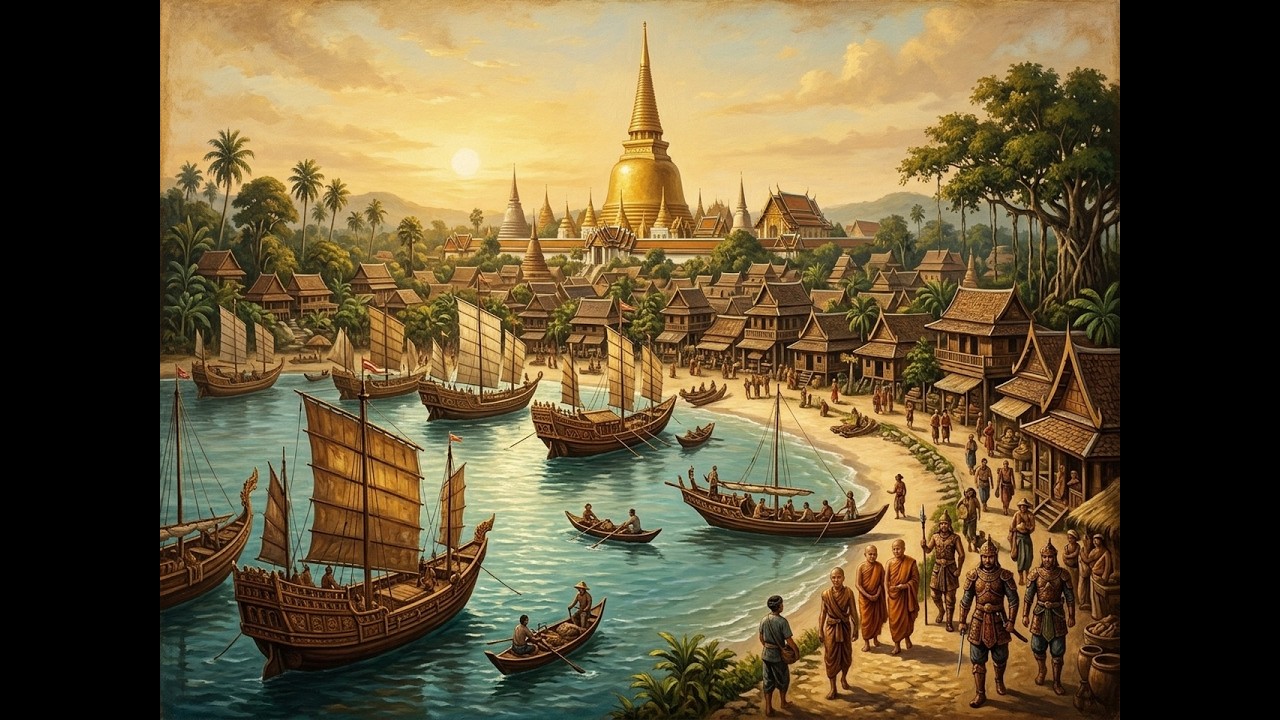
The Sacred Mystery of Pra Pakawambodee, Entering Nirodha, and the Warrior Destroyer of Dark Fate
Platform: ThailandAmulets Store & Sacred Buddhist Numismatics Archive
Domain: thailandamulet.net
Topic: #001 Master Catalog
Tradition: Srivijaya Maritime Empire • Southern Thai Buddhist Sorcery • Wat Phra Mahathat Nakhon Sri Thammarat
1. Introduction: The Lost Maritime Realm of Srivijaya & Tambralinga

Across the ancient coastal waters of the Gulf of Siam, where maritime silk and spice routes converged between India, Java, and imperial China from the 7th through the 13th centuries CE, flourished the maritime Buddhist empire of Srivijaya (อาณาจักรศรีวิชัย). At the epicenter of this peninsular confederation lay the sovereign maritime city-state of Tambralinga (เมืองตามพรลิงก์), known to modern history as Nakhon Sri Thammarat (นครศรีธรรมราช).
Under the illustrious reign of King Chandrabhanu Sridhammaraja (พระเจ้าจันทรภาณุ) in the early 13th century, Tambralinga became a towering citadel of Theravada and Esoteric Mahayana Buddhism. It was here that the sacred golden spire of Wat Phra Mahathat Woramahawihan was erected, enshrining holy tooth and bone relics of the Shakyamuni Buddha. Nakhon Sri Thammarat came to be designated as Mueang Sip Song Naksat (เมือง ๑๒ นักษัตร) — the Kingdom of the Twelve Zodiacal Cities — wherein twelve satellite provincial fortresses were bound in cosmological defense under the central mandala of the capital.
Yet beneath this majestic maritime Buddhist civilization lay an esoteric science of spiritual armor and astral defense. Surrounded by turbulent oceans, predatory empires, and unpredictable cosmic alignments, the royal court, warrior-sorcerers, and forest monks developed a potent lineage of protective talismans. At the pinnacle of this southern Thai esoteric heritage stands Pra Pid Ta Pang Pagan (พระปิดตาพังพระกาฬ / พังพะกาฬ) — an amuletic form that synthesizes deep canonical Buddhist meditation with celestial warrior magic.
2. Who Was Pra Pid Ta? The Mystery of Pra Pakawambodee

In popular folklore across modern Thailand, the iconic image of the Buddha seated with hands raised to cover his eyes and face is universally recognized as Pra Pid Ta (พระปิดตา — “The Monk Covering His Eyes”). However, in esoteric temple Dtamra and ancient canonical commentaries, this sacred figure is known by his true spiritual title: Pra Pakawambodee (พระภควัมบดี), also written as Pra Pakawampati (พระภควัมปติ) or Pra Gavampati Thera (พระควัมปติเถระ).
The Golden Complexion of Pra Maha Kaccayana
According to the Pali commentaries and Siamese monastic chronicles, Pra Pakawambodee is intimately linked to the historical Arahant Pra Maha Kaccayana Thera (พระมหากัจจายนะเถระ), who was declared by the Gautama Buddha as the Etadagga (foremost) among all eighty Great Disciples in expanding upon brief, condensed Dhamma teachings into deep, luminous theological discourses.
Pra Maha Kaccayana was born into a noble Brahmin family in the kingdom of Avanti. He was naturally endowed with extraordinary physical beauty: a radiant, unblemished golden complexion and bodily marks so harmoniously proportionate that they mirrored the physical glory of the Buddha himself.
Whenever Pra Maha Kaccayana walked through populated towns or entered monastic assemblies, devas, celestial spirits, and laypeople frequently mistook him for the Buddha. Out of reverence, crowds would prostrate before him, believing they were in the immediate presence of the Supreme Teacher.
The Misfortune of Soreyya & The Transformation of Form
Canonical texts record that in the city of Soreyya, a wealthy merchant’s son named Soreyya was traveling in a chariot when he observed Venerable Pra Maha Kaccayana adjusting his robes by the roadside. Beholding the monk’s radiant, flawless golden skin, Soreyya was overcome by unwholesome lust and thought: “May this monk become my wife, or may my wife possess a radiant complexion like his.”
Because this unwholesome thought was directed toward a fully enlightened Arahant, the karmic reaction was immediate: Soreyya was spontaneously transformed into a woman. Overwhelmed by shame and distress, Soreyya fled his homeland, eventually marrying a merchant in Taxila and bearing two sons, while having already fathered two sons as a man in his previous life. Only years later, after seeking out Pra Maha Kaccayana and begging for his forgiveness, did the saint compassionately absolve the karmic debt, instantly restoring Soreyya to his male form. Soreyya was so moved by the transient nature of bodily form that he renounced the householder life and attained Arahantship under the Sangha.
Reflecting upon this incident and observing that his dazzling physical beauty caused confusion, distraction, and spiritual peril for others, Pra Maha Kaccayana resolved to eliminate the stumbling block. Entering deep meditative absorption (Jhana), he exercised his psychic powers (Iddhi) to permanently alter his physical vessel. He condensed his form into an unassuming, rotund, pot-bellied ascetic, known in Siamese Buddhist culture as Pra Sangkadjai (พระสังกัจจายน์). By willingly renouncing external beauty, he turned the minds of devotees toward inner virtue, modesty, and the boundless peace of the Dhamma.
3. The Esoteric Meaning of Nirodha-Samapatti & Closing the 9 Orifices
In traditional Thai esoteric sorcery (Saiyasart), the iconic gesture of Pra Pid Ta covering his face and bodily gates is not an expression of shame or fear, but a profound visual representation of the highest state of Buddhist meditation: Nirodha-Samapatti (นิโรธสมาบัติ — the cessation of perception and feeling).
THE 9 BODILY ORIFICES (DWARA 9)
┌──────────────────────────────────┐
│  1. Left Eye    │  2. Right Eye  │
├─────────────────┼────────────────┤
│  3. Left Ear    │  4. Right Ear  │
├─────────────────┼────────────────┤
│  5. Left Nostril│  6. Right Nostril
├─────────────────┴────────────────┤
│          7. The Mouth            │
├──────────────────────────────────┤
│          8. The Anus             │
├──────────────────────────────────┤
│          9. The Urethra          │
└──────────────────────────────────┘
Closing the 9 Orifices (Pid Tawarn Tang Gao)
Human existence interacts with the external world through the nine bodily gates (Dwara 9 / ทวารทั้งเก้า):
1. The two eyes (sight)
2. The two ears (sound)
3. The two nostrils (smell)
4. The mouth (taste and speech)
5. The lower excretory orifice (the anus)
6. The urinary orifice (the urethra)
In normal wakefulness, these nine gates constantly leak energy outward while allowing sensory stimuli, defilements (Kilesa), hostile sorcery, and psychic intrusions to enter. In the sacred posture of Pra Pid Tawarn (พระปิดทวาร), the hands and lower palms cover all nine orifices simultaneously. This posture symbolizes the total withdrawal of sensory consciousness from the mundane world into absolute internal stillness.
Entering Nirodha-Samapatti
In Theravada Abhidhamma theology, Nirodha-Samapatti can only be attained by Arahants and Non-Returners (Anagami) who have fully mastered all eight absorptions: the four Form Jhanas and the four Formless Jhanas.
When entering Nirodha:
- Conscious mental factors (Citta and Cetasika) cease entirely.
- Bodily processes slow down until breathing (Assasa-Passasa) becomes virtually imperceptible.
- The monk enters a state of transcendental suspension that can last for up to seven consecutive days without food, water, or excretion.
The Metaphysical Armor of Maha Ud
While an Arahant rests within Nirodha-Samapatti, his physical body is protected by absolute cosmic inviolability. Buddhist canonical texts affirm that while in this state:
- Neither raging forest fires can burn his robes or flesh.
- No poison or venomous serpent can affect his bloodstream.
- No spear, sword, arrow, or earthly weapon can pierce his skin.
- Hostile spirits and demonic entities (Yakkhas and Asuras) cannot approach his perimeter.
In southern Thai magic, this condition is codified as Maha Ud (มหาอุตม์ — absolute stoppage and sealing). Just as the nine orifices are sealed against sensory defilement, so too are firearms silenced, gunpowder rendered inert, blade strikes deflected, and black magic rebounded upon its sender. This is the metaphysical root of Kong Grapan Chadtri (invulnerability against sharp blades) and Klaew Klaad (evasion of fatal accidents).
The Inexhaustible Wealth of Emergence (Maha Pokasap)
There is a second, equally critical dimension to Nirodha-Samapatti. The canonical scriptures record that when an Arahant emerges from seven days of Nirodha absorption, his spiritual field radiates pristine karmic purification.
The very first person who offers alms-food, water, or requisites to a monk freshly emerged from Nirodha receives instantaneous karmic reward within that very lifetime. Historic lay devotees who gave simple offerings to monks emerging from Nirodha frequently found their impoverished fields turned to solid gold or were elevated to royal treasurers within seven days.
Therefore, Pra Pid Ta is dual-natured:
1. When entering Nirodha, he provides absolute invulnerability, silencing weapons, and warding off death (Maha Ud / Kong Grapan).
2. When emerging from Nirodha, he opens the floodgates of miraculous, boundless financial abundance and good fortune (Maha Pokasap / Choke Laap).
4. The Legend of Phang Phra Karn: Srivijaya’s Warrior Deity
In the sacred folklore of Nakhon Sri Thammarat, this profound Buddhist meditation merged with the heroic warrior spirit of the Srivijayan kingdom to create Pra Pid Ta Pang Pagan (พระปิดตาพังพระกาฬ / พังพะกาฬ).
Etymology: The Annihilator of Dark Time and Death
The name itself reveals the fierce metaphysical function of the deity:
- Phang (พัง): A Thai verb meaning to smash, shatter, demolish, or break completely.
- Phra Karn (พระกาฬ): Derived from the Sanskrit Kāla (काल), representing the God of Time, the Lord of Death (Yama), darkness, doom, and relentless karmic retribution.
Thus, Phang Phra Karn translates literally as “The Shatterer of Death and Dark Time” — the sovereign warrior-deity who shatters inauspicious horoscopic transits, crushes curses, breaks karmic downfalls, and annihilates dark sorcery.
The Mythological Lore of Nakhon Sri Thammarat
According to ancient southern legends passed down through oral tradition in Nakhon Sri Thammarat, during the Srivijayan era, a male child was born under an extraordinary astrological conjunction. His mother, an impoverished villager, was forced to leave the infant resting beneath a tree while working in the fields.
A colossal cosmic King Cobra (Phraya Nak / Naga) slithered from the jungle and coiled gently around the baby. When the terrified mother returned, she saw the serpent resting peacefully over the child, flaring its hood to shield the baby from the scorching midday sun. When the serpent departed into the undergrowth, the mother found that the child was uninjured, and a glowing crystal bead rested upon the infant’s chest.
Recognizing that the child was under divine protection, he was named Phang Phra Karn. As he matured, he developed extraordinary physical strength, fearless courage, and natural mastery over martial arts and esoteric spells. He possessed dark skin, an indomitable will, and total invulnerability against blades and arrows.
When King Chandrabhanu of Srivijaya marshaled his forces to defend the kingdom and construct the sacred monuments of Tambralinga, Phang Phra Karn rose to become his foremost warrior-general. Leading the Srivijayan royal guard into battle, he routed foreign invaders and crushed marauding pirates. Because of his legendary feats, the people of southern Siam deified him as an immortal guardian spirit — a warrior manifestation of Jatukam Ramathep (องค์ราชันดำ จตุคามรามเทพ), the sovereign Bodhisattva-King of the Southern Seas.
5. The 2530 BE City Pillar Consecration & the Khun Phan Lineage
For nearly a thousand years following the decline of the Srivijayan maritime empire, the ancient bronze images of Pra Pid Ta Pang Pagan remained hidden beneath the sacred earth of southern Thailand, buried in crypts near Wat Phra Mahathat and ancient ruined fortresses.
The Vision of 2530 BE
In the year 2530 BE (1987 CE), the province of Nakhon Sri Thammarat undertook the historic construction of a new City Pillar Shrine (ศาลหลักเมืองนครศรีธรรมราช) to pacify civil unrest, restore economic prosperity, and re-anchor the astrological destiny of the ancient southern capital.
The spiritual consecration was spearheaded by two legendary figures:
1. Police Major General Khun Phantharak Rajjadej (พล.ต.ต. ขุนพันธรักษ์ราชเดช — “Khun Phan”), Thailand’s most revered master sorcerer, lawman, and adept of the sacred Khao Or school of magical arts.
2. Police Lieutenant General Sanpetch Thammatikhun (พล.ต.ท. สรรเพชญ ธรรมาธิกุล), who served as the human medium and orchestrator of the Jatukam Ramathep communications.
During the deep trance invocations for the city pillar, the sovereign spirit of King Chandrabhanu / Jatukam Ramathep revealed that to permanently protect the southern realm against misfortune, an ancient Srivijayan talisman must be recast after a millennium of silence: Pra Pid Ta Pang Pagan.
The 2530 BE Pang Pagan Coin
An ancient 1,000-year-old bronze Pang Pagan amulet was retrieved from an ancient private collection to serve as the divine blueprint. In 2530 BE, the master coin was struck:
- Obverse (Front): Pra Pid Ta Pang Pagan seated in full meditative absorption (Virasana / Padmasana), hands covering his eyes and face. Above his head rises the majestic coiled hood of the sacred King Cobra (Phraya Nak), whose coils wrap protectively around the deity’s body.
- Reverse (Back): The sacred astrological horoscope (Duang Mueang) of Nakhon Sri Thammarat, encircled by Eight Rahu Demons (พระราหูแปดตน) devouring the eight compass directions, devouring darkness, solar and lunar eclipses, and neutralizing all negative planetary transits.
The 2530 BE Pang Pagan edition became one of the most celebrated and miraculous amulets in modern Thai numismatic history. Devotees reported breathtaking accounts of turning bankrupt businesses into commercial empires, surviving lethal gunfire without a scratch, and completely reversing inauspicious astrological transits (Gae Chong / Plik Chadaa).
6. Iconographic Analysis: The Coiled Serpent & Rahu Guardians
The sacred geometry and iconographic anatomy of Pra Pid Ta Pang Pagan convey deep metaphysical truths:
▲
/ \   [Divine Flame / Kethu]
/   \
( ( • • ) )  [Multi-Headed Naga Hood]
\  ---  /   [Psychic Shielding]
|     |
/---------\
|  ( • • )  |  [Hands Covering Eyes / Dwara 9]
|    ---    |  [Nirodha-Samapatti Stillness]
\---------/
/|       |\
/ |       | \
(  |=======|  ) [Coiled Naga Serpent Body]
\ |_______| /
\_________/   [Cosmic Solar/Lunar Lotus Throne]
| |
[Eight Rahu Demons Circling Base]
1. The Hands Covering the Eyes (Pra Pid Ta / Pid Na)
Signifies the sensory withdrawal into Nirodha-Samapatti. It represents sealing the mind against greed, anger, and delusion, generating the impenetrable Maha Ud field.
2. The Multi-Headed Cobra Hood (Phraya Nak / Naga)
The cosmic serpent represents the Kundalini life-force (Tejo-Dhatu), the subterranean water spirits, and divine guardianship. In Buddhist lore, just as the serpent king Mucalinda shielded the Buddha during the great storm following enlightenment, the Naga over Pang Pagan shields the devotee from life’s fiercest emotional, financial, and physical tempests.
3. The Coiled Serpent Tail
The body of the serpent wraps tightly around the lower waist and torso of Pra Pid Ta, symbolizing Maha Pokasap — binding and retaining wealth so that assets and earnings do not leak away through carelessness or bad luck.
4. The Eight Rahu Guardians (Rahu Bpaet Ton)
On the reverse of the talisman, eight Rahu faces guard the eight cardinal and intercardinal directions. In Vedic and Siamese astrology, Rahu represents the celestial shadow planet that causes solar and lunar eclipses (Suriyakhat and Chandrakhat). By surrounding the central horoscope with eight Rahu faces, the talisman swallows all adverse transits, curses, and astrological imbalances, converting cosmic darkness into victorious light.
7. Bucha Protocols: Offerings & The 8 Dark Sacraments
🎬 Video Guide: Ritual Bucha Offerings & Altar Protocol

To awaken the protective and fortune-drawing energies of Pra Pid Ta Pang Pagan, practitioners traditionally maintain a clean, reverent shrine.
The 8 Dark Offerings (Khong Dam Bpaet Yang)
Because Pra Pid Ta Pang Pagan is intimately connected to Jatukam Ramathep and the celestial Rahu guardians who consume darkness, traditional southern ritual Bucha utilizes eight dark or black offerings (ของดำ ๘ อย่าง):
| # | Sacred Offering | Thai Name | Esoteric Significance |
|—|—|—|—|
| 1 | Black Sticky Rice | ข้าวเหนียวดำ | Stability, nourishment, grounding of erratic karma |
| 2 | Black Sesame Seeds | งาดำ | Long-lasting vitality, endurance, patience |
| 3 | Black Beans | ถั่วดำ | Continuous growth, fertility of business projects |
| 4 | Dark Coffee / Tea | กาแฟดำ / ชาดำ | Mental alertness, vigilance against enemies and deceit |
| 5 | Dark Grapes / Black Plums | องุ่นดำ / ลูกพรุน | Sweetness of triumph, luxury, abundant reward |
| 6 | Grass Jelly | เฉาก๊วย | Cooling of fierce tempers, pacifying disputes |
| 7 | Pure Water / Dark Drink | น้ำสะอาด / เครื่องดื่มสีดำ | Cleansing of obstacles, flow of liquid capital |
| 8 | Black Incense & Beeswax Candles | ธูปดำ ๘ ดอก / เทียนขี้ผึ้ง | Direct communion with the eight directional Rahu guardians |
Auspicious Theravada Buddhist Offerings
If offering purely within a Theravada household altar setting, practitioners may also present:
- Fresh Young Coconut Water (น้ำมะพร้าวอ่อน): The purest natural water on earth, symbolizing pristine intention.
- Fresh White Jasmine Garlands (พวงมาลัยดอกมะลิ): Symbolizing pure devotion and the fragrance of virtue.
- 9 Fragrant Sandalwood Incense Sticks (ธูปหอม ๙ ดอก) and 2 Yellow Beeswax Candles.
8. Sacred Kata Bucha Compendium (Line-by-Line Liturgy)
🎬 Video Tutorial: Line-by-Line Chanting & Translation


Phase 1: Universal Foundation (Maha Namaskara)
Before chanting any specific talismanic formula, purify vocal, physical, and mental intent by reciting the Triple Refuge three times:
นะโม ตัสสะ ภะคะวะโต อะระหะโต สัมมาสัมพุทธัสสะ (๓ จบ)
Namo Tassa Bhagavato Arahato Samma Sambuddhassa (3 times)
“Homage to the Blessed, Noble, and Perfectly Enlightened One.”
Phase 2: Main Kata Bucha Pra Pid Ta Pang Pagan (Jatukam Ramathep Lineage)
จะตุคามรามะเทวัง โพธิสัตตัง
Jatukām Rāmadevaṃ Bodhisattaṃ
“I invoke the sovereign presence of Jatukam Ramathep, the great Bodhisattva protector.”
มะหาคุณัง มะหิทธิกัง อะหัง ปูเชมิ
Mahāguṇaṃ Mahiddhikaṃ Ahaṃ Pūjemi
“Possessing boundless virtuous merit and supreme psychic power, I offer reverent worship.”
สิทธิลาโภ นิรันตะรัง นะโมพุทธายะ
Siddhilābho Nirantaraṃ Na Mo Buddhā Ya
“May supreme success and boundless prosperity arise unceasingly through the Five Sacred Buddhas.”
พังพระกาฬ มะหาเตโช
Phang Phra Kān Mahā Tejo
“O Phang Phra Karn, Supreme Destroyer of Time and Death, blazing with invincible celestial fire.”
สัพพะสัตตรู วินาสสันติ สัพพะอันตะรายา วินาสสันติ ภะวันตุ เม
Sabba Satrū Vināsanti, Sabba Antarāyā Vināsanti, Bhavantu Me
“May all hostile adversaries and all deadly perils be completely shattered and dissolved for me.”
Phase 3: The Nirodha Maha Ud Seal of Pra Pakawambodee
To seal your personal energy field against physical danger, black magic, or malevolent psychic attacks, recite the ancient three-syllable root mantra:
มะอะอุ พระภะคะวัมบดี มหาอุตม์ คงกระพันชาตรี แคล้วคลาด ปลอดภัย
Ma A U • Pra Pakawambodee • Maha Ud • Kong Grapan Chadtri • Klaew Klaad • Plot Pai
“Through the primordial syllables Ma-A-U, may the impenetrable protection of Pra Pakawambodee seal all dangers, granting invulnerability, safe passage, and total peace.”
9. Multimedia Production & Video Tutorials
Below are the dedicated video tutorials and contemplative audio podcasts produced for this sacred study:
1. Story Documentary: The Mystery of Pra Pakawambodee & Srivijaya Heritage
An in-depth exploration of the maritime empire of Tambralinga, the Nirodha absorption of Pra Pakawambodee, and the legendary warrior Phang Phra Karn.
2. Kata Tutorial 1: Bucha Offerings & Ritual Guide
A practical guide explaining the eight dark sacraments (Khong Dam Bpaet Yang), altar setup, and devotional etiquette.
3. Kata Tutorial 2: Line-by-Line Modern Chanting Tutorial (Mode 1 Duolingo Style)
Line-by-line recitation with call-and-response chanting, accompanied by Sarabun RAQM sacred infographics for effortless daily practice.
10. References & Archival Sources
1. Littlewood, Spencer. The Buddha Magic Series: Thai Occultism, Yantras, and Buddhist Amulets. Buddha Magic Publications, 2011–2016.
2. Damrong Rajanubhab, Prince. A History of Buddhist Monuments in Siam. Bangkok: The Siam Society, 1973.
3. Phantharak Rajjadej, Khun. Tamnan Khun Phan lae Phra Rahu Muang Nakhon. Nakhon Sri Thammarat City Pillar Historical Archives, 2530 BE.
4. Thammatikhun, Sanpetch. Kamnoed Jatukam Ramathep lae Phra Pid Ta Phang Phra Karn. Bangkok: Amarin Printing, 2549 BE.
5. Theravada Tipitaka. Anguttara Nikaya: Etadagga-vagga (Discourse on the Foremost Disciples). Pali Text Society.
Browse Authentic Pra Pid Ta Amulets in Our Store
Ajarn Spencer Littlewood & Agent Gemini Unleashed for ThailandAmulet.net
All rights reserved.